
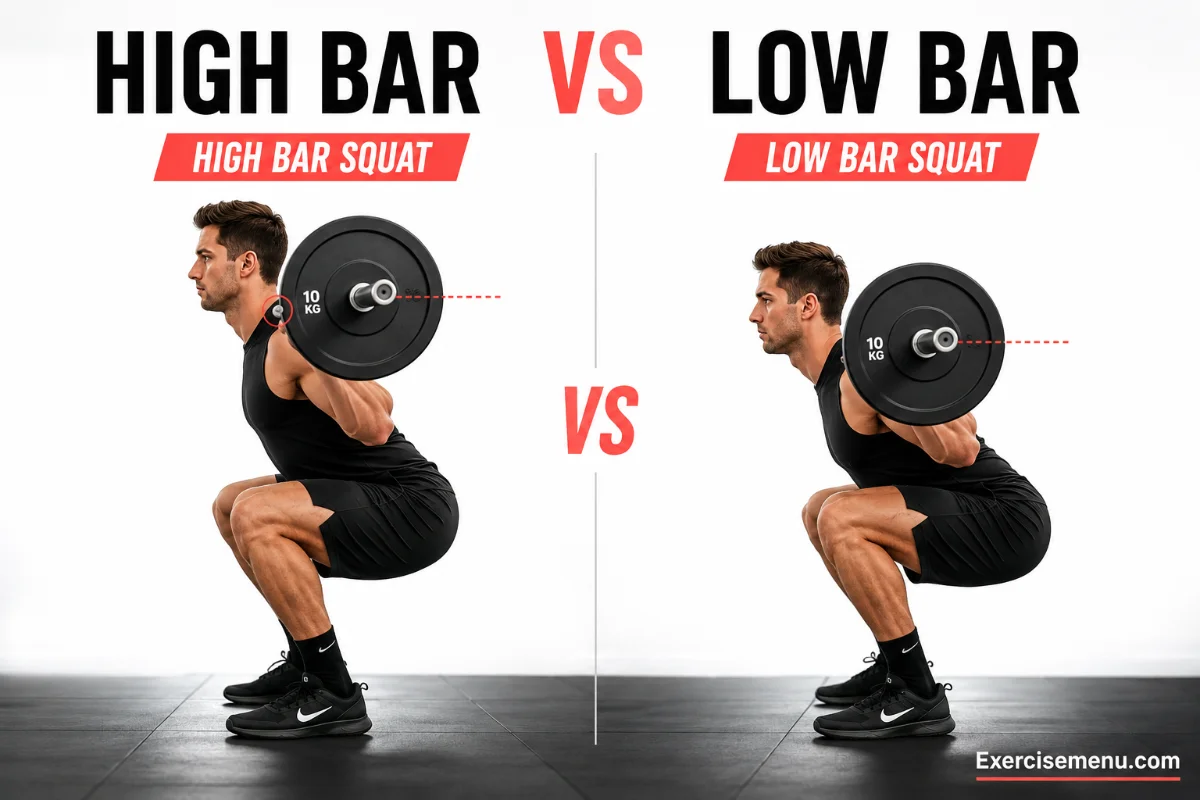
A practical comparison of bar placement, mechanics, muscle demand and how to choose the right position.
Quick Answer: High bar places the barbell on the upper traps, keeps the torso more upright and biases knee-extensor demand. Low bar pins the bar across the rear delts, increases forward lean and adds posterior-chain contribution. Most trained lifters squat 5–10% more with low bar. Neither position is universally better.
The high bar and low bar back squat are the same movement pattern with the bar shifted two to three inches. That small change alters torso angle, joint demand, usable load and which muscles feel like they limit the set. The right position depends on your training goal, your body and what you can perform without pain.
If your decision is between front and back squats rather than between bar positions, the front squat vs back squat comparison covers that choice separately. This article focuses on bar placement within the back squat: mechanics, muscle activation, shoulder and wrist issues, and a practical framework for choosing a position based on goal and body proportions.
- High Bar vs Low Bar Squat at a Glance
- What Changes When the Bar Moves Lower?
- Which Muscles Do High Bar and Low Bar Squats Work?
- Which Bar Position Builds More Muscle?
- Does Bar Position Affect Squat Depth?
- How Body Proportions Influence the Choice
- High Bar and Low Bar Squat Technique
- Which Bar Position Is Best for Your Goal?
- What to Do When a Bar Position Causes Pain?
- How to Programme Both Bar Positions?
- Frequently Asked Questions
- The Practical Takeaway
High Bar vs Low Bar Squat at a Glance
The table below summarises the main mechanical and practical differences between the two bar positions.
| Feature | High bar | Low bar |
| Bar position | On the upper trapezius, just below C-7 | Across the rear deltoids and mid-shoulder blades |
| Torso angle | More upright | More forward lean |
| Knee travel | Knees travel farther forward | Less forward knee travel |
| Typical depth | Often deeper; greater knee flexion | Usually to parallel or just below |
| Usable load | Usually lower | Usually 5–10% higher |
| Primary muscle bias | Stronger knee-extensor demand (quadriceps) | Greater posterior-chain contribution (glutes, hamstrings, erectors) |
| Mobility requirement | Needs ankle dorsiflexion and thoracic extension | Needs shoulder external rotation and wrist extension for the shelf |
| Common limiting factor | Thoracic erector strength and upright position | Bracing under forward lean; shoulder or wrist tolerance |
| Best sport match | Olympic weightlifting, CrossFit, general training | Powerlifting and maximal squat strength |
| Common pain site | Knee stress if ankle mobility is limited | Shoulder, wrist or elbow discomfort from the rack position |
What Changes When the Bar Moves Lower?
The barbell must stay over the midfoot throughout every squat for the lifter to stay balanced. When the bar sits high on the traps, the torso can remain relatively upright and still keep the load centred. When it drops to the rear delts, the lifter must lean forward to maintain the same balance point. That forward lean is not a technique flaw; it is a mechanical requirement of the lower bar position.
A 2024 biomechanical review by Straub and Powers explains that torso and shin angles have opposing effects on knee-extensor demand. A more upright torso increases the knee-flexion moment; more forward lean shifts demand toward the hip extensors. This is why high bar tends to feel more quad-dominant and low bar tends to feel more hip-dominant, even though both variations train the same muscles.
Why Most Lifters Squat More With Low Bar?
A 2017 systematic review by Glassbrook and colleagues found that the low bar position consistently allows greater absolute loads. Two factors explain this. First, the bar sits closer to the hip joint, shortening the moment arm at the hips and distributing demand across a larger group of posterior-chain muscles.
Second, the high bar squat is often limited by thoracic erector strength: the upper back must work hard to keep the torso upright under heavy load. The low bar position reduces that demand by allowing forward lean, which lets the legs and hips express more of their available strength.
A 5–10% difference is typical between trained positions. Some lifters see a larger gap if they have practised one position far more than the other. The difference narrows when both positions receive equal training time.
Which Muscles Do High Bar and Low Bar Squats Work?
Both positions train the quadriceps, gluteus maximus, adductors, hamstrings, spinal erectors and abdominal wall. The adductors assist hip extension and help stabilise the knee throughout the squat; their contribution increases with wider stances in either bar position. The meaningful difference between high bar and low bar is relative emphasis, not an entirely separate muscle list.
Quadriceps
Research on quad activation between bar positions gives mixed results, and understanding why matters more than picking a favourite study. A 2020 study by Murawa and colleagues measured EMG in 12 experienced male powerlifters and found higher eccentric-phase quad activity in the low bar squat across all tested loads.
However, a separate 2020 study by van den Tillaar and colleagues tested 10 male powerlifters with matched absolute load, depth and stance width and found higher rectus femoris and vastus medialis activity in the high bar position.
These studies do not contradict each other as clearly as they appear to. Murawa tested at matched relative loads (each lifter’s own percentage), meaning the low bar condition used heavier absolute weight. Van den Tillaar matched absolute load, isolating the effect of bar position alone.
When the weight is the same, the more upright high bar position places greater demand on the knee extensors. When each lift uses its own maximal percentage, the heavier low bar load can drive higher overall muscle activity.
The most recent evidence further narrows the gap. A 2024 biomechanical analysis by Larsen and colleagues used static optimisation to estimate individual muscle forces in 12 trained men performing 3RM squats in both positions. When stance width was standardised and the load lifted did not differ between conditions, no significant differences were found in net joint moments, muscle forces or muscle-specific moments at the hip, knee or ankle.
This suggests that bar position alone, without the stance and loading differences that typically accompany it, may play a smaller role in muscle demand than earlier EMG studies implied.
Practical interpretation: high bar tends to bias quad demand through its upright mechanics; low bar can match or exceed it through heavier loading and wider stances. But when those variables are controlled, the difference in muscle demand shrinks. For quadriceps growth, the version you can perform through a controlled, full range with adequate effort will matter more than where the bar sits.
The Murawa study specifically measured the eccentric phase of the squat, where the quads lengthen under load during the descent. Bar position changes the demand on the quads during this phase because it alters how far forward the knees travel and how much the torso leans.
Glutes, Hamstrings and Posterior Chain
Low bar squats consistently show greater gluteus maximus and hamstring EMG when each position uses its own typical loading and stance. The Glassbrook 2019 biomechanical analysis confirmed larger hip-flexion moments in the low bar position in competitive powerlifters. This does not make low bar a glute exercise or a hamstring exercise.
It means the posterior chain contributes more under the conditions lifters normally use for low bar, which is part of why the position allows heavier loads. Neither bar position replaces a hip-hinge movement like a Romanian deadlift for targeted hamstring work.
Core and Spinal Erectors
Both positions require hard bracing. High bar demands more from the thoracic erectors to maintain an upright torso. Low bar creates higher absolute erector spinae demand because of the forward lean and heavier load. Lifters who feel their back is the weak link in high bar squats often find low bar easier, even though the back works hard in both.
Which Bar Position Builds More Muscle?
No study has directly compared long-term hypertrophy between high bar and low bar squats. Given that Larsen 2024 found no significant difference in muscle forces when load and stance were matched, there is no strong biomechanical reason to expect one position to produce meaningfully more growth than the other.
In practice, the position that allows you to train the target muscles through a full, controlled range with enough recoverable volume will produce the best hypertrophy result. If high bar lets your quads work hard without your upper back or ankle mobility failing first, use it. If low bar gives you a stable setup and lets you load more weight through a repeatable range, use that. More plates on the bar do not automatically create more growth if depth, control or target-muscle effort deteriorates.
Does Bar Position Affect Squat Depth?
Yes. High bar squats typically reach greater depth because the upright torso allows more knee flexion before the lifter loses balance or runs out of hip range. Low bar squats tend toward parallel or just below, partly because the forward lean shifts the bottom position and partly because the heavier load makes depth harder to control.
Depth should match what you can control with consistent balance, bracing and foot contact. Forcing depth beyond your current range in either position is not a goal; earning it through progressive practice is.
How Body Proportions Influence the Choice
Bar position interacts with limb lengths and torso proportions. These are tendencies, not rules, and both positions can be trained regardless of body type.
Long femurs relative to torso: More forward lean is needed to keep the bar over the midfoot regardless of bar position. Low bar often feels more natural because it already accommodates forward lean. High bar can still work with a wider stance or heel elevation, but it may require more ankle mobility than the lifter currently has.
Short femurs and strong quads: High bar may allow a deep, upright squat that uses the quad strength effectively. These lifters sometimes find low bar awkward because they do not need as much hip contribution to stand up.
Short torso: High bar can stack well because there is less distance for the torso to manage. Low bar may feel excessively forward-leaning.
Proportions influence which position feels strongest on day one. Training history, mobility and bracing skill matter more over months and years.
High Bar and Low Bar Squat Technique
Both lifts should begin in a rack with safety arms set just below the bottom position. Practise the unrack and rerack with an empty bar before loading. Before each repetition, take a breath into the belly and brace the trunk in all directions; hold this brace through the full descent and ascent before exhaling at the top.
High Bar Key Cues
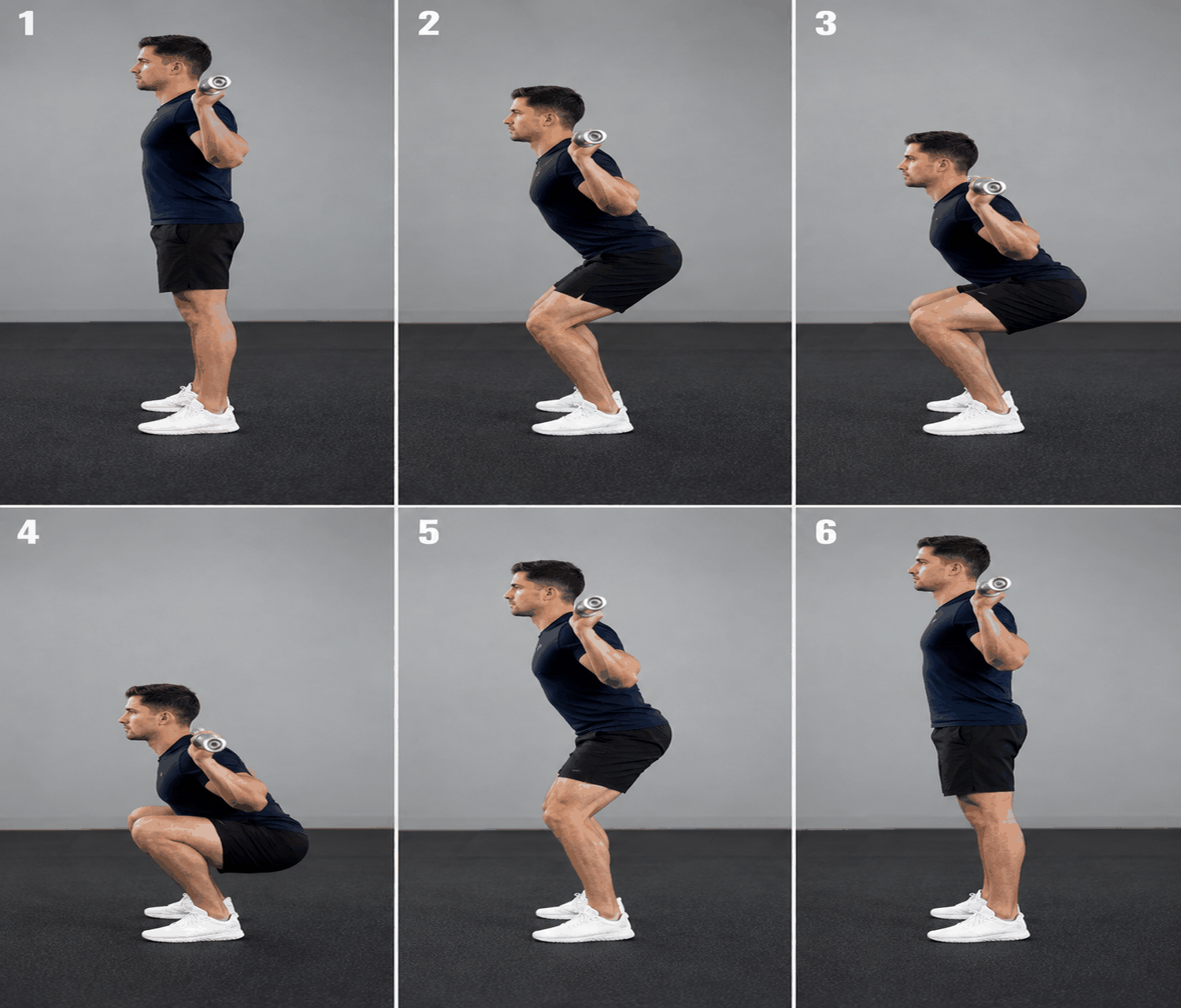
Place the bar on the upper trapezius, just below the bony bump at the base of the neck. Grip just outside the shoulders, pull the elbows under the bar and squeeze the upper back to create a shelf. Brace, unrack with a short walkout, and descend by bending the knees and hips together. Keep the torso upright and the knees tracking with the toes. Drive through the whole foot to stand.
Low Bar Key Cues
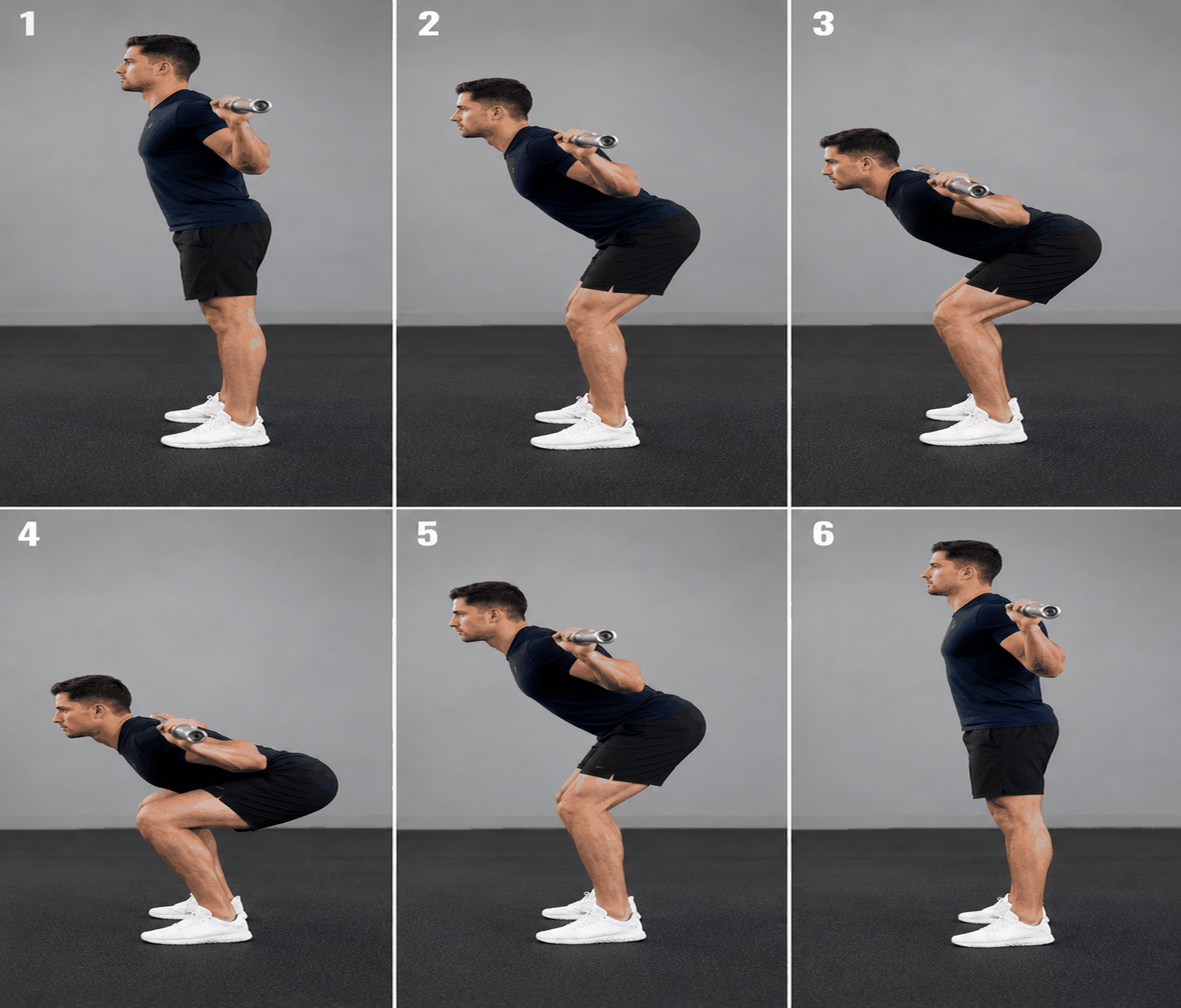
Place the bar across the rear deltoids, two to three inches lower than the high bar position. Widen the grip if needed to get the bar into the shelf. Pin the bar actively into the back rather than letting it sit passively.
Expect a slight forward lean from the start. Unrack, set a stance that may be slightly wider than high bar, brace hard, and descend by pushing the hips back while bending the knees. The chest will lean forward; this is normal. Drive through the whole foot and keep the hips and chest rising together.
Which Bar Position Is Best for Your Goal?
Choose the position that is most specific to your goal. Use the other as a secondary variation if it adds value without creating a recovery or pain problem.
| Goal or situation | Prioritise | Why |
| Powerlifting | Low bar | Allows the heaviest squat; matches competition demands for most federations |
| Olympic weightlifting | High bar | Mirrors the upright receiving position in the clean and snatch |
| Quad hypertrophy | High bar or either | Upright position biases knee-extensor demand; low bar can match it with heavier load |
| Glute and hamstring emphasis | Low bar | Greater posterior-chain contribution from the forward-lean mechanics |
| General fitness | Whichever feels stable | Consistency, technique and effort matter more than bar position |
| Beginner | High bar first | Easier to learn; upright position is more intuitive and forgiving of early technique errors |
| Knee discomfort | Low bar may help | Reduced forward knee travel can lower knee-extensor moment, but this is individual |
| Lower-back fatigue | High bar may help | More upright torso reduces absolute spinal erector demand |
| Shoulder, wrist or elbow pain | High bar or SSB | Low bar shelf requires more shoulder external rotation and wrist extension |
What to Do When a Bar Position Causes Pain?
Pain during squatting is a signal to change something, not to push through. Bar position is one variable you can adjust before reducing load or stopping the exercise.
Shoulder, Wrist or Elbow Discomfort in Low Bar
The low bar shelf requires shoulder external rotation and wrist extension that some lifters lack. Before abandoning the position, try widening the grip, using a thumbless grip (fingers over the bar rather than wrapped around it), or wrapping lifting straps around the bar for a more comfortable hold.
Elbow pain often comes from the wrists bearing too much of the bar’s weight; shifting the load onto the rear-delt shelf and relaxing the grip usually resolves it. If the discomfort persists, switch to high bar or a safety squat bar. Do not force a painful rack position under heavy load.
Knee Stress in High Bar
High bar squats send the knees farther forward, which increases knee-extensor moment. If this creates discomfort, first check stance width and toe angle; a slightly wider stance can reduce how far the knees travel. A small heel elevation (weightlifting shoe or plate under the heels) can also help by allowing forward knee travel with less ankle strain.
If the discomfort continues, try low bar or reduce depth temporarily while the issue is assessed. Sharp or persistent knee pain warrants evaluation from a qualified clinician, not a stance adjustment.
How to Programme Both Bar Positions?
Use your primary bar position for the main squat work and the secondary position as a variation or off-season tool. Progress each from its own baseline. Apply progressive overload by changing one variable at a time so you can identify what is improving.
| Session | Exercise | Example role | Example loading |
| Day 1 | Low bar squat (primary) | Strength development | 3–4 sets of 3–5 controlled reps |
| Day 2 | High bar squat (secondary) | Quad emphasis or technique | 2–3 sets of 6–8 controlled reps |
This is illustrative, not prescriptive. Adjust sets, reps and effort based on your training age, total weekly leg volume and recovery. This guide to rep ranges provides a framework for matching rep ranges to training goals.
If you compete in powerlifting, keep low bar as the primary position year-round and use high bar only during hypertrophy or off-season blocks. If you compete in Olympic lifting, high bar stays primary with low bar used rarely if at all. For general training, alternate by training block or use whichever position lets you train hardest with the least joint stress.
Track each position separately. Do not apply your low bar numbers to high bar programming. If you use estimated maxes, calculate them from the correct lift using a 1RM calculator.
Frequently Asked Questions
How Much More Can You Squat Low Bar vs High Bar?
Most trained lifters squat 5–10% more with low bar. The gap depends on training history with each position, body proportions and posterior-chain strength. It narrows when both positions receive equal practice.
Is There a Mid-Bar Position?
Some lifters naturally place the bar between the two standard positions. If the bar is stable and the movement is controlled, this is fine. It does not need a separate name or a different technique approach.
Do I Need Weightlifting Shoes for High Bar Squats?
Not required, but a raised heel can help lifters with limited ankle dorsiflexion maintain an upright torso and reach full depth. Flat shoes or barefoot training can work if ankle mobility allows sufficient forward knee travel without the heels lifting.
Should I Use the Same Stance Width for Both?
Not necessarily. Low bar often suits a slightly wider stance because of the increased hip involvement and reduced knee travel. Keep each version consistent enough to track, but do not force identical foot positions.
Can I Switch From High Bar to Low Bar Mid-Programme?
Yes, but reduce load by 10–15% for the first two to three sessions while the new position becomes familiar. Do not switch within the final weeks before a competition that uses a specific bar position.
Is Low Bar Squatting Bad for Your Lower Back?
Not inherently. The forward lean increases spinal erector demand, which some lifters feel as extra back fatigue. If bracing is sound and load progresses sensibly, the position is not automatically riskier. Persistent back pain during low bar squatting warrants a technique review and possibly a temporary switch to high bar while the issue is assessed by a qualified professional.
The Practical Takeaway
Use high bar when an upright squat, quad emphasis or Olympic lifting carryover is the priority. Use low bar when maximal loading or powerlifting specificity is the goal. For muscle growth and general strength, the latest research suggests the differences in muscle demand between positions are smaller than commonly believed when load and stance are controlled.
The position you can perform through a stable, controlled range with adequate effort will produce better results than the one a study says activates a few percent more of a single muscle. If one position causes persistent pain, switch to the other or use a safety squat bar while the issue is addressed.
Fitness Disclaimer: If you have an existing injury or medical condition, check with your doctor before starting a new programme or changing your training. The information in this article is for educational purposes and does not replace individual assessment by a qualified health or fitness professional.

2 Comments
Pingback: 17 Types of Squats: Muscles, Difficulty and How to Choose
Pingback: Knees Hurt When Squatting? 5 Form Errors and How to Fix Each