

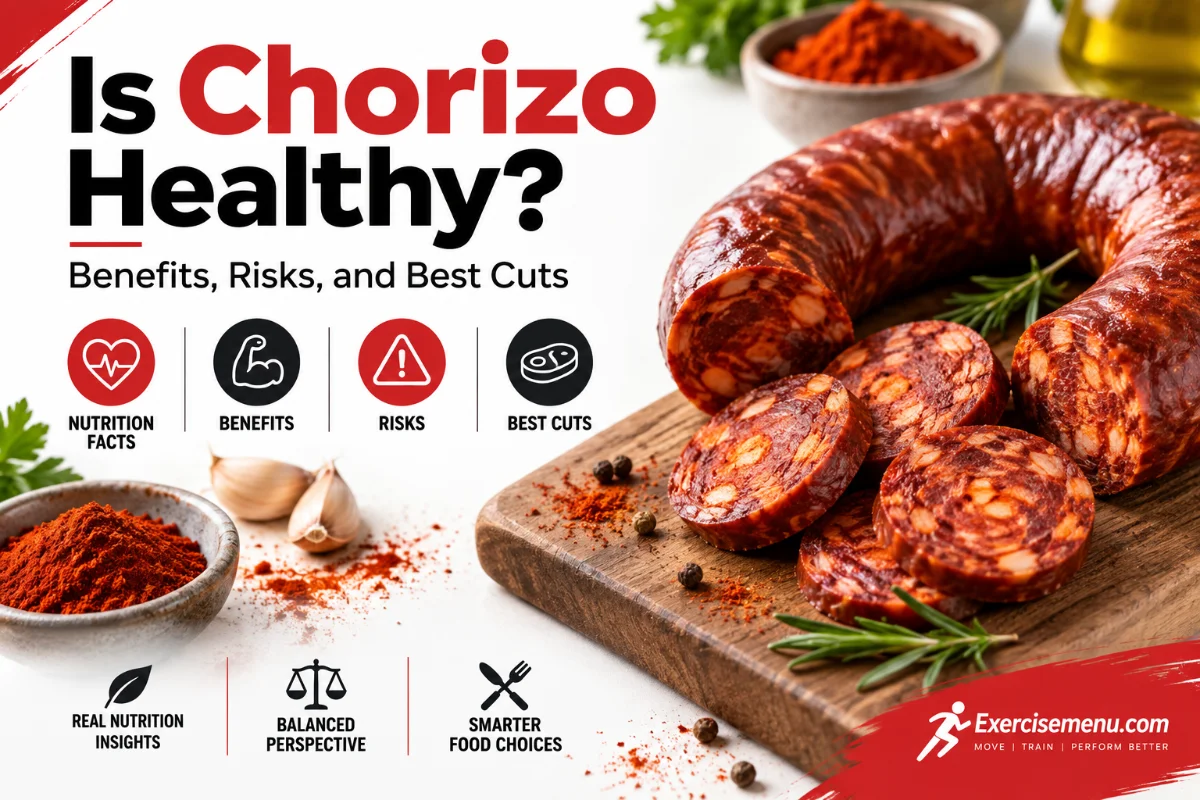
Quick Answer: Chorizo provides complete protein, heme iron, vitamin B12, and zinc in a flavorful package. But it carries more trade-offs than fresh meat: it’s classified as a Group 1 carcinogen by the WHO (processed meat), it’s high in sodium (34% of the daily value per link), and saturated fat takes up a large share of its calories. Eaten occasionally in small portions, it fits a balanced diet. It’s not a food to build daily meals around.
Chorizo is one of those foods that lands differently depending on who you ask. A Spanish tapas enthusiast considers it a kitchen staple. A cardiologist looks at the sodium label and flinches. A home cook wondering whether to add it to morning eggs just wants a straight answer.
The answer depends on the type of chorizo (whether it’s a cured sausage sliced from a Spanish log or fresh ground pork browned in a pan), how much you eat, and how often. Here’s what the nutrition data and current research say about both.
- What Is Chorizo? Two Very Different Products
- Chorizo Nutrition: What's in a Serving?
- What Are Chorizo's Nutritional Benefits?
- Is Chorizo a Processed Meat? What the Classification Means
- What Are the Other Health Risks?
- How Much Chorizo Is Safe to Eat?
- How to Make Chorizo Healthier?
- Frequently Asked Questions
What Is Chorizo? Two Very Different Products
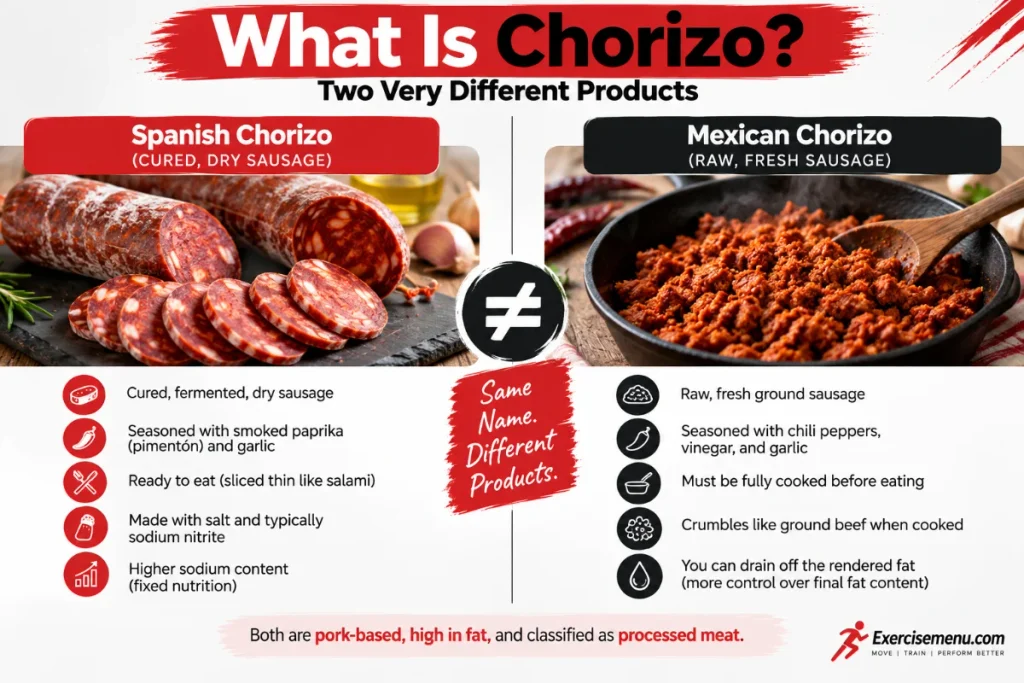
Before looking at any numbers, this distinction matters, because “chorizo” refers to two separate foods.
Spanish chorizo is a cured, fermented, dry sausage made from pork seasoned with smoked paprika (pimentón) and garlic. It’s ready to eat straight from the package, sliced thin like salami. The curing process uses salt and typically sodium nitrite, which concentrates both flavour and sodium per gram.
Mexican chorizo is a raw, fresh ground pork sausage seasoned with chili peppers, vinegar, and garlic. It must be fully cooked before eating. When browned in a pan, it crumbles like ground beef. You can drain off the rendered fat, which meaningfully changes the final fat content on your plate.
Both types are pork-based, high in fat, and classified as processed meat. But the practical difference matters: you have more control over the fat content of Mexican chorizo through cooking, while Spanish chorizo’s nutrition is fixed.
Chorizo Nutrition: What’s in a Serving?
Per USDA FoodData Central, here’s how one medium link (80 g) of pan-fried pork chorizo breaks down:
| Nutrient | Per link (~80 g) | % Daily Value |
|---|---|---|
| Calories | 273 kcal | — |
| Protein | 16 g | 32% |
| Total Fat | 23 g | 35% |
| Saturated Fat | 7.6 g | 38% |
| Carbohydrates | 2 g | — |
| Sodium | 790 mg | 34% |
| Vitamin B12 | 1 µg | 41% |
| Thiamine (B1) | 0.3 mg | 25% |
| Niacin (B3) | 2.4 mg | 15% |
| Vitamin B6 | 0.2 mg | 16% |
| Riboflavin (B2) | 0.15 mg | 11% |
| Iron (heme) | 1.9 mg | 10% |
| Zinc | 1.8 mg | 16% |
| Choline | 78 mg | 14% |
| Selenium | ~12 µg | ~15% |
| Potassium | ~240 mg | ~5% |
Sodium and saturated fat are the two numbers worth staring at. A single link supplies over a third of the recommended daily limit for both. Chorizo gives you a strong B-vitamin spread and solid iron, but you’re paying for it in sodium and fat, which is why portion control matters more here than with most proteins.
For context, here’s how chorizo compares to other common proteins per 80 g cooked:
| Protein Source (80 g) | Calories | Protein | Sat Fat | Sodium |
|---|---|---|---|---|
| Pork chorizo | 273 | 16 g | 7.6 g | 790 mg |
| Chicken breast | 132 | 25 g | 0.9 g | 58 mg |
| Lean ground beef (93/7) | 152 | 20 g | 3.2 g | 56 mg |
| Turkey chorizo | ~160 | 17 g | 2.5 g | 520 mg |
| Bacon (4 strips) | 172 | 12 g | 5.3 g | 680 mg |
Chorizo delivers the lowest protein-per-calorie ratio and the highest sodium of any option on this table. That comparison isn’t meant to scare you off chorizo. It’s meant to show that when you choose chorizo, you’re choosing it for flavour, not efficiency.
What Are Chorizo’s Nutritional Benefits?
Chorizo isn’t lean chicken, but writing it off nutritionally would miss some useful numbers.
Complete Protein
Chorizo provides all nine essential amino acids, making it a complete protein source. At 16 g per link, it contributes meaningful protein, particularly when crumbled into dishes where it serves as a flavour base rather than the sole protein source.
Vitamin B12 and Heme Iron
A single link covers 41% of the daily value for B12, a vitamin essential for nerve function, red blood cell formation, and DNA synthesis. B12 deficiency is common among older adults and people eating mostly plant-based diets, making chorizo a concentrated source when consumed.
The iron in chorizo is heme iron, the form absorbed 2 to 3 times more efficiently than the non-heme iron in plant foods, per a 2025 review in ACS Omega (Dietary Heme Iron Review, 2025). For anyone managing low ferritin levels, this matters.
Choline
Most Americans fall short on choline, a nutrient that supports brain function, liver health, and cell membrane integrity. One link provides 14% of the daily value. It’s not the reason you reach for chorizo, but it adds up if you eat it regularly.
Paprika’s Bioactive Compounds
Chorizo owes its colour and flavour to paprika, which contains capsaicin and carotenoids, compounds with documented antioxidant and anti-inflammatory activity. A 2019 study in Antioxidants confirmed that paprika extracts in Spanish chorizo contribute measurable antioxidant capacity to the finished product (Martínez et al., 2019). No other common processed meat carries this compound profile.
This doesn’t make chorizo an antioxidant food. But it’s a legitimate nutritional footnote that distinguishes chorizo from, say, a hot dog.
Is Chorizo a Processed Meat? What the Classification Means
Yes. Both Spanish and Mexican chorizo are classified as processed meat under the WHO definition: any meat that has been salted, cured, fermented, smoked, or otherwise preserved beyond simple refrigeration.
In 2015, the International Agency for Research on Cancer (IARC) classified processed meat as Group 1 carcinogenic to humans, based on sufficient evidence linking regular consumption to colorectal cancer. Each 50 g portion consumed daily (roughly one chorizo link) raises colorectal cancer risk by 18% (IARC Monographs, Vol. 114, 2015).
That 18% number gets misunderstood constantly. Here’s what it actually means:
The baseline lifetime risk of colorectal cancer for someone who eats no processed meat is roughly 4.5 to 5%. An 18% relative increase on that base moves the risk to roughly 5.3 to 5.9%. In absolute terms, you’re looking at an increase of about 1 additional case per 100 people over a lifetime of daily consumption. That context comes from an analysis by the Harvard T.H. Chan School of Public Health.
The Group 1 classification also doesn’t mean chorizo is as dangerous as smoking. Group 1 reflects the strength of evidence that something causes cancer, not the magnitude of the risk. Smoking raises lung cancer risk by roughly 2,000%. Processed meat’s effect is far smaller, but it’s real.
Chorizo also falls under IARC Group 2A (probably carcinogenic) as red meat. That’s a double classification most articles skip: chorizo carries both the processed-meat risk and the red-meat risk.
What Are the Other Health Risks?
Beyond the cancer classification, two daily-diet concerns deserve attention.
Sodium
One link delivers 790 mg, which is 34% of the 2,300 mg daily limit recommended by the Dietary Guidelines for Americans. The American Heart Association recommends a stricter 1,500 mg limit for people managing hypertension.
Spanish chorizo tends to run slightly higher in sodium per gram than Mexican chorizo because the curing process concentrates salt. If you eat chorizo plus bread, cheese, and other salty foods in the same meal, you can easily exceed the daily cap.
Saturated Fat
At 7.6 g per link (38% of the daily value), chorizo is one of the more saturated-fat-dense proteins available. The Dietary Guidelines for Americans recommend keeping saturated fat below 10% of total calories (about 22 g on a 2,000-calorie diet). One link of chorizo takes you a third of the way there before anything else touches your plate.
For someone managing elevated LDL cholesterol, the practical response isn’t necessarily avoiding chorizo entirely. It’s controlling portion size and not pairing it with other high-saturated-fat foods in the same meal.
How Much Chorizo Is Safe to Eat?
No health organization publishes a chorizo-specific guideline. But the existing frameworks for processed and red meat give you workable boundaries.
The WCRF recommends eating “little, if any” processed meat, without a specific gram target. The 2,300 mg sodium cap and the 22 g saturated fat limit from the Dietary Guidelines provide the practical ceiling.
| Goal | Suggested Portion | Frequency | Notes |
|---|---|---|---|
| General health | ½ link (~40 g) as a flavouring | 1–2× per week | Pair with vegetables and whole grains |
| Fat loss | ¼–½ link crumbled into a dish | 1× per week max | Drain fat; use as a spice, not a main protein |
| Muscle gain | ½–1 link alongside a leaner protein | 1–2× per week | Add chicken or beans to boost protein without doubling sodium |
| Managing blood pressure or high LDL | Limit or avoid | As tolerated | Discuss with your physician; turkey chorizo is a lower-risk option |
The key shift: treat chorizo as a flavouring ingredient, not a main protein source. A quarter-link crumbled into scrambled eggs, stirred through a taco filling with beans, or sliced thin over a grain bowl brings the flavour hit without the full sodium and fat load of eating whole links.
One food safety note: don’t leave cooked chorizo at room temperature for more than two hours (one hour if the temperature is above 32°C / 90°F). Refrigerate leftovers promptly.
How to Make Chorizo Healthier?
Cook Mexican Chorizo and Drain the Fat
Mexican chorizo releases fat as it browns. Cooking it in a non-stick pan without additional oil and draining the rendered fat can cut the total fat content of the final dish by 30 to 40%.
Slice Spanish Chorizo Thin
You can’t drain fat from a cured sausage, but you can control portion size. Slicing it paper-thin and using it as one element in a larger dish (a paella, a grain bowl, a lentil stew) distributes the flavour across the meal without overloading any single serving.
Check the Label Before Buying
Not all chorizo is the same product. Sodium per serving ranges from 500 mg to over 900 mg across brands. Look for options with shorter ingredient lists and sodium under 600 mg per serving. Avoid brands that list “mechanically separated pork” as the first ingredient. That’s a different product from the spicy pork sausage you’re after.
Try Turkey or Chicken Chorizo
Turkey chorizo delivers comparable protein (~17 g per 80 g) with roughly a third of the saturated fat and lower total calories. The sodium is still elevated (~520 mg per link), so it’s not a free pass. But for people specifically managing cholesterol, it’s a meaningful swap.
Pair with Fibre-Rich Foods
Adding vegetables, beans, or whole grains to any chorizo dish does two things: it dilutes the sodium-to-food ratio, and it introduces fibre, which may help offset some cardiovascular risk associated with processed meat consumption. A 2014 study in Nutrition Journal found that protein paired with fibre-rich foods significantly improved satiety compared to protein alone (Clark & Slavin, 2014).
Frequently Asked Questions
Is Mexican chorizo healthier than Spanish chorizo?
Nutritionally, they start at similar fat and sodium levels. The practical difference is that Mexican chorizo is cooked fresh, so you can drain the rendered fat, reducing total fat by 30 to 40%. Spanish chorizo is cured, so what’s in the slice is what you eat. If you’re managing fat intake, Mexican chorizo cooked and drained is the better option.
Is chorizo worse than bacon?
They’re comparable in risk: both are processed meats high in sodium and saturated fat. Chorizo delivers more protein per serving (16 g vs 12 g for 4 strips of bacon) and more B12 and iron. Neither is a health food, but chorizo gives you slightly more nutritional return for the calorie cost.
Can I eat chorizo while losing weight?
You can, but it’s not efficient. At 273 calories and 16 g of protein per link, chorizo delivers fewer grams of protein per calorie than chicken, fish, or lean beef. Use it sparingly as a flavour addition rather than a primary protein source when cutting calories.
Is chorizo safe during pregnancy?
Spanish cured chorizo may carry a small risk of listeria because it’s not cooked. To be safe, heat it to 74°C (165°F) before eating. Mexican chorizo must be fully cooked regardless, so when properly prepared it carries no additional risk beyond standard meat-handling hygiene.
Does chorizo have nitrates?
Most commercial chorizo contains sodium nitrite (not nitrate) as a curing and preserving agent. In the body, nitrites can combine with amino acids to form N-nitroso compounds, which are among the mechanisms linked to the increased colorectal cancer risk from processed meat. Some artisan producers use celery powder as a “natural” nitrite source, but celery-derived nitrites function identically in the body.
Is there a healthy type of chorizo?
Turkey chorizo has the best trade-off: comparable protein and flavour with roughly a third of the saturated fat. Soy-based chorizo eliminates the processed meat classification entirely but has a different texture and taste. No chorizo variant qualifies as a “health food,” but some versions reduce the specific risks that matter most to you.
