

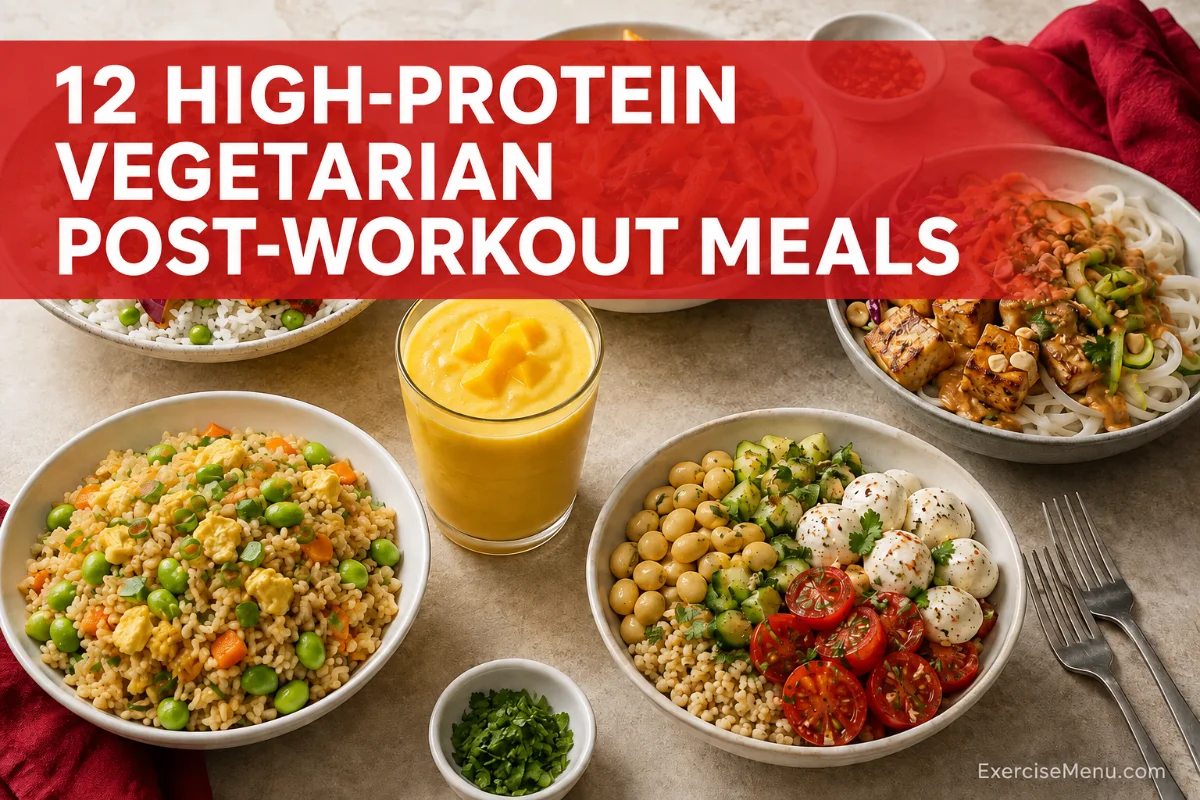
Quick Answer: A useful vegetarian post-workout meal combines a measured protein anchor—such as eggs, dairy, soy, seitan or a planned legume mix—with carbohydrate that fits the session. A universal 30-minute deadline is unnecessary. Most people can eat within the next few hours. These 12 options provide 36–44 grams of protein with complete macro estimates.
Many vegetarian meals look balanced but contain little protein. Without a measured serving, even a nutritious plate can miss the protein target the reader intended to reach.
This guide removes that guesswork. “Vegetarian” means lacto-ovo vegetarian on this page, while every vegan meal or variation carries a clear label.
- Which Vegetarian Post-Workout Meal Fits Your Needs?
- What Should a Vegetarian Eat After a Workout?
- How Were These Portions and Macros Calculated?
- What Are 12 High-Protein Vegetarian Post-Workout Meals?
- Which Vegetarian Protein Source Is Best After Training?
- What Makes a Vegetarian Post-Workout Meal Fall Short?
- Frequently Asked Questions
- What Should You Do Next?
Key Takeaways
- Protein powder offers convenience, but 11 of the 12 meals reach a substantial protein serving without it.
- The listed portions make full meals, not universal prescriptions. Adjust the serving to your appetite and protein needs, then add or remove carbohydrate according to the session.
- Macros use cooked or drained weights unless an ingredient clearly says dry. Actual totals can change with the brand you buy.
Which Vegetarian Post-Workout Meal Fits Your Needs?
For speed, choose the smoothie or Greek-yogurt bowl. For a powder-free Indian-style option, choose paneer or soy-chunk pulao. The lentil pasta is soy-free; the seitan, tempeh, tofu, TVP and smoothie options are vegan. Use this table to compare diet, time and appetite before reading the full recipe. Every option makes one complete meal.
| Meal | Diet and allergen label | kcal | Protein | Carbs | Fat | Fiber | Prep* | Best for |
| Paneer tikka rice and pea bowl | Lacto-vegetarian; contains dairy; egg-free; soy-free ingredients | 531 | 36 g | 65 g | 14 g | 6 g | 25 min | Indian-style, powder-free meal |
| Soy-chunk pulao with cucumber raita | Lacto-vegetarian; egg-free; contains soy and dairy | 518 | 42 g | 77 g | 6 g | 14 g | 25 min | Budget and higher-carb recovery |
| Seitan fajita rice bowl | Vegan; dairy- and egg-free; contains gluten; check for soy | 551 | 41 g | 78 g | 11 g | 14 g | 20 min | High-protein vegan meal |
| Red-lentil pasta with cottage-cheese sauce | Lacto-vegetarian; contains dairy; egg- and soy-free; gluten-free with certified products | 494 | 40 g | 69 g | 11 g | 13 g | 20 min | Soy-free pasta meal |
| Tempeh, edamame and soba bowl | Vegan; dairy- and egg-free; contains soy; soba may contain wheat | 527 | 41 g | 54 g | 21 g | 14 g | 20 min | Plant-only meal prep |
| Tofu peanut rice-noodle bowl | Vegan; dairy- and egg-free; contains soy and peanut | 539 | 36 g | 58 g | 22 g | 10 g | 20 min | Dairy-free complete meal |
| Egg and edamame vegetable fried rice | Ovo-vegetarian; dairy-free; contains egg and soy | 604 | 43 g | 62 g | 21 g | 10 g | 15 min | Fast use of leftover rice |
| Chickpea-flour wraps with tofu | Lacto-vegetarian; egg-free; contains soy and dairy | 521 | 44 g | 50 g | 19 g | 12 g | 25 min | Portable-feeling full meal |
| TVP three-bean chili with tortillas | Vegan; dairy- and egg-free; contains soy | 556 | 42 g | 93 g | 6 g | 26 g | 30 min | Freezer-friendly meal prep |
| Savory Greek-yogurt chickpea couscous bowl | Lacto-vegetarian; egg- and soy-free; contains dairy and gluten | 527 | 37 g | 77 g | 9 g | 11 g | 10 min | Fast assembly |
| Pea-protein mango smoothie | Vegan; dairy-, egg- and soy-free; contains pea protein | 343 | 37 g | 40 g | 7 g | 5 g | 5 min | Low appetite or limited time |
| Lupini, mozzarella and bulgur bowl | Lacto-vegetarian; egg- and soy-free; contains dairy, gluten and lupin | 530 | 41 g | 58 g | 19 g | 14 g | 20 min | Mediterranean-style meal |
Prep times assume that ingredients described as cooked—such as rice, bulgur and couscous—are already available. Add their cooking time if you start from dry. “Gluten-free” applies only when every packaged ingredient, sauce, spice blend and preparation surface meets the reader’s needs.
These totals count protein from every ingredient, not only the main protein source. They are high-protein options, not a 36–44 g minimum. If your usual meal target is closer to 20–30 g, use a smaller portion. Because that also reduces carbohydrate, add rice, bread or fruit separately when a long or demanding session creates a greater refuelling need.
The chili contains about 26 g fiber. That can suit meal prep, but it may feel heavy straight after intense training if you have a sensitive gut. Use it later in the recovery period, or choose the paneer or rice-noodle bowl. The mango smoothie is the lightest, lowest-fiber option when a large solid meal feels difficult.
What Should a Vegetarian Eat After a Workout?
Choose one meaningful protein source, one carbohydrate source and enough fluid to replace normal losses. The right serving depends on body size, the pre-workout meal, session length, appetite and how soon you will train again.
For healthy exercising adults, a practical protein serving often falls within 20–40 grams. The International Society of Sports Nutrition gives 20–40 grams, or about 0.25 g/kg, as a general per-meal reference while stressing that age, body size, total daily protein and distribution also matter. It is a starting point, not a prescription for every reader. (ISSN position stand)
Eggs, Greek yogurt, cottage cheese, paneer, tofu, tempeh and textured vegetable protein make that amount easier to reach. Beans, lentils, grains, nuts and seeds contribute too, but usual portions may need a denser protein source beside them.
Carbohydrate helps replenish muscle glycogen, but the amount and urgency change with the work completed. A long run, high-volume leg session or second workout later that day usually requires more deliberate refuelling than a short, easy session. The guide to high-glycemic carbs after a workout explains when rapid carbohydrate makes sense.
A 2025 meta-analysis that directly compared protein before versus after training found no important difference in lean-body-mass change. It did not prove that timing never matters, but it does not support a universal 30-minute deadline. Eat sooner after fasted training or when another session follows quickly; otherwise, a meal within the next few hours is practical. (2025 protein-timing meta-analysis)
For the broader recovery principles, including hydration and training-specific portions, read what to eat after a workout. To turn a general range into a daily target, estimate your protein needs with the ExerciseMenu calculator.
How Were These Portions and Macros Calculated?
Each nutrition estimate represents one serving. Generic foods use values from USDA FoodData Central; label-dependent foods use current manufacturer information. Grains, beans, noodles and vegetables use cooked edible weights unless marked dry. Canned foods use drained weights. Totals include oil, sauces and toppings.
The calculations use example labels for low-fat paneer at 174 kcal and 22 g protein per 100 g, TVP at 80 kcal and 12 g protein per 23 g dry, seitan at 90 kcal and 18 g protein per 57 g, and unsweetened pea milk at 70 kcal and 8 g protein per 240 ml. Lentil pasta and unflavored pea protein also use package values.
These links document the assumptions; they are not product endorsements: low-fat paneer, TVP, seitan, red-lentil pasta, pea protein and unsweetened pea milk.
Values are rounded estimates, not laboratory measurements. Paneer, tofu, yogurt, seitan, plant milk and protein-powder brands can differ substantially. Use the label on the product in your kitchen when precision matters.
What Are 12 High-Protein Vegetarian Post-Workout Meals?
These meals use dairy, eggs, soy foods, seitan, legumes and one protein-powder option. The variety lets you choose around appetite, budget and dietary restrictions instead of receiving twelve minor versions of the same tofu bowl.
1. Paneer Tikka Rice and Pea Bowl
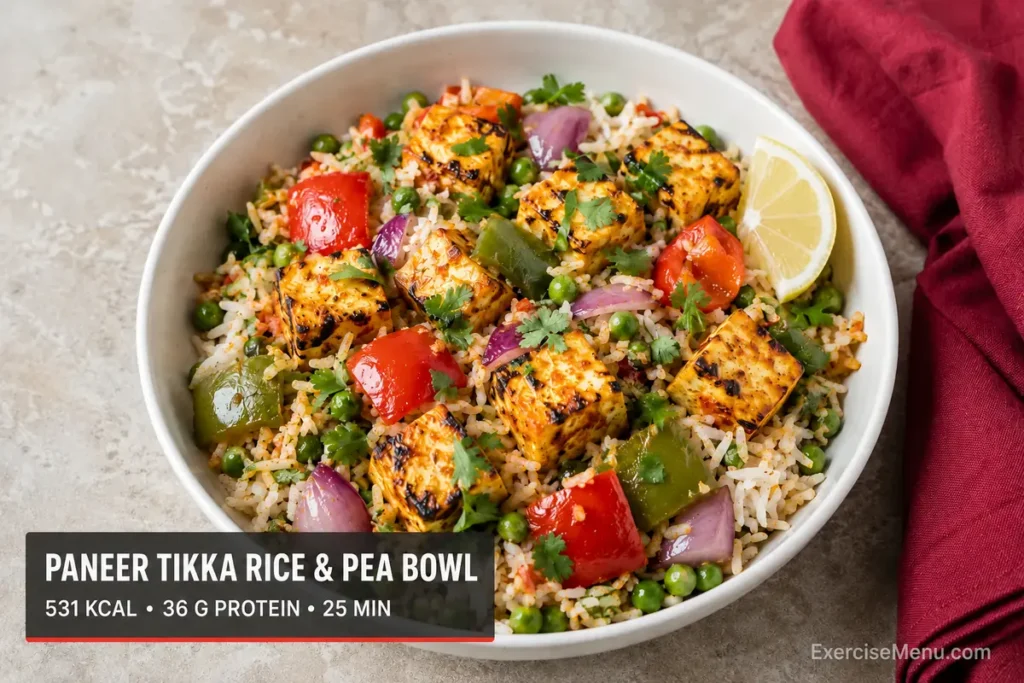
Best for: An Indian-style, powder-free meal
Diet: Lacto-vegetarian; contains dairy; egg-free; soy-free ingredients
Time: 25 minutes
Ingredients for one serving
- 100 g low-fat paneer, cubed
- 150 g cooked basmati rice
- 80 g cooked peas
- 100 g bell pepper, sliced
- 50 g plain nonfat Greek yogurt
- 5 g olive or rapeseed oil
- Tikka spices, lemon, garlic and salt to taste
Nutrition: 531 kcal | 36 g protein | 65 g carbohydrate | 14 g fat | 6 g fiber
The low-fat paneer supplies the meal’s main protein without pushing the fat as high as many standard paneer products. Rice and peas create a practical carbohydrate base for a full meal after resistance or mixed training.
Useful swap: Replace 150 g cooked rice with 150 g cooked quinoa. New estimate: 516 kcal, 39 g protein, 54 g carbs, 17 g fat and 10 g fiber.
Label note: Standard full-fat paneer can add substantial calories and fat. Do not use the displayed macros unless your paneer label closely matches 174 kcal and 22 g protein per 100 g.
Preparation: Mix the yogurt, spices, lemon and garlic. Coat the paneer and pepper. Heat the oil in a pan, cook the mixture until the edges brown, then serve it over warm rice and peas.
2. Soy-Chunk Pulao With Cucumber Raita
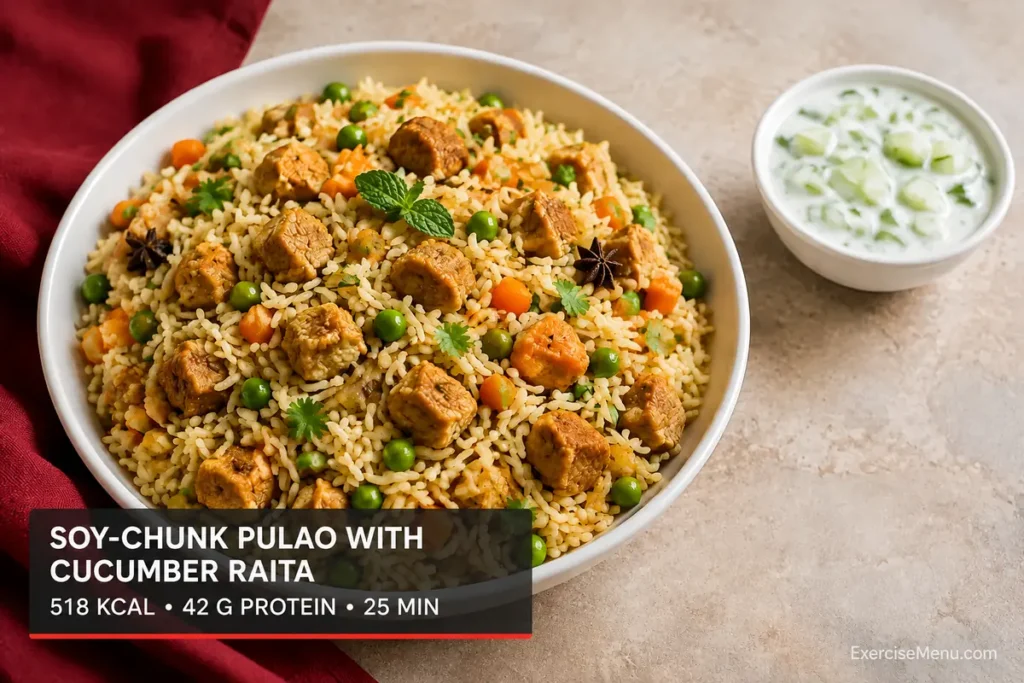
Best for: A budget-friendly, higher-carbohydrate meal without powder
Diet: Lacto-vegetarian; egg-free; contains soy and dairy
Time: 25 minutes
Ingredients for one serving
- 46 g dry textured vegetable protein or soy chunks
- 120 g cooked basmati rice
- 50 g cooked peas
- 60 g carrot, diced
- 50 g onion, sliced
- 100 g plain nonfat Greek yogurt
- 100 g cucumber, grated
- 5 g oil
- Cumin, coriander, turmeric, chili and salt to taste
Nutrition: 518 kcal | 42 g protein | 77 g carbohydrate | 6 g fat | 14 g fiber
The dry TVP measurement prevents a common tracking error: rehydrated soy chunks hold water, so their cooked weight changes without adding nutrients. This meal also keeps cost low while delivering more protein than a rice-and-pea pulao alone.
Vegan swap: Replace 100 g Greek yogurt with 150 g silken tofu, then blend it with the cucumber, lemon and mint. New estimate: 541 kcal, 39 g protein, 77 g carbs, 10 g fat and 14 g fiber.
Digestion note: TVP and peas make this a fiber-rich meal. If legumes often cause discomfort, test it after an easier session before using it on a competition or long-training day.
Preparation: Rehydrate the TVP according to its label, drain it and press out excess water. Sauté the onion, carrot and spices in the oil. Add the TVP, peas and rice, then heat through. Mix the yogurt and cucumber separately and spoon the raita over the pulao.
3. Seitan Fajita Rice Bowl With Black Beans
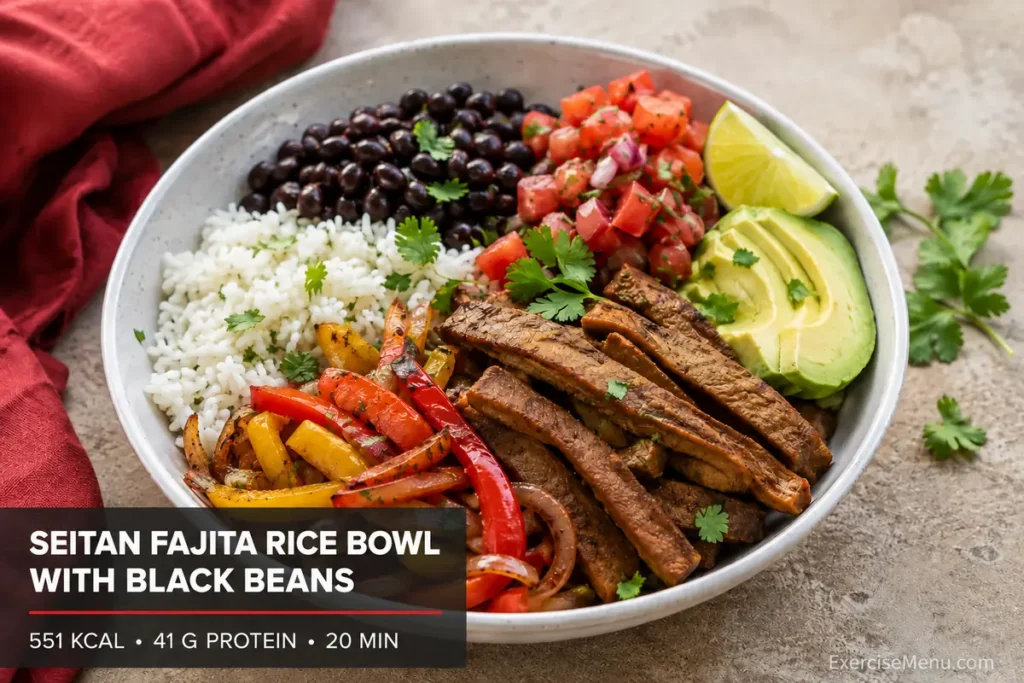
Best for: A high-protein vegan bowl
Diet: Vegan; dairy- and egg-free; contains gluten; check the seitan label for soy
Time: 20 minutes
Ingredients for one serving
- 86 g prepared seitan
- 120 g cooked rice
- 80 g cooked or canned black beans, drained
- 100 g bell pepper, sliced
- 50 g onion, sliced
- 60 g salsa
- 40 g avocado
- 3 g oil
- Smoked paprika, cumin and lime to taste
Nutrition: 551 kcal | 41 g protein | 78 g carbohydrate | 11 g fat | 14 g fiber
Seitan provides high protein density, while black beans add lysine, carbohydrate and fiber. That pairing makes more practical sense than treating wheat gluten as the meal’s only protein source.
Useful swap: Replace 120 g cooked rice with 120 g cooked quinoa. New estimate: 539 kcal, 43 g protein, 70 g carbs, 13 g fat and 17 g fiber.
Allergen note: Seitan contains wheat gluten. Many prepared products also contain soy sauce, so this meal is not automatically soy-free. Read the complete ingredient list rather than relying on the word “seitan.”
Preparation: Sauté the seitan, pepper, onion and spices in the oil. Warm the rice and beans. Build the bowl, then finish it with salsa, avocado and lime.
4. Red-Lentil Pasta With Cottage-Cheese Tomato Sauce
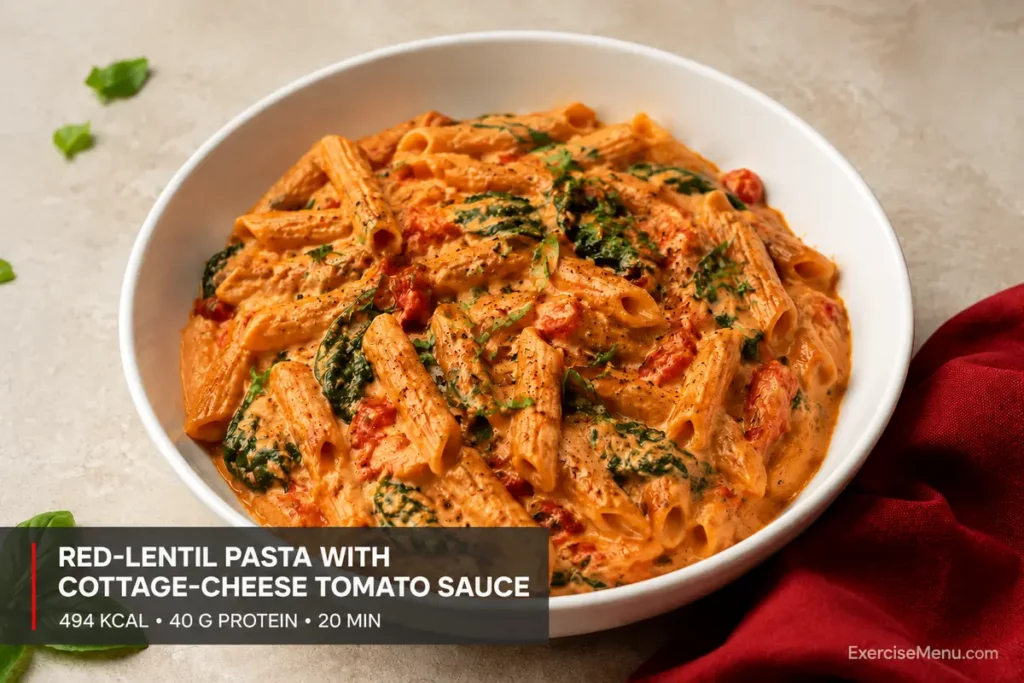
Best for: A soy-free vegetarian recovery meal
Diet: Lacto-vegetarian; contains dairy; egg- and soy-free; gluten-free when every packaged ingredient is certified
Time: 20 minutes
Ingredients for one serving
- 85 g red-lentil pasta, weighed dry
- 150 g 2% cottage cheese
- 150 g no-salt-added tomato sauce
- 50 g spinach
- 5 g olive oil
- Garlic, black pepper, basil and chili flakes to taste
Nutrition: 494 kcal | 40 g protein | 69 g carbohydrate | 11 g fat | 13 g fiber
Red-lentil pasta contributes more protein than standard pasta, but the cottage cheese turns it into a reliably high-protein mixed meal. For the evidence and practical pros and cons of this ingredient, see whether cottage cheese is good after a workout.
Useful swap: Replace 150 g cottage cheese with 150 g plain nonfat Greek yogurt and keep the pan below a simmer to prevent splitting. New estimate: 461 kcal, 40 g protein, 67 g carbs, 8 g fat and 13 g fiber.
Label note: Lentil-pasta brands differ, and some combine lentil flour with rice or quinoa. Use the dry weight and package nutrition facts for your product.
Preparation: Boil the pasta according to its label. Blend the cottage cheese with the tomato sauce and seasonings. Warm the sauce gently with the spinach and oil, then fold in the drained pasta.
5. Tempeh, Edamame and Soba Recovery Bowl
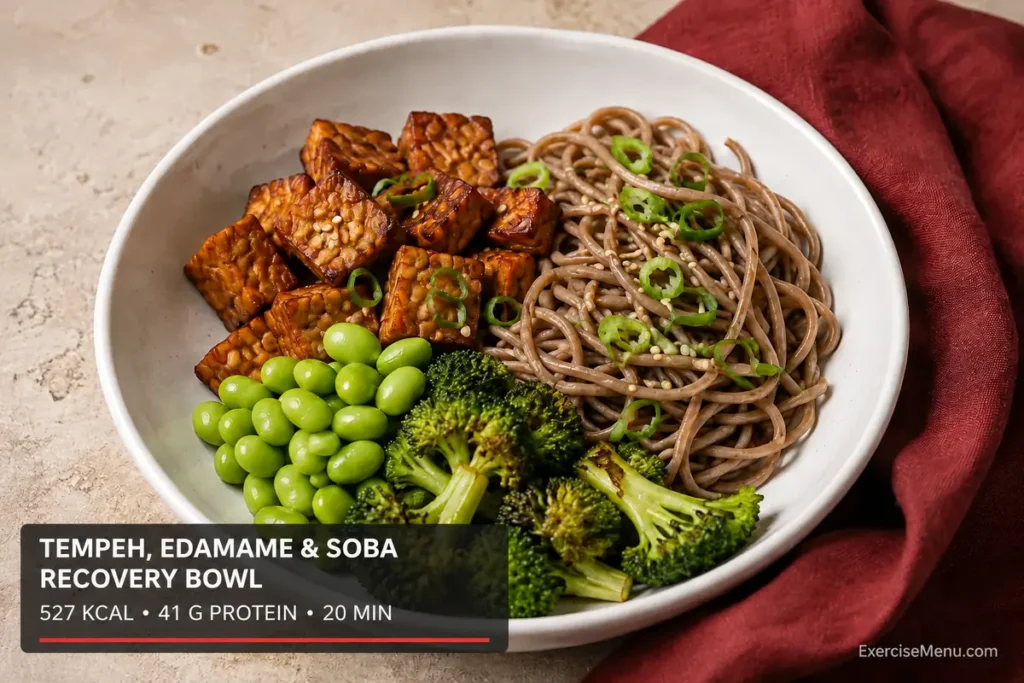
Best for: A substantial plant-only meal
Diet: Vegan; dairy- and egg-free; contains soy; regular soba often contains wheat
Time: 20 minutes
Ingredients for one serving
- 100 g cooked tempeh
- 80 g shelled edamame, cooked
- 150 g cooked soba noodles
- 100 g broccoli
- 15 g reduced-sodium soy sauce or tamari
- 5 g sesame or olive oil
- Ginger, garlic and rice vinegar to taste
Nutrition: 527 kcal | 41 g protein | 54 g carbohydrate | 21 g fat | 14 g fiber
Tempeh and edamame create a strong soy-protein base without powder. Soba and broccoli add carbohydrate and volume, while the measured dressing prevents an unnoticed pour of oil from changing the meal substantially.
Useful swap: Replace 150 g cooked soba with 150 g cooked rice. New estimate: 573 kcal, 37 g protein, 64 g carbs, 21 g fat and 12 g fiber.
Allergen note: The word “soba” does not guarantee gluten-free noodles; many contain wheat. Use 100% buckwheat noodles and certified tamari only when their labels meet your requirements.
Preparation: Steam the broccoli and edamame. Brown the tempeh in a nonstick pan. Whisk the soy sauce, oil, ginger, garlic and vinegar, then toss everything with the cooked noodles.
6. Tofu Peanut Rice-Noodle Bowl
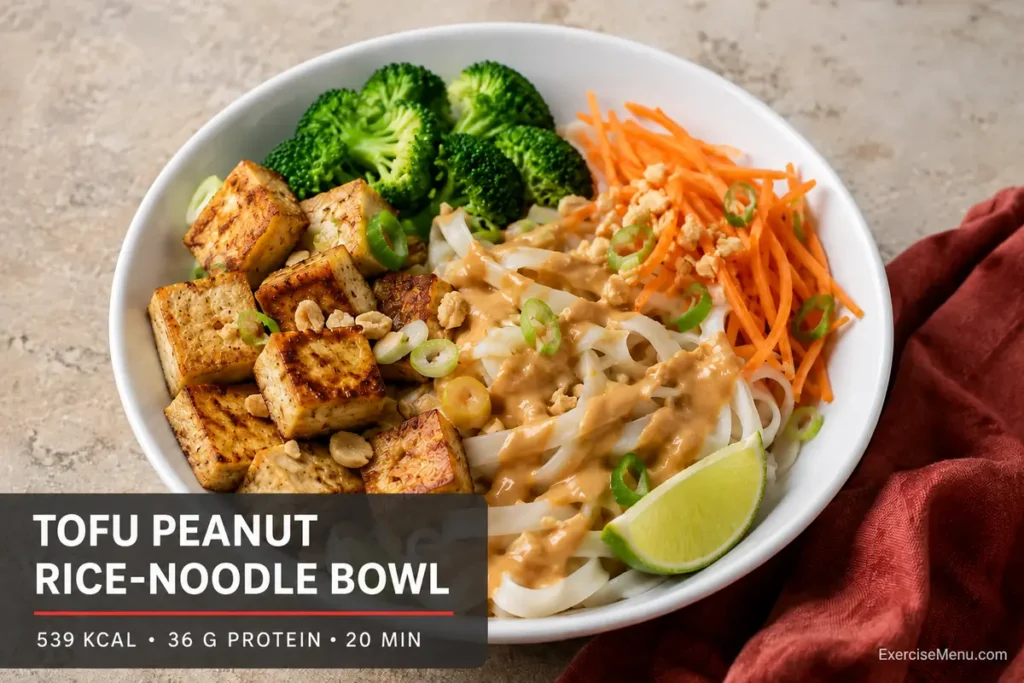
Best for: A dairy-free vegan meal with easy-to-adjust seasoning
Diet: Vegan; dairy- and egg-free; contains soy and peanut
Time: 20 minutes
Ingredients for one serving
- 150 g firm calcium-set tofu
- 150 g cooked rice noodles
- 100 g broccoli
- 60 g carrot, sliced
- 15 g peanut butter
- 15 g reduced-sodium soy sauce or tamari
- 20 g lime juice
- Garlic, chili and enough warm water to thin the sauce
Nutrition: 539 kcal | 36 g protein | 58 g carbohydrate | 22 g fat | 10 g fiber
Firm tofu carries most of the protein, so the peanut butter can do its proper job as a measured sauce ingredient rather than an overstated protein source. Rice noodles also keep this bowl distinct from a heavier tofu-and-quinoa combination.
Peanut-free swap: Replace 15 g peanut butter with 15 g tahini. New estimate: 539 kcal, 36 g protein, 58 g carbs, 22 g fat and 11 g fiber.
Allergen note: Tahini contains sesame. Use certified tamari, rice noodles and seasoning only if you need a gluten-free meal.
Preparation: Press and cube the tofu, then brown it in a nonstick pan. Steam or stir-fry the vegetables. Whisk the peanut butter, soy sauce, lime, garlic, chili and water, then toss with the tofu and noodles.
7. Egg and Edamame Vegetable Fried Rice
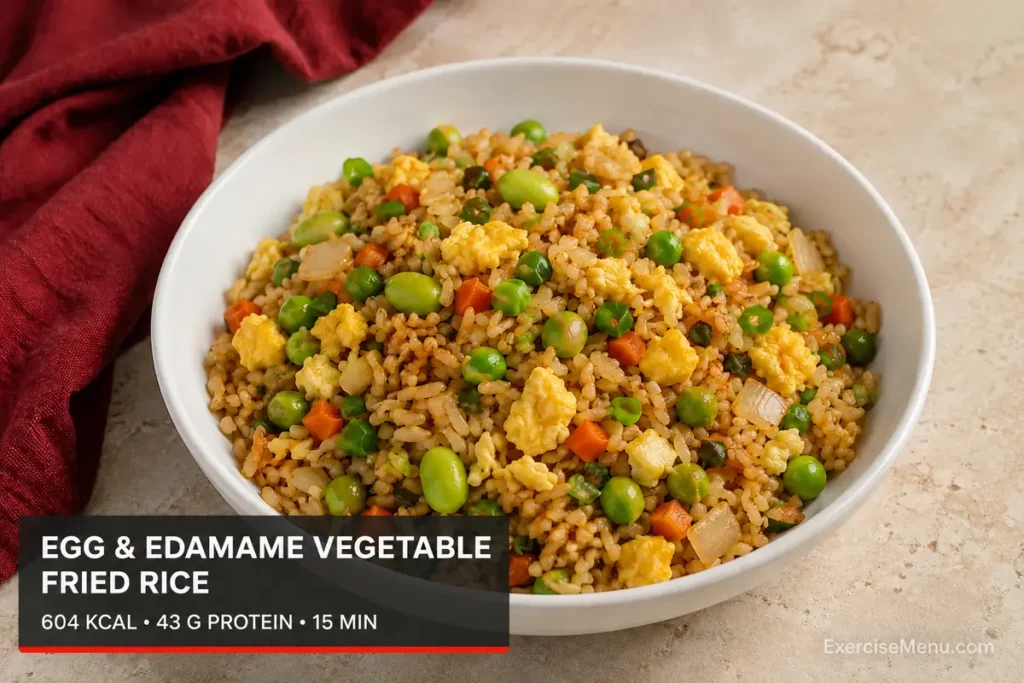
Best for: A quick meal built around leftover rice
Diet: Ovo-vegetarian; dairy-free; contains egg and soy
Time: 15 minutes
Ingredients for one serving
- 100 g whole egg, about 2 large eggs
- 100 g egg whites, about 3 large egg whites
- 100 g shelled edamame
- 120 g cooked, chilled rice
- 50 g peas
- 50 g carrot, diced
- 50 g onion, diced
- 5 g oil
- 15 g reduced-sodium soy sauce or tamari
Nutrition: 604 kcal | 43 g protein | 62 g carbohydrate | 21 g fat | 10 g fiber
Whole eggs add flavor and nutrients, while the measured egg whites raise protein without requiring a much larger meal. Edamame makes the dish more complete than ordinary vegetable fried rice.
Lower-fat variation: Use 50 g whole egg and 150 g egg whites instead of 100 g of each. New estimate: 558 kcal, 42 g protein, 62 g carbs, 16 g fat and 10 g fiber.
Food-safety note: Cool cooked rice promptly, refrigerate it and reheat it thoroughly. Do not leave cooked rice at room temperature for extended periods.
Preparation: Heat the oil and cook the onion and carrot. Add the rice, peas and edamame. Push the mixture to one side, scramble the eggs in the open space, then combine everything with the soy sauce.
8. Chickpea-Flour Wraps With Spiced Tofu and Mint Yogurt
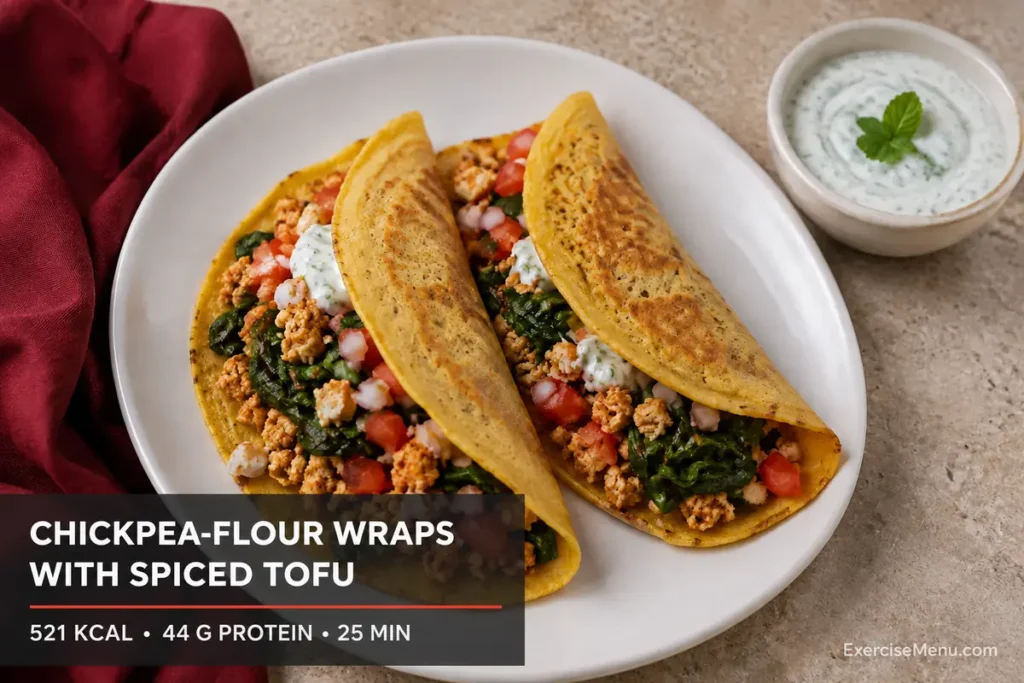
Best for: A hand-held meal that still provides full-meal nutrition
Diet: Lacto-vegetarian; egg-free; contains soy and dairy
Time: 25 minutes
Ingredients for one serving
- 60 g chickpea flour
- 100 g firm tofu, crumbled
- 100 g plain nonfat Greek yogurt
- 50 g spinach
- 100 g tomato, chopped
- 30 g onion, sliced
- 5 g oil
- Water for the batter, plus mint, cumin, paprika and lemon to taste
Nutrition: 521 kcal | 44 g protein | 50 g carbohydrate | 19 g fat | 12 g fiber
Chickpea flour gives the wraps more protein and fiber than many standard flatbreads, while tofu provides the denser protein anchor. The yogurt sauce adds moisture and keeps the filling practical to eat.
Vegan swap: Replace 100 g Greek yogurt with 150 g silken tofu blended with mint and lemon. New estimate: 544 kcal, 41 g protein, 50 g carbs, 22 g fat and 12 g fiber.
Allergen note: Chickpea and soy can both trigger allergies. Call the meal gluten-free only when the flour, spices, sauces and cooking surface avoid the relevant cross-contact.
Preparation: Whisk the chickpea flour with water and seasoning into a pourable batter. Use part of the oil to cook two thin wraps. Sauté the tofu, onion, tomato and spinach in the remaining oil, then fill the wraps and add the mint yogurt.
9. TVP Three-Bean Chili With Corn Tortillas
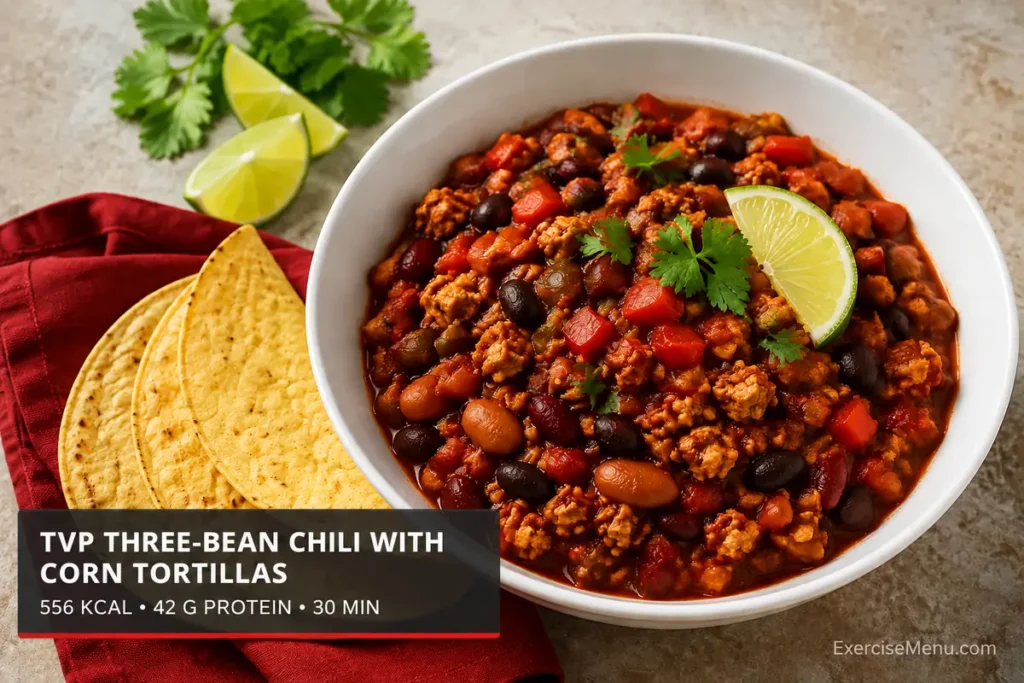
Best for: Freezer-friendly meal prep
Diet: Vegan; dairy- and egg-free; contains soy
Time: 30 minutes
Ingredients for one serving
- 46 g TVP, weighed dry
- 40 g cooked or canned black beans, drained
- 40 g cooked or canned kidney beans, drained
- 40 g cooked or canned pinto beans, drained
- 200 g no-salt-added tomato sauce
- 100 g bell pepper, diced
- 60 g onion, diced
- 50 g corn tortillas
- 3 g oil
- Chili powder, cumin, smoked paprika and garlic to taste
Nutrition: 556 kcal | 42 g protein | 93 g carbohydrate | 6 g fat | 26 g fiber
Three small bean portions add texture and variety, while TVP prevents the common problem of calling a large bowl of beans “high protein” without checking the serving. The meal also freezes more successfully than yogurt- or egg-based options.
Useful swap: Replace the 50 g tortillas with 120 g cooked rice. New estimate: 601 kcal, 42 g protein, 103 g carbs, 5 g fat and 24 g fiber.
Digestion and label note: This is the highest-fiber meal in the list. Choose it later in the recovery period or reduce the bean portions if high fiber feels uncomfortable after hard exercise. Rinse canned beans when you want to remove some surface sodium; check tortillas, TVP and spices if you need certified gluten-free ingredients.
Preparation: Rehydrate and drain the TVP. Sauté the onion, pepper and spices in the oil. Add the TVP, beans and tomato sauce, then simmer for 15 minutes. Serve with warmed tortillas.
10. Savory Greek-Yogurt, Chickpea and Couscous Bowl
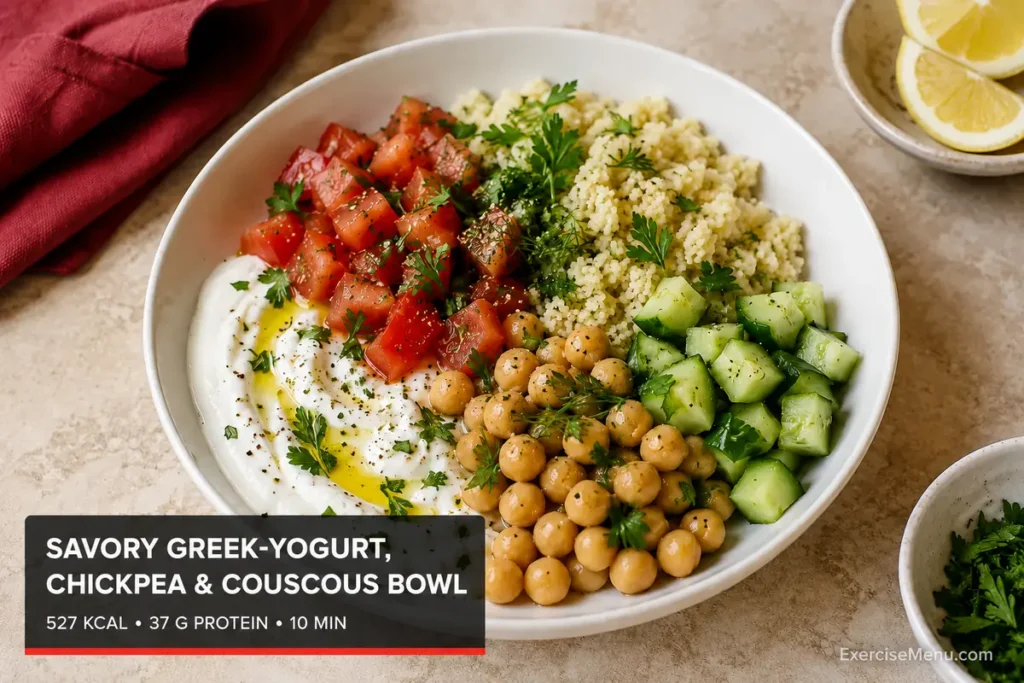
Best for: Fast assembly with prepared couscous
Diet: Lacto-vegetarian; egg- and soy-free; contains dairy and gluten
Time: 10 minutes
Ingredients for one serving
- 200 g plain nonfat Greek yogurt
- 100 g cooked or canned chickpeas, drained
- 150 g cooked couscous
- 100 g cucumber, chopped
- 100 g tomato, chopped
- 5 g olive oil
- Lemon, parsley, dill, black pepper and salt to taste
Nutrition: 527 kcal | 37 g protein | 77 g carbohydrate | 9 g fat | 11 g fiber
Greek yogurt delivers most of the protein without cooking, while chickpeas and couscous provide carbohydrate and a more substantial texture than a sweet yogurt bowl. It works especially well when you already keep cooked grains in the refrigerator.
Gluten-free swap: Replace 150 g cooked couscous with 150 g cooked quinoa. New estimate: 539 kcal, 37 g protein, 74 g carbs, 12 g fat and 14 g fiber.
Label note: Strained-yogurt protein varies by brand. Choose a product close to 10 g protein per 100 g if you want the displayed total.
Preparation: Stir lemon, herbs, pepper and a pinch of salt into the yogurt. Add the chickpeas, couscous, cucumber and tomato. Finish with the measured olive oil.
11. Pea-Protein Mango Recovery Smoothie
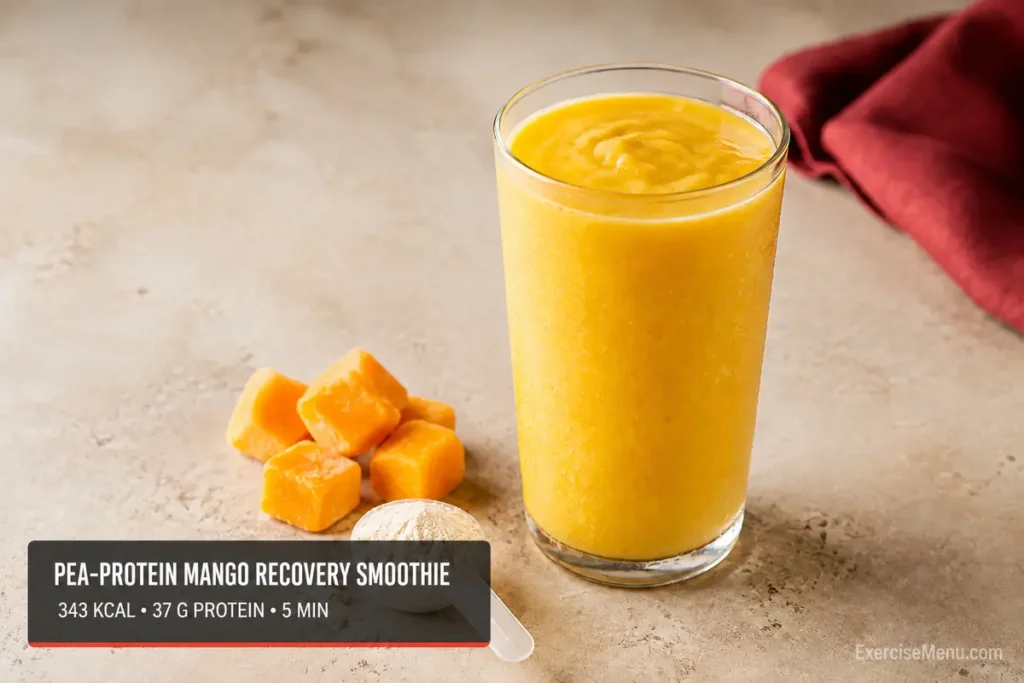
Best for: Low appetite or a five-minute meal
Diet: Vegan; dairy-, egg- and soy-free; contains pea protein; gluten-free with certified products
Time: 5 minutes
Ingredients for one serving
- 30 g unflavored pea protein powder
- 250 ml unsweetened pea milk
- 250 g frozen mango
- Ice, water and cinnamon as needed
Nutrition: 343 kcal | 37 g protein | 40 g carbohydrate | 7 g fat | 5 g fiber
This is the only powder-led meal in the list. Pea milk and powder provide most of the protein, while mango supplies carbohydrate without the high fiber load of a large bean or whole-grain meal. Powder solves an appetite or time problem; it is not inherently better than food.
Label note: Use a pea milk close to 8 g protein and 70 kcal per 240 ml if you want the displayed total. Almond and oat drinks often contain far less protein and are not equivalent replacements.
Tolerance note: A large or very cold drink can still feel uncomfortable after hard exercise. Add only enough water to blend and sip it rather than drinking it rapidly.
Preparation: Add the pea milk, mango and protein powder to a blender. Blend until smooth, then adjust the thickness with ice or water.
12. Lupini Bean, Mozzarella and Bulgur Bowl
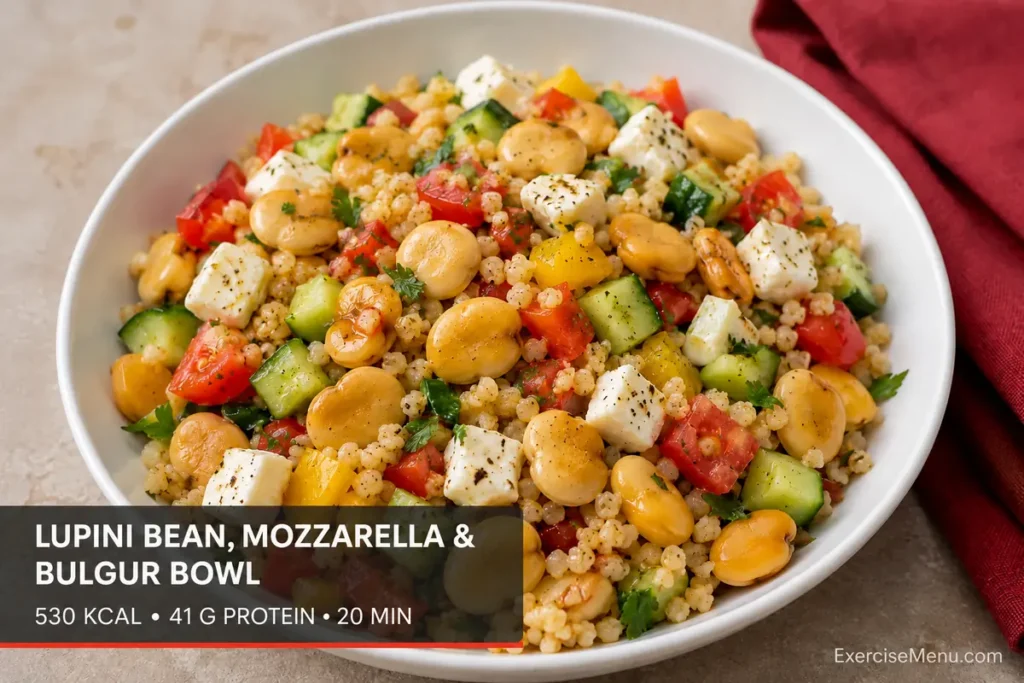
Best for: A Mediterranean-style, soy-free meal
Diet: Lacto-vegetarian; egg- and soy-free; contains dairy, gluten and lupin
Time: 20 minutes
Ingredients for one serving
- 130 g cooked or jarred lupini beans, drained and rinsed
- 56 g part-skim mozzarella
- 150 g cooked bulgur
- 100 g tomato, chopped
- 100 g cucumber, chopped
- 100 g bell pepper, chopped
- 5 g olive oil
- 20 g lemon or lime juice, plus parsley and black pepper
Nutrition: 530 kcal | 41 g protein | 58 g carbohydrate | 19 g fat | 14 g fiber
Lupini beans provide more protein per cooked weight than many common beans, while a controlled mozzarella portion raises protein without turning the bowl into a cheese-heavy meal. Rinsing brined beans also improves the flavor and can remove some surface salt.
Vegan swap: Replace 56 g mozzarella with 100 g firm tofu. New estimate: 531 kcal, 45 g protein, 59 g carbs, 19 g fat and 17 g fiber.
Allergen warning: Lupin is a recognized food allergen. People with peanut allergy may also react to it, and reactions can be serious. Do not use this meal as a casual peanut-allergy alternative. (FDA consumer advice on lupin)
Preparation: Combine the beans, bulgur and vegetables. Fold in the mozzarella, then dress the bowl with the oil, citrus juice, parsley and pepper.
Which Vegetarian Protein Source Is Best After Training?
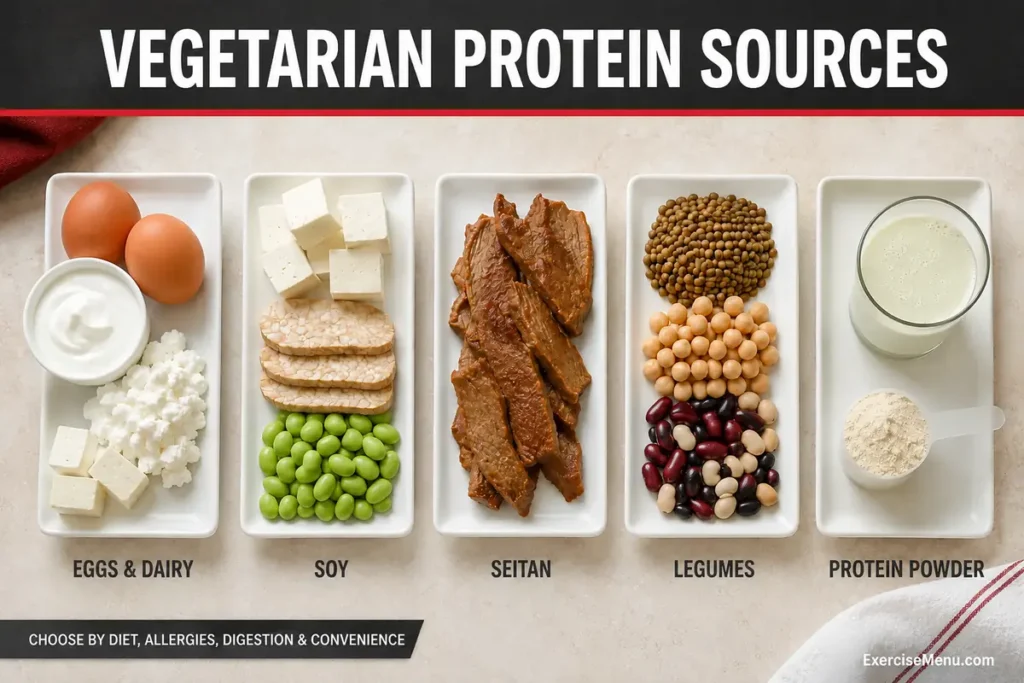
No single source is best for everyone. Choose the option that fits your diet, allergy profile, digestion, budget and practical protein target.
The Academy of Nutrition and Dietetics states that appropriately planned vegetarian and vegan eating patterns can be nutritionally adequate for adults. That conclusion applies to the whole diet; it does not mean that every vegetarian meal automatically contains enough protein, energy or micronutrients for a particular person. (Academy position paper)
Protein quality includes the amount and digestibility of essential amino acids, including leucine. Exact leucine totals for mixed meals can become misleading when brands and food databases differ, so this guide uses verified protein totals and varied sources rather than publishing unsupported “leucine threshold” numbers.
| Protein base | Main advantage | Main limitation | Best practical use |
| Eggs and dairy | High protein density and a complete essential-amino-acid profile | Not vegan; dairy or egg allergy; lactose varies by food | Fast lacto-ovo meals |
| Soy foods | Complete plant protein with many textures and price points | Soy allergy; tofu and milk labels vary | Vegan meals without powder |
| Seitan | High protein for its calories | Contains gluten and provides relatively little lysine; prepared products may contain soy | Pair with beans or other lysine-containing foods |
| Legumes | Affordable protein, carbohydrate, fiber and minerals | Larger portions can feel bulky or cause gastrointestinal discomfort | Meal prep and mixed-source meals |
| Plant protein powder | Convenient, measurable and easy to drink | Cost, taste and label variation | Low appetite, travel or time pressure |
Must You Combine Plant Proteins in the Same Meal?
No. You do not need to force rice and beans together at every sitting when your total diet supplies enough energy, protein and varied plant foods. A review of plant-protein quality explains why complementary amino acids remain available across nearby meals, so varied sources do not need to appear on the same plate. (Plant-protein quality review)
Combining sources can still improve a specific meal. Seitan with black beans, chickpea flour with tofu, and legumes with grains raise total protein and create a broader amino-acid mix without requiring precise “protein-combining” mathematics.
A 2026 study used four-day food records from 193 vegans to build a tool that models complementary plant-food pairings. The modeled pairings improved the amino-acid profile of many meals, but this was a diet-planning study—not a post-workout clinical trial. It supports thoughtful variety without proving that every meal needs a rigid pairing rule. (2026 vegan protein-quality study)
Do Vegetarians Automatically Need More Protein?
Not by a fixed percentage. A lacto-ovo vegetarian who regularly eats dairy, eggs and soy has a different protein pattern from a vegan relying mainly on grains and small servings of beans.
A 2025 meta-analysis across adult trials found a small overall muscle-mass advantage for animal protein, but no pooled difference between soy and milk protein for muscle mass and no clear plant-versus-animal difference in strength or physical performance. The studies were not exclusively post-workout trials in athletes, so the useful response is careful planning—not the claim that every vegetarian automatically needs 20% more protein. (2025 plant-versus-animal protein meta-analysis)
Is Protein Powder Necessary for Vegetarian Recovery?
No. Whole foods can meet protein needs, and 11 meals above demonstrate that in realistic servings. Powder helps when appetite, time, portability or cooking access makes a full meal difficult.
A 2025 systematic review of studies in healthy young adults found that adequately dosed, well-formulated plant-protein blends can support muscle protein synthesis. Most interventions tested supplements rather than full meals, and the evidence included small samples, varied methods and risk-of-bias concerns. Treat powder as a convenient tool, not a shortcut that replaces total diet quality. (2025 plant-protein recovery review)
What Makes a Vegetarian Post-Workout Meal Fall Short?
The most common problem is a meal that looks nutritious but lacks a meaningful protein anchor or uses a misleading serving size.
- Treating nuts or peanut butter as the main protein. They contribute protein, but normal servings provide far more fat than protein. Use them as a topping or sauce beside tofu, dairy, eggs, soy or another stronger anchor.
- Eating fruit, juice, salad or avocado toast alone. These foods can add carbohydrate, fiber or micronutrients, but they do not create a high-protein recovery meal by themselves.
- Assuming plain dal, chickpeas or quinoa always provide 25–30 g protein. They can form part of the meal, but the result depends on the actual cooked serving. Add tofu, TVP, dairy, eggs or another measured source when the portion falls short.
- Mixing dry and cooked weights. Dry TVP, pasta, rice and legumes absorb water during cooking. Tracking a dry database entry against a cooked kitchen weight can produce a large error.
- Removing all carbohydrate after training. Carbohydrate need varies, but protein-only is not automatically better. Keep enough carbohydrate to match the work completed, your total diet and the timing of your next session.
Frequently Asked Questions
Is whey protein vegetarian or vegan?
Whey comes from milk, so it generally fits a lacto-vegetarian diet but not a vegan diet. A product can still contain added ingredients that conflict with a person’s dietary, religious or allergy requirements. Read the full ingredient and allergen statement rather than assuming every whey powder has the same formulation.
Can I use canned beans and frozen vegetables?
Yes. They shorten preparation without preventing you from building a useful post-workout meal. Weigh canned beans after draining, and count any oil or sugar in sauces. Rinsing can remove some surface sodium. Choose plain frozen vegetables or include the nutrition from any added sauce.
Does plant milk count as a high-protein ingredient?
Sometimes. Soy milk and some high-protein pea milks can contribute meaningfully, while many almond, oat, rice and coconut drinks provide little protein. Compare protein per serving, serving size, added sugar and fortification on the label. Do not count a low-protein plant drink as equivalent to dairy or soy milk.
Can I prepare these meals three or four days ahead?
Many bowls and the chili suit meal prep, but cool them promptly and refrigerate them in shallow, covered containers. US food-safety guidance advises refrigerating perishable food within two hours, using cooked leftovers within four days and reheating leftovers thoroughly. Freeze extra portions when you need longer storage. (FoodSafety.gov)
Do I need the same protein intake on rest days?
Keep your daily protein pattern reasonably consistent because adaptation and tissue repair continue between training sessions. Your carbohydrate or total energy intake may change with activity, but a rest day does not make protein irrelevant. Use your weekly training load and overall goal rather than one workout to plan the day.
Does severe soreness mean my post-workout meal failed?
No. Soreness also reflects unfamiliar movements, training volume, sleep, recovery time and previous conditioning. One meal cannot prevent every symptom. Severe pain, major swelling, dark urine, marked weakness or pain that keeps worsening needs medical assessment rather than another change to your macros. The CDC lists unexpectedly severe muscle pain, dark urine and weakness among the warning signs that require prompt care. (CDC rhabdomyolysis guidance)
What Should You Do Next?
Choose one meal that matches your dietary restrictions and usual appetite. Recalculate it with the labels you actually buy, then test it after two or three similar sessions. Note comfort, hunger and how prepared you feel for the next workout; those observations help you refine the portion without chasing a universal “perfect” meal.
If you train early, choose a time-specific option from the best post-workout breakfast guide. If you need something smaller and portable, use the post-workout snacks for muscle gain. Readers who also eat meat or fish can compare a wider range of post-workout meal ideas.
Need a Plan Built Around Your Training and Health History?
Want a Nutrition Plan Built Around Your Training?
Generic meal plans don’t account for your training schedule, health history, or goals. Rimsha Shahid — Registered Dietitian, Certified Diabetes Specialist (USA), and Certified Pediatric Nutritionist — builds personalised nutrition plans that work alongside your programme, not against it.
Free initial consultation — no commitment required.
Medical Disclaimer
This article provides general nutrition information and does not replace individual medical or dietetic advice. People with kidney disease, diabetes treated with medication, food allergies, gastrointestinal disease, an eating disorder, pregnancy-related needs or a prescribed diet should speak with a qualified healthcare professional before making substantial dietary changes.
