

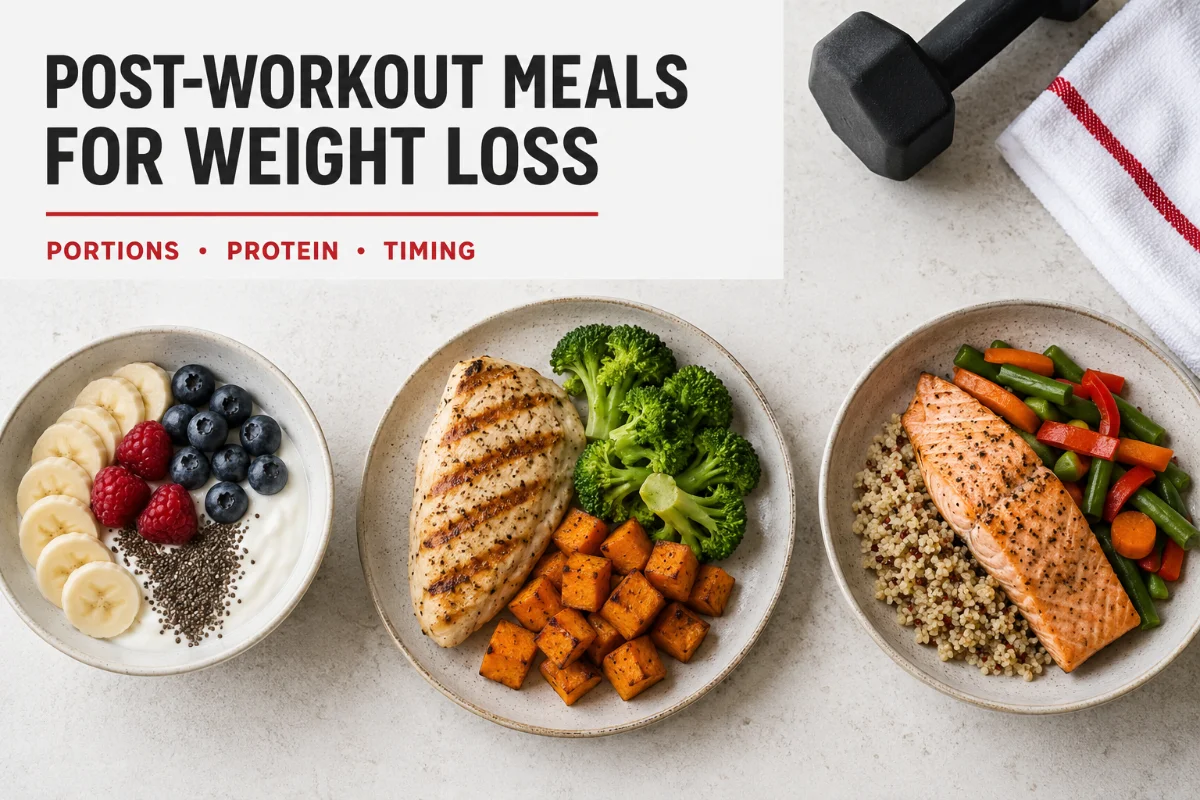
Quick answer: Fit your post-workout food inside your daily calorie target instead of treating it as a reward for exercising. After hard strength training, HIIT or long cardio, choose protein with an appropriate carbohydrate portion. After light exercise, you may not need separate food if you recently ate or your regular meal is coming soon.
Eating after exercise does not cancel the calories you burned. The part that matters for weight loss is whether the food fits into your overall calorie target—not whether you eat it at 6 p.m., after cardio or immediately after lifting.
You may need a proper recovery meal after hard training, especially if you exercised fasted or will not eat again for several hours. A short walk before dinner is different. In that situation, your normal meal may cover everything you need.
This guide shows you how to build a post-workout meal for weight loss, decide whether you need one and choose a portion that supports recovery without turning exercise into permission to overeat. For broader recovery guidance across different fitness goals, read our complete guide to what to eat after a workout.
- Do You Need to Eat After Every Workout to Lose Weight?
- Will Eating After a Workout Stop Weight Loss?
- What Should a Weight-Loss Post-Workout Meal Contain?
- How Many Calories Should a Post-Workout Meal Have for Weight Loss?
- 10 Post-Workout Meals for Weight Loss With Calories and Macros
- How Should Workout Type Change a Weight-Loss Meal?
- When Should You Eat After a Workout for Weight Loss?
- Should You Choose a Meal, Snack or Shake for Weight Loss?
- Seven Post-Workout Mistakes That Can Slow Weight-Loss Progress
- How Do You Handle Post-Workout Hunger in Real Life?
- Use This 30-Second Post-Workout Decision Check
- Frequently Asked Questions
- Your Next Step
- Need a Post-Workout Plan Built Around Your Weight-Loss Goal?
Do You Need to Eat After Every Workout to Lose Weight?
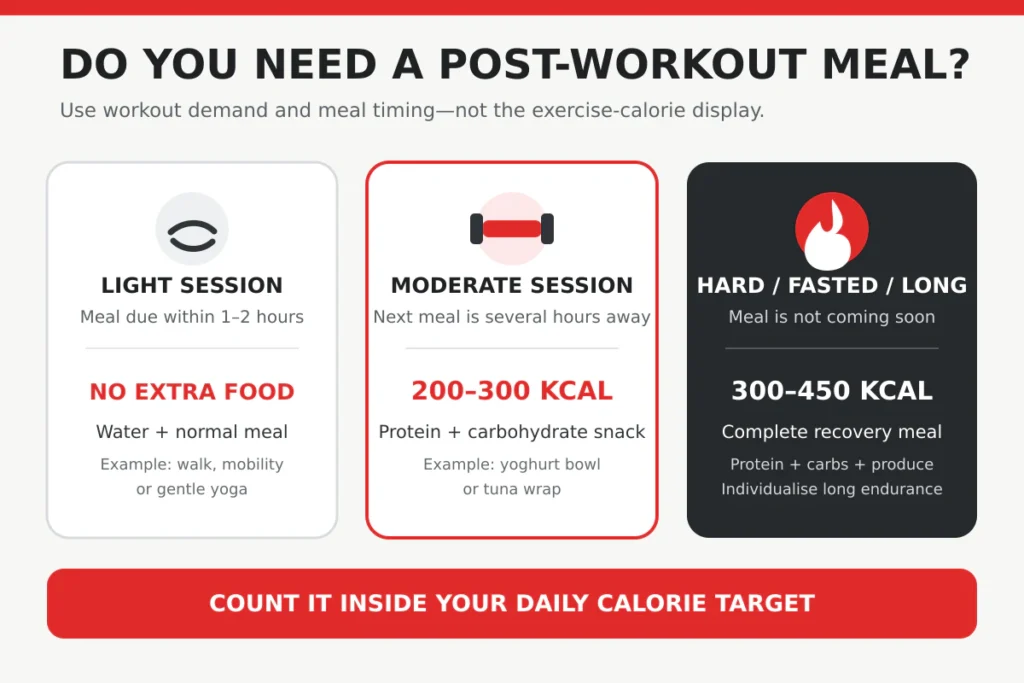
No. You do not need a separate meal after every workout. Base the decision on how hard and long you trained, when you last ate, when you will eat next, whether you trained fasted and whether the food fits your planned intake.
The American Diabetes Association notes that people trying to lose weight may not need an intentional post-workout meal after lower-intensity activities such as walking, jogging or cycling for less than an hour. A demanding session creates a different recovery need.
You May Not Need an Extra Meal If…
You can usually continue to your next scheduled meal when:
- Your session was a short walk, easy cycle, gentle yoga class or another light activity.
- You ate a balanced meal within a few hours before training.
- Your next regular meal is due within one or two hours.
- You are not physically hungry.
- An extra snack would sit outside your planned calorie intake.
This does not mean you should ignore hydration or deliberately delay your next meal. It means the workout does not automatically create a need for extra calories.
A Meal or Snack Is More Useful If…
Plan food after training when:
- You completed a hard resistance-training or HIIT session.
- You exercised for longer than 60 minutes at a moderate or high intensity.
- You trained before breakfast or after a long gap without food.
- Your next regular meal is several hours away.
- Delaying food tends to trigger strong cravings or overeating later.
- You will train again later that day or early the following morning.
If you regularly train before eating, our guide on whether you should work out on an empty stomach explains when fasted exercise may be reasonable and when it can work against performance.
ExerciseMenu Post-Workout Decision Table
| Workout situation | Do you need separate food? | Practical choice | Example calorie level |
|---|---|---|---|
| Light walk or mobility session under 45 minutes | Usually not if a meal is due soon | Water and your normal meal | No automatic extra calories |
| Moderate cardio or resistance session | Depends on your previous and next meal | Protein-and-carb snack | About 200–300 kcal |
| Hard strength workout or HIIT | A planned meal is often useful | Complete protein-focused meal | About 300–450 kcal |
| Long endurance session | You may need more recovery fuel | Protein, carbohydrates and fluids | Individualised |
| Hard fasted workout | Eat relatively soon | Protein plus carbohydrates | Fit it into your daily target |
These calorie levels are examples, not universal prescriptions. Body size, total calorie needs, training load, appetite and health history can change the appropriate amount
Will Eating After a Workout Stop Weight Loss?
Eating after exercise will not stop weight loss when the meal stays within your overall energy plan. The bigger risk is treating exercise as permission for an unplanned reward meal that contains more calories than the workout used.
Your Overall Calorie Balance Matters More Than One Meal
Your body does not classify a meal as “fattening” simply because you ate it after training. Weight trends respond to energy intake and expenditure over time. The National Institute of Diabetes and Digestive and Kidney Diseases explains that regularly taking in more energy than you use can lead the body to store the excess.
Treat post-workout food as part of breakfast, lunch, dinner or a planned snack. Do not add it automatically on top of a full day of eating.
Exercise watches and cardio machines do not provide an exact food allowance. A 2024 living umbrella review found that consumer wearables produced inconsistent energy expenditure estimates across devices and activities. Use the displayed number as an estimate, not a command to eat the same number of calories back. Read the review.
How Do You Fit the Meal Into a Daily Calorie Target?
Decide where the meal belongs before the workout begins. It should replace a planned meal or use calories already reserved for a snack. It should not appear automatically on top of the day’s food.
For example, imagine that a qualified professional has helped someone set a daily target of 1,800 calories. This is only a budgeting example—not a recommended target:
| Planned food | Calories |
| Breakfast | 400 |
| Lunch | 450 |
| Dinner | 600 |
| Other planned snack | 150 |
| Post-workout snack | 200 |
| Daily total | 1,800 |
If the same person has already planned 1,800 calories before exercise, the post-workout food needs to replace another meal or snack. Adding 300 calories because a watch displayed “300 calories burned” may remove the intended deficit, especially when both food intake and exercise expenditure are estimates.
Skipping Food Can Also Create Problems
Missing an immediate meal once will not “damage your metabolism.” However, routinely pairing hard training with aggressive restriction can leave you tired, hungry and less able to train well.
Some people feel little hunger immediately after intense exercise because a hard session can temporarily suppress appetite. Hunger may return later. A planned meal or snack can prevent the evening from turning into unstructured grazing, but it still needs an appropriate portion.
Aim to Lose Fat While Preserving Lean Mass
Scale weight includes water, stored carbohydrate, body fat and lean mass. A good fat-loss plan aims to reduce body fat while keeping as much muscle as possible.
Resistance training provides the stimulus to retain muscle. Sufficient protein and a manageable calorie deficit support that process. A 2024 systematic review found that increased protein intake helped limit muscle-mass loss in adults with overweight or obesity who were losing weight. The review supports adequate protein, not an unlimited high-protein diet or one universal target. Review the research.
For the training side of the plan, see our guide to reps and sets for fat loss.
What Should a Weight-Loss Post-Workout Meal Contain?
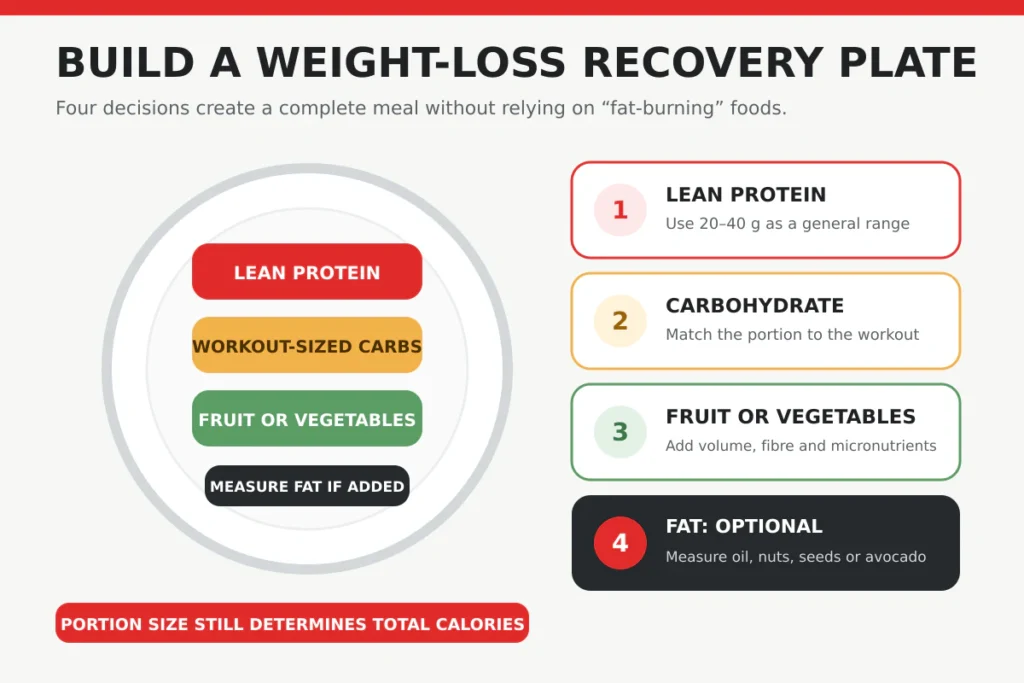
Build the meal around lean protein, add carbohydrates in proportion to the workout, include fruit or vegetables, and measure calorie-dense fats. This structure supports recovery and fullness without relying on “fat-burning” foods.
Start With Protein
Protein supplies amino acids for muscle protein synthesis—the process involved in repairing and remodelling trained muscle—and helps make a lower-calorie meal more filling. The International Society of Sports Nutrition identifies total daily protein as a priority and gives 20–40 grams of high-quality protein per feeding as a useful general range for exercising adults.
Your ideal amount depends on body size, age, daily intake and training. Eggs, Greek yoghurt, cottage cheese, poultry, fish, tofu, tempeh, lentils and protein powder can all contribute. Use the ExerciseMenu protein calculator for a starting estimate of your daily target.
Match Carbohydrates to the Work You Did
Carbohydrates help restore glycogen, the stored carbohydrate your muscles use during exercise. They do not automatically prevent fat loss. Portion size matters more than avoiding the entire food group.
A short upper-body session usually needs less carbohydrate than a long run, hard HIIT class or high-volume leg workout. If you train once per day, your total daily carbohydrate intake often matters more than choosing the fastest possible source.
Do not apply a universal 3:1 or 4:1 carbohydrate-to-protein ratio to every fat-loss workout. Those ratios can help structure rapid recovery after demanding endurance work, but they can oversupply calories after a short gym session when the next workout is not soon.
Oats, rice, quinoa, potatoes, whole-grain bread, fruit, beans and lentils all work. Our guide to high-glycaemic carbs after a workout explains when rapid glycogen replenishment becomes useful.
Use Fruit and Vegetables for Volume
Fruit and vegetables add fibre, fluid, vitamins and minerals without making the meal excessively energy-dense. They can also make a modest portion look and feel like a complete meal.
Very high-fibre food can cause discomfort immediately after intense exercise in some people. If your stomach feels unsettled, choose cooked vegetables, ripe fruit or a smaller serving and increase fibre elsewhere in the day.
Measure Fats Instead of Avoiding Them
Avocado, olive oil, nuts and nut butter can fit into a weight-loss meal, but small visual portions can contain substantial energy. Measure them when progress depends on a tight calorie target.
A tablespoon of oil poured freely into a pan can change the meal more than switching from white rice to brown rice. Healthy food still counts toward total intake.
Weight-loss recovery plate: Choose one protein source, one workout-sized carbohydrate portion, fruit or vegetables, and an optional measured fat source.
How Many Calories Should a Post-Workout Meal Have for Weight Loss?
There is no universal calorie number. The right amount depends on your daily energy needs, body size, workout difficulty, recent food intake and whether you need a snack or a full meal.
The NIDDK portion guide makes an important distinction: a serving is the amount listed on a food label, while a portion is the amount you actually choose to eat. Tracking the real portion prevents a “300-calorie meal” from quietly becoming two servings.
About 200–250 Calories: A Small Recovery Snack
This range can work after a moderate session when your next full meal is several hours away. It should bridge the gap, control hunger and provide meaningful protein—not act as a second lunch.
About 300–350 Calories: A Standard Light Meal
This range suits many planned breakfasts or lunches after moderate resistance training or cardio. A useful meal at this level can still include 20–35 grams of protein, a carbohydrate source and produce.
About 400–450 Calories: A More Substantial Meal
This range may fit after heavy lifting, HIIT or a longer session, especially when it replaces a normal main meal. A larger person or someone with a higher daily energy target may need more; a smaller person may need less.
Do not use these bands as clinical targets for children, pregnancy, breastfeeding, eating-disorder recovery, kidney disease, diabetes treated with insulin or professional endurance training. Those situations require individual assessment.
Rimsha’s note: Decide what role the food serves before choosing its size. Is it replacing a main meal, bridging a long gap or meeting a genuine recovery need? A post-workout meal should not appear automatically on top of a full day of eating.
10 Post-Workout Meals for Weight Loss With Calories and Macros
The meals below use measured portions rather than vague combinations. Nutrition values are rounded estimates calculated from standard entries in USDA FoodData Central alongside typical product labels. Meat, fish, grains, potatoes, lentils and vegetables use cooked edible weights unless the description says otherwise. Brands, cooking methods and drained weights can change the totals, so check the labels on the foods you use.
| Meal | Calories | Protein | Carbs | Fat | Fibre | Approx. prep time |
| Greek yoghurt, banana and chia bowl | 213 kcal | 19 g | 31 g | 2 g | 4 g | 3 min |
| Cottage cheese, berries and walnuts | 259 kcal | 27 g | 19 g | 9 g | 5 g | 3 min |
| Tuna and vegetable crunch wrap | 246 kcal | 28 g | 25 g | 4 g | 4 g | 5 min |
| Egg and vegetable toast plate | 323 kcal | 23 g | 25 g | 15 g | 6 g | 10 min |
| Chicken, sweet potato and broccoli | 335 kcal | 35 g | 32 g | 7 g | 7 g | 20 min |
| Tofu, vegetable and brown-rice bowl | 333 kcal | 24 g | 35 g | 12 g | 5 g | 15 min |
| Protein oats with berries | 317 kcal | 25 g | 46 g | 4 g | 8 g | 7 min |
| Salmon, quinoa and vegetables | 388 kcal | 29 g | 33 g | 14 g | 7 g | 25 min |
| Turkey and hummus whole-grain wrap | 382 kcal | 38 g | 40 g | 8 g | 9 g | 7 min |
| Lentil, egg and potato bowl | 417 kcal | 28 g | 54 g | 11 g | 14 g | 20 min |
1. Greek Yoghurt, Banana and Chia Bowl — 213 Calories
Combine 170 grams of plain non-fat Greek yoghurt, 100 grams of banana and one teaspoon of chia seeds. This quick bowl provides about 19 grams of protein and 31 grams of carbohydrate.
It works well after a moderate morning workout when breakfast or lunch is still a few hours away. If you need more protein, choose a higher-protein yoghurt rather than adding calorie-dense toppings.
2. Cottage Cheese, Berries and Walnuts — 259 Calories
Use 200 grams of low-fat cottage cheese, 100 grams of mixed berries and 10 grams of walnuts. The meal provides approximately 27 grams of protein, while the measured walnuts add texture without taking over the calorie budget.
Slow-digesting dairy protein makes it particularly practical after an evening session. Read our evidence review on cottage cheese after a workout for a closer comparison with whey, yoghurt and eggs.
3. Tuna and Vegetable Crunch Wrap — 246 Calories
Fill one small whole-wheat tortilla with 85 grams of tuna canned in water, lettuce, cucumber, tomato and one tablespoon of plain Greek yoghurt. Season it with lemon, black pepper or herbs instead of adding a large spoonful of mayonnaise.
The wrap delivers roughly 28 grams of protein and works well when you need a portable savoury snack after lifting.
4. Egg and Vegetable Toast Plate — 323 Calories
Serve two eggs and one egg white with one slice of whole-grain toast, 100 grams of spinach and tomato, and 20 grams of avocado. This combination supplies around 23 grams of protein and 6 grams of fibre.
It functions as a complete breakfast rather than an additional snack. If you already ate before training, reduce the portion or wait for your normal meal.
For more morning options, see our guide to the best post-workout breakfasts.
5. Chicken, Sweet Potato and Broccoli — 335 Calories
Pair 100 grams of cooked chicken breast with 120 grams of baked sweet potato and 100 grams of broccoli. Use no more than about three grams of oil for cooking or dressing.
This plate provides approximately 35 grams of protein and 32 grams of carbohydrate. It suits a moderate-to-hard resistance session without reaching the calorie level of many restaurant recovery bowls.
6. Tofu, Vegetable and Brown-Rice Bowl — 333 Calories
Combine 150 grams of extra-firm tofu, 75 grams of cooked brown rice and 150 grams of mixed stir-fry vegetables. Add reduced-sodium soy sauce, garlic, ginger or chilli for flavour.
The exact total will vary more than the other meals because tofu brands differ in water content and calories. Check the pack and adjust the rice or tofu portion rather than guessing.
7. Protein Oats With Berries — 317 Calories
Cook 40 grams of oats with 100 millilitres of skimmed milk and water. Stir in 20 grams of whey protein after cooking, then add 100 grams of berries.
The meal provides about 25 grams of protein, 46 grams of carbohydrate and 8 grams of fibre. It works after cardio or a mixed session when you want more carbohydrate without a large serving.
8. Salmon, Quinoa and Vegetables — 388 Calories
Serve 100 grams of cooked salmon with 100 grams of cooked quinoa and 150 grams of roasted or steamed vegetables. Use lemon, herbs or vinegar rather than adding an unmeasured oil-based dressing.
This meal offers protein, carbohydrate and omega-3 fats in a controlled portion. It can replace dinner after a hard session; it should not sit beside a second full evening meal.
9. Turkey and Hummus Whole-Grain Wrap — 382 Calories
Fill one large whole-grain wrap with 100 grams of cooked turkey breast, 25 grams of hummus and 100 grams of salad vegetables. This meal delivers approximately 38 grams of protein and 9 grams of fibre.
It also travels well, which makes it useful when the gap between the gym and dinner often leads to convenience-food choices.
10. Lentil, Egg and Potato Bowl — 417 Calories
Combine 120 grams of cooked lentils, two eggs, 120 grams of cooked potato and 100 grams of spinach and tomato. Use spices, herbs, lemon or vinegar for flavour.
With about 28 grams of protein and 14 grams of fibre, this is the most filling plant-forward meal in the list. It suits a harder session and replaces a normal meal.
If weight loss is not your primary goal, our collection of post-workout meal ideas includes larger meals designed around recovery and muscle growth.
How Should Workout Type Change a Weight-Loss Meal?
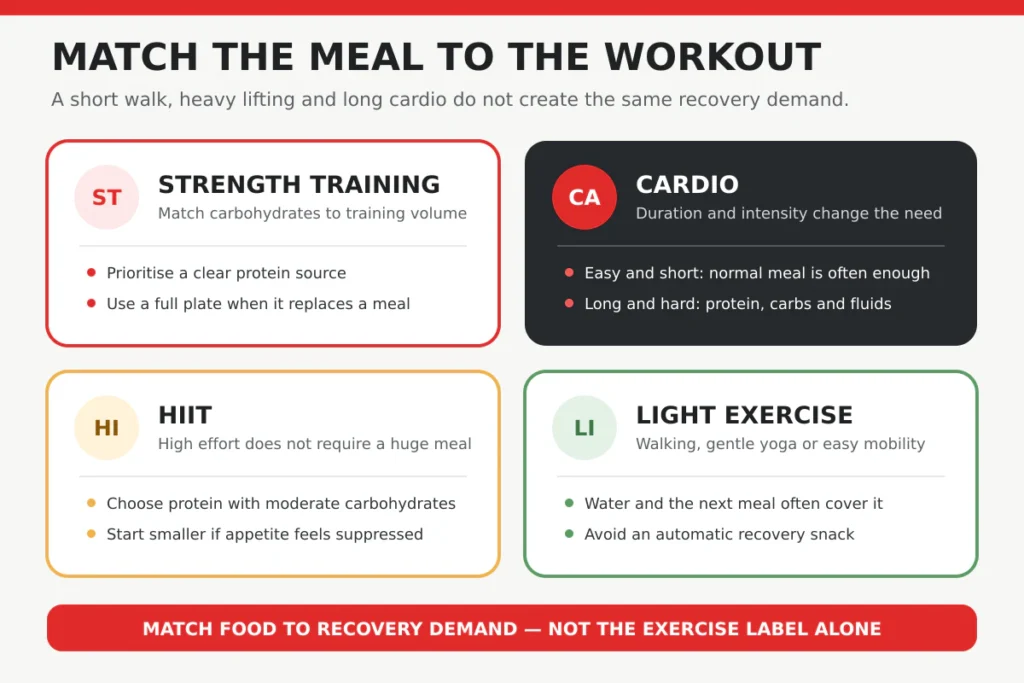
Match the meal to the work you completed. A short walk, a heavy leg session and a long run do not create the same recovery demand, so they should not automatically receive the same portion.
After Strength Training
Prioritise protein and add enough carbohydrate to match the training volume. A short upper-body session may need less than a high-volume full-body or leg workout.
Choose a complete plate such as chicken with sweet potato or tofu with rice when the food replaces a main meal. Use a yoghurt bowl or tuna wrap when you only need a bridge to dinner.
After Cardio
Duration and intensity determine how much food makes sense. A relaxed 30-minute walk usually does not require recovery calories. A long run or demanding cycling session may require a proper meal with protein, carbohydrates and fluids.
Do not match food to the calorie figure on the machine. Match it to your planned daily intake, hunger, recovery needs and next meal.
After HIIT
HIIT creates a high effort in a short period, but that does not mean every class requires a huge meal. Choose protein with a moderate carbohydrate portion, such as protein oats or the chicken and sweet-potato plate.
If intense exercise suppresses your appetite, start with a smaller, digestible option. You can eat the rest of the meal later instead of forcing a heavy plate immediately.
After Walking, Yoga or Light Exercise
Water and your next scheduled meal will cover many light sessions. Check whether you feel physically hungry before adding a snack.
This distinction matters during weight loss because repeated “healthy” snacks after low-demand sessions can quietly remove the intended calorie deficit.
When Should You Eat After a Workout for Weight Loss?
Most people do not need to race against a stopwatch. Your last meal, whether you trained fasted, workout difficulty and the timing of your next meal offer more useful guidance than a rigid universal deadline.
A 2025 systematic review and meta-analysis found that taking protein before rather than after resistance exercise did not meaningfully change gains in lean body mass. That does not make post-workout food irrelevant. It means total daily protein and the wider eating pattern matter more than treating 30 minutes as an all-or-nothing window.
If You Ate Before Training
You may still have circulating nutrients from the earlier meal. Continue to your normal meal schedule unless the session was unusually hard or your next meal is several hours away.
If You Trained Fasted
Eat relatively soon after a demanding fasted workout. Choose protein and carbohydrates rather than extending the fast solely to “burn more fat.”
The meal still counts toward your daily intake. Fasted training does not turn post-workout calories into free calories.
If Your Next Meal Is Soon
Skip the separate snack and make the upcoming meal recovery-focused. Include a clear protein source, an appropriate carbohydrate portion and produce.
If Your Next Meal Is Several Hours Away
Use a planned 200–300 calorie snack rather than grazing. The Greek yoghurt bowl, cottage-cheese bowl and tuna wrap all fit this role.
If You Train Late at Night
Late eating does not automatically create fat gain. Keep the portion consistent with your daily target and choose food that does not disturb your sleep or aggravate reflux.
Cottage cheese with berries or Greek yoghurt with banana can work when you want a light option. A full dinner such as salmon and quinoa makes more sense if you have not eaten an evening meal.
Should You Choose a Meal, Snack or Shake for Weight Loss?
Choose the format according to hunger, convenience and the timing of your next meal. A shake offers convenience, but it does not produce better weight loss than a suitable whole-food option.
| Option | Best when | Main advantage | Common problem |
| Full meal | It replaces breakfast, lunch or dinner | Complete nutrition and better fullness | The portion can become too large |
| Small snack | Your next meal is several hours away | Bridges hunger with fewer calories | It may contain too little protein |
| Protein shake | Time or appetite is limited | Convenient and measurable | Add-ons can turn it into a large meal |
| No separate food | Exercise was light and a meal is soon | Avoids unnecessary calories | It may not suit hard fasted training |
A Protein Shake Is Optional
Protein powder can help when you lack time or appetite, but it is not a fat-loss supplement. A scoop mixed with water may provide around 100–130 calories. Milk, oats, banana, nut butter and honey can quickly turn it into a 500-calorie drink.
Count every ingredient and decide whether the shake replaces a meal or supports one. If you are intentionally eating for size rather than weight loss, our guide to post-workout snacks for muscle gain covers higher-energy options.
Seven Post-Workout Mistakes That Can Slow Weight-Loss Progress
The most common mistakes involve portion decisions, not one forbidden food. Correcting them protects the calorie deficit without compromising recovery.
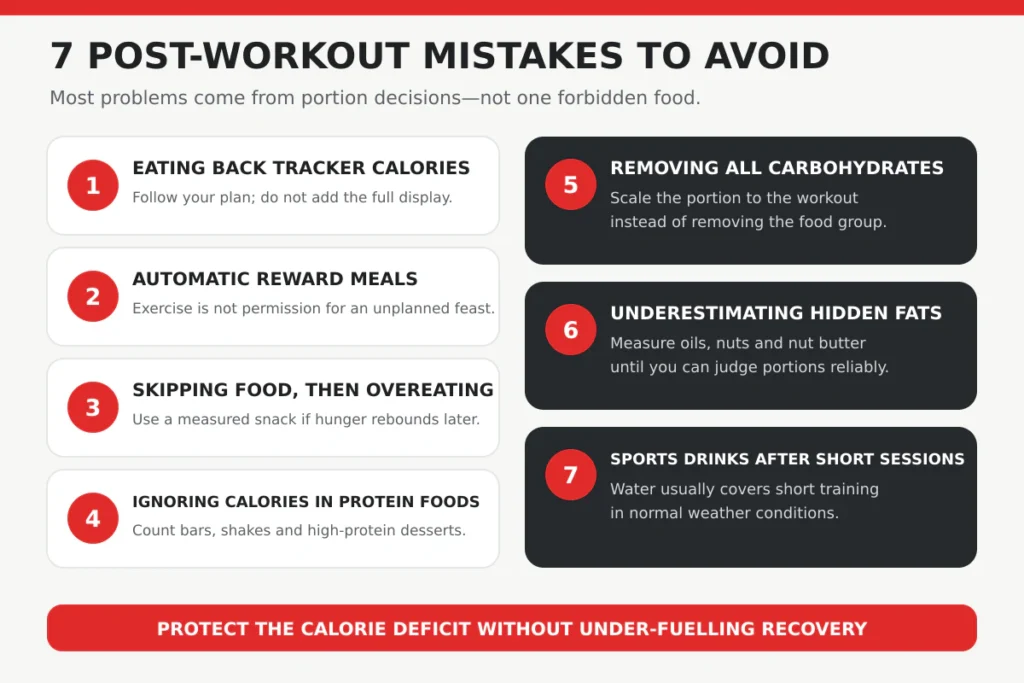
1. Eating Back Every Calorie Your Tracker Shows
Wearables can estimate steps and heart rate reasonably well, but calorie-burn estimates vary widely. Do not add the full displayed number to your food allowance. Follow your planned intake and adjust it from real weight, hunger and performance trends.
2. Treating Exercise as Permission for a Reward Meal
A takeaway, dessert or large café smoothie can contain more energy than a moderate workout used. Enjoying food is not the problem; attaching an automatic reward to every workout makes intake harder to regulate.
3. Skipping Food and Overeating Later
If delaying food reliably leads to intense evening hunger, plan a measured snack. The solution is not to force a meal after every session; it is to prevent predictable loss of control.
4. Focusing on Protein but Ignoring Total Calories
Protein bars, shakes and “high-protein” desserts still contribute calories. Check the serving size and ingredient list rather than assuming the protein claim makes the product suitable.
5. Removing All Carbohydrates
Carbohydrates support glycogen restoration and training quality. Scale the portion to the session instead of removing the entire food group. A potato or serving of rice can fit a calorie-controlled meal.
6. Underestimating Oils, Nuts and Nut Butter
These foods offer useful nutrients, but their calories accumulate quickly. Weigh or measure them until you can judge portions reliably.
7. Drinking Sports Drinks After Short Sessions
Most people training for less than 60–90 minutes in normal weather are unlikely to need dedicated electrolyte replacement, according to the American College of Sports Medicine. Water is usually enough after a short gym session or walk.
How Do You Handle Post-Workout Hunger in Real Life?
Use the same calorie and protein priorities, then adapt the format to your appetite, schedule and health needs. The goal is to prevent a predictable problem—such as late overeating or an oversized takeaway—without creating an unnecessary extra meal.
What If You Are Not Hungry After Exercise?
Do not force a large meal. Hard exercise can temporarily suppress appetite, so use a smaller yoghurt, milk-based drink or half portion if you need recovery food.
Check again after 30–60 minutes and make the next meal protein-focused. If low appetite regularly prevents you from meeting basic nutrition needs, discuss it with a registered dietitian.
What If Exercise Makes You Extremely Hungry?
Review what you ate before training. Starting a hard workout after a long food gap can make post-workout hunger harder to manage.
Plan the meal before you exercise, include protein and high-volume produce, and avoid deciding what to eat while exhausted and hungry. Persistent hunger can also signal that the overall deficit is too aggressive.
What If You Need to Buy Food on the Way Home?
Choose an item with an identifiable protein serving, one carbohydrate source and fruit or vegetables. Ask for calorie-dense dressings and sauces on the side instead of guessing how much the kitchen used.
A grilled chicken rice bowl with salad, a burrito bowl with beans and lean protein, sushi with edamame, or plain high-protein yoghurt with fruit can all work. Check the restaurant’s nutrition information where available. Avoid stacking a large main meal, sugary drink, side and dessert simply because you exercised.
What If You Have Diabetes or Use Glucose-Lowering Medication?
Exercise can change blood glucose during and after a session. Insulin and some diabetes medicines can also increase the risk of low blood glucose.
Do not change medication or remove carbohydrates based on a general article. Use a plan developed with the clinician or dietitian who understands your medication, glucose response and training routine.
Use This 30-Second Post-Workout Decision Check
Before preparing food, answer five questions. The aim is to choose between a full meal, a small snack and no additional food beyond your normal schedule.
The ExerciseMenu Recovery Check
- Was the workout hard or longer than 60 minutes?
- Did I train fasted or eat several hours ago?
- Is my next regular meal more than two hours away?
- Am I physically hungry?
- Will this food fit inside my daily calorie target?
How to Use Your Answers
- Mostly no: Hydrate and continue to your next scheduled meal.
- Two or three yes answers: Consider a planned 200–300 calorie snack.
- Hard workout, fasted and next meal far away: Choose a complete protein-and-carbohydrate meal.
- Medical condition or medication involved: Follow your individual clinical plan.
This check does not calculate personal nutrition needs. It prevents an automatic meal from replacing a reasoned decision.
Frequently Asked Questions
Why Can the Scale Rise After a Higher-Carbohydrate Post-Workout Meal?
Carbohydrates replenish glycogen, which stores water. A temporary scale increase may reflect glycogen, water, sodium and food weight—not overnight fat gain. Judge progress from longer-term trends. (Scientific review)
Should I Weigh Post-Workout Meal Ingredients Raw or Cooked?
Either method works, but the weight must match the food entry you use. Cooking changes water content, so 100 grams of raw chicken does not equal 100 grams of cooked chicken. Use one method consistently. For batch meals, log the full recipe from raw ingredients, then divide the finished dish into equal portions.
What Should I Eat After a Workout to Lose Belly Fat?
No food selectively burns belly fat. Choose a protein-rich meal that fits your calorie deficit, continue resistance training and track weight and waist trends over time.
How Should I Eat After Two Workouts in One Day?
Faster recovery matters more when the next session starts within several hours. Eat protein and carbohydrates after the first workout, restore fluids and avoid an aggressive deficit that compromises the second session. Two-a-day training requires a personalised plan because sport, session length, body size and sweat loss change the amounts.
Are Frozen and Canned Foods Suitable for Post-Workout Meals?
Yes. Frozen vegetables, fruit, fish and plain cooked grains can offer the same practical building blocks as fresh food. Canned tuna, salmon, beans and lentils also work. Check added sugar, oil and sodium, and use the drained weight when calculating a portion.
How Can I Tell if My Calorie Deficit Is Affecting Recovery?
Persistent fatigue, declining performance, poor sleep, unusual soreness, frequent injuries, intense hunger or menstrual changes may indicate under-fuelling. If these symptoms continue, review your calorie deficit and training load with a doctor or registered dietitian. (2023 IOC consensus)
How Long Can Prepared Post-Workout Meals Stay Refrigerated?
Refrigerate cooked food within two hours and keep the fridge at 4°C/40°F or below. FoodSafety.gov lists three to four days for cooked meat, poultry, soups and stews; freeze portions you will not use within that period. Its safe-temperature chart lists 74°C/165°F for reheated leftovers. Check the official cold-storage chart.
Your Next Step
Before your next workout, decide whether the food afterwards will replace a normal meal or act as a planned snack. Choose one calorie level, prepare the protein source in advance and track how the meal affects hunger, energy and training quality for a week.
Do not judge the plan from one scale reading. A useful post-workout meal should make your calorie target easier to follow while helping you recover for the next session.
Need a Post-Workout Plan Built Around Your Weight-Loss Goal?
Need a Personalized Post-Workout Nutrition Plan?
Rimsha Shahid is a Registered Dietitian (DDNS, MS HND), Certified Diabetes Specialist (USA), and Certified Pediatric Nutritionist with five years of clinical experience. At Exercise Menu, she writes and reviews all nutrition content, applying the same clinical standard she uses with her own clients.
Medical disclaimer: This article provides general nutrition information, not personalised medical advice. Consult a doctor or registered dietitian before changing your diet if you have a medical condition, are pregnant or breastfeeding, or take medication. Never change prescribed medication without professional guidance.

1 Comment
Really enjoyed this post. Thanks for sharing such helpful info. If you want a science‑based breakfast tool, this one has been super helpful for me: