

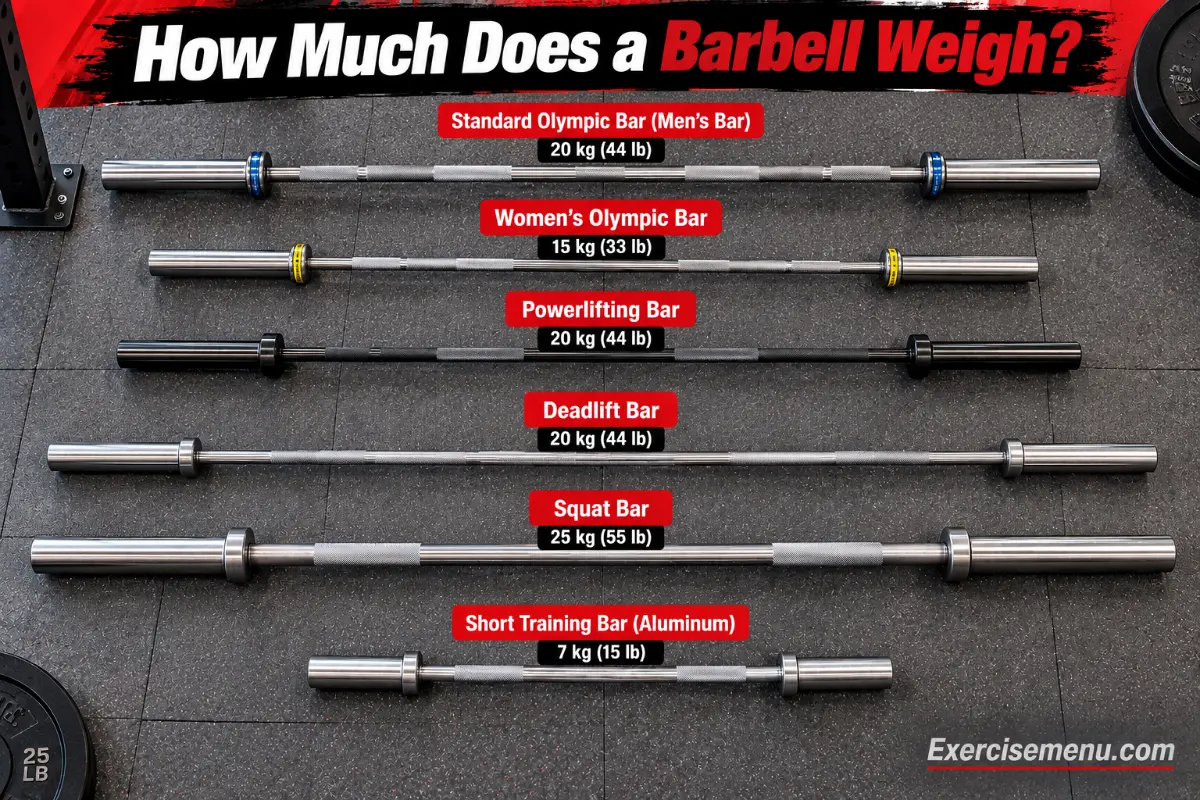
Quick Answer: A standard Olympic barbell weighs 45 lbs (20 kg). A women’s Olympic bar weighs 33 lbs (15 kg). Powerlifting and deadlift bars also weigh 45 lbs but differ in stiffness and length. Squat bars are heavier at 55 lbs (25 kg). Training bars run 5–15 lbs.
Every barbell in a gym looks like a steel rod with sleeves on each end. Most of them weigh 45 lbs. But “most” isn’t “all,” and the exceptions matter more than people expect.
A deadlift bar and a squat bar both look like 7-foot steel rods, but one weighs 45 lbs and the other weighs 55 lbs. A training bar looks like a regular barbell but weighs 10 lbs. A safety squat bar with its pads and handles can hit 70 lbs before you add a single plate. If you’re tracking progressive overload, every one of those differences changes what your training log actually says about your strength.
- Quick Reference Table
- How Much Does a Standard Olympic Barbell Weigh?
- How Much Does a Women's Barbell Weigh?
- How Much Does a Powerlifting Bar Weigh?
- How Much Does a Deadlift Bar Weigh?
- How Much Does a Squat Bar Weigh?
- How Much Does a Standard (1-Inch) Barbell Weigh?
- How Much Does a Training or Technique Bar Weigh?
- Specialty Bars at a Glance
- How Much Do EZ Curl Bars, Hex Bars, and Smith Machine Bars Weigh?
- Is a Barbell 44 or 45 Pounds?
- Do You Count the Bar Weight?
- FAQs
Quick Reference Table
| Barbell Type | Weight (lbs) | Weight (kg) | Length | Shaft Diameter | Primary Use |
|---|---|---|---|---|---|
| Men’s Olympic Barbell | 44–45 lbs | 20 kg | 7.2 ft (2.2 m) | 28 mm | Cleans, snatches, general training |
| Women’s Olympic Barbell | 33 lbs | 15 kg | 6.5 ft (2.01 m) | 25 mm | Olympic lifts, smaller hands |
| Powerlifting Bar | 44–45 lbs | 20 kg | 7.2 ft (2.2 m) | 28–29 mm | Squat, bench, deadlift |
| Deadlift Bar | 44–45 lbs | 20 kg | 7.4–7.7 ft | 27 mm | Deadlifts (more whip) |
| Squat Bar | 55 lbs | 25 kg | 7.7–8 ft | 32 mm | Heavy squats (no whip) |
| Standard (1-Inch) Barbell | 15–25 lbs | 7–11 kg | 5–6 ft | 25 mm (1 inch) | Home gym starter kits |
| Training/Technique Bar | 5–15 lbs | 2.5–7 kg | 4–6 ft | 25–28 mm | Learning form, youth athletes |
| Safety Squat Bar | ~70 lbs | ~32 kg | 7–7.5 ft | 32–38 mm | Squat with shoulder relief |
| Bench Press Bar (Cambered) | ~60 lbs | ~27 kg | ~8 ft | 32–38 mm | Bench press with bend |
| Axle Bar | 44–55 lbs | 20–25 kg | 7 ft | 50 mm (2 inch) | Grip/strongman training |
| Tricep Bar | ~22 lbs | ~10 kg | ~3 ft | 25 mm | Tricep extensions |
| Bamboo/Stability Bar | ~6 lbs | ~2.7 kg | 6.5 ft | 38 mm | Stability, rehab, warm-ups |
| Fixed (Preloaded) Barbell | 20–115 lbs | 9–52 kg | 4–5 ft | 30–32 mm | Quick-grab curls, presses |
| EZ Curl Bar | 10–30 lbs | 4.5–14 kg | 4–4.5 ft | 28 mm | Curls, tricep extensions |
| Trap/Hex Bar | 44–65 lbs | 20–29 kg | 4.5–6 ft | 28–34 mm | Deadlifts, shrugs, carries |
| Smith Machine Bar | 15–35 lbs | 7–16 kg | Varies | Varies | Guided squat, bench, press |
How Much Does a Standard Olympic Barbell Weigh?
A men’s Olympic barbell weighs 20 kg (44.1 lbs, rounded to 45 in the imperial system). It runs 2.2 meters (7.2 feet) long with a 28mm shaft diameter and rotating sleeves that accept 2-inch Olympic plates.
This is the bar the International Weightlifting Federation (IWF) sets as the competition standard for the snatch and clean & jerk. The IWF’s Technical and Competition Rules specify the exact dimensions, materials, and manufacturing tolerances, bars must fall within +0.1% to −0.05% of the stated weight (IWF, 2025). Every competition bar worldwide matches these specs.
Outside of competition, the same 20 kg / 45 lb standard carries into commercial gyms, CrossFit boxes, and home gyms. If you see a 7-foot bar on a squat rack with 2-inch sleeves, it almost certainly weighs 45 lbs.
Olympic bars are built with whip, the shaft flexes under heavy loads. That flex helps during cleans and snatches because the plates break off the floor before the bar finishes bending, giving the lifter a mechanical timing advantage. If you’re not doing Olympic lifts, a stiffer powerlifting bar is a better fit.
How Much Does a Women’s Barbell Weigh?
A women’s Olympic barbell weighs 15 kg (33 lbs). It’s shorter at 2.01 meters (6.5 feet) and uses a 25mm shaft instead of 28mm.
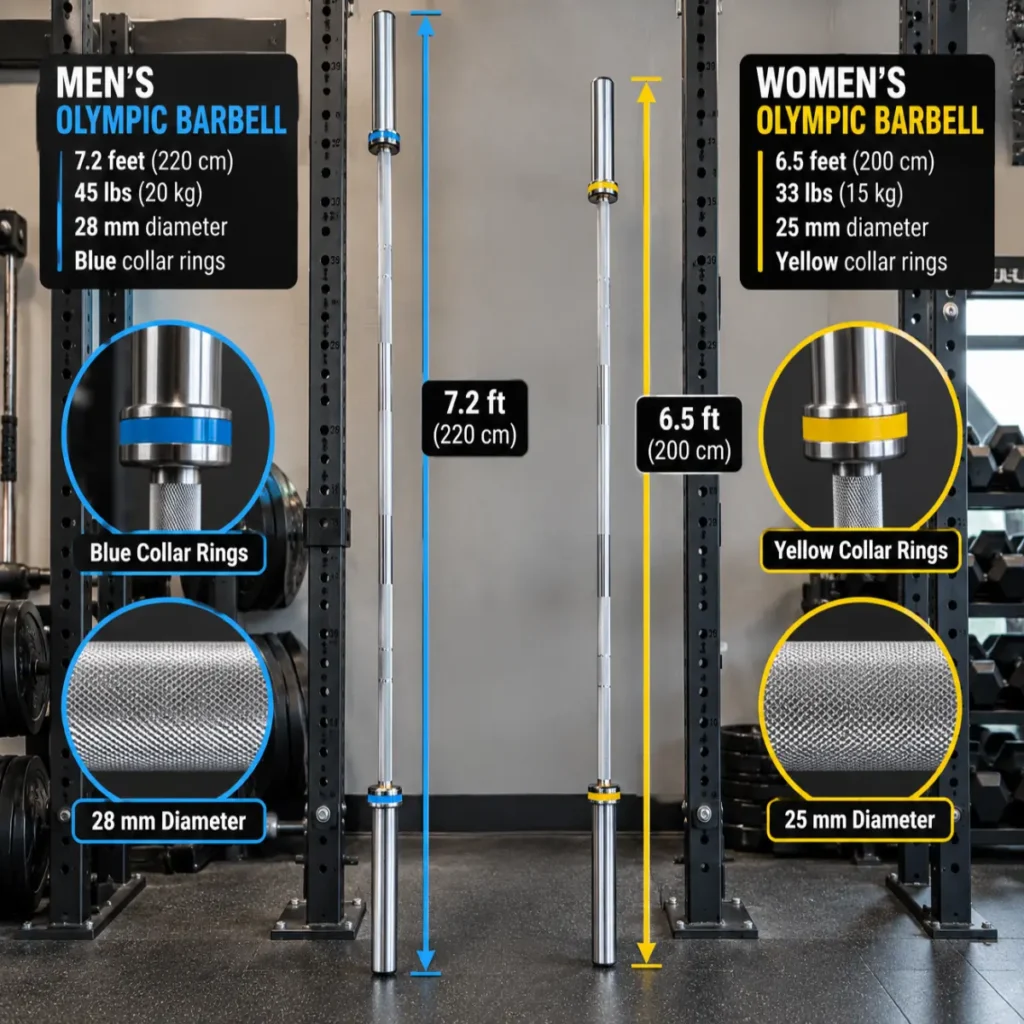
The thinner shaft isn’t about strength capacity, it’s about grip. A 25mm bar fits smaller hands better, which means a more secure hold during fast, technical lifts like snatches and cleans. Despite the name, these bars work for anyone with smaller hands, including teenage athletes and lighter adults who find a 28mm shaft uncomfortable.
You can identify one by the collar markings: women’s Olympic bars carry yellow rings near the sleeves, while men’s bars carry blue. If there are no markings, grip the shaft — if your thumb and fingers overlap easily, it’s the thinner 25mm women’s bar.
How Much Does a Powerlifting Bar Weigh?
A powerlifting bar weighs 20 kg (44–45 lbs), same as an Olympic bar on paper, but built for a different purpose. The International Powerlifting Federation (IPF) specifies a shaft diameter between 28–29mm and a combined bar-and-collar weight of 25 kg (IPF, 2026).
The key difference is stiffness. A powerlifting bar has almost no whip, the shaft doesn’t flex under load. That rigidity is what you want for squats, bench press, and deadlifts, where bar stability matters more than the timing advantage whip provides.
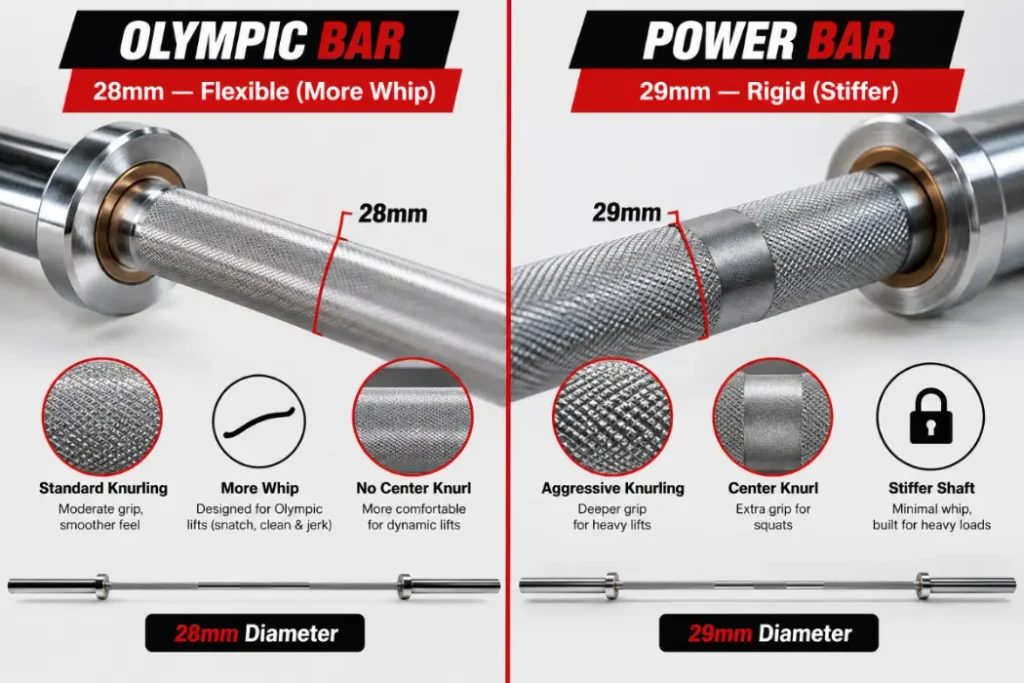
Powerlifting bars also have aggressive knurling and center knurling. The center knurl keeps the bar from sliding down your back during squats. If a bar has center knurling and a stiff feel, it’s a powerlifting bar — not an Olympic bar.
How Much Does a Deadlift Bar Weigh?
A deadlift bar weighs 44–45 lbs (20 kg), but everything else about it is different from a powerlifting bar.
Deadlift bars are longer (7.4–7.7 feet vs 7.2 feet standard) with a thinner shaft (27mm vs 28–29mm). Both changes increase whip. On a heavy pull, the bar bends and the inner plates break the floor before the outer plates do, meaning you’re not lifting the full load all at once. That mechanical advantage is why deadlift bars are used in meets that allow them.
The knurling is aggressive with no center knurl (keeping the bar from scraping your shins), and the sleeves are shorter to concentrate the weight closer to the hands. If a bar flexes noticeably when you pull 315+ lbs, it’s a deadlift bar.
How Much Does a Squat Bar Weigh?
A squat bar weighs 55 lbs (25 kg), heavier and thicker than a standard barbell.
The shaft diameter jumps to 32mm (vs 28mm standard), and the total length extends to 7.7–8 feet. Both changes serve stability: the thicker shaft spreads the load across your upper back more evenly, and the complete lack of whip means the bar stays rigid under maximal squat loads. Center knurling is wider than on a powerlifting bar, covering more shaft where it contacts your back.
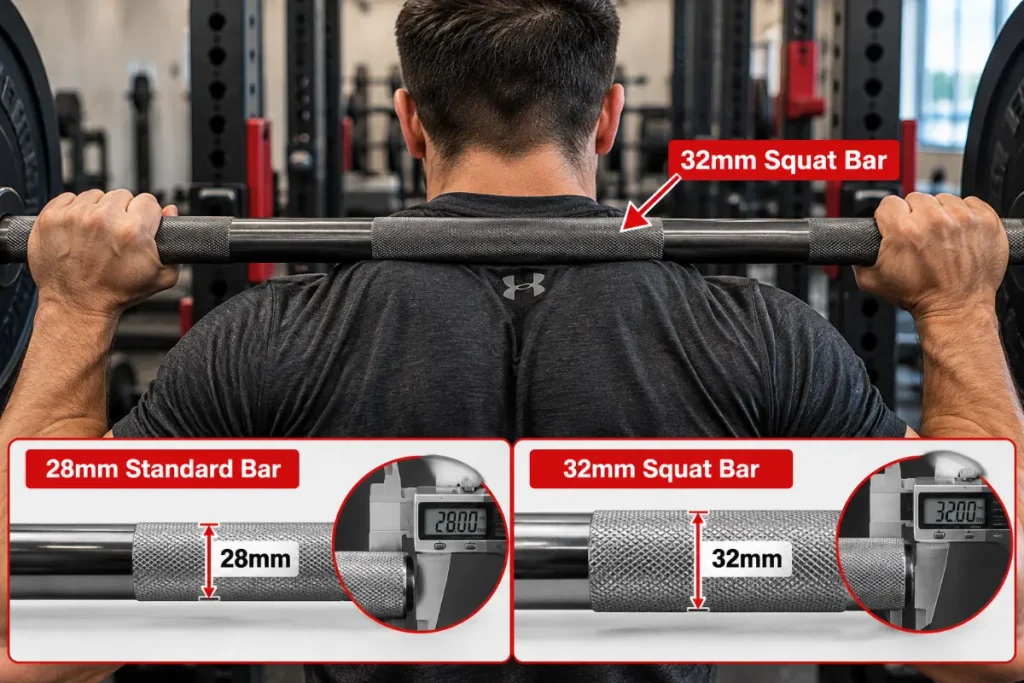
This is a specialty bar. Most commercial gyms don’t stock it — it’s mainly found in powerlifting-focused facilities. If you’re squatting under 400 lbs, a standard 45 lb powerlifting bar handles the job.
How Much Does a Standard (1-Inch) Barbell Weigh?
Standard barbells with 1-inch sleeves weigh 15–25 lbs (7–11 kg). They run 5–6 feet long and accept standard plates with a 1-inch center hole, not the 2-inch Olympic plates used on every bar listed above.
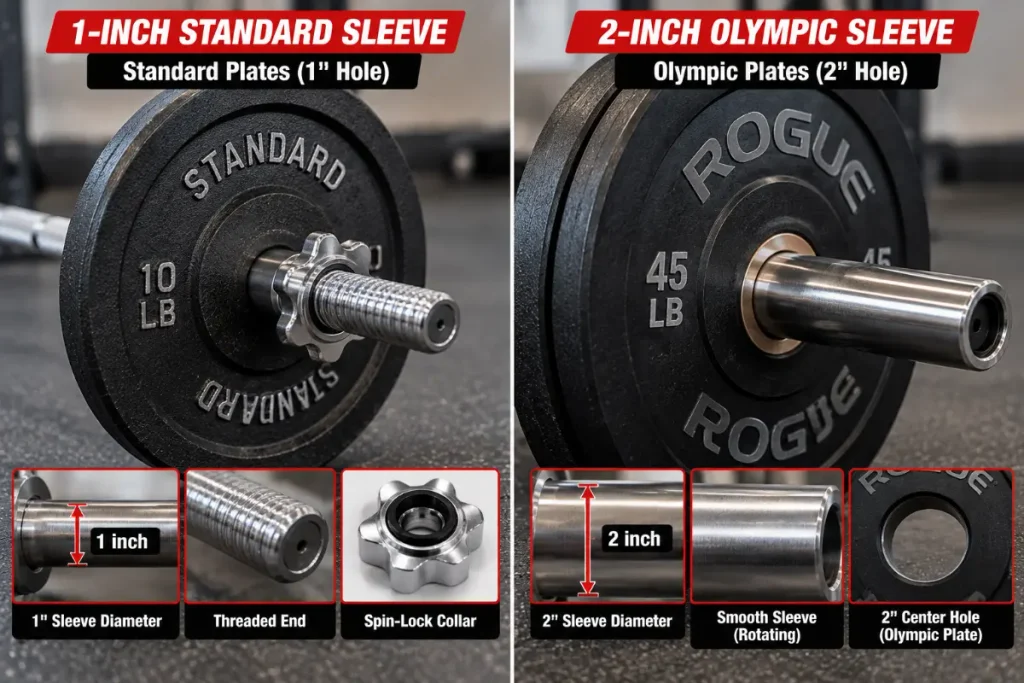
These are the bars included in home gym starter kits, body-pump classes, and budget setups. They’re lighter, cheaper, and have lower weight capacity (typically under 200 lbs). If you’ve already bought Olympic plates, they won’t fit on a standard bar, the sleeve diameters are incompatible.
For anyone training seriously or planning to add weight over time, an Olympic bar is the better investment from the start.
How Much Does a Training or Technique Bar Weigh?
Training bars weigh 5–15 lbs (2.5–7 kg). They’re typically aluminum or lightweight steel, run 4–6 feet long, and max out at 40–200 lbs of capacity.
These bars exist for one purpose: learning movement patterns without load. They’re used with youth athletes, rehab patients, and anyone practicing Olympic lift technique before adding real weight. They’re not built for working sets, they’re built for movement quality. Coaches also use them as warm-up tools before transitioning athletes to a full 45 lb bar.
Specialty Bars at a Glance
Some bars don’t fit the standard categories. Here are the specialty types you’re most likely to encounter:
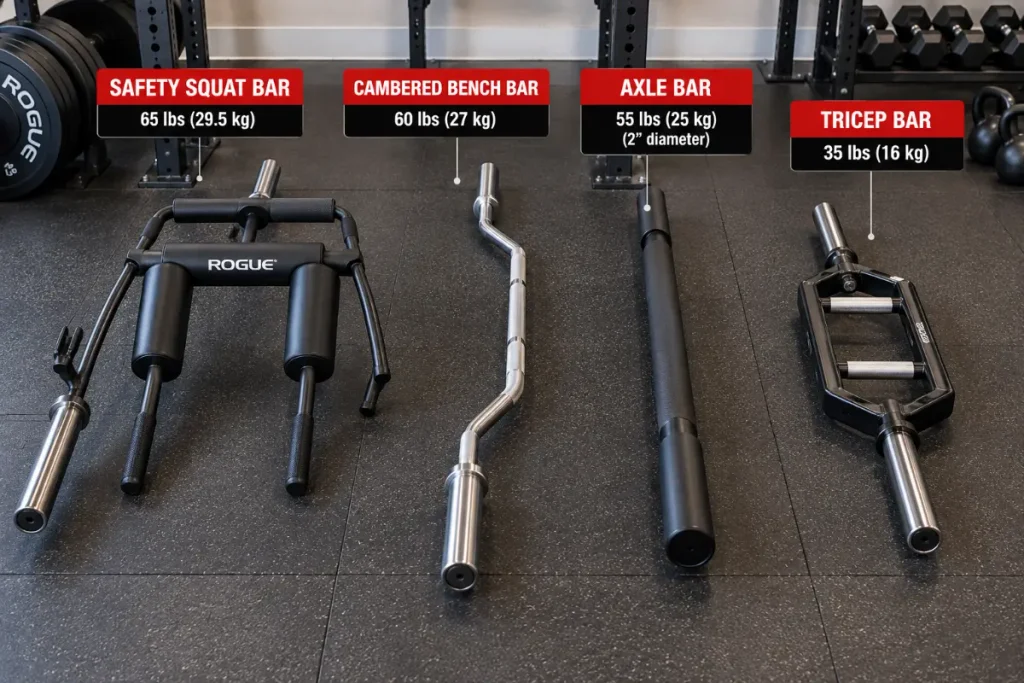
Safety Squat Bar (SSB): ~70 lbs (32 kg). Padded yoke sits on your shoulders with handles jutting forward. The load shifts your center of gravity forward, forcing your core and upper back to work harder. Built for lifters with shoulder mobility issues who can’t hold a straight bar behind them.
Bench Press Bar (Cambered): ~60 lbs (27 kg). A bar with a 4–6 inch bend in the shaft. The curve lowers the plates’ center of gravity and reduces wrist strain during heavy bench pressing. Roughly 8 feet long — longer than a standard bar.
Axle Bar: 44–55 lbs (20–25 kg). A 2-inch thick shaft with no rotating sleeves. The fat grip makes every pulling movement harder and is a staple in strongman training for building raw grip strength.
Tricep Bar: ~22 lbs (10 kg). A short bar (~3 feet) with two parallel handles inside a square frame. Designed to reduce wrist stress during tricep extensions and close-grip pressing movements.
Bamboo/Stability Bar: ~6 lbs (2.7 kg). A flexible bar that wobbles under load, forcing your stabilizer muscles to work throughout the lift. Can handle up to 300 lbs despite its light weight. Used for warm-ups, rehab, and stability-focused training.
Fixed (Preloaded) Barbell: 20–115 lbs (9–52 kg). Straight or EZ-shaped bars with rubber-coated plates permanently attached. The number stamped on the end IS the total weight, bar plus plates combined. You’ll find these on a dedicated rack in most commercial gyms, organized by weight in 10 lb increments.
How Much Do EZ Curl Bars, Hex Bars, and Smith Machine Bars Weigh?
These three bar types vary so widely across brands that each has its own detailed guide on ExerciseMenu:
EZ Curl Bars: 10–30 lbs depending on standard, Olympic, super, rackable, or fixed-weight model. A Titan Olympic EZ bar weighs 14 lbs, while a Rogue weighs 30 lbs. For the complete brand-by-brand breakdown with 16 models compared, see our EZ curl bar weight guide.
Hex/Trap Bars: 44–65 lbs depending on closed, open, or rackable frame design. A CAP hex bar weighs 45 lbs, a Kabuki HD weighs 65 lbs. For the full comparison with 15 brands, see our hex bar weight guide.
Smith Machine Bars: 15–35 lbs depending on the counterbalance system. A counterbalanced bar can feel as light as 15 lbs, while a non-counterbalanced bar sits closer to 30–35 lbs. For specs by machine type, see our Smith machine bar weight guide.
Is a Barbell 44 or 45 Pounds?
Technically, 44.09 lbs. The IWF standard is exactly 20 kg, which converts to 44.09 lbs, not 45.
The rounding happened because barbells and standardized weight plates were designed in Europe during the early-to-mid 20th century using the metric system. A 20 kg bar plus two 20 kg plates plus two 2.5 kg collars = 65 kg, clean, simple math. When the United States adopted the barbell, 44.09 lbs didn’t work for quick plate math, so the industry rounded to 45.
Both numbers are functionally correct for training. The distinction only matters in competition settings where bars and plates are calibrated in kilograms to within 0.1% tolerance. For everyday training, pick one number and use it consistently across every session so your log stays comparable.
Do You Count the Bar Weight?
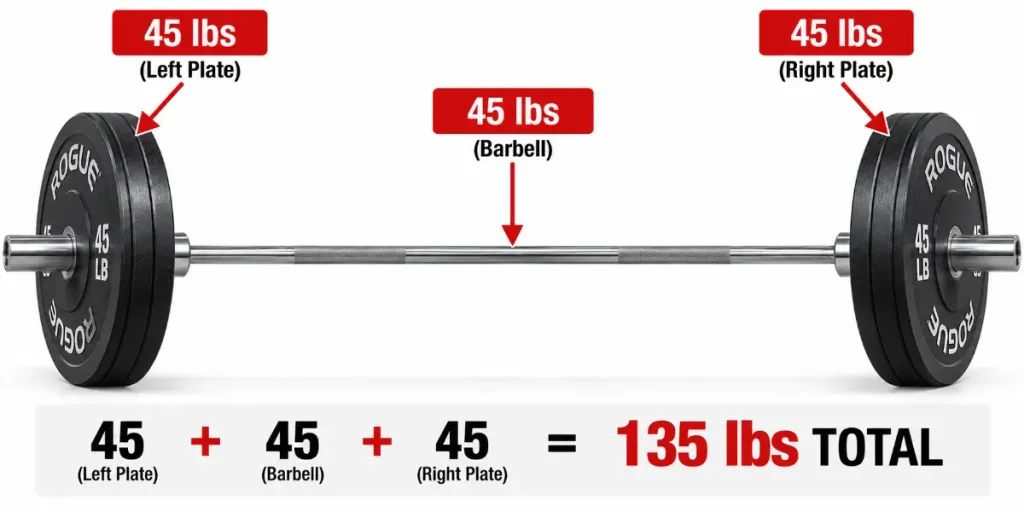
Yes. The bar is part of the load your body moves. Leaving it out makes every number in your training log wrong.
Common loading totals with a 45 lb bar:
| Plates Per Side | Plate Weight | Bar Weight | Total |
|---|---|---|---|
| 1 × 45 lb | 90 lbs | 45 lbs | 135 lbs |
| 2 × 45 lb | 180 lbs | 45 lbs | 225 lbs |
| 3 × 45 lb | 270 lbs | 45 lbs | 315 lbs |
| 4 × 45 lb | 360 lbs | 45 lbs | 405 lbs |
What about collars? Standard gym spring clips weigh roughly 0.5 lbs total for the pair — most lifters ignore them. Metal lock-jaw collars add 1–2 lbs. In competition, IPF-spec collars weigh 2.5 kg (5.5 lbs) each and ARE counted in the total — the bar-plus-collars unit weighs 25 kg before any plates go on.
FAQs
How much does the bar weigh at Planet Fitness?
Most Planet Fitness locations stock standard Olympic-style barbells at 45 lbs. Some locations carry lighter fixed-weight bars and Smith machines with counterbalanced bars at 15–25 lbs. The specific equipment varies by franchise, so check the bar markings or ask the staff at your location.
How much does a 5-foot or 6-foot barbell weigh?
Short barbells with 2-inch Olympic sleeves typically weigh 25–35 lbs. Short bars with 1-inch standard sleeves weigh 12–15 lbs. Neither matches a full-length 7-foot Olympic bar at 45 lbs — don’t assume a shorter bar carries the same weight just because it has the same sleeve type.
Is the bar the same weight on a bench press station and a squat rack?
In most commercial gyms, yes — the same 45 lb barbell gets used across both stations. The weight only changes if your gym places a dedicated bench press bar (~60 lbs, cambered shaft) on the bench or a dedicated squat bar (55 lbs, thicker shaft) on the rack. If the bar looks or feels different from what you’re used to — thicker, longer, or with a bend in it — it’s probably a specialty bar at a different weight.
Does bar weight matter if I’m a beginner?
It matters more for beginners than for advanced lifters. A 45 lb bar is already a meaningful load for someone who hasn’t trained before — it’s your first bench press, squat, or overhead press weight before a single plate goes on. Knowing that starting number lets you track progress from session one instead of guessing later.
Can I deadlift with a squat bar or squat with a deadlift bar?
You can, but neither is ideal. A squat bar at 55 lbs with a 32mm shaft changes your deadlift grip and pulls 10 lbs heavier than expected. A deadlift bar with a 27mm shaft and aggressive whip makes squats unstable under heavy loads. Use the bar built for the lift whenever your gym has the option.
How much does a fixed barbell weigh?
Fixed barbells — the preloaded bars sitting on a dedicated rack, usually with rubber-coated plates that can’t be removed — range from 20 to 115 lbs. The number stamped on the end cap IS the total weight, bar and plates combined. No math needed — just read the label and lift.
If you’re new to barbell training or returning after a break, start with the empty bar and add weight in small increments. If you have pain or mobility limitations, consult a doctor or physiotherapist before loading.
