

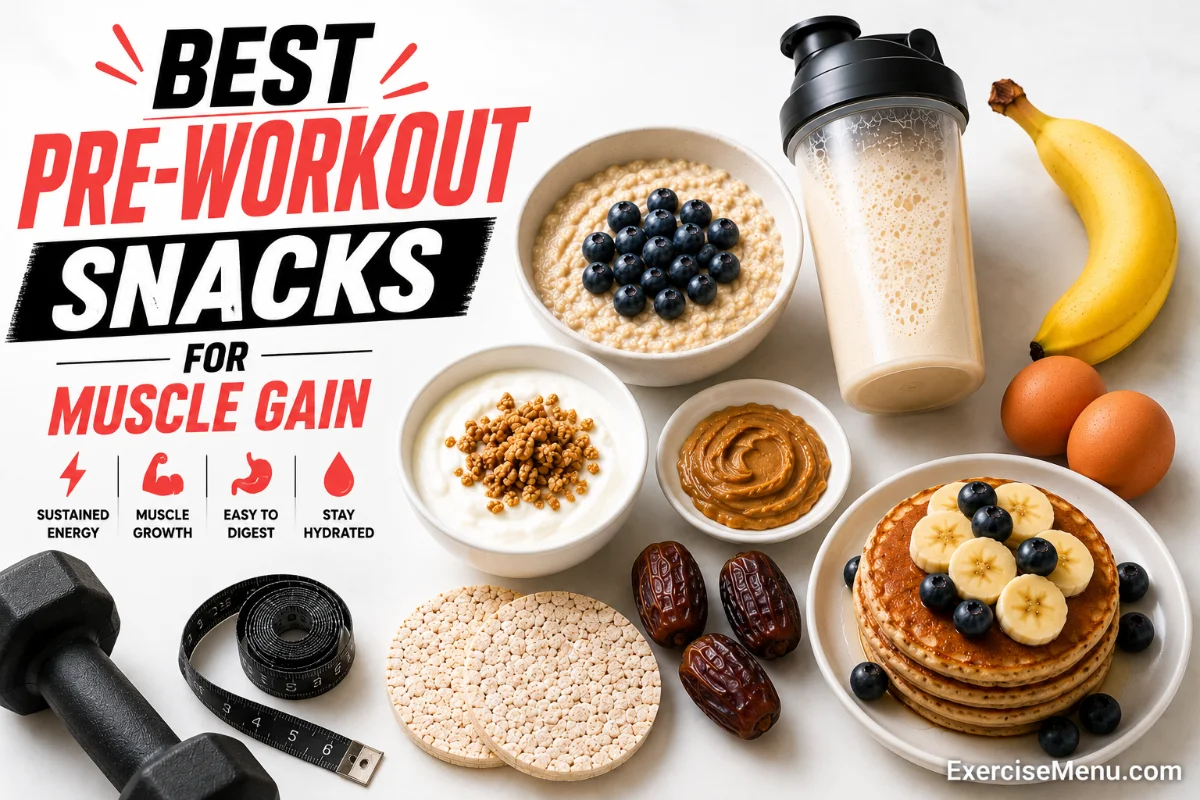
Quick Answer: A pre-workout snack for muscle gain should deliver 20–30g of protein and 30–60g of carbohydrates, eaten 30–90 minutes before training. Top options: banana with a whey protein shake, Greek yogurt with granola, or oatmeal with whey and banana.
Most pre-workout snack advice stops at “eat some carbs and protein.” That works for general fitness. Muscle gain demands more precision enough glycogen to power heavy sets past the third and fourth set where the growth stimulus actually happens, and enough circulating amino acids to reduce muscle protein breakdown while you’re still under the bar.
This guide covers 7 pre-workout snacks organised by how much time you have, with approximate macros for each. A comparison table puts all 7 side by side so you can pick the right one in seconds. For a broader look at pre-workout nutrition beyond snacks, the what to eat before a workout guide covers full meals, timing by schedule, and body-weight-based portions.
- Why Does Your Pre-Workout Snack Matter for Muscle Gain?
- What Should a Pre-Workout Snack for Muscle Gain Contain?
- 7 Best Pre-Workout Snacks for Muscle Gain
- When Should You Eat Your Pre-Workout Snack?
- How Does Your Snack Change on a Bulk vs a Cut?
- What Should You Avoid Before Lifting?
- Frequently Asked Questions
Why Does Your Pre-Workout Snack Matter for Muscle Gain?
A pre-workout snack for muscle gain serves a different purpose than a pre-workout snack for general fitness. General fitness snacking is about energy. Muscle gain snacking is about protecting the muscle you already have while creating the conditions to build more.
Without adequate fuel, your body increases muscle catabolism — it breaks down existing muscle tissue for amino acids to use as energy during the session. A snack with protein provides amino acids that circulate during the workout, reducing that breakdown and supporting muscle protein synthesis (MPS) while you’re still lifting.
A 2017 study by Schoenfeld et al. published in PeerJ tested the “anabolic window” theory by comparing 25g of protein consumed immediately before versus immediately after resistance training in trained men over 10 weeks. The result: no significant difference in muscle strength or hypertrophy between groups pre-workout protein was equally effective as post-workout protein.
This means your pre-workout snack contributes to muscle growth just as much as a post-workout shake, so timing matters less than hitting your total daily protein.
What Should a Pre-Workout Snack for Muscle Gain Contain?
A pre-workout snack for muscle gain needs 30–60g of carbohydrates for energy, 20–30g of protein for muscle protection, and under 10–15g of fat to avoid slowing digestion. The closer you eat to your session, the lighter and simpler the snack should be.
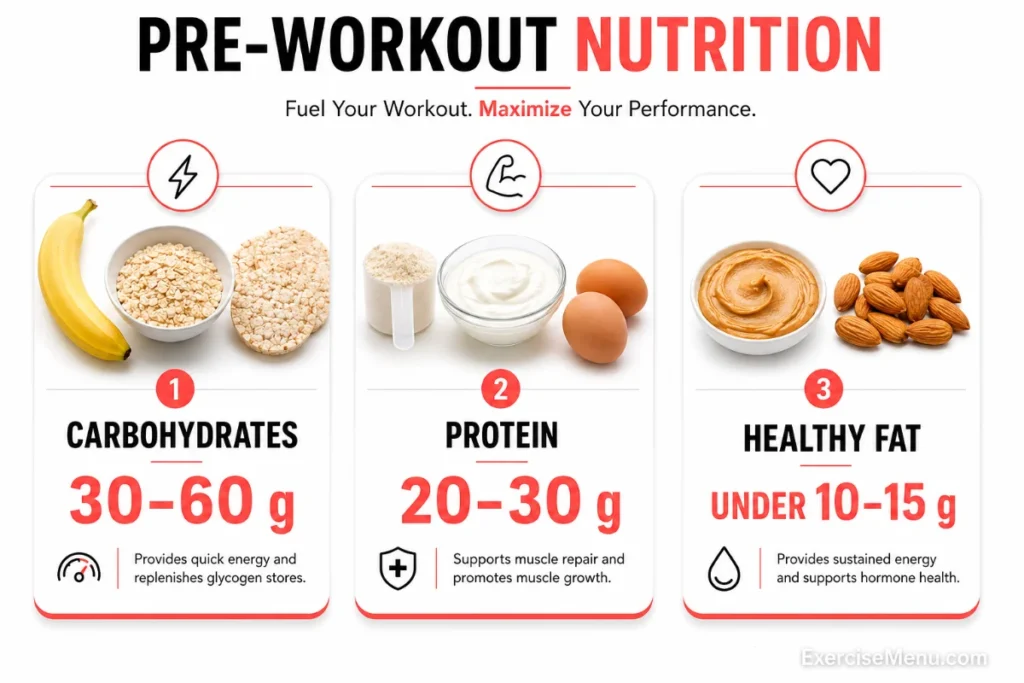
An effective pre-workout snack combines carbohydrates for energy, protein for muscle support, and a small amount of fat for easier digestion.
Carbohydrates
Aim for 30–60g of carbohydrates. For muscle gain specifically, carbs aren’t just about avoiding fatigue they replenish muscle glycogen, which directly affects how many productive sets you can complete. Adequate glycogen helps you maintain training intensity across your full session rather than fading in later sets.
Choose fast-digesting, high glycemic index (GI) sources like bananas, dates, and rice cakes within 60 minutes of training. If you have 90+ minutes, slower-digesting low-GI options like oatmeal and whole grain toast work because they have time to break down before your first warm-up set. The pillar guide covers the full carbohydrate breakdown if you want deeper detail.
Protein
Aim for 20–30g of protein in your pre-workout snack. This amount provides enough of the amino acid leucine roughly 2.5–3g from whey, less from whole foods to trigger MPS. According to the ISSN Position Stand on Nutrient Timing (Kerksick et al., 2017), consuming protein and carbohydrates in the hours surrounding exercise supports glycogen replenishment and muscle protein balance.
For muscle gain, protein source matters as much as quantity. Whey protein, eggs, and Greek yogurt are fast-digesting ideal within 60 minutes. Cottage cheese and casein digest slower, which extends amino acid availability through sessions lasting 60+ minutes. Pick your source based on when you’re training, not just how much protein it has.
Fat — Keep It Low Before Training
One tablespoon of peanut butter or a few almonds won’t hurt your session. But anything beyond 10–15g of fat within an hour of lifting risks sitting in your stomach during heavy compound movements.
Fat slows gastric emptying, which diverts blood to digestion when you need it in your working muscles. For muscle gain, fat doesn’t contribute to the immediate session its value is in your overall daily intake, not your pre-workout window.
Quick Reference Table — Macro Targets by Timing
| Timing Before Workout | Carbs (g) | Protein (g) | Fat (g) | Snack Size (cal) |
|---|---|---|---|---|
| 30–60 min | 30–40 | 20–25 | Under 10 | 200–300 |
| 60–90 min | 40–50 | 25–30 | Under 15 | 300–400 |
| 90–120 min | 50–60 | 25–30 | Under 15 | 350–450 |
7 Best Pre-Workout Snacks for Muscle Gain
Every snack below includes approximate macro breakdowns. They’re organized by how much time you have because the person searching “best pre-workout snacks for muscle gain” is usually 30 minutes away from training, not planning tomorrow’s meal prep.
Grab-and-Go — Under 2 Minutes
1. Banana + Whey Protein Shake
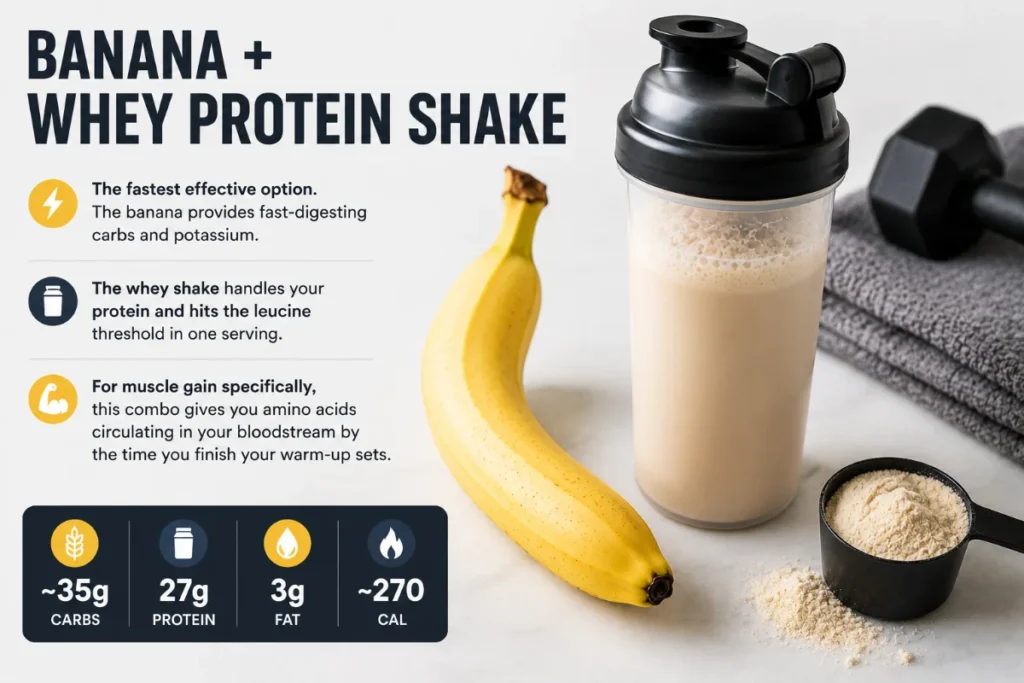
The fastest effective option. The banana provides fast-digesting carbs, potassium, and natural sugars that top off blood glucose quickly. The whey shake handles your protein and hits the leucine threshold in one serving. For muscle gain specifically, this combo gives you amino acids circulating in your bloodstream by the time you finish your warm-up sets.
~35g carbs | 27g protein | 3g fat | ~270 cal
2. Protein Bar
Not all bars work for this. Check three things on the label: 15–25g carbs, 15–20g protein, and under 10g fat. Bars loaded with fiber (10g+) or fat (15g+) digest too slowly and can cause stomach pressure during heavy compound lifts like squats and deadlifts. Ignore the branding and marketing — flip the bar over and read the nutrition panel.
Target: ~25g carbs | 18g protein | <10g fat | ~250 cal
3. Dates (3-4) + Small Handful of Almonds
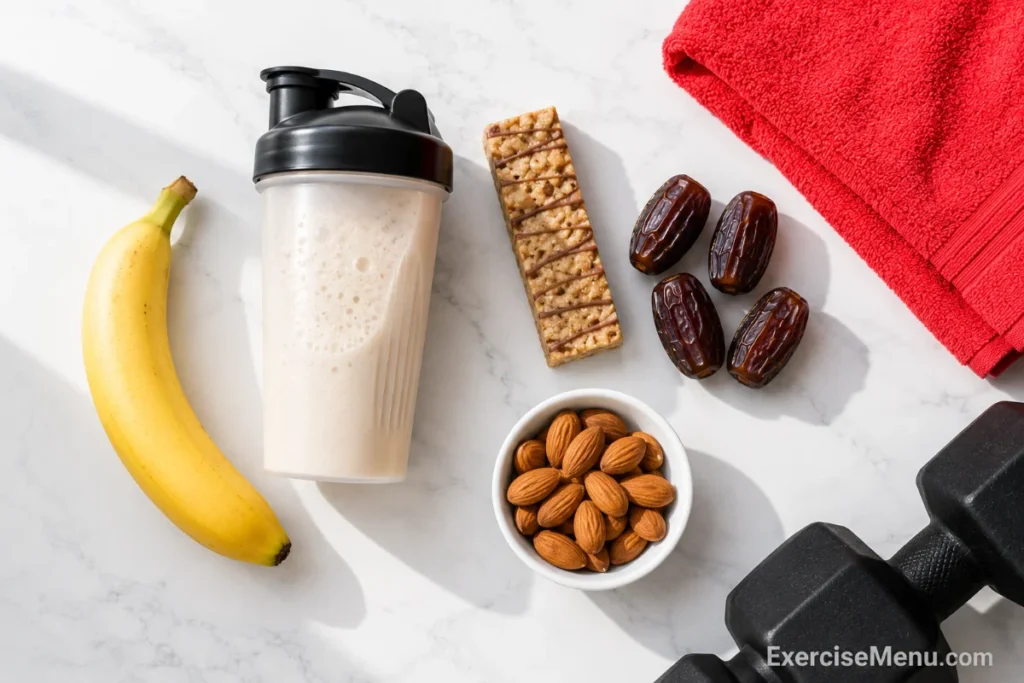
Dates deliver roughly 18g of carbs each almost pure glucose and fructose plus potassium. Almonds add a small amount of protein and healthy fat. Note: This snack provides only 6g of protein, which is well below the 20–30g target for muscle gain.
It works as a quick fuel source, but pair it with a few sips of a whey shake if hypertrophy is the priority. On its own, it’s an energy snack not a muscle-building snack.
~35g carbs | 6g protein | 7g fat | ~230 cal
Quick Prep — 5 to 10 Minutes
4. Greek Yogurt + Granola + Berries
Greek yogurt stands out for muscle gain because of its leucine content — 200g of plain Greek yogurt provides roughly 18–20g protein with a higher leucine concentration per gram than most whole-food protein sources. The granola adds carbs for energy. The berries add antioxidants and fast sugars. Choose plain over flavored to control added sugar. To push protein past 25g, stir in a half scoop of whey.
~40g carbs | 22g protein | 8g fat | ~320 cal
5. Cottage Cheese + Banana + Drizzle of Honey
Cottage cheese is high in casein a slower-digesting protein that extends amino acid delivery through longer sessions (60+ minutes). The banana and honey handle fast carbs. For muscle gain during longer workouts (75+ minutes of heavy resistance work), casein keeps amino acid levels elevated for 3–4 hours after eating meaning you still have amino acids circulating during your last sets when whey would have cleared your system.
~40g carbs | 20g protein | 4g fat | ~280 cal
6. Rice Cakes (2) + Peanut Butter + Banana Slices
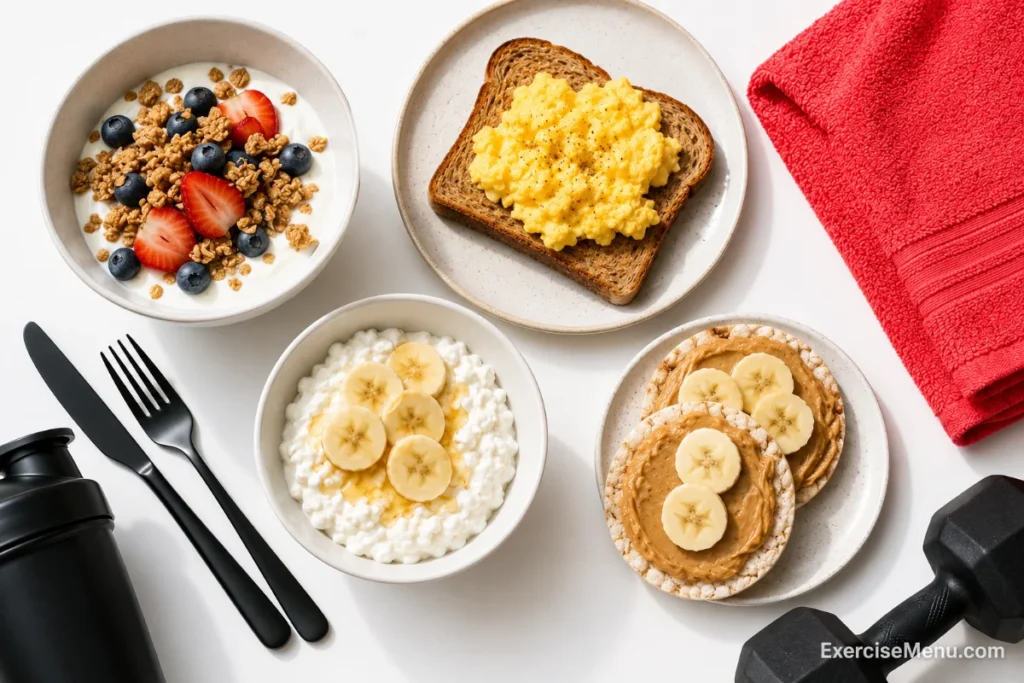
Rice cakes are almost pure fast-digesting carbs with minimal fiber they clear your stomach fast. Peanut butter adds protein and fat. Good option if heavier snacks cause nausea before training. Keep the peanut butter to one tablespoon to avoid pushing fat too high.
~42g carbs | 10g protein | 9g fat | ~290 cal
7. Protein Smoothie (Banana + Berries + Whey + Oat Milk)
Liquids digest faster than solids, which makes smoothies a strong option for early morning lifters who can’t eat solid food at 5 AM. Blend everything, drink it on the way to the gym, and train 30–45 minutes later. Add a tablespoon of oats to the blend if you want more sustained energy for sessions over 60 minutes.
~45g carbs | 28g protein | 5g fat | ~340 cal
If you have 90+ minutes before training and want a full meal with higher calories and protein, see pre-workout meals for muscle gain.
Quick Reference Table — All 10 Snacks Compared
| # | Snack | Carbs (g) | Protein (g) | Fat (g) | Calories | Prep Time | Best Timing |
|---|---|---|---|---|---|---|---|
| 1 | Banana + Whey Shake | 35 | 27 | 3 | 270 | <2 min | 30–45 min before |
| 2 | Protein Bar | ~25 | ~18 | <10 | ~250 | 0 min | 30–60 min before |
| 3 | Dates + Almonds | 35 | 6 | 7 | 230 | <2 min | 20–30 min before |
| 4 | Greek Yogurt Bowl | 40 | 22 | 8 | 320 | 5 min | 60–90 min before |
| 5 | Cottage Cheese + Banana | 40 | 20 | 4 | 280 | 5 min | 60–90 min before |
| 6 | Rice Cakes + PB + Banana | 42 | 10 | 9 | 290 | 5 min | 30–60 min before |
| 7 | Protein Smoothie | 45 | 28 | 5 | 340 | 10 min | 30–45 min before |
When Should You Eat Your Pre-Workout Snack?
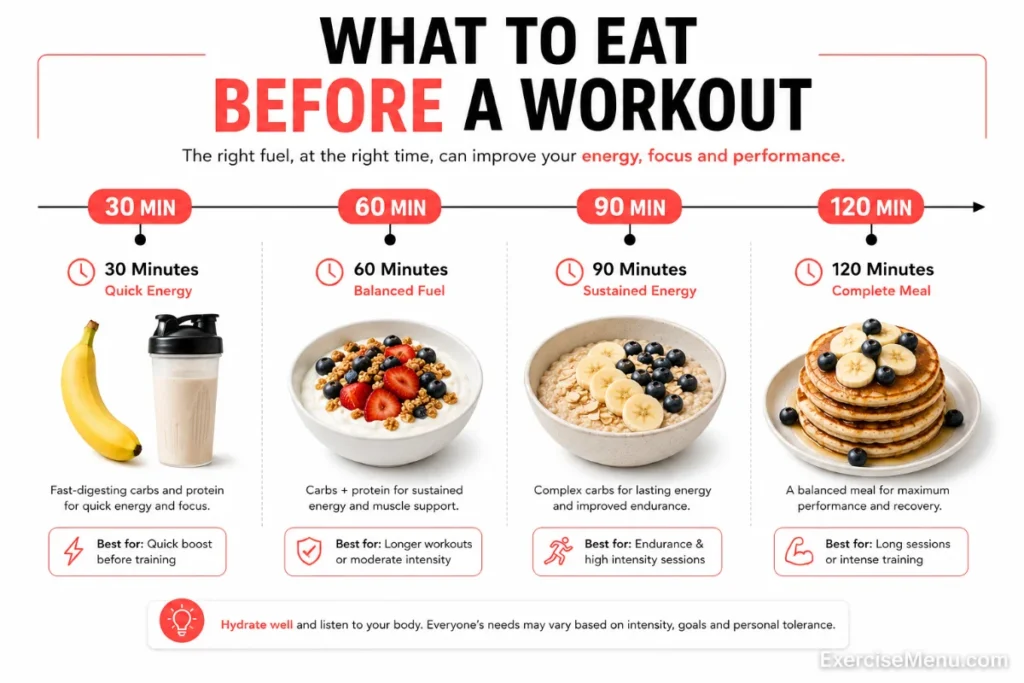
Eat a lighter snack 30–60 minutes before training if you need fast fuel. Banana + whey shake, protein bar, dates, rice cakes, and the protein smoothie all digest within that window. If you have 60–90 minutes, Greek yogurt bowl or cottage cheese + banana work better because they need more digestion time.
“I ate a full meal two hours ago — do I still need a snack?” If that meal was 400+ calories with at least 20g of protein, you’re likely covered for sessions under 60 minutes. Your glycogen is still topped off, and amino acids from the meal are still circulating. But if the meal was light, or your session will run 75+ minutes of heavy resistance work, a small 150–200 calorie snack 30 minutes before fills the gap without overloading your stomach.
Morning lifters who train at 5–6 AM face a different situation. You’ve been fasting for 8+ hours overnight, and muscle glycogen is partially depleted. Even a small snack, a banana and a few sips of whey shake, makes a measurable difference in how many productive reps you get before fatigue. Don’t skip it.
Everyone’s stomach handles pre-workout food differently. Some people can eat oatmeal 45 minutes before deadlifts with no issues. Others feel nauseous from a banana 30 minutes out. Test your pre-workout snack during lighter sessions before relying on it for heavy training days. If solid food never sits well, liquid options like smoothies and shakes are a permanent solution, not a compromise.
One thing that matters as much as the snack itself: water. Drink 400–500 mL (roughly 2 cups) in the 2 hours before training. Dehydration reduces strength output and accelerates fatigue even before glycogen becomes an issue. Sip steadily, don’t chug right before your warm-up.
How Does Your Snack Change on a Bulk vs a Cut?
The keyword here is portions — not different foods.
If you’re bulking (caloric surplus), your pre-workout snack is part of your daily surplus. Scale to the higher end of the targets: 50–60g carbs, 25–30g protein, 350–450 calories. Full bowl of oatmeal with whey and banana. Smoothie with extra oats blended in. Bigger snack means more glycogen means more training volume which drives the growth stimulus you’re eating for in the first place.
If you’re cutting (caloric deficit), the snack comes from your daily calorie budget — it’s not extra food. Keep it under 250 calories. Prioritize protein (25–30g) to protect muscle while the deficit strips fat. Reduce carbs to the lower end: 20–30g. Skip the granola on the yogurt. Use half a banana instead of a full one.
Protein shake plus half a banana is the leanest effective option at roughly 200 calories and 28g protein. Getting enough sleep during a cut is equally important without adequate recovery, even a perfect pre-workout snack won’t compensate for the muscle breakdown that poor sleep accelerates.
What Should You Avoid Before Lifting?
The pillar guide covers general pre-workout foods to avoid in detail. For muscle gain sessions specifically, these are the mistakes that cost you the most:
Too much fat within an hour of heavy compounds. A 20g+ fat snack before squats or deadlifts diverts blood to digestion when you need it in your working muscles. You lose top-end strength and feel sluggish during the sets that matter most for progressive overload and growth.
Fiber-heavy foods right before training. Gas and bloating during a heavy brace — the kind you hold during a squat or overhead press is uncomfortable enough to cut your session short. Save the high-fiber foods for meals outside the pre-workout window.
Spicy food. Capsaicin irritates the stomach lining and can trigger acid reflux during movements that compress your abdomen. Even if you tolerate spicy food at rest, bracing under load changes that equation.
Carbonated drinks and alcohol. Carbonation creates gas pressure that worsens during core bracing. Alcohol impairs muscle contractile force and coordination — both of which directly reduce the quality of your training stimulus.
Large meals too close to your session. More than 400 calories within 30 minutes will sit in your stomach. If you ate big, wait longer. If you can’t wait, go liquid — a smoothie or shake clears faster than solid food.
Frequently Asked Questions
Is a banana enough before a workout for muscle gain?
For strength training aimed at muscle growth, a banana alone provides carbs but only about 1.3g of protein — well below the 20–30g needed to trigger muscle protein synthesis. Pair it with a whey shake or a tablespoon of nut butter.
Should I eat a protein bar before lifting?
Check the label for 15–25g carbs, 15–20g protein, and under 10g fat. Many “protein bars” are closer to meal replacements with 15–20g fat and 10g+ fiber, which sit heavy during compound lifts.
How much protein do I need before a workout to build muscle?
You need roughly 2.5–3g of leucine to trigger MPS. A 25g scoop of whey delivers about 2.7g. Three whole eggs deliver only ~1.5g. If using whole-food protein, you may need a larger portion or a combined source to hit the threshold.
Can I build muscle training on an empty stomach?
You can, but fasted strength training increases muscle catabolism during the session. Even a banana and a scoop of whey (270 cal) provides enough amino acids to reduce breakdown and enough carbs to keep training intensity up.
Is peanut butter a good pre-workout snack for muscle gain?
As part of a combo, yes one tablespoon with toast, rice cakes, or a banana works well. On its own, peanut butter is roughly 75% fat by calories, which slows digestion too much for anything eaten within an hour of training.
Is Greek yogurt or cottage cheese better before a workout?
Greek yogurt has more whey protein and digests faster better 30–60 minutes before training. Cottage cheese is higher in casein, which extends amino acid availability through longer sessions (60+ minutes). Pick based on timing, not taste.
