

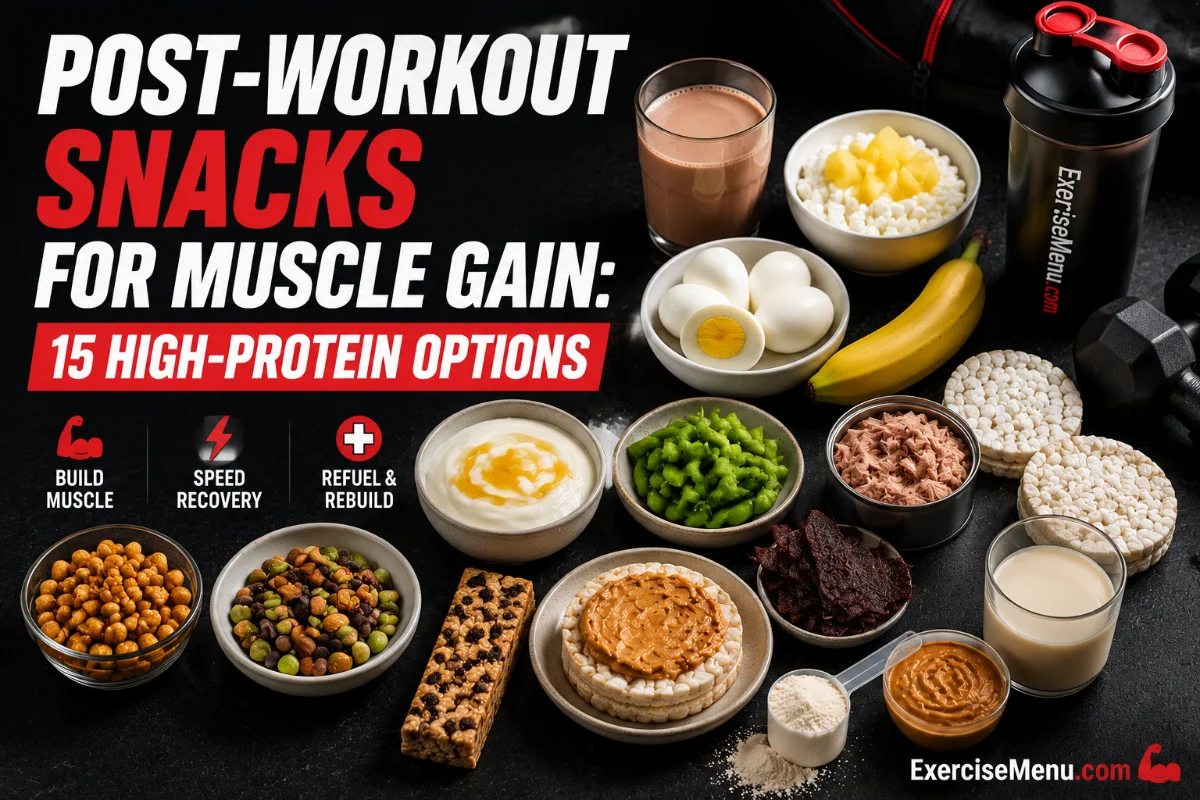
Quick answer: The best post-workout snacks for muscle gain and recovery deliver 20–40g of protein with at least 2.5g of leucine — the amino acid that triggers muscle protein synthesis. Greek yogurt, cottage cheese, jerky, tuna packets, and a whey shake with a banana all hit that mark in under 400 calories.
A post-workout snack is not a meal. It is a focused serving of protein and carbohydrates eaten when a full meal is not practical — between sessions and dinner, after a late workout, or on the drive home from the gym.
The International Society of Sports Nutrition recommends 20–40g of high-quality protein per feeding opportunity for muscle gain (ISSN position stand). Researcher Daniel Moore found that the optimal dose scales to roughly 0.31g per kilogram of body weight (Moore, per-meal protein), which lands between 25–35g for most adults weighing 80–110 kg. These 15 snacks are built around that range — most hit it outright, and the few that fall short are paired with additions that close the gap.
- What's the Best Post-Workout Snack for Muscle Gain?
- What Makes a Post-Workout Snack Good for Muscle Gain?
- What Are the 15 Best Post-Workout Snacks for Muscle Gain?
- Which Snacks Work Best for Your Situation?
- What Post-Workout Snack Mistakes Slow Down Muscle Gain?
- Should You Eat a Snack or Drink a Protein Shake After a Workout?
- Frequently Asked Questions
What’s the Best Post-Workout Snack for Muscle Gain?
The best post-workout snack for muscle gain clears 2.5g of leucine with 20–30g of protein. For a fast grab-and-go pick, a banana with a whey shake (27g protein, 2.8g leucine) wins; for a whole-food option, cottage cheese with pineapple (28g protein, 2.6g leucine) is the strongest. Both cross the muscle-building threshold on their own, in under 300 calories. The full list below covers quick grabs, higher-carb options, and plant-based picks.
What Makes a Post-Workout Snack Good for Muscle Gain?
A post-workout snack that builds muscle needs three things: enough total protein (20–40g), enough leucine (at least 2.5g), and a serving of carbohydrates to support glycogen recovery. Not sure of your own number? Run your weight through a protein calculator.
Leucine is the amino acid that switches on muscle protein synthesis. Most whole-food protein sources contain 6–8% leucine by weight, so hitting 2.5g requires roughly 30–35g of total protein. Whey is the exception — it contains roughly 11% leucine, so 25g of whey alone crosses the threshold.
Carbohydrates are secondary but not optional. Even 15–20g of carbs alongside protein improves glycogen replenishment compared to protein alone, and a 3:1 carb-to-protein ratio helps most after long, high-volume sessions — more on high-glycemic carbs after a workout. A banana, a handful of crackers, or a rice cake is enough. A snack sits between 150 and 400 calories; anything larger with multiple components is a meal, and your full post-workout meal planning should handle that.
What Are the 15 Best Post-Workout Snacks for Muscle Gain?
These 15 snacks deliver 15–32g of protein each, with leucine listed per option. Picks below the 2.5g leucine threshold are marked — pair them with a second protein source to close the gap.
| Snack | Protein | Leucine | Carbs | Cal | Best for |
|---|---|---|---|---|---|
| Greek yogurt + honey | 20g | 2.0g* | 25g | 220 | Add whey/almonds |
| 3 eggs + banana | 18g | 1.6g* | 27g | 280 | Starter / prep-ahead |
| Beef jerky + banana | 24g | 2.0g* | 27g | 280 | Gym bag |
| Cottage cheese + pineapple | 28g | 2.6g | 20g | 260 | Late-night (casein) |
| Tuna packet + rice cakes | 26g | 2.2g* | 16g | 220 | Gym bag |
| Chocolate milk (500ml) | 16g | 1.5g* | 50g | 400 | Glycogen / endurance |
| Whey protein bar | 20–30g | 1.8–2.5g | 25–35g | 250–350 | Gym bag |
| Rice cake + PB + whey shake | 32g | 3.0g | 25g | 380 | Max muscle |
| Protein trail mix | 15g | 1.2g* | 20g | 320 | Pair w/ shake |
| Banana + whey shake | 27g | 2.8g | 30g | 280 | Fast grab-and-go |
| Edamame (1.5 cups) | 25g | 2.0g* | 15g | 280 | Plant + fiber |
| Roasted chickpeas + soy milk | 22g | 1.8g* | 35g | 340 | Plant / portable |
| Tofu jerky + apple | 18g | 1.4g* | 25g | 240 | Plant (add soy milk) |
| Pea protein shake + banana | 24g | 2.0g* | 28g | 260 | Plant |
| Peanut butter + plant shake | 30g | 2.4g* | 12g | 350 | Plant / satiety |
* below the 2.5g leucine threshold alone — pair with a second protein source.
High-Protein Quick Grabs
1. Greek yogurt (200g) + honey. 20g protein, 2.0g leucine, 25g carbs, 220 cal. Below the leucine threshold alone — add a scoop of whey or a handful of almonds to push past 2.5g.
2. Hard-boiled eggs (3) + a banana. 18g protein, 1.6g leucine, 27g carbs, 280 cal. Below both thresholds on their own, but the banana adds carbs and the combination works as a starter snack. Prep a batch weekly — they keep 5 days refrigerated.
3. Beef jerky (60g) + a banana. 24g protein, 2.0g leucine, 27g carbs, 280 cal. No refrigeration needed. Check sodium — aim for brands under 500mg per serving.
4. Cottage cheese (1 cup) + pineapple. 28g protein, 2.6g leucine, 20g carbs, 260 cal. One of the few whole-food snacks that crosses the leucine threshold on its own. The pineapple adds vitamin C, which supports connective tissue repair and can reduce muscle soreness after heavy sessions.
5. Tuna packet + rice cakes (2). 26g protein, 2.2g leucine, 16g carbs, 220 cal. Single-serve packets require no can opener. Shelf-stable for the gym bag.
Snacks With Carbs for Glycogen
6. Chocolate milk (500ml). 16g protein, 1.5g leucine, 50g carbs, 400 cal. Low in protein and leucine, but the 3:1 carb-to-protein ratio makes it effective for glycogen recovery after high-volume sessions. Pair with a handful of nuts to boost protein.
7. Whey protein bar. 20–30g protein, 1.8–2.5g leucine, 25–35g carbs, 250–350 cal. Choose bars listing whey protein isolate or concentrate as the first ingredient. Avoid bars where collagen is the primary protein — collagen lacks leucine.
8. Rice cake + peanut butter + whey shake. 32g protein, 3.0g leucine, 25g carbs, 380 cal. The whey provides the leucine; the rice cake and peanut butter add carbs and fats.
9. Protein trail mix (DIY blend, 60g). 15g protein, 1.2g leucine, 20g carbs, 320 cal. Standard trail mix is fat-heavy and protein-light. Build your own: almonds, pumpkin seeds, roasted edamame, and dark chocolate chips. Below both thresholds alone — pair with a protein shake.
10. Banana + whey protein shake. 27g protein, 2.8g leucine, 30g carbs, 280 cal. Fast-digesting carbs from the banana plus high-leucine whey. Ready in 30 seconds.
Plant-Based Options
Building muscle on plants works when the leucine adds up. For full sit-down portions, see our high-protein vegetarian post-workout meals.
11. Edamame (1.5 cups, shelled). 25g protein, 2.0g leucine, 15g carbs, 8g fiber, 280 cal. One of the highest-leucine plant sources. The fiber sustains energy through the afternoon. Frozen bags microwave in 3 minutes.
12. Roasted chickpeas (100g) + soy milk (250ml). 22g protein, 1.8g leucine, 35g carbs, 340 cal. Crunchy, portable, shelf-stable. Soy milk adds the leucine that chickpeas lack alone.
13. Tofu jerky (80g) + an apple. 18g protein, 1.4g leucine, 25g carbs, 240 cal. Below threshold — check labels and aim for brands with 15g+ per serving. Add a soy milk to close the leucine gap.
14. Pea protein shake + banana. 24g protein, 2.0g leucine, 28g carbs, 260 cal. Pea protein has the highest leucine content among plant protein powders at roughly 8% by weight.
15. Peanut butter (2 tbsp) + plant protein shake. 30g protein, 2.4g leucine, 12g carbs, 350 cal. The shake does the protein work; the peanut butter adds calories and fat for satiety.
Which Snacks Work Best for Your Situation?
Jerky and protein bars for the gym bag, cottage cheese for late-night sessions, and eggs and edamame when budget matters. These groupings match snacks to the moments people most often skip eating.
Gym Bag (Portable, No Fridge)
Beef jerky, protein bars, tuna packets with rice cakes, roasted chickpeas, and trail mix all survive hours without refrigeration. Pack one protein-dominant and one carb-containing option so you are covered regardless of session intensity.
Late-Night Post-Workout
After an evening session, cottage cheese is the strongest pick. Its casein-dominant protein digests slowly, delivering amino acids through the night while you sleep. Pair it with fruit. Avoid chocolate milk before bed — the sugar can delay sleep onset.
Budget-Friendly (Under $2 Per Serving)
Hard-boiled eggs, bananas, peanut butter, and frozen edamame are all under $2 per serving. A dozen eggs costs roughly $3 and gives you four good snacks. Greek yogurt bought in 1 kg tubs (vs. single-serve cups) cuts per-serving cost by 40–50%.
What Post-Workout Snack Mistakes Slow Down Muscle Gain?
Four habits that undercut your recovery:
- Choosing snacks under 15g of protein. A granola bar with 4g of protein is a carb snack, not a recovery snack. If protein is not the dominant macro on the label, it will not support muscle repair.
- Relying on collagen protein. Collagen bars and powders contain almost zero leucine. They support joint and skin health but do not stimulate muscle growth. Choose whey, casein, egg, or soy instead.
- Skipping the snack because a meal is coming “soon.” If your next meal is more than 2 hours away, your muscles sit without amino acids that whole time. A 200-calorie snack bridges the gap without killing your appetite at dinner.
- Treating every protein shake as equal. A collagen shake, a 12g plant blend, and a 30g whey isolate are not interchangeable. Source and dose both matter.
Should You Eat a Snack or Drink a Protein Shake After a Workout?
A shake is faster. A whole-food snack recovers more.
A 2019 review in Applied Physiology, Nutrition, and Metabolism found that whole foods provide a “food matrix” — vitamins, minerals, fiber, and bioactive compounds — that isolated protein supplements do not replicate (food-matrix review). This enhances the overall recovery response beyond what protein content alone predicts.
Use a shake when time is the constraint. Use whole food when you can sit for 5 minutes. If your only option is a shake, add a banana or oats — you get the speed with some of the food-matrix benefit.
Research by Macnaughton et al. also showed that 40g of protein stimulated greater muscle protein synthesis than 20g after whole-body resistance exercise (Macnaughton 2016). If your workout hits multiple muscle groups, aim for the higher end of the 20–40g range.
Frequently Asked Questions
Is Greek yogurt and berries a good post-workout snack?
Yes — 200g of Greek yogurt with berries gives roughly 20g protein and 30g carbs. It falls just short of the leucine threshold alone (2.0g vs. 2.5g), so add a tablespoon of hemp seeds or a few almonds.
Are 2 eggs enough protein after a workout?
Two eggs provide 12g protein and about 1.1g leucine — not enough to maximize muscle protein synthesis alone. Add a third egg plus toast or a glass of milk.
Is peanut butter and banana enough after a workout?
Alone, no. Two tablespoons of peanut butter plus a banana gives roughly 11g protein and only 0.7g leucine. Add a whey shake or a cup of Greek yogurt to complete it.
I ate a meal before my workout — do I still need a post-workout snack?
If your pre-workout meal was within 2 hours and had 30g+ protein, the urgency drops. If it was 3+ hours ago or light on protein, eat a snack within an hour of finishing.
What’s the best time to eat a post-workout snack?
Within 1–2 hours of finishing. The window is wider than the old 30-minute myth, but sooner still helps slightly — see our guide on the anabolic window.
Do post-workout snacks for long runs differ from strength training snacks?
Yes. Snacks for long runs should favour carbs — aim for a 3:1 carb-to-protein ratio (45g carbs, 15g protein) to replenish glycogen. Chocolate milk, overnight oats, or a banana with honey and a small yogurt fit better than jerky or eggs.
Discalimer: Nutrition information is general and not a substitute for personalised advice from a registered dietitian, especially if you have a medical condition or dietary restriction.
Want a Nutrition Plan Built Around Your Training?
Generic meal plans don’t account for your training schedule, health history, or goals. Rimsha Shahid — Registered Dietitian, Certified Diabetes Specialist (USA), and Certified Pediatric Nutritionist — builds personalised nutrition plans that work alongside your programme, not against it.

Rimsha Shahid is a Registered Dietitian (DDNS, MS HND), Certified Diabetes Specialist (USA), and Certified Pediatric Nutritionist with five years of clinical experience across hospital nutrition departments and private practice. At Exercise Menu, she writes and reviews all nutrition content — applying the same clinical standard she uses with her own clients. Every plan she builds starts with your actual health picture, not a generic template.