

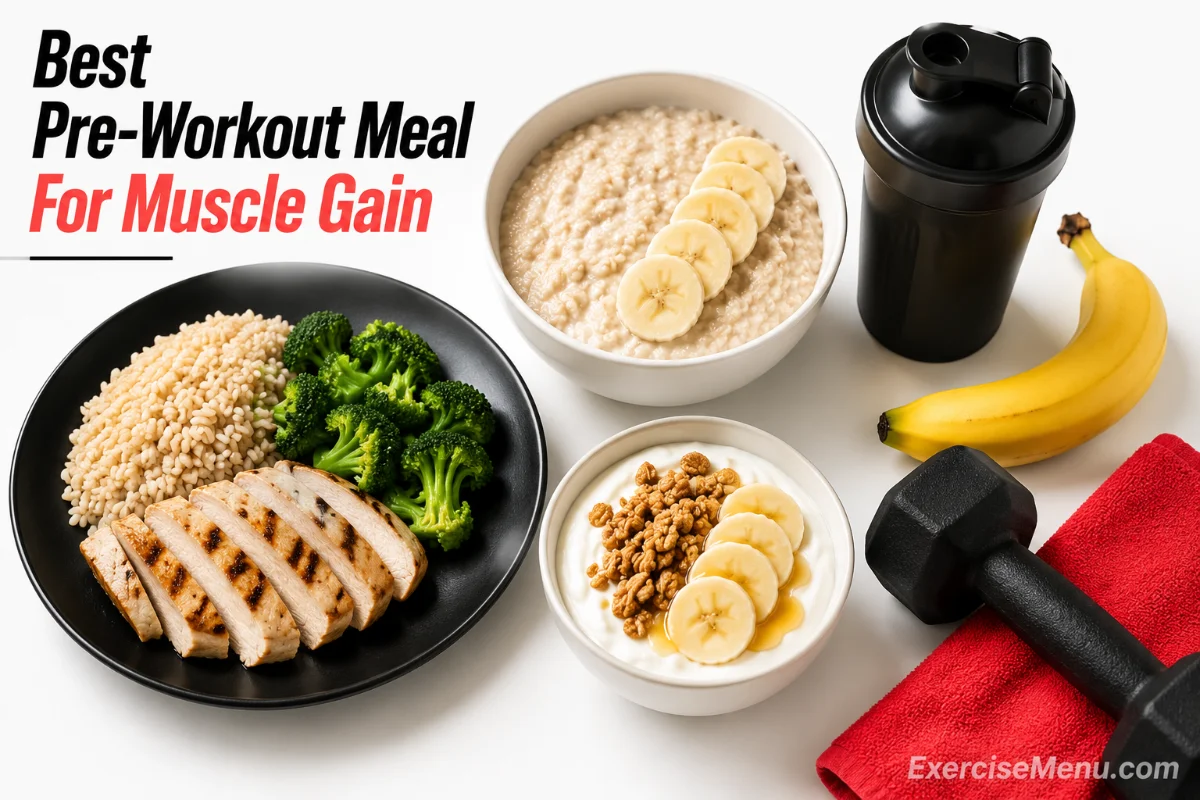
Quick Answer: The best pre-workout meal for muscle gain combines 20–40g protein with 40–80g carbs, eaten 1–3 hours before training. Closer to your session, eat lighter and simpler. A strong option: chicken breast with rice and vegetables 2 hours before, or oatmeal with protein powder and banana 1 hour before.
The meal you eat before a muscle-building session needs to do two things: give your body enough fuel to train hard and enough protein to protect muscle while you train. Get it wrong and you’re either sluggish from eating too much too late, or running on empty halfway through your working sets.
That said, your pre-workout meal supports the session, but it does not override your overall diet. Total daily calorie intake and protein distribution across the day have a larger impact on muscle gain than any single meal. Whether you’re eating in a surplus for a bulk or running a lean gain at maintenance, the principles below apply, only the portion sizes change.
Our full guide on what to eat before a workout covers the complete framework for all training goals. This article narrows the focus to muscle gain specifically, where calorie targets run higher, protein needs increase, and undereating before a session costs you more. Every meal below comes with approximate macros, organized by how much time you have before training.
- Pre-Workout Meal Timing Guide
- Why Your Pre-Workout Meal Matters for Muscle Gain?
- What Macronutrients to Prioritize for Muscle Gain?
- What to Eat 2–3 Hours Before Your Workout?
- What to Eat 1–1.5 Hours Before Your Workout?
- What to Eat 30–45 Minutes Before Your Workout?
- What to Eat Before an Early Morning Workout?
- Foods to Avoid Before a Muscle-Building Workout
- Do Pre-Workout Supplements Help with Muscle Gain?
- Plant-Based Pre-Workout Meals for Muscle Gain
- FAQs
Pre-Workout Meal Timing Guide
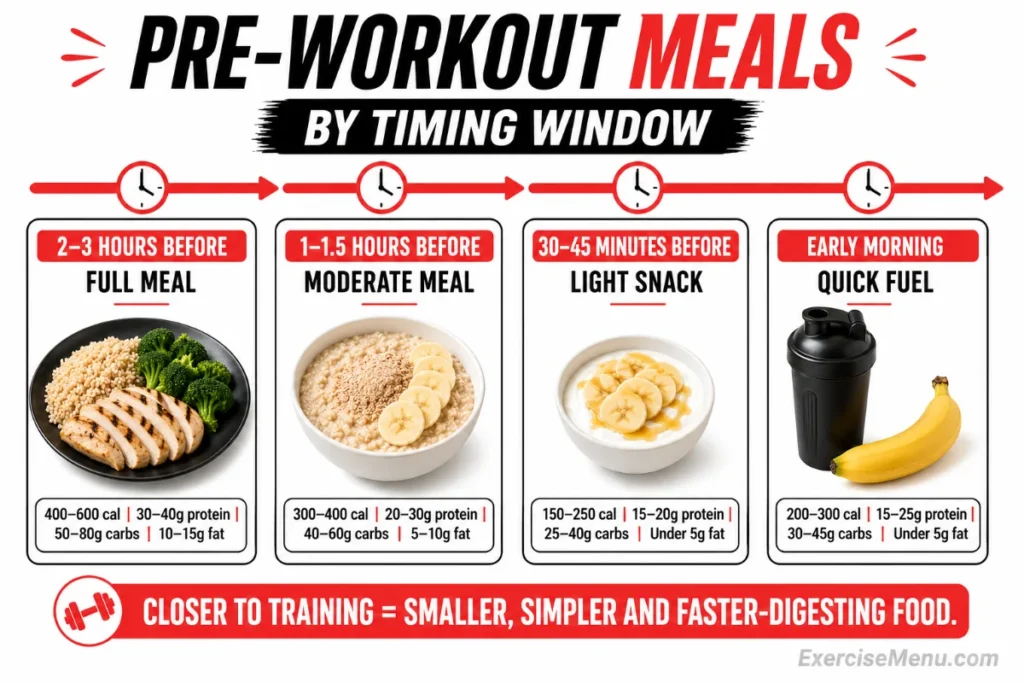
Your timing determines your meal. Pick your window, match a meal, and go.
| Timing | Meal Size | Calories | Protein | Carbs | Fat | Example |
| 2–3 hours before | Full meal | 400–600 | 30–40g | 50–80g | 10–15g | Chicken + rice + vegetables |
| 1–1.5 hours before | Moderate meal | 300–400 | 20–30g | 40–60g | 5–10g | Oatmeal + protein powder + banana |
| 30–45 minutes before | Light snack | 150–250 | 10–20g | 25–40g | <5g | Banana + protein shake |
| Early morning | Quick fuel | 200–300 | 15–25g | 30–45g | <5g | Protein shake + banana |
The pattern: the closer you eat to training, the smaller and simpler the meal. Larger meals need more digestion time. Simpler carbohydrate sources work better in shorter windows because they clear the stomach faster and convert to usable energy sooner.
Why Your Pre-Workout Meal Matters for Muscle Gain?
A pre-workout meal fuels heavy compound sets by topping off muscle glycogen, delivers amino acids to reduce muscle protein breakdown during training, and creates the conditions for stronger performance, which drives better muscle-building stimulus over time.
Muscle-building workouts, especially sessions built around squats, deadlifts, and bench press — rely heavily on muscle glycogen for fuel. The ISSN position stand by Kerksick et al. (2017) confirms that consuming carbohydrates with protein before exercise increases muscle glycogen stores and supports better training adaptations. Without adequate glycogen, your capacity for high-rep, high-volume work drops, and volume is one of the primary drivers of hypertrophy.
The protein in your pre-workout meal serves a different purpose. While you train, muscle protein breakdown (MPB) rises. Amino acids from a recent meal help offset this breakdown, keeping the balance tilted toward muscle protein synthesis (MPS) rather than net muscle loss during the session.
A systematic review by Henselmans et al. (2022) found that consuming a meal before training improves strength performance compared to fasting for four or more hours. If you’re training first thing in the morning after an overnight fast, even a small meal can be useful when muscle gain is the goal.
What Macronutrients to Prioritize for Muscle Gain?
Prioritize carbohydrates and protein. Aim for 1–1.5g carbs per kg of bodyweight and 0.4g protein per kg in your pre-workout meal. Keep fat low, under 15g,R to support comfortable digestion.
Carbohydrates — Your Primary Fuel Source
Carbohydrates are stored as muscle glycogen, which your body burns during resistance training. For muscle gain specifically, your carb target runs higher than for general fitness because hypertrophy-style sessions demand deeper glycogen stores. A practical target: 1–1.5g of carbs per kilogram of bodyweight in your pre-workout meal.
The type of carb matters based on timing. Complex carbs (brown rice, oats, sweet potato) suit the 2–3 hour window. Simple carbs (white rice, banana, white bread) work better within 60 minutes of training because they digest faster.
Protein — Preventing Muscle Breakdown
Research by Schoenfeld and Aragon (2018) suggests roughly 0.4g of protein per kilogram of bodyweight per meal across four daily feedings to support muscle protein synthesis. For a 75kg person, that’s about 30g per meal.
Leucine content matters. Whey protein, eggs, and chicken breast are high-leucine sources. If you’re eating within 60 minutes of training, whey protein digests faster than many whole-food sources.
Fat — When and How Much
Fat slows gastric emptying. Keep fat under 15g in your pre-workout meal if training within 2 hours. In the 2–3 hour window, moderate fat (10–15g) from sources like eggs or avocado is more practical. In the 30–60 minute window, aim for near-zero fat.
What to Eat 2–3 Hours Before Your Workout?
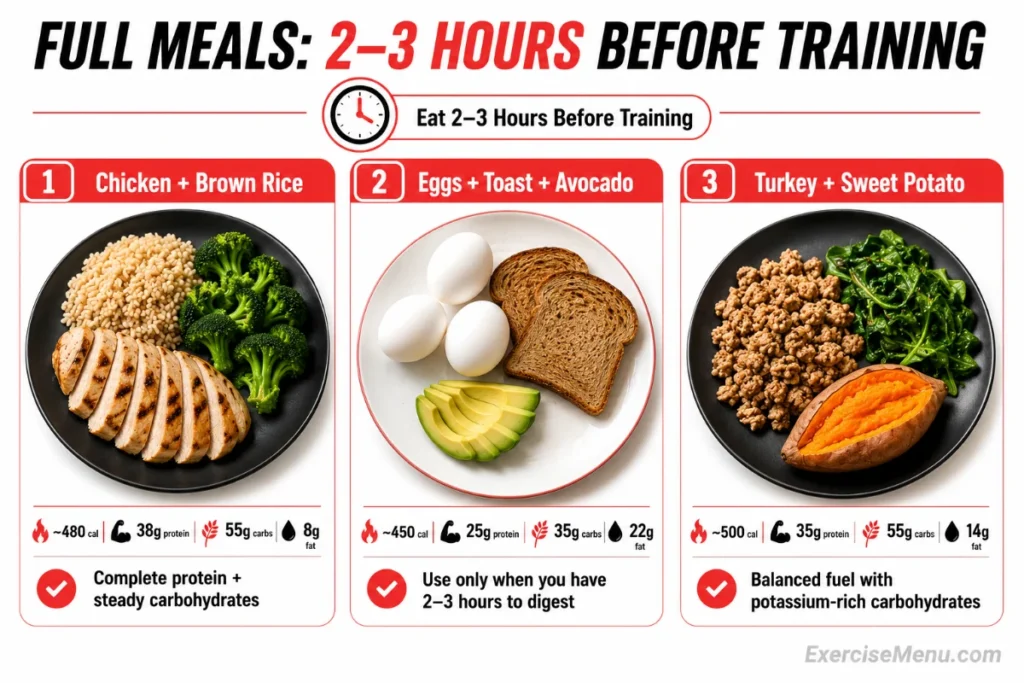
With 2–3 hours of lead time, you can eat a complete meal and digest it fully before your first warm-up set.
Meal 1 — Chicken Breast + Brown Rice + Steamed Vegetables
150g grilled chicken breast, 1 cup cooked brown rice, 1 cup broccoli or spinach. ~480 cal | 38g protein | 55g carbs | 8g fat. Brown rice releases glucose gradually over 2 hours. Chicken provides a complete amino acid profile with high leucine content.
Meal 2 — Eggs + Whole Grain Toast + Half Avocado
3 whole eggs, 2 slices whole grain toast, ¼ avocado. ~450 cal | 25g protein | 35g carbs | 22g fat. This higher-fat meal works best in the 2–3 hour window.
Meal 3 — Turkey + Sweet Potato + Greens
150g lean ground turkey, 1 medium baked sweet potato, side salad with olive oil. ~500 cal | 35g protein | 55g carbs | 14g fat. Sweet potato provides carbohydrate and potassium, while turkey provides lean protein.
If you’re bulking, scale these portions up. Add an extra half cup of rice, a second banana on the side, or increase the meat portion to 200g. A pre-workout meal for bulking can sit in the 500–700 calorie range in this window.
What to Eat 1–1.5 Hours Before Your Workout?
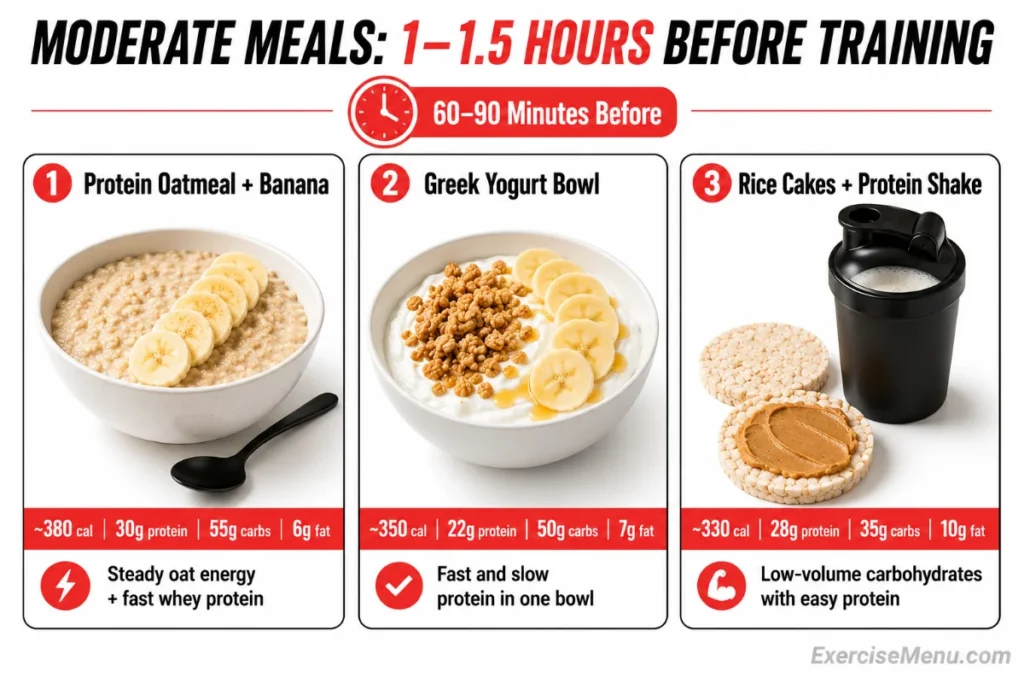
With 1–1.5 hours, you need a meal that delivers enough fuel without sitting heavy. Complex carbs can still work, but fat should be lower.
Meal 1 — Oatmeal + Protein Powder + Banana
½ cup rolled oats, 1 scoop whey protein, 1 banana. ~380 cal | 30g protein | 55g carbs | 6g fat. Oats provide steady carbohydrates, while whey digests relatively quickly.
Meal 2 — Greek Yogurt Bowl
1 cup Greek yogurt, ¼ cup granola, ½ banana, drizzle of honey. ~350 cal | 22g protein | 50g carbs | 7g fat. Greek yogurt provides a blend of protein sources, while granola and banana provide carbohydrates.
Meal 3 — Rice Cakes + Peanut Butter + Protein Shake
2 rice cakes, 1 tbsp peanut butter, 1 scoop whey protein in water. ~330 cal | 28g protein | 35g carbs | 10g fat. Rice cakes are light and easy to digest; the shake provides protein without adding much food volume.
What to Eat 30–45 Minutes Before Your Workout?
With less than 45 minutes, a full meal is not the right move. Choose something light, quick to digest, and low in fat and fiber.
Option 1 — Banana + Protein Shake
1 banana, 1 scoop whey protein in water. ~225 cal | 25g protein | 30g carbs | 2g fat.
Option 2 — Rice Cakes + Honey + Whey Protein
2 rice cakes with honey drizzle, 1 scoop whey in water. ~230 cal | 22g protein | 35g carbs | 1g fat. Rice cakes and honey provide quick carbohydrates with minimal stomach burden.
What to Eat Before an Early Morning Workout?
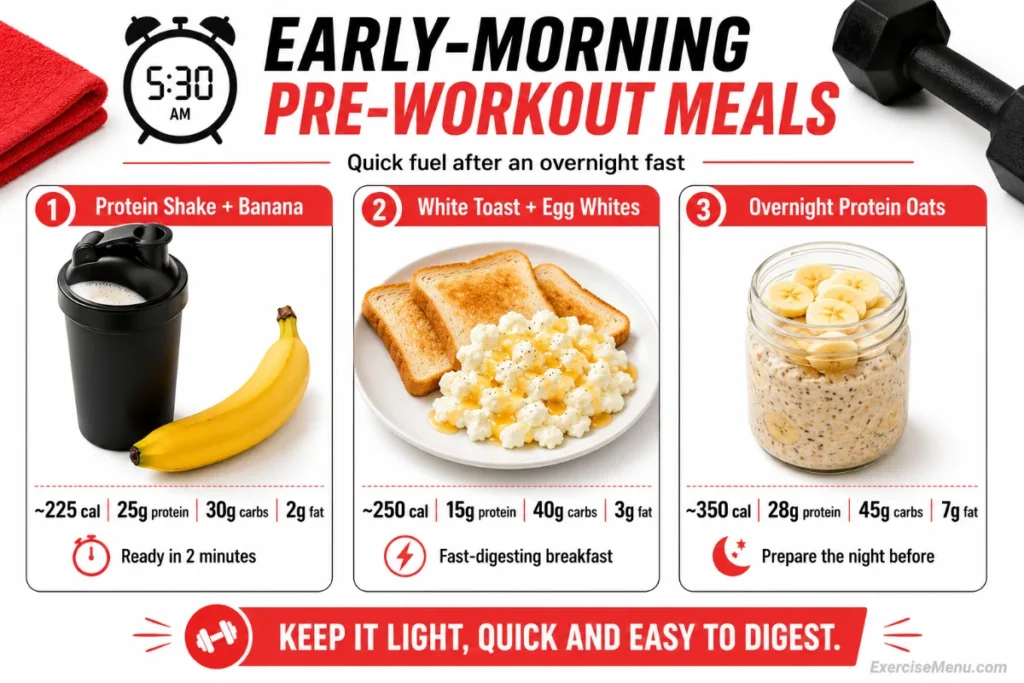
Training at 5–6am creates a specific challenge because you have been fasting overnight and may not tolerate a full meal.
Option 1 — Protein Shake + Banana
1 scoop whey + water, 1 banana. ~225 cal | 25g protein | 30g carbs | 2g fat. A practical option when time is tight.
Option 2 — White Toast + Egg Whites + Honey
2 slices white bread, 2 scrambled egg whites, honey drizzle. ~250 cal | 15g protein | 40g carbs | 3g fat.
Option 3 — Overnight Oats (Prepped the Night Before)
½ cup oats + 1 scoop protein powder + ½ banana + almond milk, refrigerated overnight. ~350 cal | 28g protein | 45g carbs | 7g fat.
If solid food at 5am makes you nauseous, start with just the shake and banana and build up from there.
Foods to Avoid Before a Muscle-Building Workout
High-fat meals such as fried foods, heavy cheese, and fatty cuts of meat can slow gastric emptying and may increase nausea or bloating during heavy lifting.
High-fiber foods within 60 minutes of training can also cause digestive discomfort for some people. Save large salads, lentils, and high-fiber cereals for earlier meals.
Sugary processed snacks such as candy bars, pastries, and soda can provide rapid energy but are less useful as a complete pre-workout option than carbohydrate sources paired with protein.
If you are lactose-sensitive, milk or regular yogurt shortly before training may cause cramping or bloating. Whey isolate or lactose-free alternatives may be easier to tolerate.
Do Pre-Workout Supplements Help with Muscle Gain?
Pre-workout supplements can improve gym performance but do not replace food. Caffeine, creatine, and citrulline malate are among the most researched options.
Caffeine
The ISSN position stand on caffeine reports performance benefits from approximately 3–6mg per kg of bodyweight. For a 75kg person, that is 225–450mg, although individual tolerance varies.
Creatine Monohydrate
Creatine is one of the most researched supplements for muscle gain. A standard maintenance dose is 3–5g daily; consistency matters more than precise pre-workout timing.
Citrulline Malate and Beta-Alanine
Citrulline malate may support blood flow and fatigue resistance during higher-rep training. Beta-alanine supports buffering during high-intensity efforts. Neither replaces a proper meal.
None of these replace a proper pre-workout meal. Eat first, supplement second.
Staying Hydrated Before Training
Drink 400–600ml of water in the 2 hours before your session. Pale-yellow urine generally indicates good hydration, while darker urine can indicate that you need more fluids. If you sweat heavily or train in heat, electrolytes may also be useful.
Plant-Based Pre-Workout Meals for Muscle Gain
If you’re vegetarian, vegan, or prefer plant-based eating, the macro targets stay similar, only the protein source changes. Plant protein can be less protein-dense per serving, so portions or combinations may need adjustment.
Option 1 — Tofu Scramble + Toast + Banana (1–1.5 Hour Window)
150g firm tofu, 2 slices whole grain toast, 1 banana. ~380 cal | 22g protein | 50g carbs | 10g fat.
Option 2 — Soy Protein Shake + Oats + Berries (30–45 Min or Early Morning)
1 scoop soy protein isolate + water, ¼ cup dry oats blended in, ½ cup berries. ~300 cal | 28g protein | 40g carbs | 5g fat.
Option 3 — Overnight Oats with Pea Protein + Banana (Early Morning)
½ cup oats + 1 scoop pea protein + ½ banana + oat milk, refrigerated overnight. ~350 cal | 25g protein | 50g carbs | 6g fat.
FAQs
Should I eat differently before a workout when I’m bulking?
Yes. Scale up to 500–700 calories instead of 300–400. Add more carbohydrates while keeping the overall macro balance similar.
Can I just have a protein shake as my pre-workout meal?
A shake alone covers protein but may provide too little carbohydrate for a demanding strength session. A shake blended with a banana and oats is a more complete option.
What if I train during my lunch break and can’t eat a full meal beforehand?
Eat a moderate breakfast with carbohydrates and protein 3–4 hours before, then have a small snack 30–45 minutes before training.
Is white rice or brown rice better before a workout?
Timing decides. White rice is generally easier to fit into a shorter window, while brown rice works well when you have 2–3 hours to digest.
Do I need a pre-workout supplement on top of my meal?
Not for fuel. Supplements can target performance, but a balanced meal covers the basic energy and protein needs.
Is chicken a good pre-workout meal?
Chicken breast is a lean, high-protein option. Because it is a whole food, it is generally better suited to the 2–3 hour window than the final 30 minutes before training.
Can the same pre-workout meal work for muscle gain and fat loss?
Yes. The basic composition can remain protein plus carbohydrates with controlled fat. Portion size and total daily calories are what change.
How many calories should a pre-workout meal have for weight gain?
For weight gain, a 500–700 calorie meal can fit well when eaten 2–3 hours before training, depending on your overall daily calorie target.
If you have a medical condition, food allergy, or digestive disorder, consult a registered dietitian or your doctor before making changes to your pre-workout nutrition.
Want a Nutrition Plan Built Around Your Training?
Generic meal plans don’t account for your training schedule, health history, or goals. Rimsha Shahid — Registered Dietitian, Certified Diabetes Specialist (USA), and Certified Pediatric Nutritionist — builds personalised nutrition plans that work alongside your programme, not against it.
Free initial consultation — no commitment required.
