

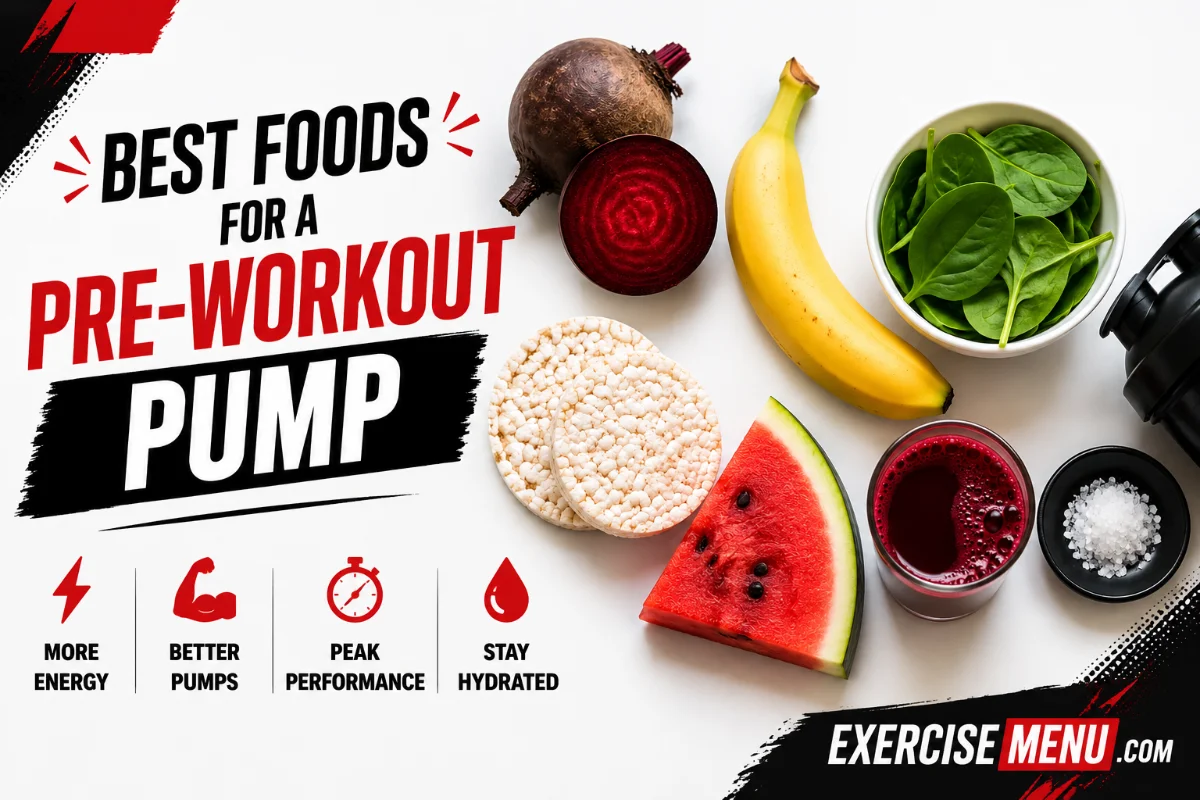
The best foods for a pump are beetroot, arugula, spinach, and watermelon for nitric oxide-driven vasodilation, paired with fast-digesting carbs like white rice, banana, and rice cakes for glycogen-driven muscle fullness. Stay well-hydrated and ensure adequate sodium intake before training to support both effects.
Most pre-workout nutrition advice covers carbs and protein for energy and muscle repair — the complete pre-workout nutrition guide handles that in depth. Pump-specific nutrition adds a different layer: foods that increase nitric oxide production to widen blood vessels and push more blood into working muscles during training.
In Rimsha’s clinical practice, clients who add a nitrate-rich food often report feeling a stronger pump within the first few sessions though individual response varies before any training variable changes.
This guide covers the foods that target the pump specifically with actual nitrate and citrulline content per serving so you can compare options, plus ready-to-eat meal combos built around both pump mechanisms.
- What Creates the Muscle Pump?
- Best Foods That Boost Nitric Oxide and Blood Flow
- Nitrate and NO Content Per Food — Comparison Table
- Best Carbs for Muscle Fullness and Pump
- Why Sodium and Hydration Amplify Your Pump?
- Pre-Workout Pump Meals — Ready-to-Eat Combos
- What Kills Your Pump?
- Does a Better Pump Mean More Muscle Growth?
- Frequently Asked Questions
What Creates the Muscle Pump?
The pump is driven by two separate mechanisms, and different foods target each one.
Mechanism 1 — Glycogen volumizing. Carbohydrates are stored in muscle cells as glycogen. Each gram of glycogen pulls roughly 3–4 grams of water into the cell alongside it. This water-glycogen combination makes muscles physically expand from the inside — the “fullness” side of the pump. Low carb intake means low glycogen, which is why cutting phases and low-carb diets often produce flat, pump-less sessions.
Mechanism 2 — Nitric oxide vasodilation. Dietary nitrates from certain vegetables convert to nitric oxide in the body. Nitric oxide relaxes the smooth muscle lining of blood vessels, widening them and allowing more blood to reach working muscles during contractions. This produces the vascular, skin-tight look that separates a good pump from just feeling “full.”
Carbs alone give fullness without vascularity. NO foods alone give vascularity without the full, hard look. You need both working at the same time to get the pump most lifters are after.
Best Foods That Boost Nitric Oxide and Blood Flow
These foods enhance the pump through direct nitric oxide production — not through general “energy” or macronutrient balance.
Beetroot and Beet Juice
Beetroot is the most widely studied pump food. It delivers approximately 250mg of dietary nitrate per 100g. Your body converts that nitrate to nitrite (via bacteria in your mouth), then to nitric oxide in the bloodstream. According to Hord et al. (2009) in the American Journal of Clinical Nutrition, beetroot ranks among the highest whole-food sources of dietary nitrate available.
Practical approach: 200–250mL of beet juice or 150–200g of cooked beets, consumed 2–3 hours before training. This timing aligns with peak plasma nitrite levels — the point where vasodilation is strongest.
Arugula and Spinach
Arugula delivers up to 480mg of nitrate per 100g nearly double beetroot per gram. Spinach sits around 200mg per 100g. Both work through the same nitrate-nitrite-NO pathway as beetroot.
The advantage of leafy greens: they blend easily into a pre-workout smoothie alongside a banana and whey shake, covering glycogen, protein, and NO in one glass. Heating doesn’t destroy nitrate content, so cooked spinach in a pre-workout meal works just as well as raw.
Watermelon
Watermelon boosts NO through a different pathway than beetroot or spinach. Instead of nitrate, watermelon contains L-citrulline an amino acid that converts to L-arginine, which then produces nitric oxide via the arginine-NO pathway. This means watermelon and beetroot stack — they produce NO through separate mechanisms without competing.
Watermelon also delivers fast-digesting carbs and 92% water content, supporting both glycogen and hydration in one food. Eat 300–400g of watermelon chunks or drink 250mL of juice 1–2 hours before your session.
Keep in mind that a typical 300–400g serving provides roughly 0.75–1g of citrulline — well below the 3–6g doses used in most supplement studies. Watermelon can contribute to NO production alongside other nitrate-rich foods, but should not be expected to match the effects of a dedicated citrulline supplement.
Pomegranate Juice
Pomegranate does something other NO foods don’t. It elevates endothelial nitric oxide synthase — the enzyme that produces NO — and simultaneously prevents NO breakdown once it’s formed. This extends how long the vasodilation effect lasts during your session, not just how strong the initial effect is.
A 2017 study by Roelofs et al. in the European Journal of Sport Science found that pomegranate extract increased blood flow and vessel diameter after high-intensity exercise in young adults. Pomegranate juice also has a 50:50 glucose-to-fructose ratio, which means it uses two separate gut transporters for absorption — reducing the GI distress that pure glucose can cause during training. This makes it a viable intra-workout carb source alongside its NO benefits.
Dark Chocolate (85%+ Cacao)
Cocoa flavanols stimulate endothelial NO production through a mechanism distinct from dietary nitrates. The effective range is 300–900mg of flavanols per day. A 40g bar of 85% dark chocolate provides roughly 200mg of flavanols enough to contribute to NO production when combined with nitrate-rich foods.
The practical option for gym-goers: 20g of cocoa powder stirred into pre-workout oatmeal or a whey shake. This delivers flavanols without the 8g of saturated fat that comes with a chocolate bar. One warning: avoid “Dutch processed” cocoa. The alkalizing treatment that removes bitterness also strips most of the flavanols — the compounds you’re eating it for.
Nitrate and NO Content Per Food — Comparison Table
| Food | Active Compound | Amount per 100g | How It Boosts NO | Best Timing |
|---|---|---|---|---|
| Arugula | Nitrate | ~480mg | Nitrate → nitrite → NO pathway | 1–2 hrs before |
| Beetroot | Nitrate | ~250mg | Nitrate → nitrite → NO pathway | 2–3 hrs before |
| Spinach | Nitrate | ~200mg | Nitrate → nitrite → NO pathway | 1–2 hrs before |
| Watermelon | L-citrulline | ~250mg | Citrulline → arginine → NO pathway | 1–2 hrs before |
| Pomegranate juice | Polyphenols | per 240mL serving | Elevates eNOS + prevents NO breakdown | 1–2 hrs or intra |
| Dark chocolate (85%) | Cocoa flavanols | ~200mg per 40g | Flavanols stimulate endothelial NO | 1–2 hrs before |
Nitrate and citrulline values are approximate and vary by growing conditions, soil quality, season, and storage method.
Best Carbs for Muscle Fullness and Pump
Carbs create the “full” side of the pump through the glycogen-water mechanism covered above. Skip carbs before training and the NO foods will give you vascularity, but your muscles will still look flat glycogen is what makes them physically expand from the inside.
Insulin from fast-digesting carbs also acts as a vasodilator an effect most lifters don’t realize. The insulin spike from a pre-workout banana or rice cakes actively opens blood vessels, compounding the NO effect from the foods above.
For pump-focused sessions, choose carbs that digest fast and convert to glycogen quickly: white rice, rice cakes with honey, banana, white potatoes, or dates. Eat them 30–90 minutes before training depending on the amount.
One distinction that matters for pump specifically: white rice outperforms whole grain rice and whole wheat pasta before training. The lower fiber content means faster digestion, faster glycogen replenishment, and less stomach bloating during heavy sets. Whole grains are the better daily choice for sustained energy but for a pump-focused pre-workout window, fast-digesting carbs win.
For the full breakdown of carb types, timing, and pre-workout snack options for muscle gain, the dedicated guides go deeper than this section covers.
Why Sodium and Hydration Amplify Your Pump?
Sodium is the most underrated pump nutrient. It increases blood plasma volume the liquid portion of blood that carries oxygen and nutrients to working muscles. More plasma volume means more blood available for delivery during each contraction. Every other pump strategy (carbs, nitrates, hydration) works better when sodium is adequate.
For healthy individuals without blood pressure concerns, 300–600mg of sodium 30–60 minutes before training may support plasma volume. That’s roughly 1/8 to 1/4 teaspoon of salt in water or sprinkled on your pre-workout meal.
If you have high blood pressure, kidney concerns, or take medication that affects fluid balance, consult your doctor before adding extra sodium. Most people already get adequate sodium from their regular diet this applies mainly to heavy sweaters or those eating very low-sodium diets.
If you’d rather get sodium from food instead of loose salt, olives (4–5 olives = ~300mg sodium), pickles, or a small cup of bone broth all work.
Pair sodium with potassium for balanced fluid regulation. Bananas, dates, and watermelon foods already on this list all deliver potassium alongside their primary pump benefit. Sodium pulls water into the bloodstream. Potassium helps water enter muscle cells. Both minerals working together produce a fuller pump than either alone.
Hydration supports the same system. Drink 500mL of water at least 2 hours before your session and sip throughout the warm-up. Dehydration reduces plasma volume which means less blood reaches working muscles regardless of how much beetroot you ate.
One thing to keep in mind: caffeine is a mild vasoconstrictor it can narrow blood vessels, which works against the vasodilation nitric oxide provides. In practice, moderate caffeine intake (1–2 cups of coffee) is unlikely to cancel out the effects of nitrate-rich foods, and caffeine’s performance benefits reduced perceived effort, improved power output generally outweigh any minor pump reduction.
If a visible pump is the specific priority for that session, keeping caffeine moderate is reasonable. But skipping caffeine entirely for the sake of pump isn’t supported by strong evidence.
Pre-Workout Pump Meals — Ready-to-Eat Combos
These five combos cover both pump mechanisms (glycogen + NO) in a single sitting.
Combo 1 — Full Meal (2 hours before) 1 cup white rice + 100g grilled chicken + 150g roasted beetroot + pinch of salt ~450 cal | ~35g protein | ~55g carbs Covers: glycogen (rice), nitrate (beetroot), sodium (salt), protein (chicken)
Combo 2 — Moderate Snack (90 min before) 1 cup oatmeal + 20g cocoa powder + 1 banana + drizzle of honey ~380 cal | ~12g protein | ~65g carbs Covers: glycogen (oats, banana), flavanols (cocoa), fast sugars (honey)
Combo 3 — Light Snack (30–45 min before) 2 rice cakes + honey + 200mL beet juice + pinch of salt in water ~250 cal | ~3g protein | ~55g carbs Covers: fast carbs (rice cakes), nitrate (beet juice), sodium (salt)
Combo 4 — Liquid Only (30 min before) 250mL watermelon juice + 200mL pomegranate juice + pinch of salt ~200 cal | ~2g protein | ~45g carbs Covers: citrulline pathway (watermelon), eNOS pathway (pomegranate), sodium, hydration
Combo 5 — Bare Minimum (15–20 min before) 1 banana + pinch of salt ~105 cal | ~1g protein | ~27g carbs Covers: fast carbs for glycogen, potassium + sodium for electrolyte balance. A simple two-ingredient option that provides quick carbohydrates and electrolytes, although its effect on the visible muscle pump will vary between individuals.
What Kills Your Pump?
High-fat meals within an hour of training. Fat slows gastric emptying and diverts blood to digestion instead of working muscles.
Dehydration. Plasma volume drops, less blood reaches muscles, and glycogen can’t hold its full water content. Everything else can be dialed in and you’ll still train flat.
Very low carb intake. Depleted glycogen stores mean no water drawn into cells. NO foods give vascularity but muscles look flat and soft without the glycogen base.
Excessive caffeine for your tolerance. High caffeine intake can cause jitters, anxiety, an elevated heart rate, or digestive discomfort. However, evidence does not establish a universal three-cup threshold at which workout blood flow or muscle pump declines.
Inadequate fluid or electrolyte replacement during long, hot, or high-sweat sessions. Extra sodium is not necessary before every ordinary workout because most people already obtain enough through their normal diet. It becomes more relevant for heavy sweaters, prolonged sessions, hot environments, or people following a medically appropriate low-sodium intake plan.
Does a Better Pump Mean More Muscle Growth?
Not directly. A muscle pump is a temporary increase in blood flow and fluid within the muscles being trained. It can make the muscles look and feel fuller during and after exercise, but the duration of this effect varies.
A noticeable pump can accompany increased blood flow to the working muscles, but it does not reliably confirm hydration, glycogen status, exercise quality, or future muscle growth. A weak pump also does not automatically mean that a workout was ineffective.
Long-term muscle growth depends mainly on progressive resistance training, sufficient training volume, appropriate protein and calorie intake, and recovery over weeks and months. Pump-focused foods may support hydration, carbohydrate availability, or training performance, but the visual pump itself should not be treated as proof of hypertrophy.
Frequently Asked Questions
Do I need to eat all of these foods together for a good pump?
No. Even one nitrate-rich food (like 200mL of beet juice) combined with a carb source may produce a noticeable improvement in some trainees over training without them. The meal combos above are optimized versions, but you don’t need to hit every food on the list in one sitting. Start with one NO food and one carb source, then build from there based on what your stomach tolerates.
How far in advance should I prep beet juice if I’m making it fresh?
Blend raw beetroot and strain it the night before — store it in the fridge. Fresh beet juice holds its nitrate content for 24–48 hours when refrigerated. If you buy pre-made juice, check that it’s not from concentrate. Concentrated versions are often diluted with apple juice, which reduces nitrate density per serving.
Can women benefit from pump-focused nutrition the same way men do?
Yes. The nitrate-to-NO pathway and the glycogen-water volumizing mechanism work identically regardless of sex. Women may notice a less dramatic visual pump due to lower baseline muscle mass, but the underlying effects — improved blood flow and stronger contractions — are the same.
Does cooking destroy the nitrate content in vegetables?
No. Boiling, steaming, and roasting don’t break down nitrates. However, boiling in large amounts of water can leach some nitrate into the cooking liquid. If you boil beets or spinach, use the cooking water in a smoothie or drink it — the nitrate transfers to the liquid rather than disappearing.
Will eating these foods before every session cause tolerance or reduced effects over time?
Dietary nitrate doesn’t cause tolerance the way stimulants do. Your body doesn’t downregulate the nitrate-nitrite-NO conversion pathway with repeated exposure. You can eat beetroot or spinach before every session without diminishing returns. This is one of the advantages food-based NO boosters have over caffeine-based pre-workouts.
Is there a difference between whole beets and beet juice for pump?
Whole beets contain fiber that slows digestion and delays the nitrate peak by 30–60 minutes compared to juice. Juice hits your bloodstream faster, making it better for tighter timing windows (90 min before). Whole beets work better in a full meal 2–3 hours out. Nitrate content per gram is similar — the difference is absorption speed, not amount.
Want a Nutrition Plan Built Around Your Training?
Generic meal plans don’t account for your training schedule, health history, or goals. Rimsha Shahid — Registered Dietitian, Certified Diabetes Specialist (USA), and Certified Pediatric Nutritionist — builds personalised nutrition plans that work alongside your programme, not against it.
Free initial consultation — no commitment required.
