
Pull-Up
A bodyweight pulling exercise that lifts you up to a fixed bar with an overhand grip, training the lats and upper back.
IntermediateCompoundBodyweightBackLatsPull
Last updated: November 3, 2026
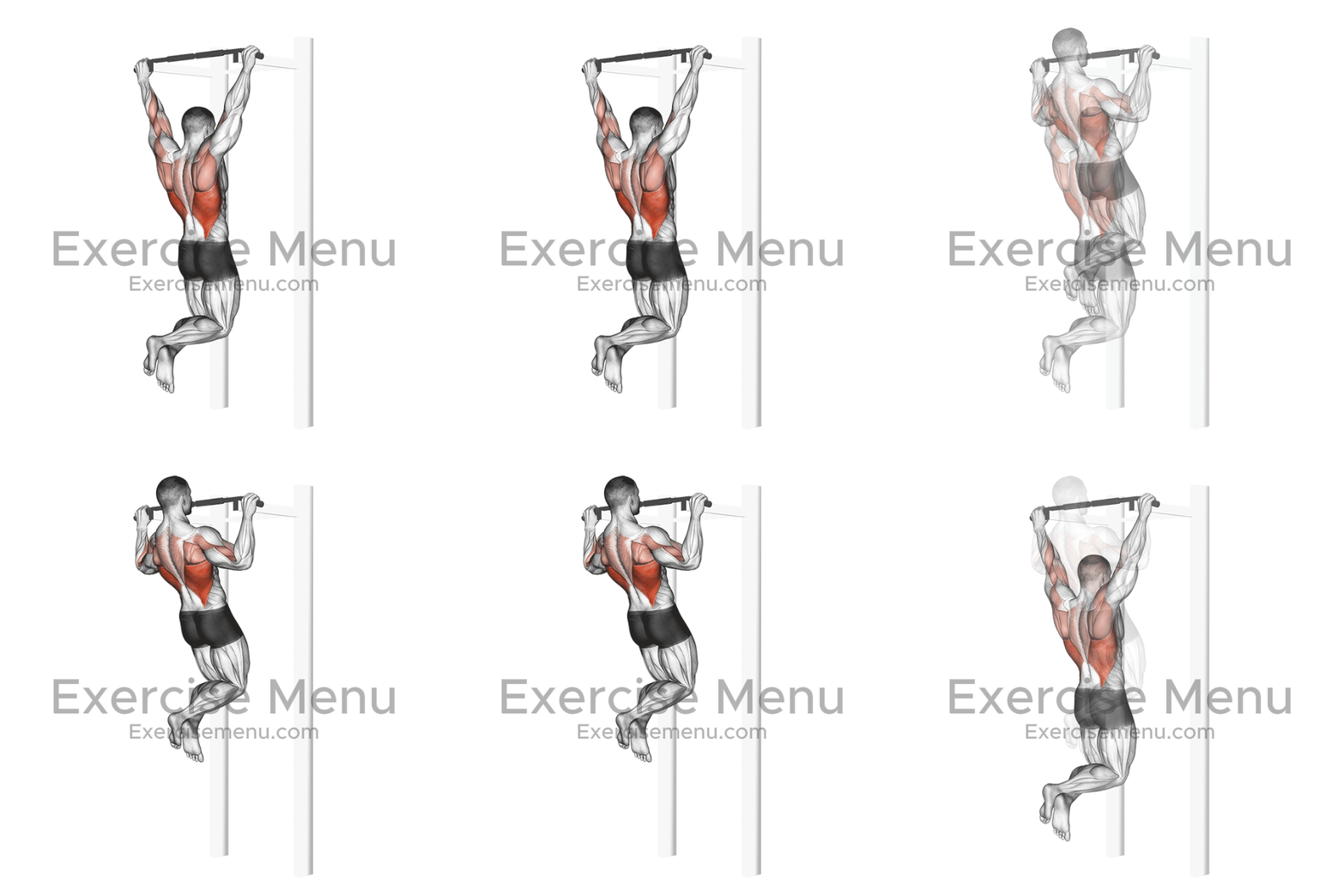
Exercise Profile
- Target Muscle
- Latissimus Dorsi
- Body Part
- Back
- Equipment
- Pull-Up Bar
- Category
- Compound
- Skill Level
- Intermediate
- Movement
- Vertical Pull
- Also Known As
- Wide-Grip Pull-Up, Overhand Pull-Up, Pullup
- Est. Calories
- 3–6 kcal per setEstimate for a 70 kg person, 30–60 second set
Quick Answer
A pull-up is a bodyweight exercise for the lats and upper back. Hang from a bar with an overhand grip a little wider than your shoulders, pull your chest toward the bar by driving your elbows down, then lower until your arms are straight. Use 3 sets of 6 to 12 reps.
How to Do the Pull-Up
- 1
Set your grip
Reach up and take an overhand grip a little wider than shoulder-width, with your thumbs wrapped around the bar.
- 2
Hang with straight arms
Let yourself hang with your arms straight. Bend your knees and cross your ankles behind you, as shown, so your feet stay clear of the floor.
- 3
Set your shoulders
Pull your shoulders down away from your ears before the first rep so you are not hanging loose.
- 4
Pull up
Drive your elbows down toward your sides and pull your chest toward the bar until your chin clears it. Keep your body still.
- 5
Lower under control
Lower over 2–3 seconds until your arms are straight again, then start the next rep.
What Muscles Does the Pull-Up Work?
Primary
- Latissimus Dorsipulls the upper arms down and back toward the body.
Secondary
- Teres Majorworks with the lats to pull the arms down.
- Lower and Middle Trapeziuspull the shoulder blades down and together.
- Rhomboidspull the shoulder blades together.
- Biceps Brachii and Brachialisbend the elbows during the pull.
- Brachioradialis and Forearm Flexorshold your grip on the bar.
- Posterior Deltoidassists in pulling the arms back.
- Abdominalskeep your body from swinging.
How Many Sets and Reps Should You Do?
| Goal | Sets | Reps | Rest |
|---|---|---|---|
| Muscle Growth | 3–4 | 6–12 (add weight once you pass 12) | 2 min |
| Strength | 3–5 | 3–6 (weighted) | 2–3 min |
| Endurance | 2–3 | as many as you can hold form for | 90 sec |
| Beginner | 3 | 5–8 band-assisted or machine-assisted | 2 min |
Common Mistakes That Reduce Results
✕
Swinging to Get Up
Throwing the hips and legs to build momentum turns the pull-up into a different exercise. Keep your body still unless you are training kipping on purpose.
✕
Half Reps at the Bottom
Stopping with your elbows still bent removes the hardest, most stretched part of the rep. Straighten your arms every time.
✕
Chin Over, Chest Away
Craning your neck to clear the bar hides a short rep. Aim your chest at the bar instead.
✕
Shrugging at the Start
Hanging with your shoulders up by your ears makes the first few inches harder than they need to be. Pull them down first.
✕
Dropping off the Bar
Letting go at the top skips the lowering phase, which is a large part of the training effect.
Tips for Better Results
✓
The Pull-Up Works the Lower Traps Harder Than the Chin-Up
Youdas and colleagues (2010) measured higher lower trapezius activity in the pull-up, while the chin-up produced more biceps and chest activity.
✓
Use a Band or the Assisted Machine to Build Up
Both take part of your body weight, so you can train full-range reps before you can do one unassisted.
✓
Add Weight Once You Pass About 12 Reps
A dip belt or a dumbbell held between your feet keeps your sets in a range that still builds strength.
✓
Train the Lowering First
If you cannot pull up yet, step or jump to the top position and take 3–5 seconds to lower yourself. Build up to full reps from there.
Modifications and Progressions
▼ Easier
Band-Assisted Pull-Up
A band looped over the bar and under your knee or foot takes part of your body weight.
▼ Easier
Cable Lat Pulldown
The pulldown trains the same movement with a weight you choose, which suits beginners and higher reps.
▲ Harder
Weighted Pull-Up
Add load with a dip belt or a dumbbell held between your feet.
▲ Harder
Pull-Up with 3-Second Lowering
Take 3 seconds to come down on every rep, which makes the same body weight harder.
Workout Plans With the Pull-Up
Day 3 — Full Body 12-Week Lean Bulk Workout Plan: Training and Calorie GuidePull-Up Alternatives
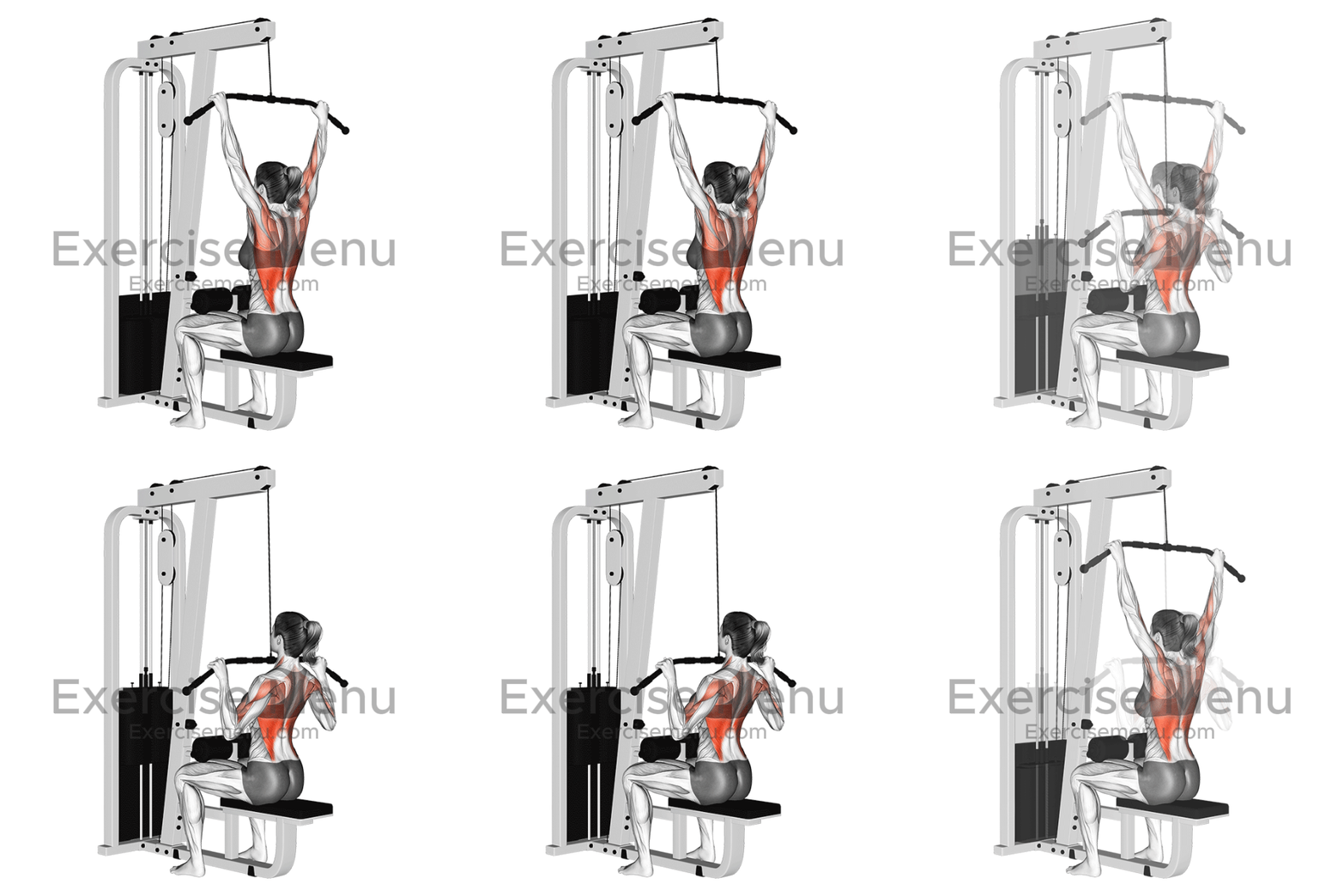 Cable Lat Pulldown
Latissimus Dorsi
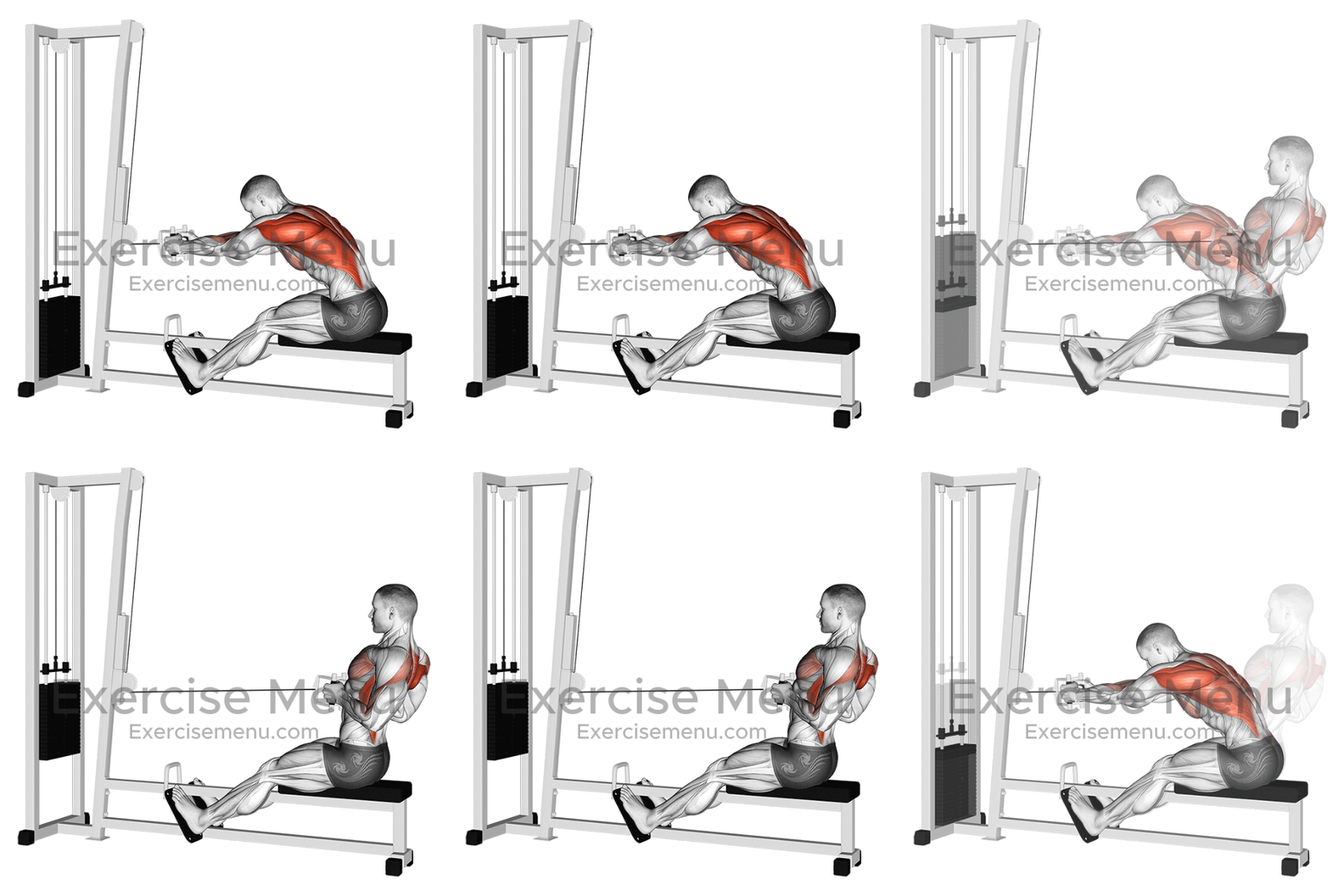 Seated Cable Row
Latissimus Dorsi, Rhomboids, Middle Trapezius
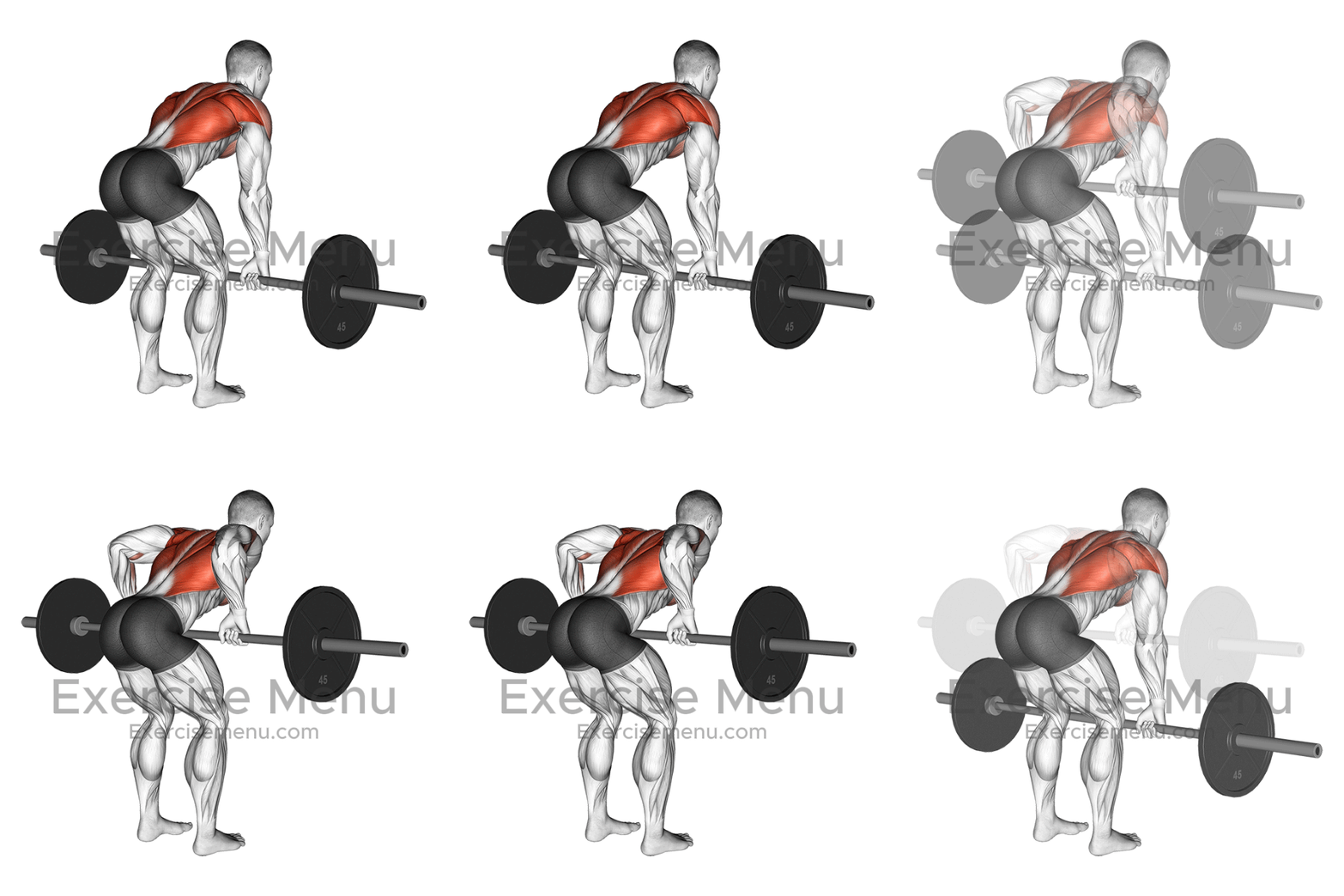 Barbell Bent-Over Row
Latissimus Dorsi, Rhomboids, Middle Trapezius
Frequently Asked Questions
Pull-up or chin-up?
The pull-up uses an overhand grip and the chin-up an underhand one. In Youdas and colleagues' 2010 study the chin-up produced more biceps and chest activity, while the pull-up produced more lower trapezius activity.
How wide should my grip be?
A little wider than shoulder-width, as in the demonstration. Much wider grips shorten the distance you travel, so most lifters stay close to this width.
I cannot do a single pull-up — where do I start?
Use band assistance or the assisted pull-up machine for full reps, and practise lowering yourself slowly from the top. Lat pulldowns build the same muscles while you work up.
Should I cross my ankles?
It is optional. Crossing them, as the demonstration shows, keeps your legs together and makes it easier to stop swinging.
Is the pull-up better than the lat pulldown?
They train the same muscles. The pull-up loads your full body weight, which suits lower reps, while the pulldown lets you pick any weight, which suits beginners and higher-rep sets.
Sources
- Youdas JW, Amundson CL, Cicero KS, Hahn JJ, Harezlak DT, Hollman JH. Surface electromyographic activation patterns and elbow joint motion during a pull-up, chin-up, or perfect-pullup rotational exercise. J Strength Cond Res. 2010;24(12):3404–3414. https://pubmed.ncbi.nlm.nih.gov/21068680/
If you have an existing injury or medical condition, check with your doctor before adding this exercise to your training.