
Cable Lat Pulldown
A seated cable exercise that pulls a wide bar down to the upper chest to build the lats and upper back.
BeginnerCompoundCableBackLatsPull
Last updated: October 31, 2026
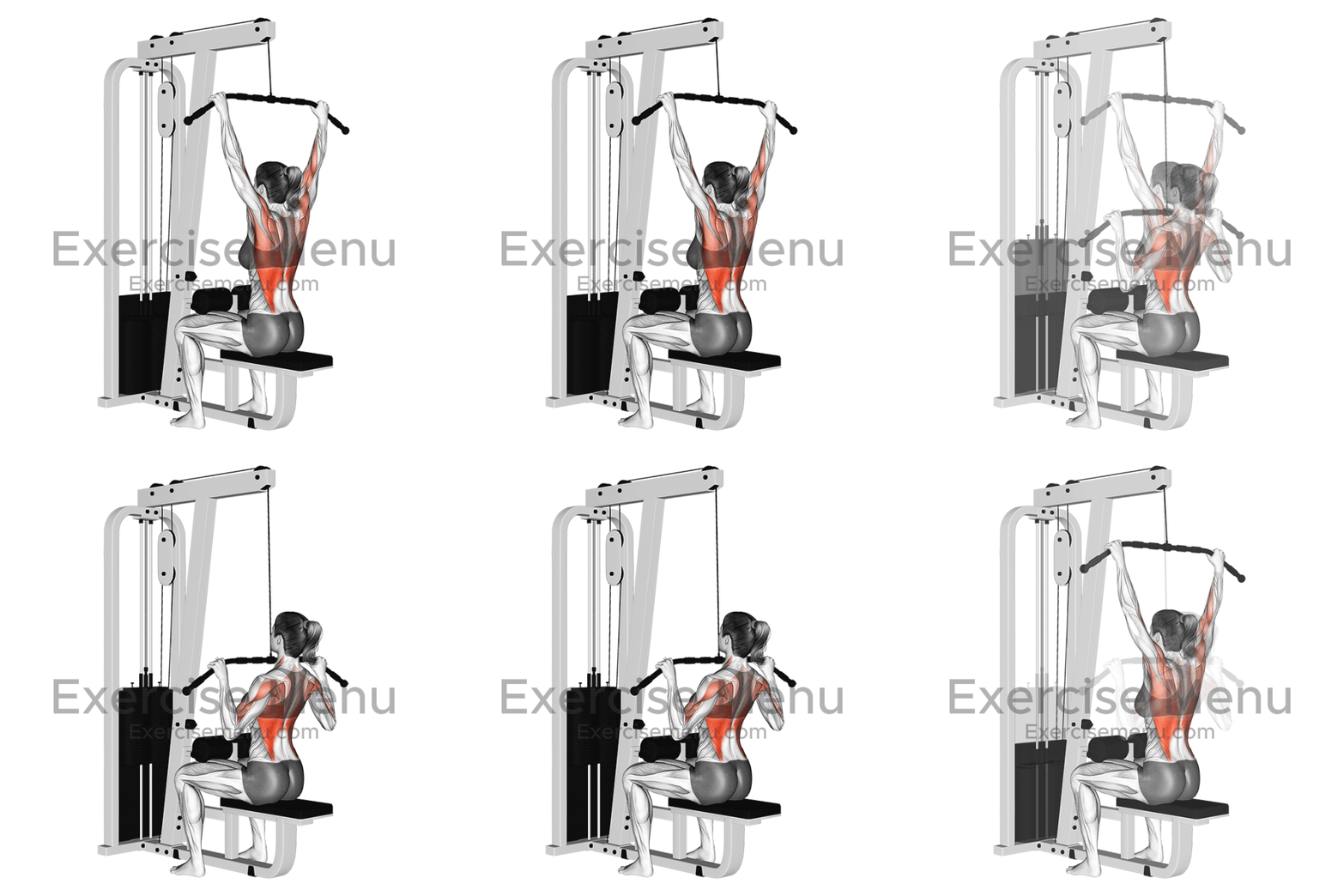
Exercise Profile
- Target Muscle
- Latissimus Dorsi
- Body Part
- Back
- Equipment
- Cable Lat Pulldown Machine, Wide Bar
- Category
- Compound
- Skill Level
- Beginner
- Movement
- Vertical Pull
- Also Known As
- Lat Pulldown, Wide-Grip Lat Pulldown, Cable Pulldown
- Est. Calories
- 2–4 kcal per setEstimate for a 70 kg person, 30–60 second set
Quick Answer
The cable lat pulldown is a seated pulling exercise for the lats and upper back. Lock your thighs under the pad, grip the bar wider than your shoulders, then pull it down to your upper chest by driving your elbows toward your sides. Let it rise slowly. Use 3 sets of 8 to 12 reps.
How to Do the Cable Lat Pulldown
- 1
Set the thigh pad
Sit at the machine and adjust the pad so your thighs are held firmly and your feet are flat on the floor.
- 2
Take a wide grip
Stand up, grip the bar with an overhand grip wider than your shoulders, then sit down with your arms fully straight.
- 3
Set your chest
Lean back slightly, lift your chest and pull your shoulders down away from your ears.
- 4
Pull to your upper chest
Pull the bar down in front of your face to your upper chest by driving your elbows down toward your sides.
- 5
Return slowly
Let the bar rise over 2–3 seconds until your arms are straight and you feel a stretch in your lats, then repeat.
What Muscles Does the Cable Lat Pulldown Work?
Primary
- Latissimus Dorsipulls the upper arms down and back toward the body.
Secondary
- Teres Majorworks with the lats to pull the arms down.
- Rhomboids and Middle Trapeziuspull the shoulder blades together and down.
- Lower Trapeziusdraws the shoulder blades down.
- Posterior Deltoidassists in pulling the arms back.
- Biceps Brachii and Brachialisbend the elbows during the pull.
How Many Sets and Reps Should You Do?
| Goal | Sets | Reps | Rest |
|---|---|---|---|
| Muscle Growth | 3–4 | 8–12 | 90 sec–2 min |
| Strength | 3–5 | 6–8 | 2 min |
| Endurance | 2–3 | 15–20 | 45–60 sec |
| Beginner | 2–3 | 10–12 | 90 sec |
Common Mistakes That Reduce Results
✕
Leaning Back Too Far
A big backward lean turns the pulldown into a row and lets body weight do the work. Keep a slight lean and a still torso.
✕
Swinging the Weight
Jerking the bar down with your body uses momentum. Pull smoothly and control the return.
✕
Cutting the Top Short
Stopping before your arms straighten removes the stretch on the lats. Let the bar rise all the way.
✕
Shrugging at the Bottom
Letting your shoulders rise toward your ears shifts the work away from the lats. Keep them down.
✕
Pulling Behind the Neck
Pulling the bar behind your head puts the shoulders in an extreme position. Pull to the front of your upper chest.
Tips for Better Results
✓
Drive Your Elbows Down
Think about pulling your elbows into your back pockets rather than pulling with your hands.
✓
Grip Width Is Flexible
Andersen and colleagues (2014) found similar overall lat activity with grips 1 to 2 times shoulder width; the wide grip was higher than the narrow grip only during the lowering phase. Use the width that feels best.
✓
Control the Stretch
Take 2–3 seconds to let the bar rise; the stretched top position is part of the work.
✓
Use Straps if Your Grip Fails First
Straps let your back finish the set when your hands tire first.
Modifications and Progressions
▼ Easier
Resistance Band Lat Pulldown
A band anchored above you gives light resistance for learning the movement at home.
▼ Easier
Close-Grip (V-Bar) Lat Pulldown
A narrower, palms-facing grip that many lifters find comfortable on the shoulders.
▲ Harder
Pull-Up
Lifting your own body weight on a bar trains the same muscles and needs more strength.
▲ Harder
Lat Pulldown with Slow Lowering
Take 3–4 seconds to let the bar rise, which makes the same weight harder.
Cable Lat Pulldown Alternatives
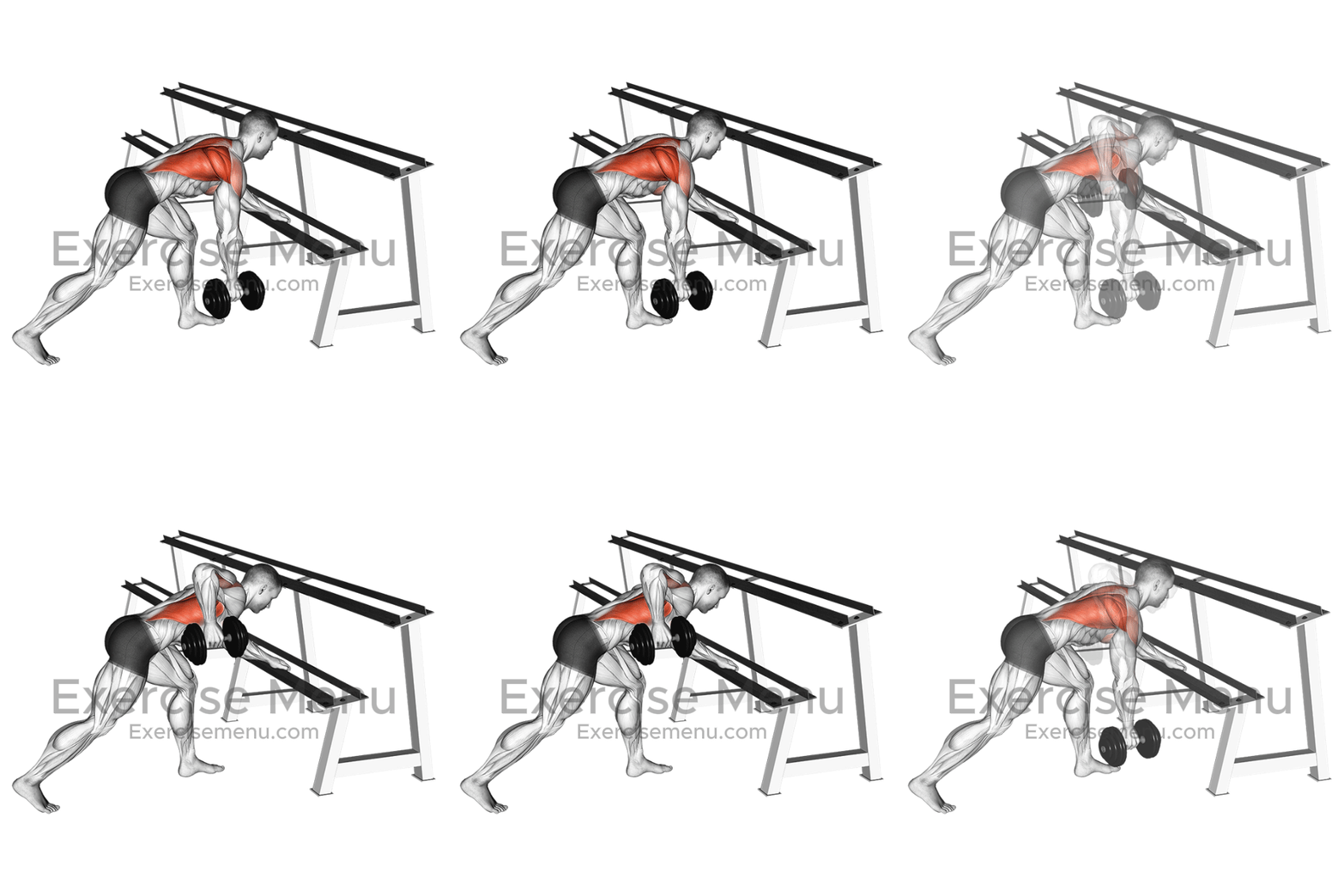 Dumbbell One-Arm Row
Latissimus Dorsi
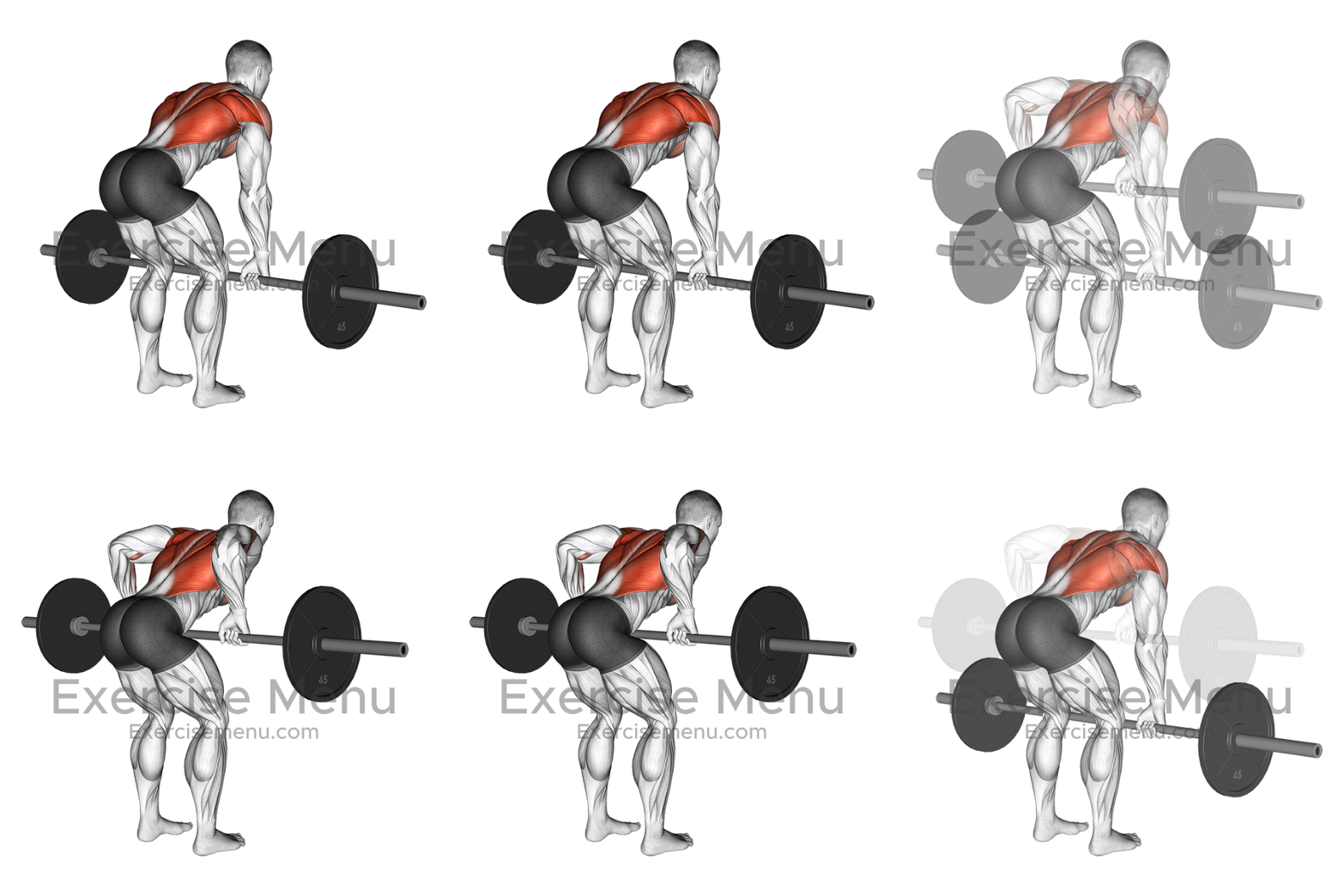 Barbell Bent-Over Row
Latissimus Dorsi, Rhomboids, Middle Trapezius
Frequently Asked Questions
Is a wide grip better than a close grip?
Not by much. A 2014 study by Andersen and colleagues found similar lat activity across grip widths, and lifters handled slightly more weight with narrow and medium grips.
Where should the bar touch?
Your upper chest, just below the collarbones. Pull the bar in front of your face, not behind your neck.
How far should I lean back?
Only slightly, enough to let the bar pass your face. Leaning far back turns it into a row.
Is the lat pulldown as good as the pull-up?
Both train the lats. The pulldown lets you choose a weight lighter than your body weight, which suits beginners and higher-rep sets.
Why do I feel lat pulldowns in my arms?
Your arms always help. If you feel them most, you are probably pulling with your hands. Focus on driving your elbows down.
Sources
- Andersen V, et al. Effects of grip width on muscle strength and activation in the lat pull-down. J Strength Cond Res. 2014;28(4):1135–1142. https://pubmed.ncbi.nlm.nih.gov/24662157/
If you have an existing injury or medical condition, check with your doctor before adding this exercise to your training.