
Barbell Bent-Over Row
A hinged barbell pull that builds the lats, upper back, and rear shoulders while the lower back holds your position.
IntermediateCompoundBarbellBackLatsPull
Last updated: November 4, 2026
Exercise Profile
- Target Muscle
- Latissimus Dorsi, Rhomboids, Middle Trapezius
- Body Part
- Back
- Equipment
- Barbell, Weight Plates
- Category
- Compound
- Skill Level
- Intermediate
- Movement
- Horizontal Pull
- Also Known As
- Bent-Over Barbell Row, Barbell Row
- Est. Calories
- 2–4 kcal per setEstimate for a 70 kg person, 30–60 second set
Quick Answer
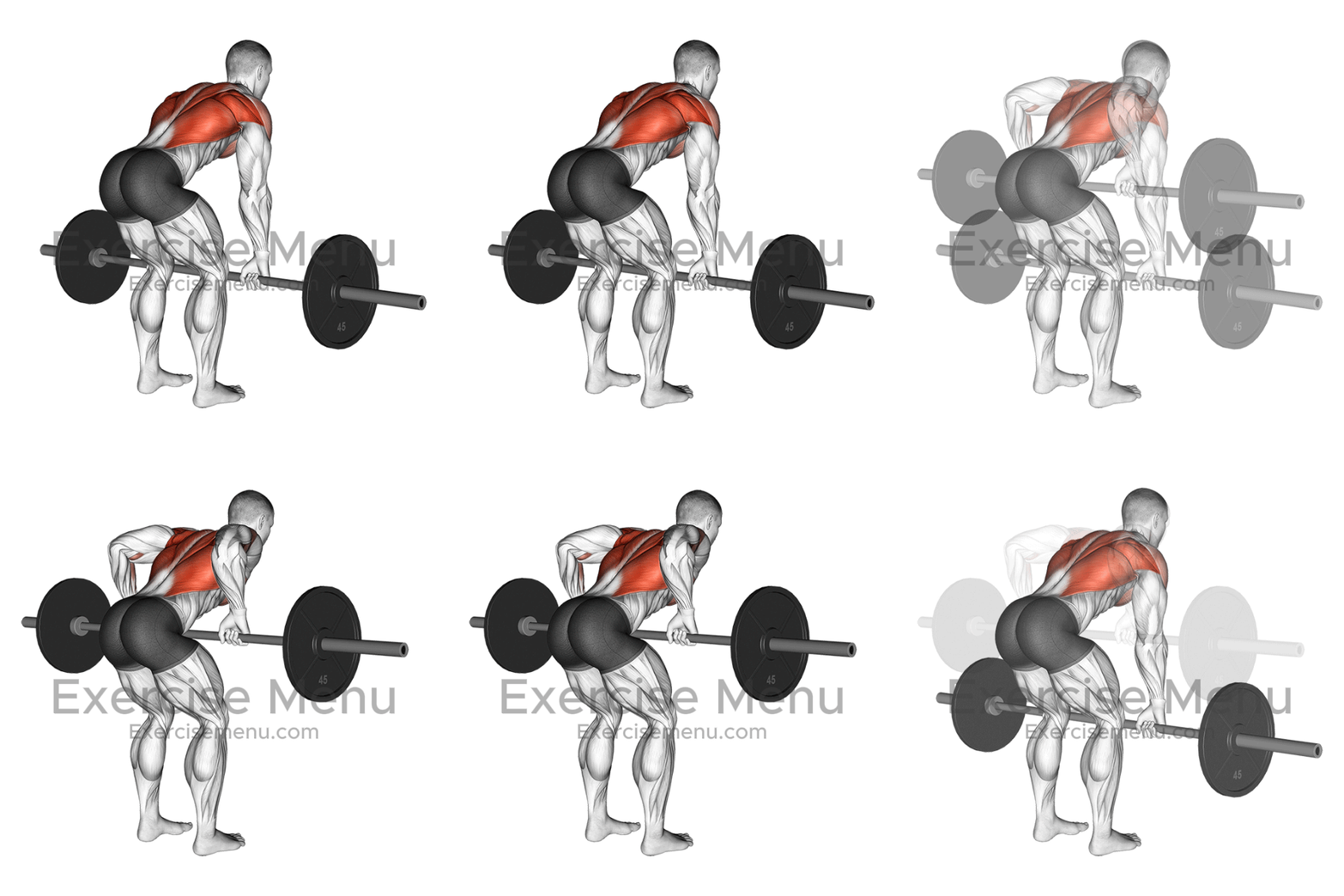
The barbell bent-over row is a compound pulling exercise that trains the lats, rhomboids, middle traps, and rear delts. Hinge forward with a flat back, let the bar hang at arm's length, then pull it to your lower ribs or upper stomach and lower it under control. Start with 3 sets of 8 to 12 reps.
How to Do the Barbell Bent-Over Row
- 1
Pick up the bar
Deadlift the bar to standing with an overhand grip slightly wider than shoulder-width.
- 2
Hinge into position
Soften your knees and push your hips back until your torso leans well forward, roughly 45 degrees or lower. Keep your back flat and the bar hanging at arm's length.
- 3
Brace your trunk
Take a breath, tighten your abs, and keep your neck in line with your spine, eyes on the floor a little ahead of you.
- 4
Row the bar up
Pull your elbows back and up to bring the bar to your lower ribs or upper stomach. Squeeze your shoulder blades together at the top.
- 5
Lower under control
Let the bar travel back down until your arms are straight, keeping your torso angle the same on every rep.
What Muscles Does the Barbell Bent-Over Row Work?
Primary
- Latissimus Dorsipulls the upper arms back toward the torso.
- Rhomboidssqueeze the shoulder blades together at the top of the row.
- Middle Trapeziusretracts the shoulder blades and holds the upper back tight.
Secondary
- Posterior Deltoidassists in pulling the elbows back.
- Biceps Brachii and Brachialisbend the elbows during the pull.
- Erector Spinaehold the hinged torso position for the whole set.
- Hamstrings and Gluteshold the hips steady in the hinge.
- Forearm Flexorsmaintain grip on the bar.
How Many Sets and Reps Should You Do?
| Goal | Sets | Reps | Rest |
|---|---|---|---|
| Muscle Growth | 3–4 | 8–12 | 90 sec–2 min |
| Strength | 3–5 | 5–6 | 2–3 min |
| Endurance | 2–3 | 15–20 | 45–60 sec |
| Beginner | 2–3 | 10–12 | 90 sec |
Common Mistakes That Reduce Results
✕
Standing Up as You Row
Letting the torso rise on each rep shifts the pull toward the upper traps and shortens the range. Hold the same hinge angle from the first rep to the last.
✕
Rounding the Back
A rounded lower back under load puts stress on the spine. Keep a flat back and lighten the bar if you cannot hold it.
✕
Jerking the Weight with the Hips
Using a hip snap to start each rep moves the work away from the back. If you need momentum, the load is too heavy.
✕
Pulling with the Arms Only
Bending the elbows without moving the shoulder blades leaves the upper back underworked. Think about driving the elbows back, not curling the bar.
✕
Cutting the Bottom Short
Stopping before the arms are straight removes the stretch on the lats. Lower until your arms are fully extended.
Tips for Better Results
✓
Pull to Where the Bar Naturally Lands
Most lifters touch the bar to the lower chest or upper stomach. Pick one spot and use it on every rep so the lift stays consistent.
✓
Keep the Bar Close to Your Legs
A bar that drifts forward increases the pull on your lower back. Let it travel straight up and down beneath your shoulders.
✓
Change Grip to Shift the Focus
An overhand grip with elbows slightly out emphasizes the upper back. An underhand grip with elbows tucked brings in more lats and biceps.
✓
Use Straps When Grip Fails First
If your grip gives out before your back, wrist straps let you finish the set with good form.
Modifications and Progressions
▼ Easier
Chest-Supported Dumbbell Row
Lying face down on an incline bench removes the need to hold the hinge, so beginners and anyone with lower back fatigue can focus on the pull.
▼ Easier
Seated Cable Row
The seat and foot plate support your body, and the cable lets you adjust the load in small steps.
▲ Harder
Pendlay Row
Each rep starts from the floor with the torso parallel to the ground, which requires more upper back power and a stricter hinge.
▲ Harder
Paused Barbell Row
Holding the bar against your body for 1–2 seconds at the top removes momentum and makes the upper back work harder.
Barbell Bent-Over Row Alternatives
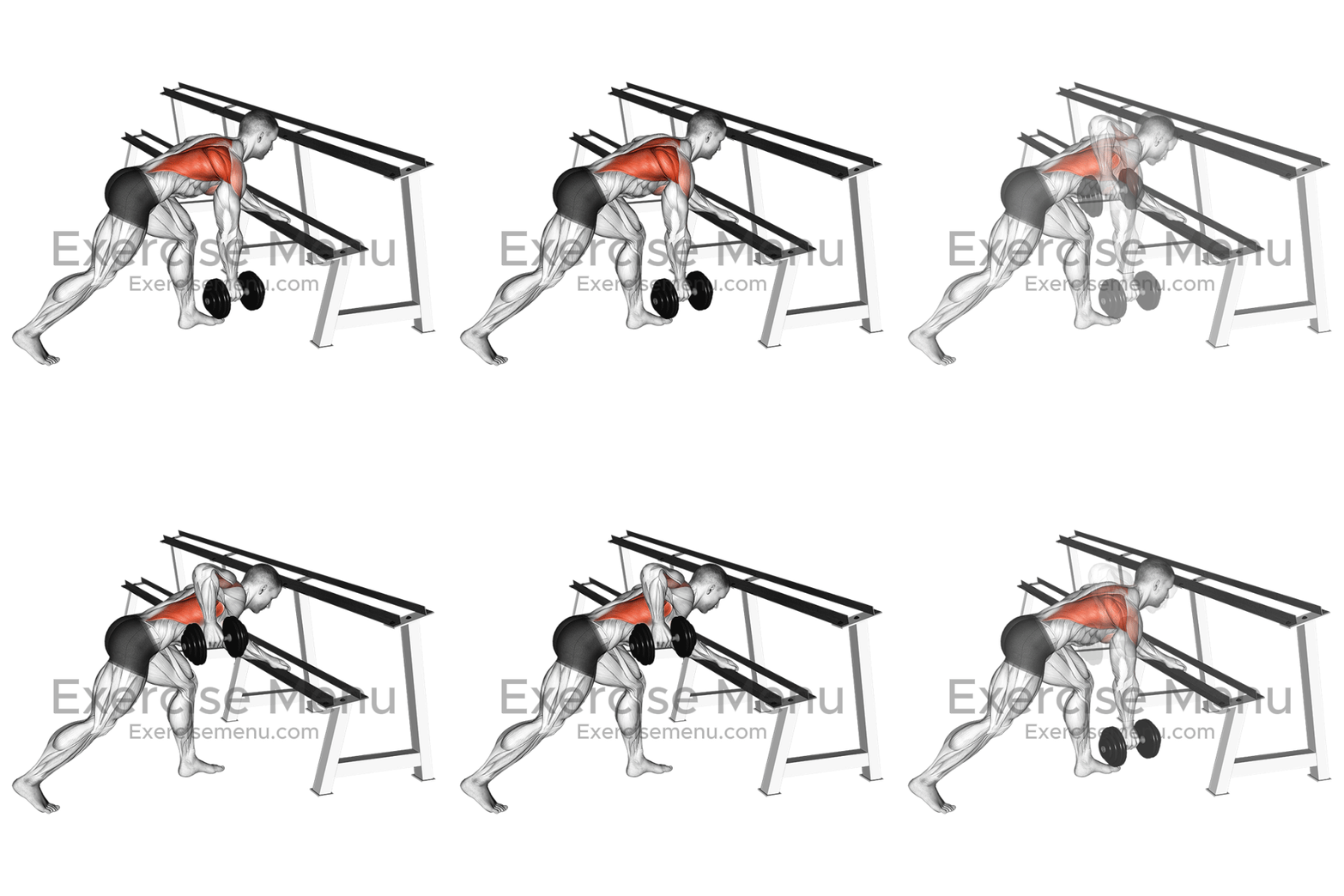 Dumbbell One-Arm Row
Latissimus Dorsi
Frequently Asked Questions
Should I use an overhand or underhand grip?
An overhand grip is more common and biases the upper back, while an underhand grip lets the elbows stay closer to the body and involves more lats and biceps.
How bent over should I be?
A torso angle between about 45 degrees and parallel to the floor is typical. The more horizontal you are, the more your back works to hold the position.
Is the barbell row bad for the lower back?
Not when performed with a flat back and a load you can control. If your lower back tires before your upper back, try a chest-supported row instead.
Bent-over row or lat pulldown — which is better?
They train the back in different directions. The row is a horizontal pull, and the pulldown is a vertical pull, so most programs include one of each.
Can beginners do barbell rows?
Yes, with light loads once they can hold a flat-back hip hinge. Beginners who struggle with the hinge can start with a chest-supported or cable row.
If you have an existing injury or medical condition, check with your doctor before adding this exercise to your training.