
Dumbbell Biceps Curl
A standing curl with a dumbbell in each hand and palms facing up that trains the biceps, one of the easiest arm exercises to learn.
BeginnerIsolationDumbbellsBicepsUpper Arms
Last updated: November 4, 2026
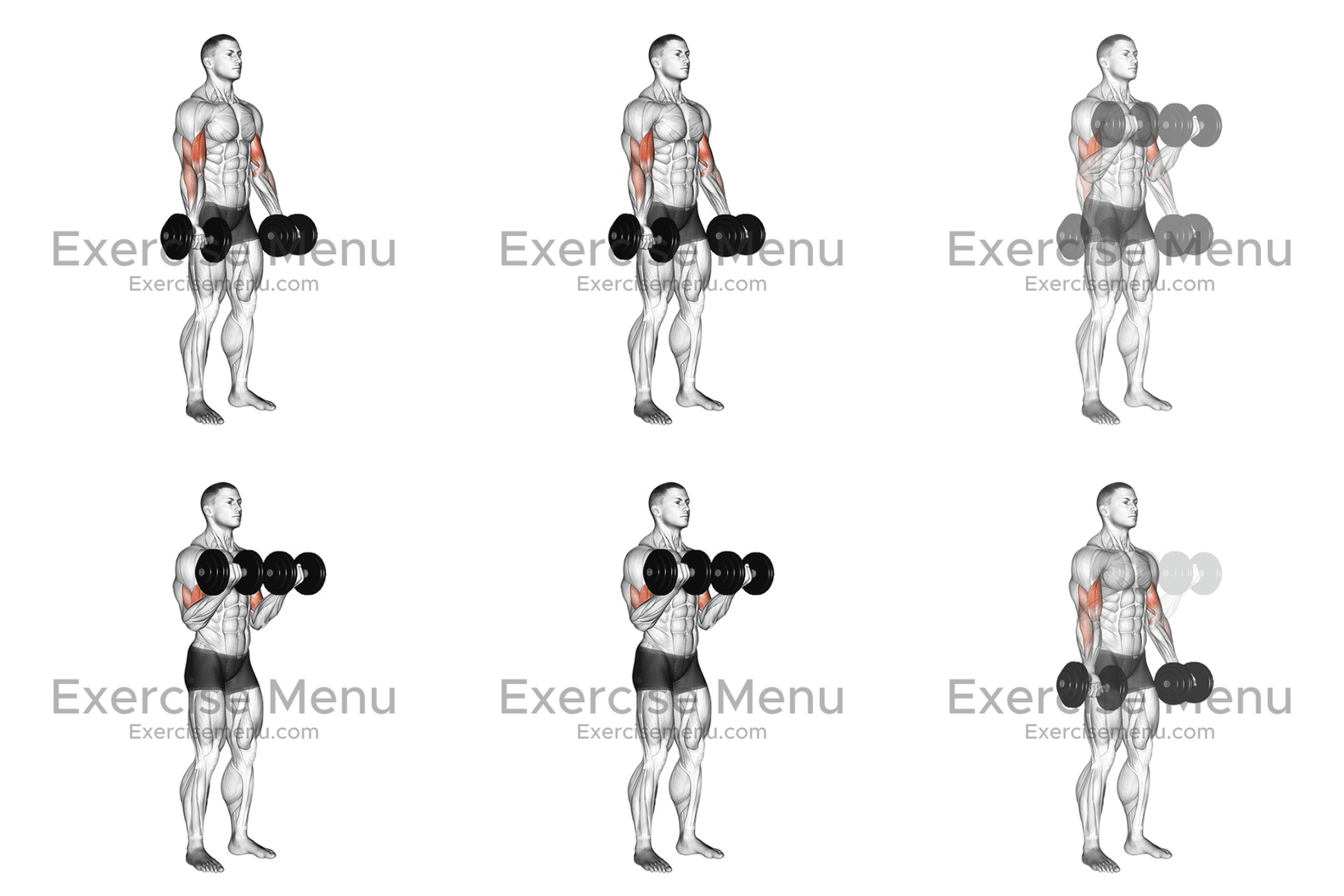
Exercise Profile
- Target Muscle
- Biceps Brachii
- Body Part
- Upper Arms
- Equipment
- Dumbbells
- Category
- Isolation
- Skill Level
- Beginner
- Movement
- Elbow Flexion
- Also Known As
- Dumbbell Curl, DB Curl
- Est. Calories
- 2–4 kcal per setEstimate for a 70 kg person, 30–60 second set
Quick Answer
The dumbbell biceps curl is a standing elbow flexion exercise done with palms facing up. Keep your elbows at your sides, curl both dumbbells toward your shoulders, then lower them slowly. It trains the biceps, with help from the brachialis and brachioradialis. Use 3 to 4 sets of 8 to 12 reps.
How to Do the Dumbbell Biceps Curl
- 1
Stand tall
Stand with feet hip-width apart, a dumbbell in each hand at your sides, palms facing forward.
- 2
Fix your elbows
Keep your elbows close to your sides for the whole set.
- 3
Curl both dumbbells
Bend your elbows to curl both dumbbells toward your shoulders, keeping your palms facing up.
- 4
Pause at the top
Hold briefly when your forearms are about vertical, without letting your elbows move forward.
- 5
Lower slowly
Lower the dumbbells over 2–3 seconds until your arms are straight.
What Muscles Does the Dumbbell Biceps Curl Work?
Primary
- Biceps Brachiiboth the long and short heads bend the elbow and keep the palm turned up.
Secondary
- Brachialisa strong elbow flexor under the biceps.
- Brachioradialisa forearm muscle that assists elbow flexion.
- Forearm Flexorshold the dumbbells.
How Many Sets and Reps Should You Do?
| Goal | Sets | Reps | Rest |
|---|---|---|---|
| Muscle Growth | 3–4 | 8–12 | 60–90 sec |
| Strength | 3–4 | 6–8 | 2 min |
| Endurance | 2–3 | 15–20 | 30–60 sec |
| Beginner | 2–3 | 10–12 | 60–90 sec |
Common Mistakes That Reduce Results
✕
Swinging the Body
If your torso rocks back on each rep, the weight is too heavy. Keep your core braced and your body still.
✕
Letting the Palms Turn In
Turning the palms toward your body shifts work away from the biceps. Keep them facing up.
✕
Elbows Drifting Forward
Moving the elbows forward lets the front shoulders help. Keep them at your sides.
✕
Rushing the Lowering Phase
Dropping the weights fast loses control and tension. Lower over 2–3 seconds on every rep.
✕
Going Too Heavy Too Soon
Heavy weights with poor form train the biceps less, not more. Use a weight you can control for every rep.
Tips for Better Results
✓
Train Both Arms Evenly
Each arm lifts its own dumbbell, so a weaker arm cannot hide behind a stronger one.
✓
Keep Turning the Palms Up
The biceps both bend the elbow and turn the palm up. Keeping the palms fully turned up, little finger slightly higher, keeps the biceps working through the rep.
✓
Do Curls After Your Main Pulling Work
In a push pull legs split, curls usually come at the end of the pull session.
✓
Add Weight in Small Steps
Move up by the smallest dumbbell increase available, usually 1–2 kg (2.5–5 lb), once all sets feel solid.
Modifications and Progressions
▼ Easier
Seated Dumbbell Curl
Sitting removes body swing and makes strict form easier.
▼ Easier
Resistance Band Curl
A light band under your feet is easy on the joints and simple to use at home.
▲ Harder
Incline Dumbbell Curl
Sitting back on an incline bench starts the curl with the arms behind the body, which places the biceps in a more stretched position.
▲ Harder
EZ Bar Curl
Both arms lift one bar, which usually allows more total weight.
Workout Plans With the Dumbbell Biceps Curl
Pull B Push Pull Legs Split: How It Works, And How to Start?Dumbbell Biceps Curl Alternatives
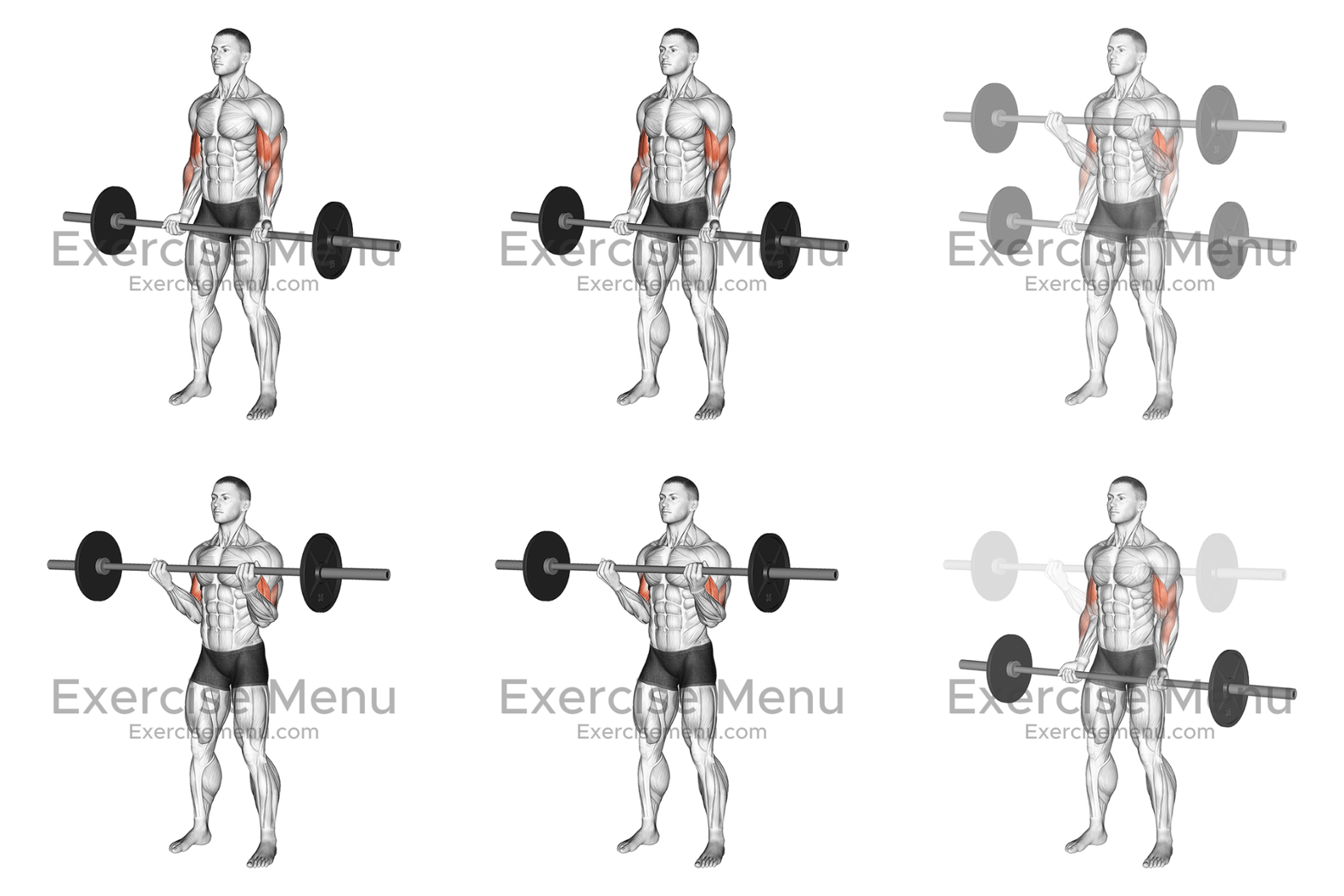 Barbell Curl
Biceps Brachii
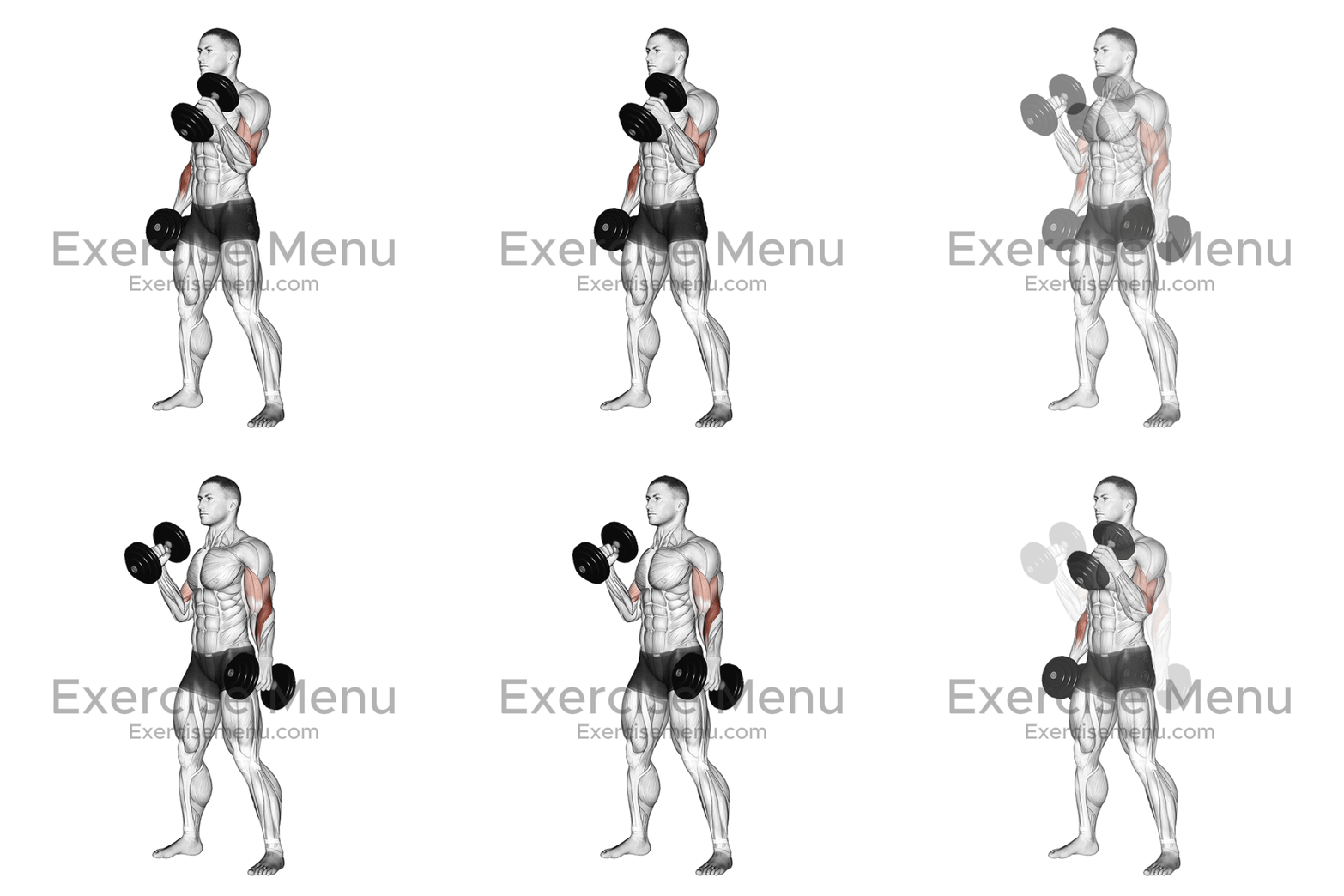 Dumbbell Hammer Curl
Brachialis, Brachioradialis
Frequently Asked Questions
Should I curl both arms at once or alternate?
Both work. Curling together saves time; alternating gives each arm a short rest and can make strict form easier with heavier weights.
Are dumbbell curls better than barbell curls?
Neither is clearly better for growth. Dumbbells let each arm work on its own; a barbell lets you lift more total weight.
Why do I feel dumbbell curls in my forearms?
Often because the palms turn in toward a thumbs-up grip, which shifts work to the brachioradialis. Keep the palms facing up.
Can I do dumbbell curls every day?
There is no need. Training biceps hard every day leaves little time to recover; two or three sessions a week with a rest day between works well for most lifters.
What weight should a beginner start with?
A weight you can curl for 10–12 controlled reps without swinging. If the last two reps break form, go lighter.
If you have an existing injury or medical condition, check with your doctor before adding this exercise to your training.