
Dumbbell Bench Press
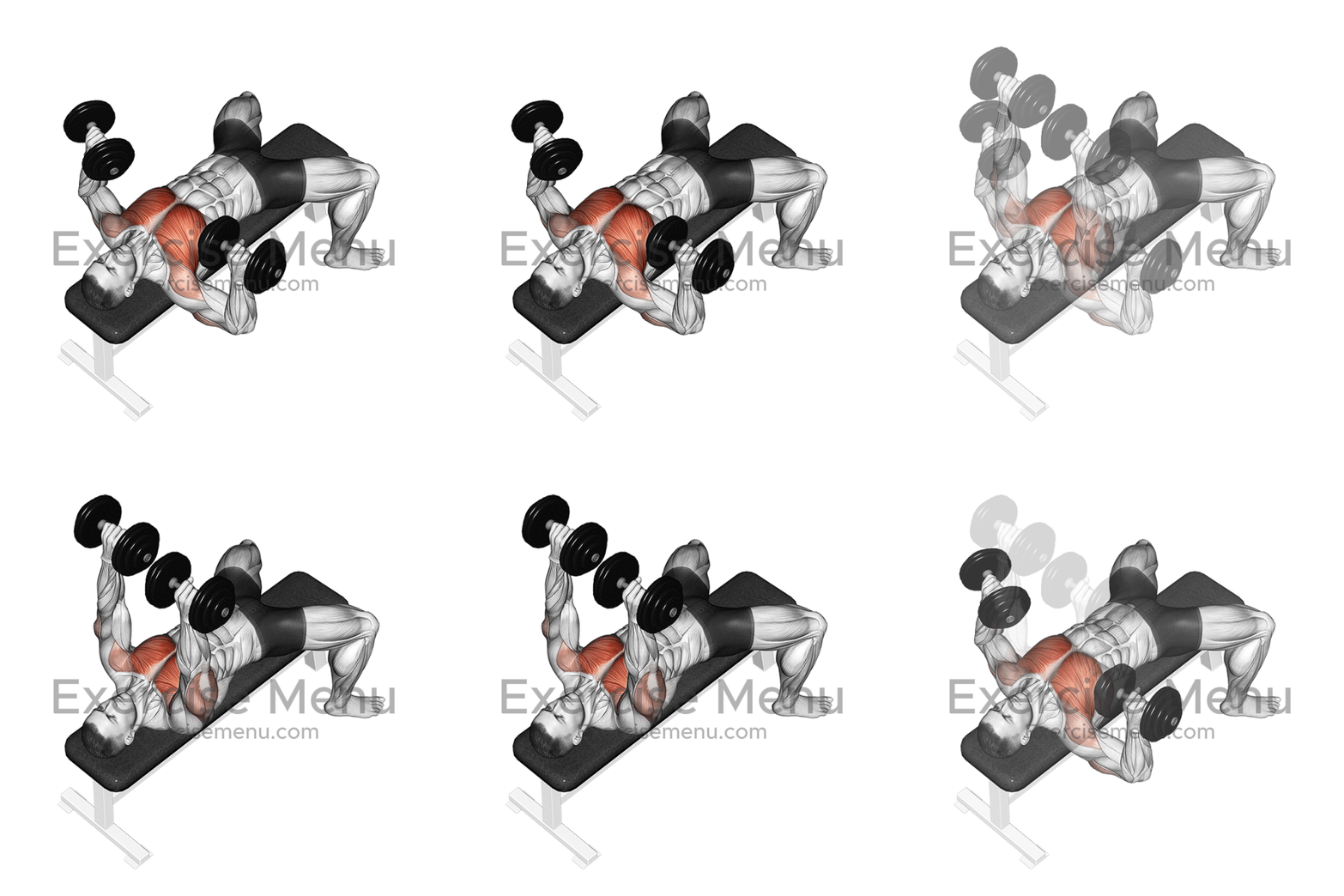
A flat-bench press with two dumbbells that trains the chest, front shoulders, and triceps, with each arm working on its own.
BeginnerCompoundDumbbellsChestPush
Last updated: November 4, 2026
Exercise Profile
- Target Muscle
- Pectoralis Major
- Body Part
- Chest
- Equipment
- Dumbbells, Flat Bench
- Category
- Compound
- Skill Level
- Beginner
- Movement
- Horizontal Push
- Also Known As
- Flat Dumbbell Press, DB Bench Press
- Est. Calories
- 2–4 kcal per setEstimate for a 70 kg person, 30–60 second set
Quick Answer
The dumbbell bench press is a compound chest exercise done on a flat bench. Each arm presses its own dumbbell, which allows a slightly deeper lowering than a barbell. It trains the chest, front shoulders, and triceps. Use 3 to 4 sets of 8 to 12 reps for muscle growth.
How to Do the Dumbbell Bench Press
- 1
Get the dumbbells into position
Sit on the end of the bench with a dumbbell on each thigh. Lie back and use your thighs to help bring the dumbbells up to chest level.
- 2
Set your base
Plant your feet on the floor and pull your shoulder blades back and down against the bench.
- 3
Start at chest level
Hold the dumbbells beside your chest, palms facing forward, elbows about 45–75 degrees from your torso.
- 4
Press up
Press the dumbbells up in a slight arc until your arms are straight over your chest. Do not bang them together.
- 5
Lower with control
Lower the dumbbells over 2–3 seconds to the sides of your chest, as deep as your shoulders comfortably allow.
- 6
Finish safely
After the last rep, bring the dumbbells to your thighs as you sit up.
What Muscles Does the Dumbbell Bench Press Work?
Primary
- Pectoralis Majorthe chest, both the upper (clavicular) and mid (sternal) fibers press the dumbbells.
Secondary
- Anterior Deltoidthe front of the shoulder, assists the press.
- Triceps Brachiistraighten the elbows at the top.
- Serratus Anteriorhelps stabilize the shoulder blades.
- Biceps Brachiihelps steady the dumbbells.
How Many Sets and Reps Should You Do?
| Goal | Sets | Reps | Rest |
|---|---|---|---|
| Muscle Growth | 3–4 | 8–12 | 60–90 sec |
| Strength | 3–5 | 5–6 | 2–3 min |
| Endurance | 2–3 | 15–20 | 30–60 sec |
| Beginner | 2–3 | 10–12 | 60–90 sec |
Common Mistakes That Reduce Results
✕
Flaring the Elbows to 90 Degrees
Fully flared elbows put the front of the shoulder in a more stressful position. Keep them about 45–75 degrees from your torso.
✕
Cutting the Range Short
Stopping high reduces the stretch on the chest, one of the main benefits of dumbbells. Lower until the dumbbells reach chest level or slightly below.
✕
Shoulders Rolling Forward at the Top
Letting the shoulder blades lift off the bench takes tension off the chest. Keep them back and down.
✕
Going Too Heavy Too Soon
Dumbbells need more balance than a barbell. Start lighter than you expect and add weight once every rep is steady.
✕
Dropping the Dumbbells to the Side
Letting heavy dumbbells fall out wide with the arms stretched can strain the shoulders. Bring them to your thighs and sit up.
Tips for Better Results
✓
Train Both Sides Evenly
Each arm lifts its own weight, so a weaker side cannot hide behind a stronger one.
✓
Keep a Moderate Elbow Angle
If your shoulders tire before your chest, your elbows are probably too wide.
✓
Know What Dumbbells Change
Saeterbakken and colleagues (2011) found similar chest and front-shoulder activity in barbell, Smith machine, and dumbbell bench presses, but 1-RM was about 17% lower with dumbbells.
✓
Do It Early in the Session
Press while you are fresh, and balance your weekly pressing with rows.
Modifications and Progressions
▼ Easier
Dumbbell Floor Press
Pressing from the floor shortens the range at the bottom and removes the need to get off a bench with heavy weights.
▼ Easier
Machine Chest Press
A guided path removes the demand of two dumbbells.
▲ Harder
Dumbbell Incline Bench Press
A bench at about 30 degrees shifts more of the work to the upper chest and front shoulders.
▲ Harder
Dumbbell Bench Press with Slow Lowering
Lowering each rep over 3–4 seconds makes the same weight harder and builds control.
Workout Plans With the Dumbbell Bench Press
Push B Push Pull Legs Split: How It Works, And How to Start?Dumbbell Bench Press Alternatives
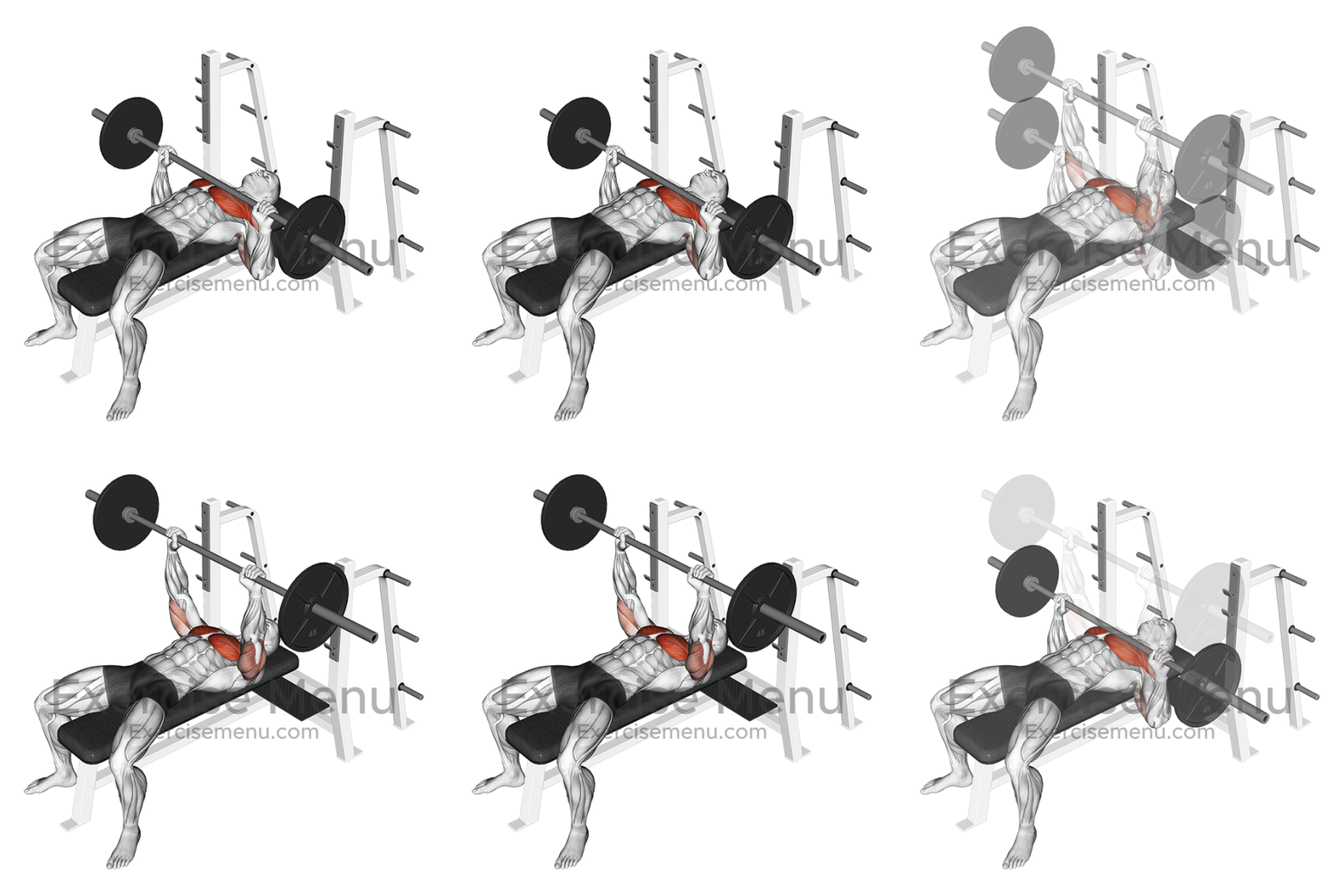 Barbell Bench Press
Pectoralis Major
Frequently Asked Questions
How is the dumbbell bench press different from the barbell bench press?
Each arm works on its own, and the dumbbells can travel slightly lower than a bar. A barbell usually lets you lift more total weight.
Should the dumbbells touch at the top?
They can come close, but there is no need to bang them together. Keep the movement controlled.
Why do my shoulders hurt during dumbbell bench press?
Flared elbows, shoulders rolling forward, or lowering too deep for your mobility are common causes. Adjust these first, and see a clinician if pain continues.
What weight should a beginner use?
A weight you can press for 10–12 controlled reps with a full range of motion. The right starting weight varies widely from person to person.
Can I do it without a bench?
Yes. The dumbbell floor press trains the same pattern with a shorter range of motion.
Sources
- Saeterbakken AH, van den Tillaar R, Fimland MS. A comparison of muscle activity and 1-RM strength of three chest-press exercises with different stability requirements. J Sports Sci. 2011;29(5):533–538. https://pubmed.ncbi.nlm.nih.gov/21225489/
If you have an existing injury or medical condition, check with your doctor before adding this exercise to your training.