
Barbell Bench Press
A compound barbell press on a flat bench that trains the chest, front shoulders, and triceps.
IntermediateCompoundBarbellChestPush
Last updated: November 4, 2026
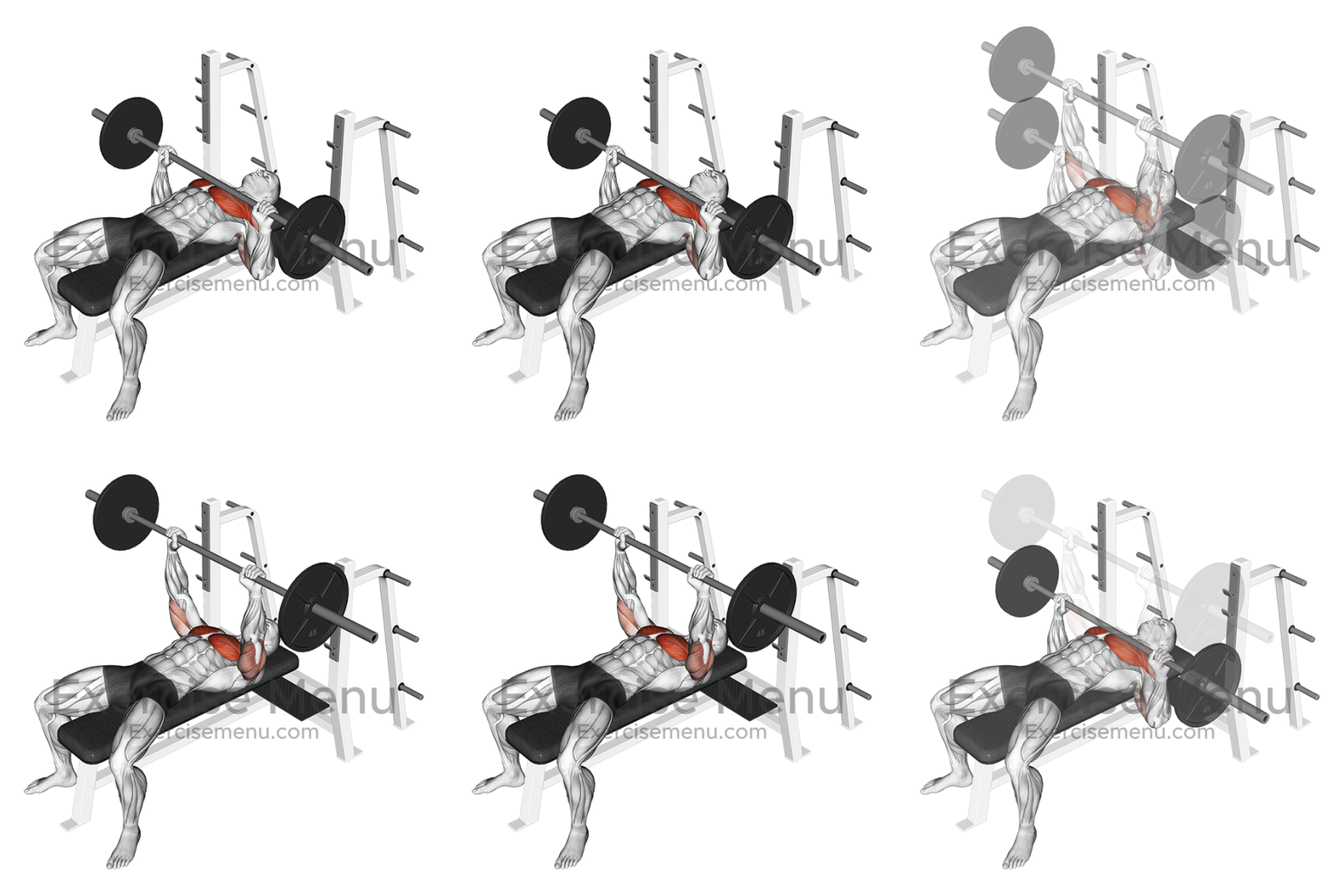
Exercise Profile
- Target Muscle
- Pectoralis Major
- Body Part
- Chest
- Equipment
- Barbell, Flat Bench, Rack
- Category
- Compound
- Skill Level
- Intermediate
- Movement
- Horizontal Push
- Also Known As
- Bench Press, Flat Bench Press, Flat Barbell Bench Press
- Est. Calories
- 2–4 kcal per setEstimate for a 70 kg person, 30–60 second set
Quick Answer
The barbell bench press is a compound lift that trains the chest, front shoulders, and triceps. Lie on a flat bench, grip the bar slightly wider than shoulder-width, lower it to your mid-chest with elbows tucked at a moderate angle, then press it back up. Start with 3 sets of 8 to 10 reps.
How to Do the Barbell Bench Press
- 1
Set up under the bar
Lie on the bench with your eyes under the bar and your feet flat on the floor.
- 2
Set your grip
Grip the bar slightly wider than shoulder-width, with your wrists stacked over your forearms.
- 3
Pin your shoulder blades
Pull your shoulder blades back and down into the bench, keeping a small natural arch in your lower back.
- 4
Unrack
Lift the bar out of the rack and hold it with straight arms over your shoulders.
- 5
Lower to mid-chest
Lower the bar under control to your mid or lower chest, with elbows about 45–70 degrees from your torso.
- 6
Press up
Press the bar up and slightly back until your arms lock out over your shoulders.
What Muscles Does the Barbell Bench Press Work?
Primary
- Pectoralis Majorthe chest, produces most of the pressing force.
Secondary
- Anterior Deltoidthe front of the shoulder, assists the press.
- Triceps Brachiistraighten the elbows to lock out the bar.
- Serratus Anteriorhelps stabilize the shoulder blades.
- Rotator Cuffkeeps the shoulder joint stable.
How Many Sets and Reps Should You Do?
| Goal | Sets | Reps | Rest |
|---|---|---|---|
| Muscle Growth | 3–4 | 8–12 | 90 sec–2 min |
| Strength | 4–5 | 4–6 | 2–3 min |
| Endurance | 2–3 | 15–20 | 45–60 sec |
| Beginner | 3 | 8–10 | 90 sec |
Common Mistakes That Reduce Results
✕
Bouncing the Bar off the Chest
Rebounding uses momentum and is hard to control. Touch the chest lightly, then press.
✕
Flaring the Elbows to 90 Degrees
Fully flared elbows put the shoulders in a more stressful position. Keep them at a moderate angle from your body.
✕
Lifting the Hips off the Bench
Driving the hips up changes the pressing angle and usually means the load is too heavy. Keep your glutes on the bench.
✕
Losing the Shoulder Blade Position
If the shoulder blades slide forward during the set, the shoulders take over. Set them before you unrack and hold them for every rep.
✕
Grip Too Wide or Too Narrow
An extra-wide grip can strain the shoulders, and a narrow grip shifts work to the triceps. Start slightly wider than shoulder-width.
Tips for Better Results
✓
Set Your Feet First
Planting both feet firmly gives you a stable base and keeps your hips on the bench.
✓
Think About Bending the Bar
Trying to bend the bar apart with your hands helps keep your shoulder blades and elbows in position.
✓
Lower Slower Than You Press
Take about 2 seconds on the way down, then press with intent.
✓
Use Safety Arms or a Spotter
Set the safety arms just below chest height, or ask for a spotter, so you can train close to failure safely.
Modifications and Progressions
▼ Easier
Dumbbell Bench Press
Two dumbbells let each arm work on its own and remove the risk of being pinned under a barbell.
▼ Easier
Machine Chest Press
A fixed path lets beginners learn the pressing pattern without balancing a bar.
▲ Harder
Pause Bench Press
Pausing the bar on the chest for 1–2 seconds removes the bounce and builds strength from the bottom.
▲ Harder
Close-Grip Bench Press
A shoulder-width grip shifts more of the work to the triceps and builds lockout strength.
Workout Plans With the Barbell Bench Press
Push A Push Pull Legs Split: How It Works, And How to Start?Barbell Bench Press Alternatives
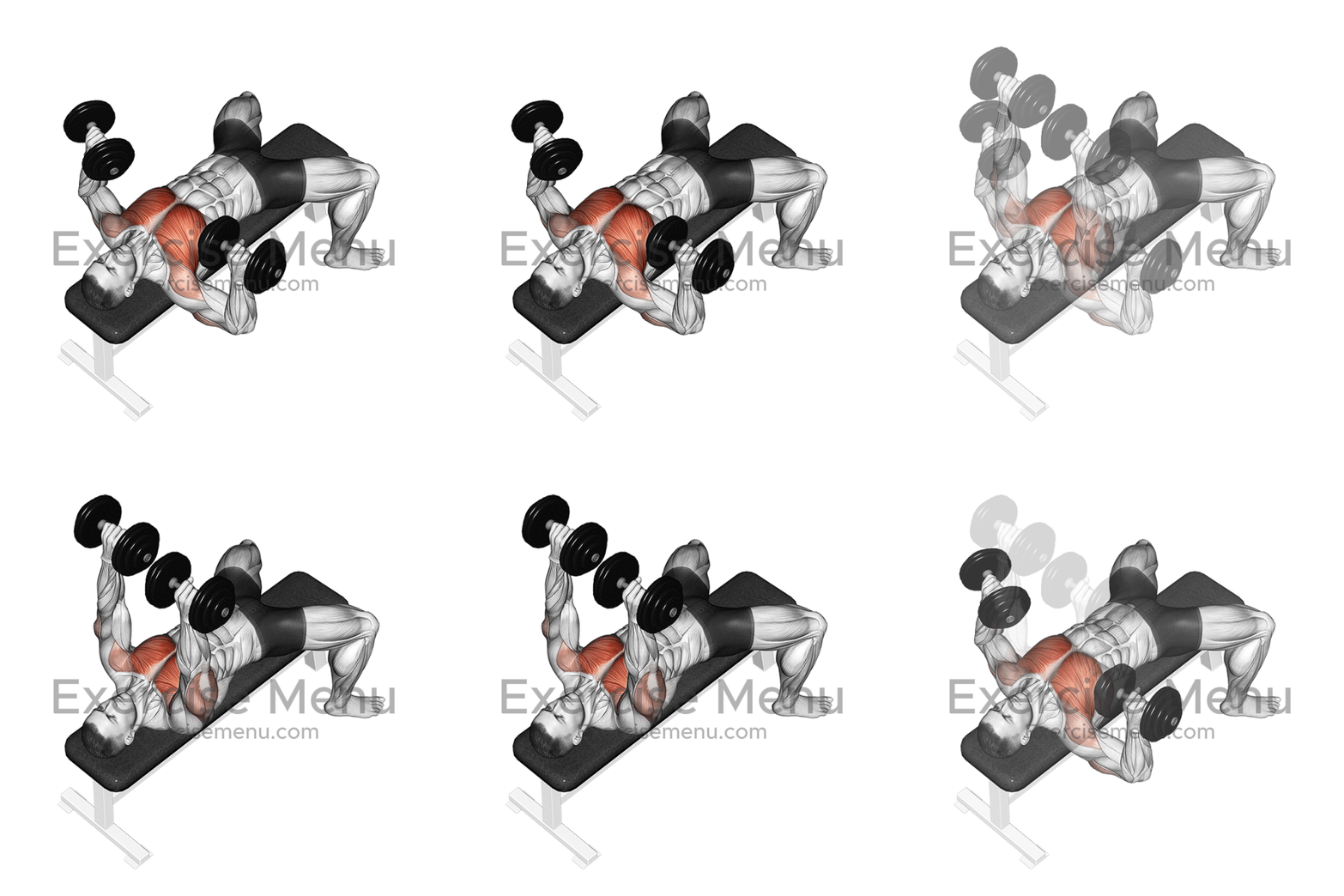 Dumbbell Bench Press
Pectoralis Major
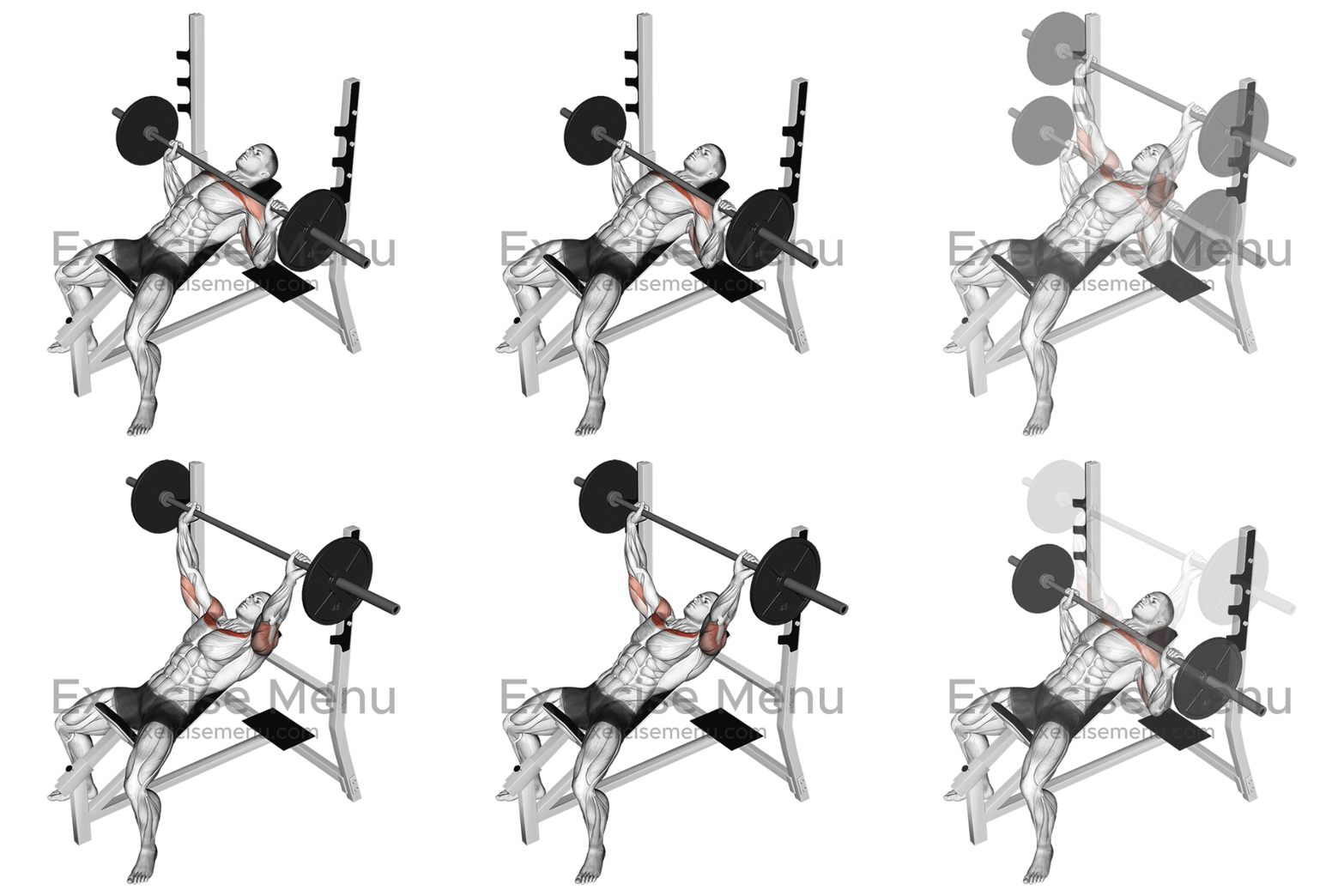 Barbell Incline Bench Press
Pectoralis Major (Clavicular Head)
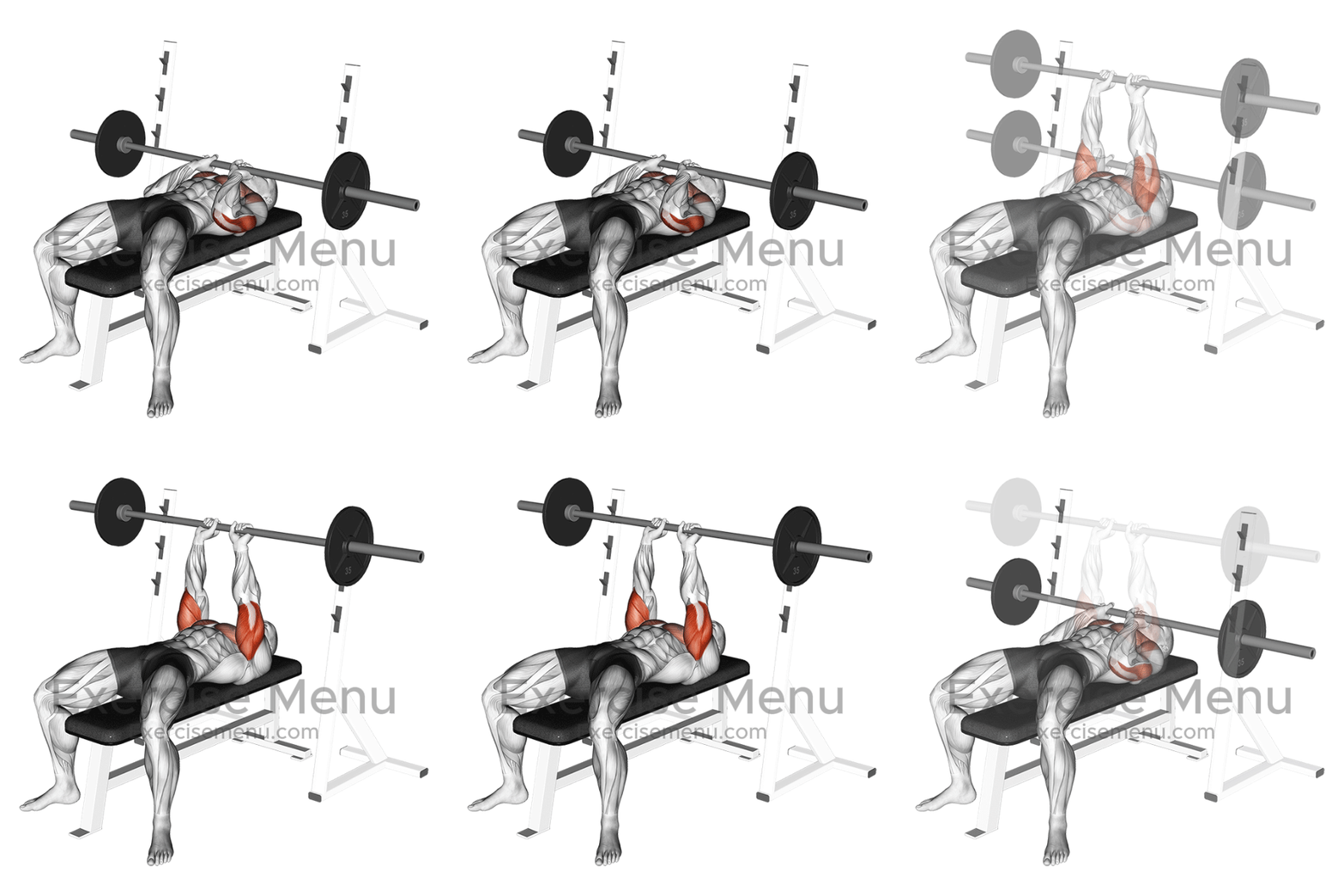 Barbell Close-Grip Bench Press
Triceps Brachii
Frequently Asked Questions
How much should a beginner bench press?
Start with a weight you can lift for 8–10 controlled reps. For many beginners this is the empty 20 kg (45 lb) bar or a lighter fixed barbell. Add 1–2.5 kg (2.5–5 lb) when every set feels solid.
Should I touch my chest on every rep?
Yes, unless a shoulder problem stops you. A full range of motion trains the chest through its whole range and gives you a consistent way to track strength.
How often should I bench press?
One to three times a week works for most lifters, depending on the rest of the program.
Is flat bench or incline better for the chest?
Use both. A 2020 study by Rodríguez-Ridao and colleagues found the mid and lower chest were most active on a flat bench and the upper chest at about 30 degrees.
Should I arch my back when benching?
A small natural arch is normal and helps hold the shoulder blades in place. A large arch shortens the range of motion and is mainly a powerlifting technique.
Sources
- Rodríguez-Ridao D, et al. Effect of Five Bench Inclinations on the Electromyographic Activity of the Pectoralis Major, Anterior Deltoid, and Triceps Brachii during the Bench Press Exercise. Int J Environ Res Public Health. 2020;17(19):7339. https://pmc.ncbi.nlm.nih.gov/articles/PMC7579505/
If you have an existing injury or medical condition, check with your doctor before adding this exercise to your training.