
Chest Dip
A bodyweight press on parallel bars, done with the torso leaning forward so the chest takes more of the work.
IntermediateCompoundBodyweightChestTricepsPush
Last updated: November 4, 2026
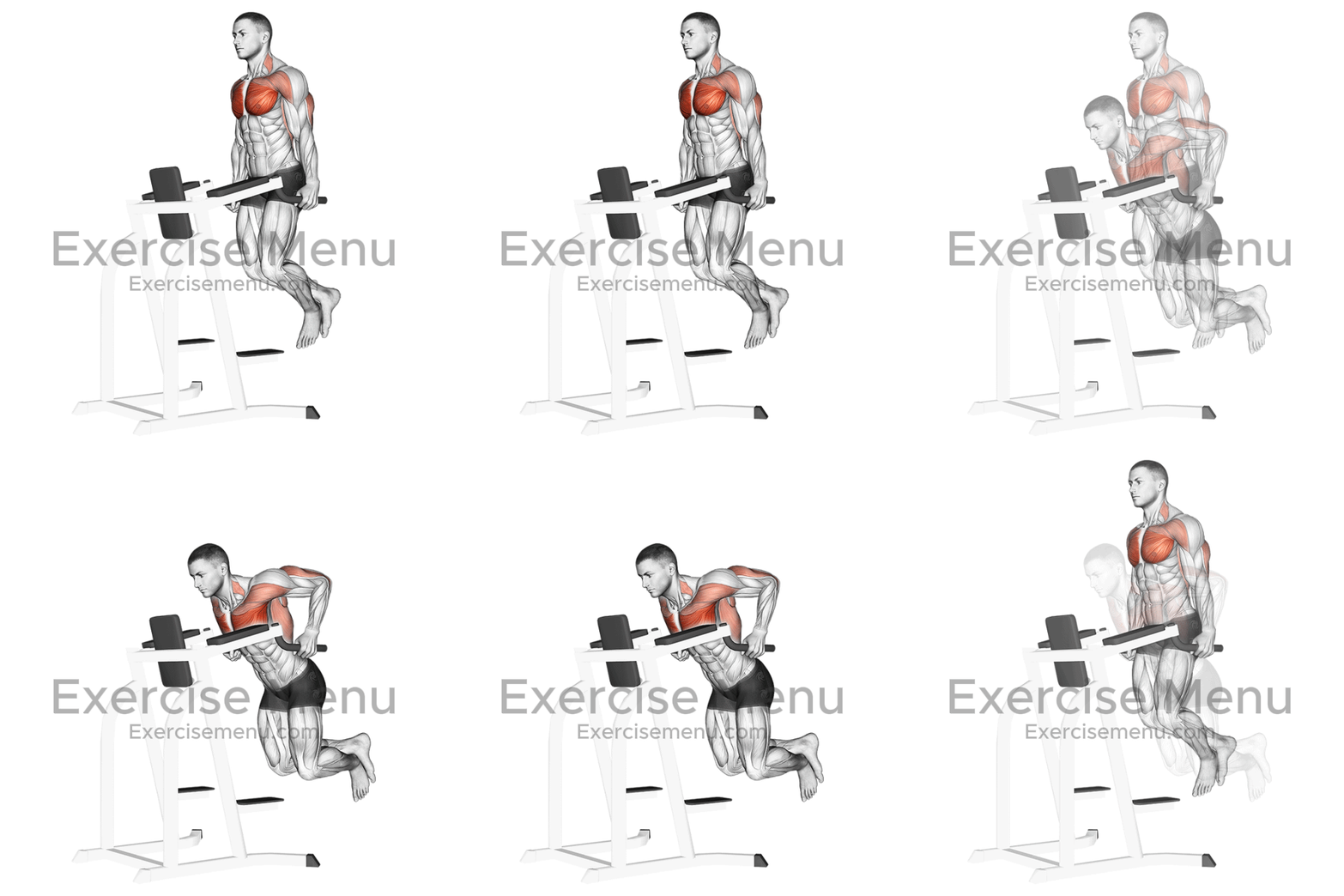
Exercise Profile
- Target Muscle
- Pectoralis Major
- Body Part
- Chest
- Equipment
- Parallel Dip Bars or Dip Station
- Category
- Compound
- Skill Level
- Intermediate
- Movement
- Vertical Push (Downward)
- Also Known As
- Dip, Parallel Bar Dip, Weighted Dip, Chest Version Dip
- Est. Calories
- 3–6 kcal per setEstimate for a 70 kg person, 30–60 second set
Quick Answer
The chest dip is a bodyweight press on parallel bars. Support yourself with straight arms, lean your torso forward, then bend your elbows to lower until your upper arms reach about shoulder level. Press back up without locking out hard. Use 3 sets of 6 to 12 reps.
How to Do the Chest Dip
- 1
Set up at the top
Grip the parallel bars and press up until your arms are straight and your body hangs between them.
- 2
Set your shoulders
Pull your shoulder blades slightly back and down so your shoulders do not round forward, as ACE advises for dips.
- 3
Lean forward and bend your knees
Tip your torso forward and bend your knees back behind you, as the demonstration shows. That forward lean is what makes this the chest version.
- 4
Lower under control
Bend your elbows and lower until your upper arms reach about shoulder level, letting your elbows travel out and back. Keep the forward lean the whole way.
- 5
Press back up
Push through the bars to return to the top. Straighten your arms without snapping the elbows into a hard lockout.
What Muscles Does the Chest Dip Work?
Primary
- Pectoralis Majorbrings the upper arms down and forward across the body; the forward lean is what puts the chest in charge.
- Triceps Brachiistraightens the elbows to press you back up.
Secondary
- Anterior Deltoidbrings the upper arms forward from the bottom of the rep.
- Lower Trapezius and Pectoralis Minordraw the shoulder blades down so your body does not sink between the bars.
- Abdominalskeep your trunk from swinging on the bars.
How Many Sets and Reps Should You Do?
| Goal | Sets | Reps | Rest |
|---|---|---|---|
| Muscle Growth | 3–4 | 6–12 (add weight once you pass 12) | 2 min |
| Strength | 3–5 | 4–6 (weighted) | 2–3 min |
| Endurance | 2–3 | as many as you can hold form for | 90 sec |
| Beginner | 3 | 5–8 assisted or band-assisted | 2 min |
Common Mistakes That Reduce Results
✕
Staying Upright
An upright torso turns the dip into a triceps exercise. Lean forward if you want the chest to do the work.
✕
Going Deeper Than Your Shoulders Allow
ACE notes that the dip needs a high level of shoulder stability and range of motion. Lower to about upper arms level with the shoulders, and stop higher if you feel pinching at the front of the shoulder.
✕
Shoulders Rolling Forward
Letting the shoulders round forward at the bottom puts the joint in a poor position. Keep the shoulder blades set back and down.
✕
Swinging the Legs
Using a leg kick to get back up turns it into a different exercise. Keep the knees bent and still behind you.
✕
Snapping Into Lockout
Jamming the elbows straight at the top under body weight adds nothing. Finish just short of a hard lockout.
Tips for Better Results
✓
Build Up Before You Add Weight
A band looped under your knees or the assisted dip machine lets you train full-range reps before you can do them unassisted.
✓
Add Load Once You Pass About 12 Reps
A dip belt or a dumbbell held between your feet keeps the sets in a range that still builds strength.
✓
Check the Bar Width
Bars a little wider than your shoulders usually feel best. Bars much wider than that push the shoulders into a harder position.
✓
How Strong Is the Chest Claim? Leaning forward lines the movement up with the chest fibres, which is why this version is named for the chest. Figures comparing leaning and upright dips circulate widely, but they trace back to blog write-ups rather than papers that could be checked, so treat the lean as a sensible choice rather than a measured one.
✓
Earn the Depth
ACE flags shoulder mobility as the limiting factor on this lift. Start higher and add depth over weeks rather than in one session.
Modifications and Progressions
▼ Easier
Band-Assisted Dip
A band looped over the bars and under your knees takes part of your body weight.
▼ Easier
Assisted Dip Machine
The machine lets you dial in exactly how much help you need and reduce it over time.
▲ Harder
Weighted Chest Dip
Add load with a dip belt or a dumbbell held between your feet.
▲ Harder
Chest Dip with 3-Second Lowering
Take 3 seconds to come down on every rep, which makes the same body weight harder.
Chest Dip Alternatives
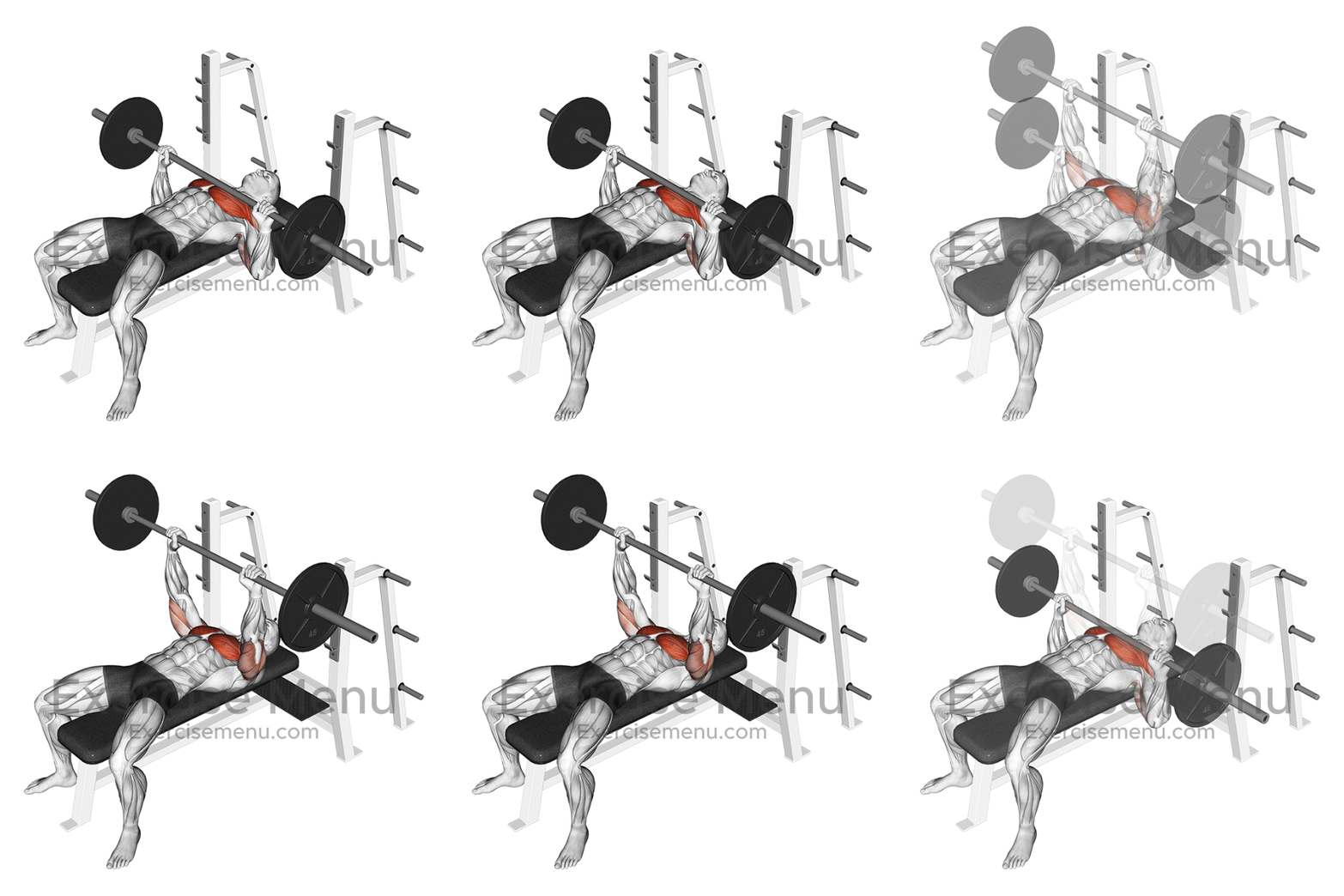 Barbell Bench Press
Pectoralis Major
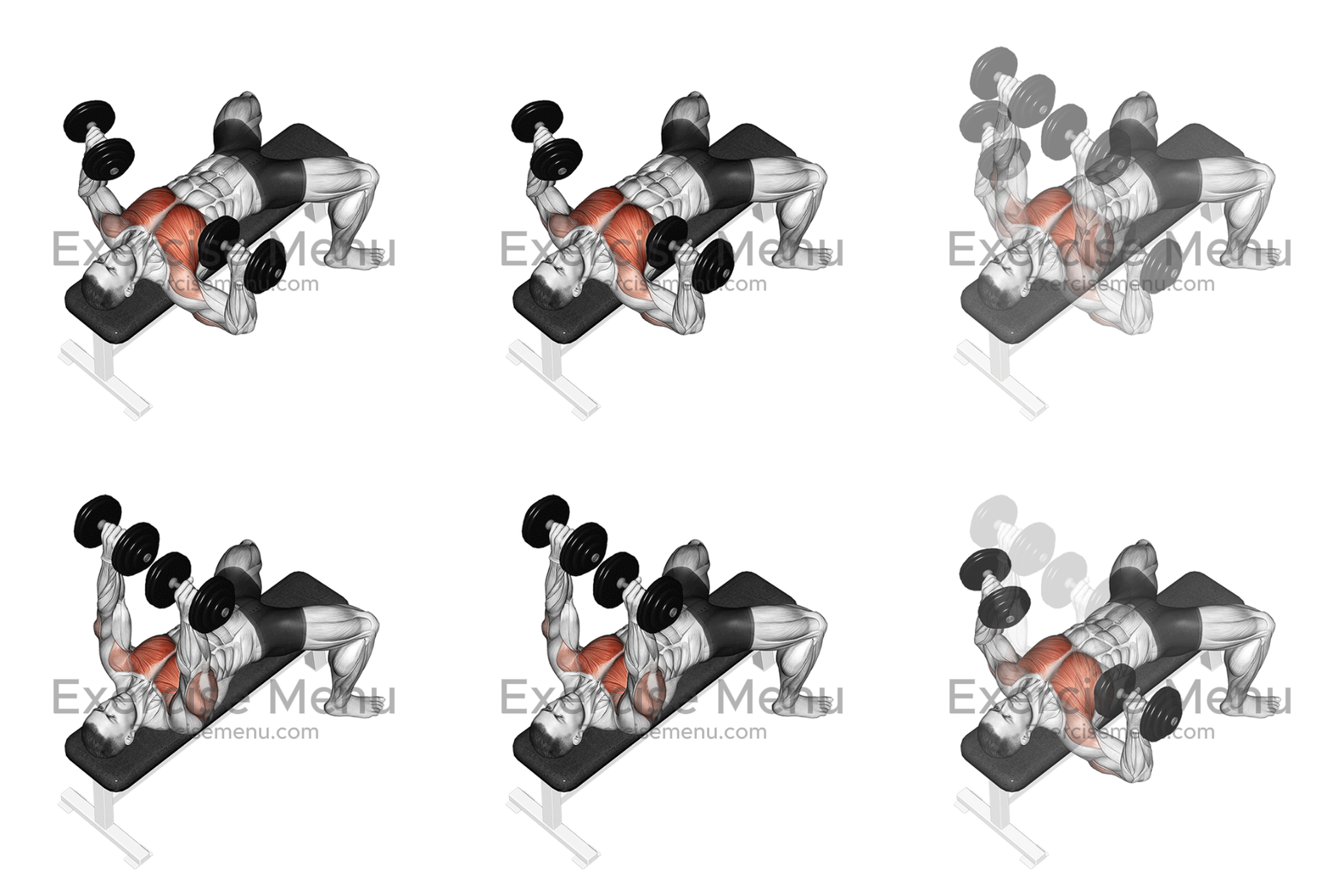 Dumbbell Bench Press
Pectoralis Major
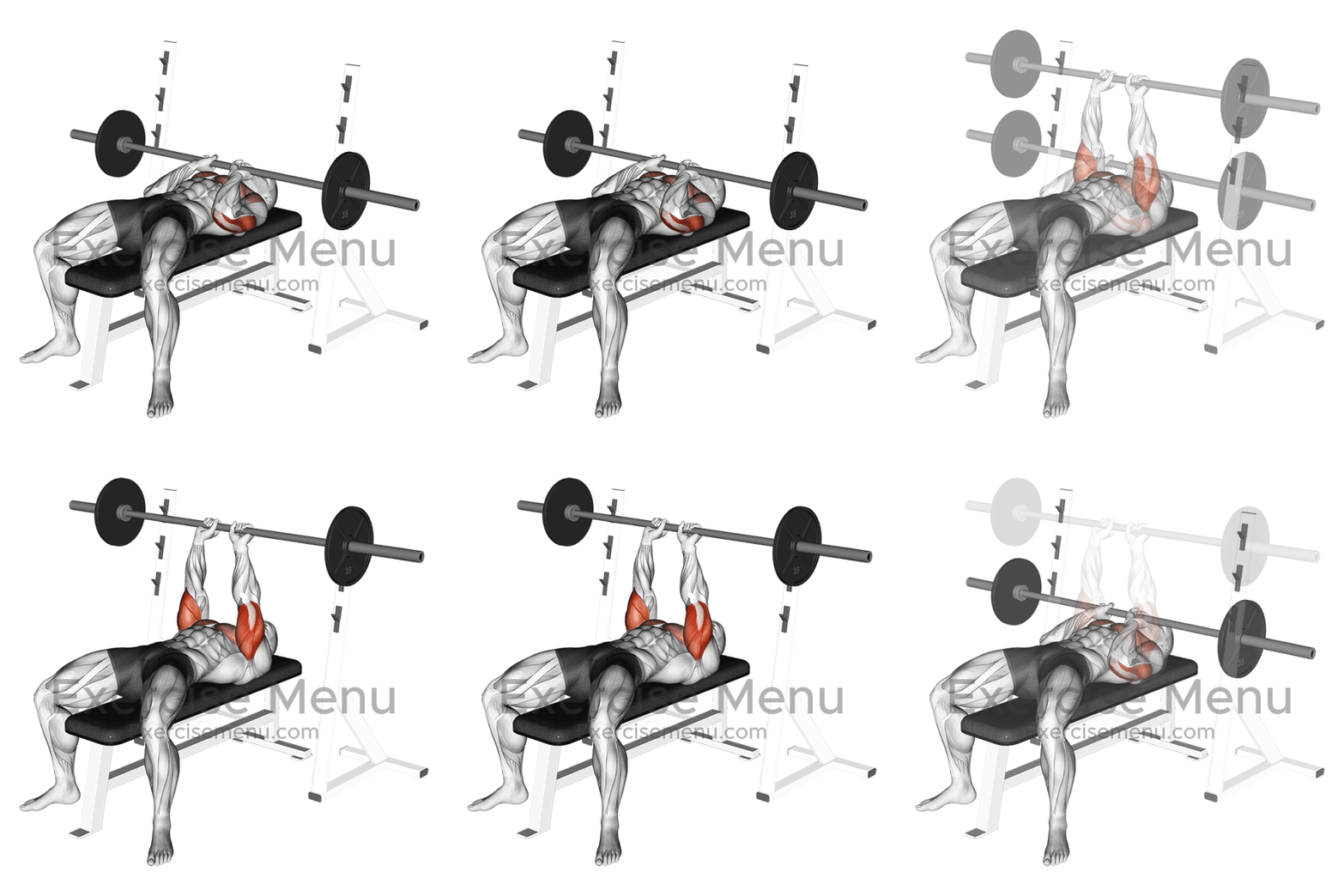 Barbell Close-Grip Bench Press
Triceps Brachii
Frequently Asked Questions
How do I make dips work the chest instead of the triceps?
Lean your torso forward and let your elbows travel out and back, as the demonstration does. Staying upright with the elbows tucked shifts the work to the triceps.
How deep should I go?
To about upper arms level with your shoulders. ACE points out that dips need plenty of shoulder stability and range, so go only as deep as your shoulders allow without pinching.
Why do my shoulders hurt on dips?
Most often it is depth, or the shoulders rounding forward at the bottom. Reduce the range, set your shoulder blades back and down, and see a clinician if the pain carries on.
I cannot do a dip yet — where do I start?
Use a band or the assisted machine for full reps, and practise holding the top position with straight arms. Press-ups and bench pressing build the same muscles while you work up.
Dip or bench press?
Both train the chest and triceps. The dip loads your body weight and asks more of your shoulders; the bench press lets you pick any load. Most programs use both, as the plans on this site do.
Sources
- American Council on Exercise (ACE). Tone Up Your Triceps With These Three Exercises. https://www.acefitness.org/resources/everyone/blog/4930/tone-up-your-triceps-with-these-three-exercises/
If you have an existing injury or medical condition, check with your doctor before adding this exercise to your training.