
Dumbbell One-Arm Row
A single-arm dumbbell row with the free hand braced on a rack, training the lats and upper back one side at a time.
BeginnerCompoundDumbbellsBackLatsPull
Last updated: November 4, 2026
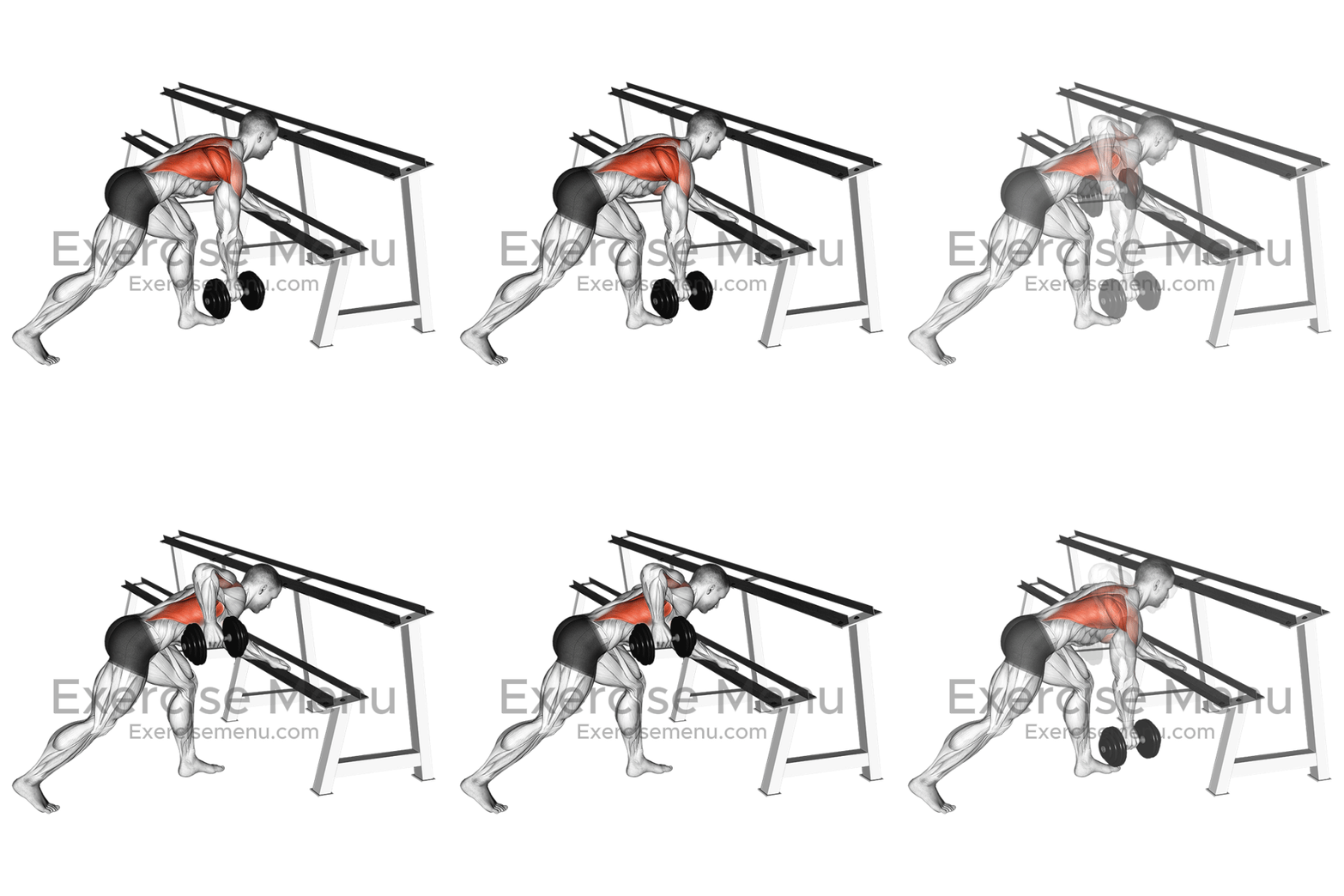
Exercise Profile
- Target Muscle
- Latissimus Dorsi
- Body Part
- Back
- Equipment
- Dumbbell, Rack or Bench for Support
- Category
- Compound
- Skill Level
- Beginner
- Movement
- Horizontal Pull
- Also Known As
- Single-Arm Dumbbell Row, One-Arm Dumbbell Row
- Est. Calories
- 2–4 kcal per arm per setEstimate for a 70 kg person, 30–60 second set
Quick Answer
The one-arm dumbbell row is a unilateral pulling exercise that trains the lats, rhomboids, and middle traps. Brace one hand on a rack or bench, hinge forward with a flat back, and pull the dumbbell toward your hip, keeping the elbow close to your body. Lower it under control. Use 3 sets of 8 to 12 reps per arm.
How to Do the Dumbbell One-Arm Row
- 1
Brace your free hand
Stand beside a dumbbell rack or bench. Place your non-working hand on it and step back into a staggered stance, with the leg on the working side further back.
- 2
Hinge and set your back
Push your hips back until your torso leans well forward. Keep your back flat and your neck in line with your spine.
- 3
Let the dumbbell hang
Hold the dumbbell with a neutral grip (palm facing in), arm straight below your shoulder.
- 4
Row toward your hip
Pull your elbow up and back, keeping it close to your side, until the dumbbell reaches your lower ribs or hip.
- 5
Lower with control
Lower the dumbbell until your arm is straight and you feel a stretch in your lat. Finish all reps, then switch sides.
What Muscles Does the Dumbbell One-Arm Row Work?
Primary
- Latissimus Dorsipulls the upper arm back toward the hip.
- Rhomboidspull the shoulder blade toward the spine at the top of the row.
- Middle Trapeziusretracts and steadies the shoulder blade.
Secondary
- Posterior Deltoidassists in pulling the elbow back.
- Biceps Brachii and Brachialisbend the elbow during the pull.
- Obliques and Erector Spinaeresist twisting and hold the flat back.
- Forearm Flexorshold the dumbbell.
How Many Sets and Reps Should You Do?
| Goal | Sets | Reps | Rest |
|---|---|---|---|
| Muscle Growth | 3–4 | 8–12 per arm | 60–90 sec |
| Strength | 3–4 | 5–8 per arm | 2 min |
| Endurance | 2–3 | 15–20 per arm | 30–60 sec |
| Beginner | 2–3 | 10–12 per arm | 60–90 sec |
Common Mistakes That Reduce Results
✕
Twisting the Torso
Rotating your chest open to lift the dumbbell higher uses momentum and the lower back. Keep your shoulders square to the floor.
✕
Shrugging the Weight Up
Pulling the shoulder toward the ear moves work to the upper traps. Keep the shoulder down and drive the elbow back.
✕
Rounding the Back
A rounded back puts the spine in a weak position. Keep a flat back throughout the set.
✕
Short, Jerky Reps
Yanking the weight up and dropping it fast skips the stretch at the bottom. Lower the dumbbell all the way under control.
✕
Pulling Straight Up to the Chest
Rowing to the chest with the elbow flared shifts the work toward the upper back and rear delts. Pull toward the hip to bias the lats.
Tips for Better Results
✓
Think "Elbow to Back Pocket"
This cue keeps the elbow close and the path toward the hip, which keeps the lats working.
✓
Use the Support Hand
Pressing into the rack or bench keeps your torso steady, so you can use more weight with strict form.
✓
Use Straps When Grip Fails First
If your grip gives out before your back, straps let you finish the set.
✓
Start with Your Weaker Side
Do the same number of reps on the stronger side to keep both sides balanced.
Modifications and Progressions
▼ Easier
Bench-Supported Dumbbell Row
Placing one knee and one hand on a flat bench gives more support and makes the flat back easier to hold.
▼ Easier
Chest-Supported Dumbbell Row
Lying face down on an incline bench removes any need to stabilize the hinge.
▲ Harder
Meadows Row
Rowing one end of a barbell in a landmine with a staggered stance allows heavy loading.
▲ Harder
Unsupported One-Arm Row
Rowing without a hand on a support forces your trunk to resist rotation and adds a balance challenge.
Dumbbell One-Arm Row Alternatives
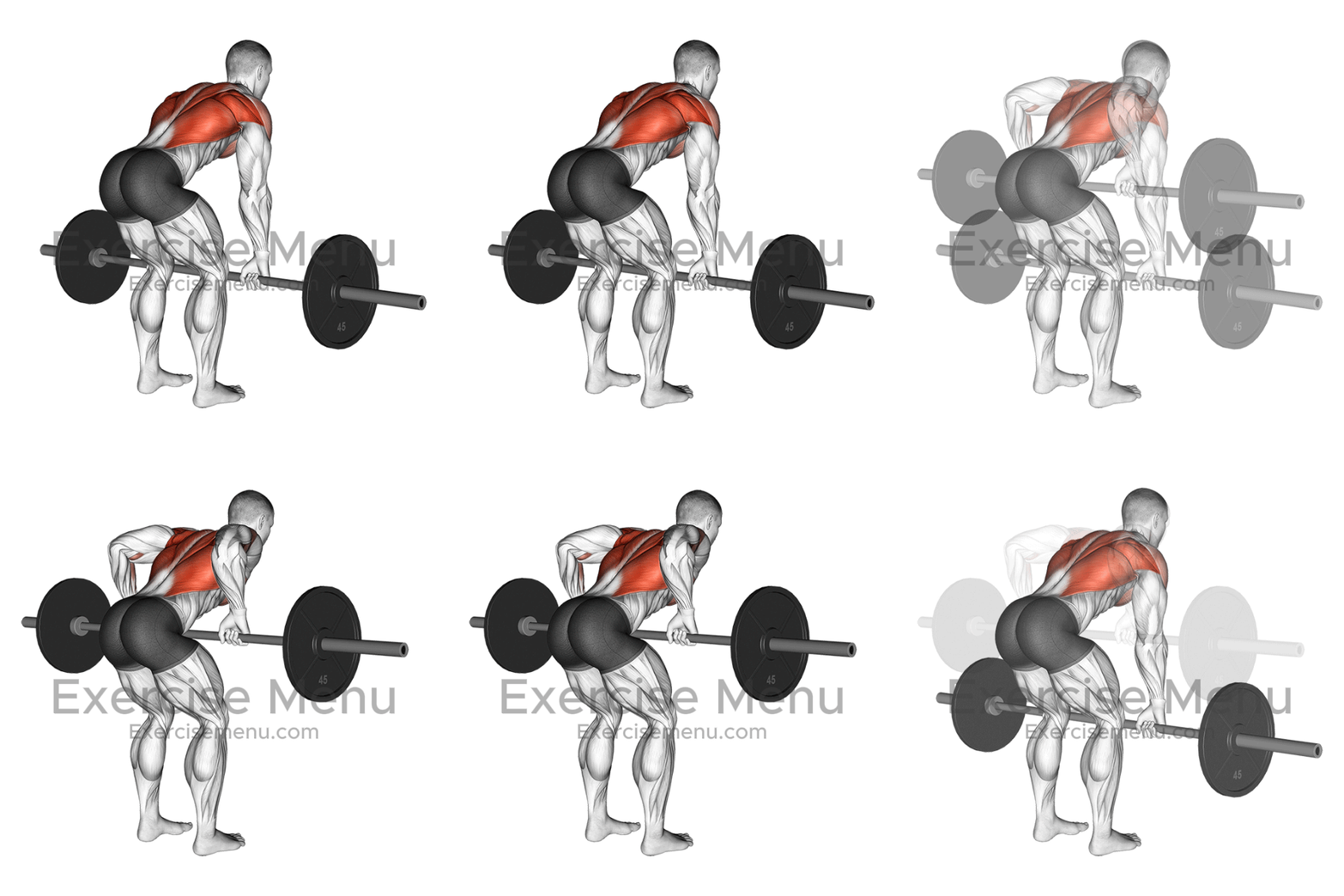 Barbell Bent-Over Row
Latissimus Dorsi, Rhomboids, Middle Trapezius
Frequently Asked Questions
Should I put my knee on a bench or use a rack?
Both train the same muscles. A knee on a bench gives the most support; a hand on a rack with a staggered stance, as in the demonstration, lets you stand and choose your own torso angle.
Where should I pull the dumbbell to?
Toward your lower ribs or hip. A path toward the hip with the elbow tucked emphasizes the lats.
Is the one-arm row better than the barbell row?
It is different. The one-arm row trains each side separately and is easier on the lower back, while the barbell row allows heavier total loads.
Why do I feel it in my biceps?
The biceps always help, but feeling them most usually means you are pulling with the hand. Focus on driving the elbow back and let the hand act as a hook.
Can beginners do dumbbell rows?
Yes. With the free hand supported, it is one of the easiest back exercises to learn.
If you have an existing injury or medical condition, check with your doctor before adding this exercise to your training.