Barbell Deadlift
A full-body barbell hinge that lifts the bar from the floor, building the glutes, hamstrings, back, and grip.
IntermediateCompoundBarbellGlutesHamstringsBackPull
Last updated: November 4, 2026
Exercise Profile
- Target Muscle
- Gluteus Maximus, Hamstrings, Erector Spinae
- Body Part
- Hips, Thighs, Back
- Equipment
- Barbell, Weight Plates
- Category
- Compound
- Skill Level
- Intermediate
- Movement
- Hip Hinge
- Also Known As
- Conventional Deadlift, Barbell Deadlift from the Floor
- Est. Calories
- 3–6 kcal per setEstimate for a 70 kg person, 30–60 second set
Quick Answer
The barbell deadlift is a compound hip hinge that lifts a loaded bar from the floor to a standing position. It trains the glutes, hamstrings, spinal erectors, and grip. Keep the bar close to your legs, brace your trunk, and stand up by driving through your feet. Start with 3 sets of 5 to 8 reps.
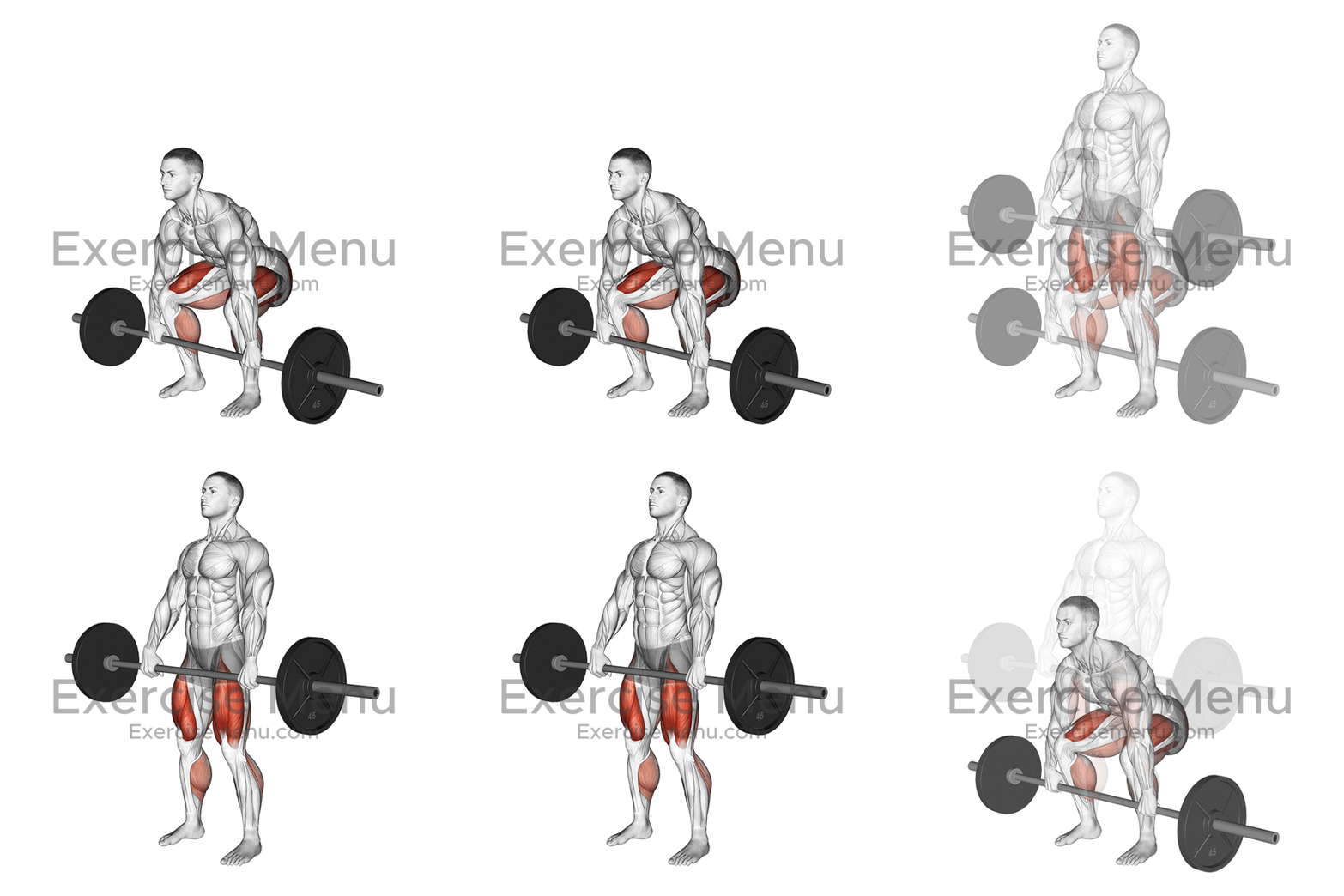
How to Do the Barbell Deadlift
- 1
Set your feet under the bar
Stand with feet about hip-width apart and the bar over the middle of your feet. Toes can point slightly out.
- 2
Grip the bar
Hinge at the hips and bend your knees until you can grip the bar just outside your legs with an overhand grip. Arms hang straight.
- 3
Brace and set your back
Take a breath into your belly, brace your trunk, and pull your chest up so your back is flat. Shins lightly touch the bar.
- 4
Push the floor away
Drive through your whole foot to lift the bar. Hips and shoulders rise together, and the bar stays in contact with or close to your legs.
- 5
Lock out standing tall
Once the bar passes your knees, push your hips forward until you stand upright with hips and knees fully extended. Do not lean back past vertical.
- 6
Lower with control
Push your hips back first, keep the bar close to your thighs, and bend your knees once the bar passes them. Set the bar down on the floor before the next rep.
What Muscles Does the Barbell Deadlift Work?
Primary
- Gluteus Maximusextends the hips to bring the torso upright and lock out the lift.
- Hamstringsassist hip extension and help control the bar as it passes the knees.
- Erector Spinaehold the spine in a neutral, braced position under load.
Secondary
- Quadricepsextend the knees as the bar breaks from the floor.
- Adductor Magnusassists the glutes and hamstrings with hip extension.
- Latissimus Dorsikeeps the bar pulled in close to the body.
- Trapezius and Rhomboidshold the shoulder blades steady under the bar.
- Forearm Flexorsmaintain grip on the bar for the whole set.
How Many Sets and Reps Should You Do?
| Goal | Sets | Reps | Rest |
|---|---|---|---|
| Muscle Growth | 3–4 | 6–10 | 2–3 min |
| Strength | 3–5 | 3–5 | 3–5 min |
| Endurance | 2–3 | 12–15 | 60–90 sec |
| Beginner | 2–3 | 5–8 | 2–3 min |
Common Mistakes That Reduce Results
✕
Rounding the Lower Back
Losing the flat back position moves stress away from the hips and onto the spine. Brace before every rep and lower the load if your back rounds as the bar leaves the floor.
✕
Letting the Bar Drift Forward
A bar that swings away from the legs becomes harder to control and pulls you forward. Keep it close enough to brush your shins and thighs.
✕
Hips Shooting Up First
If the hips rise before the chest, the lift turns into a stiff-legged pull and loads the lower back. Raise the hips and shoulders at the same rate off the floor.
✕
Leaning Back at Lockout
Pushing the hips forward and arching backward at the top adds spine extension without adding any work for the glutes. Finish standing tall with glutes squeezed.
✕
Jerking the Bar off the Floor
Yanking the bar before the slack is out jolts the arms and back and breaks your position. Pull the slack out of the bar first, then press the floor away smoothly.
Tips for Better Results
✓
Start Each Rep from a Dead Stop
Resetting on the floor keeps your setup consistent and makes every rep a true deadlift instead of a bounce.
✓
Think "Push the Floor Away"
Driving through the legs keeps the hips from shooting up and spreads the load across the glutes, hamstrings, and quads.
✓
Use Straps or a Mixed Grip Only for Heavy Sets
Train with a double overhand grip for as long as you can hold it to build grip strength. Add straps once your grip, not your back or legs, limits the set.
✓
Wear Flat, Firm Shoes
A thin, flat sole keeps you stable and closer to the floor. Thick cushioned running shoes can make the lift feel unstable.
Modifications and Progressions
▼ Easier
Trap Bar Deadlift
The handles sit at your sides, which lets the torso stay more upright and keeps the load in line with your body. Many beginners learn the hinge pattern faster with it.
▼ Easier
Kettlebell Deadlift
A single kettlebell between the feet uses lighter loads and teaches the brace and hip hinge before you load a barbell.
▲ Harder
Deficit Deadlift
Standing on a low platform (2–5 cm) increases the range of motion, so you start from a deeper position and work harder off the floor.
▲ Harder
Paused Deadlift
Pausing for 1–2 seconds just below the knee on the way up forces you to hold a flat back and a close bar path under load.
Barbell Deadlift Alternatives
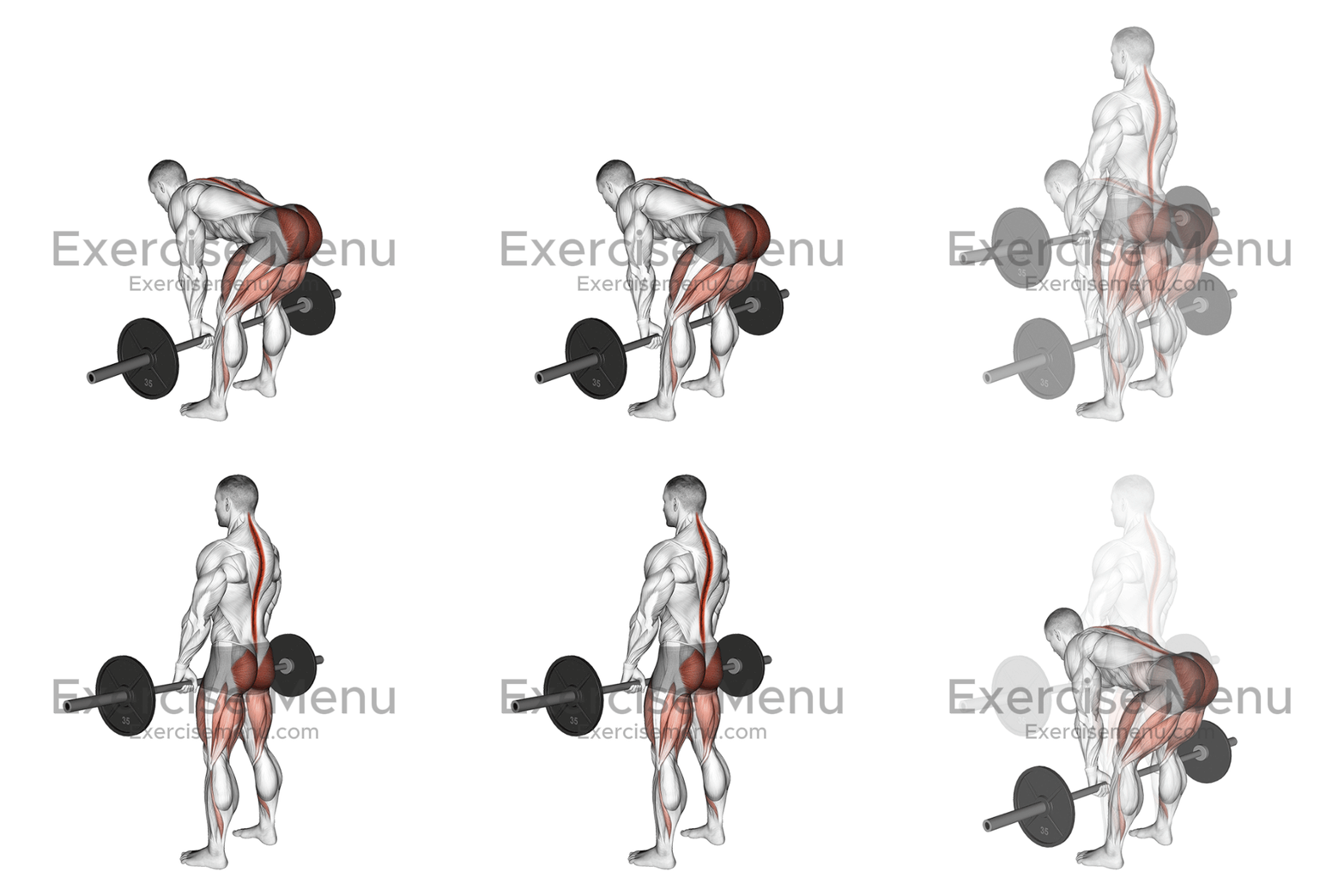 Barbell Romanian Deadlift
Hamstrings, Gluteus Maximus
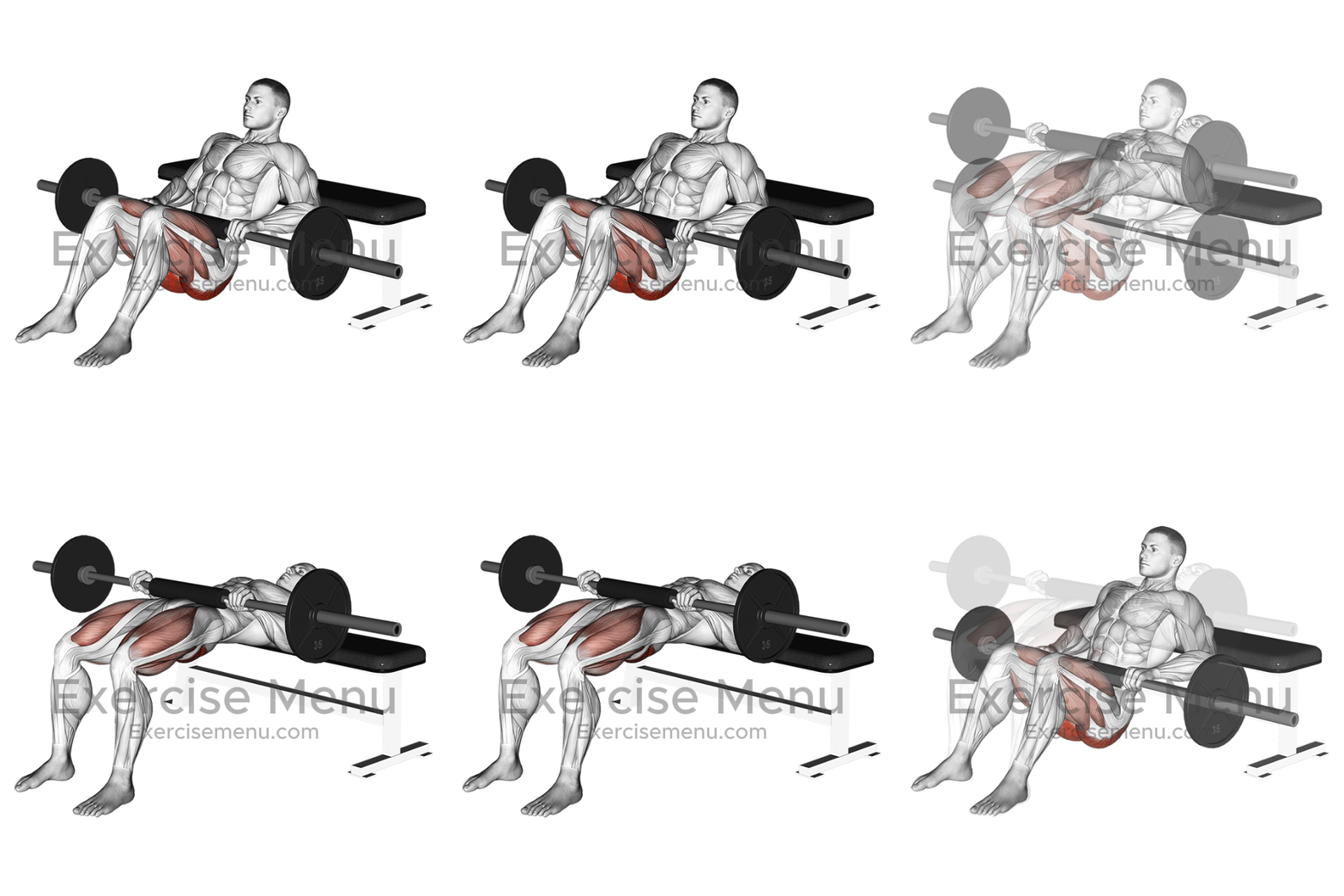 Barbell Hip Thrust
Gluteus Maximus
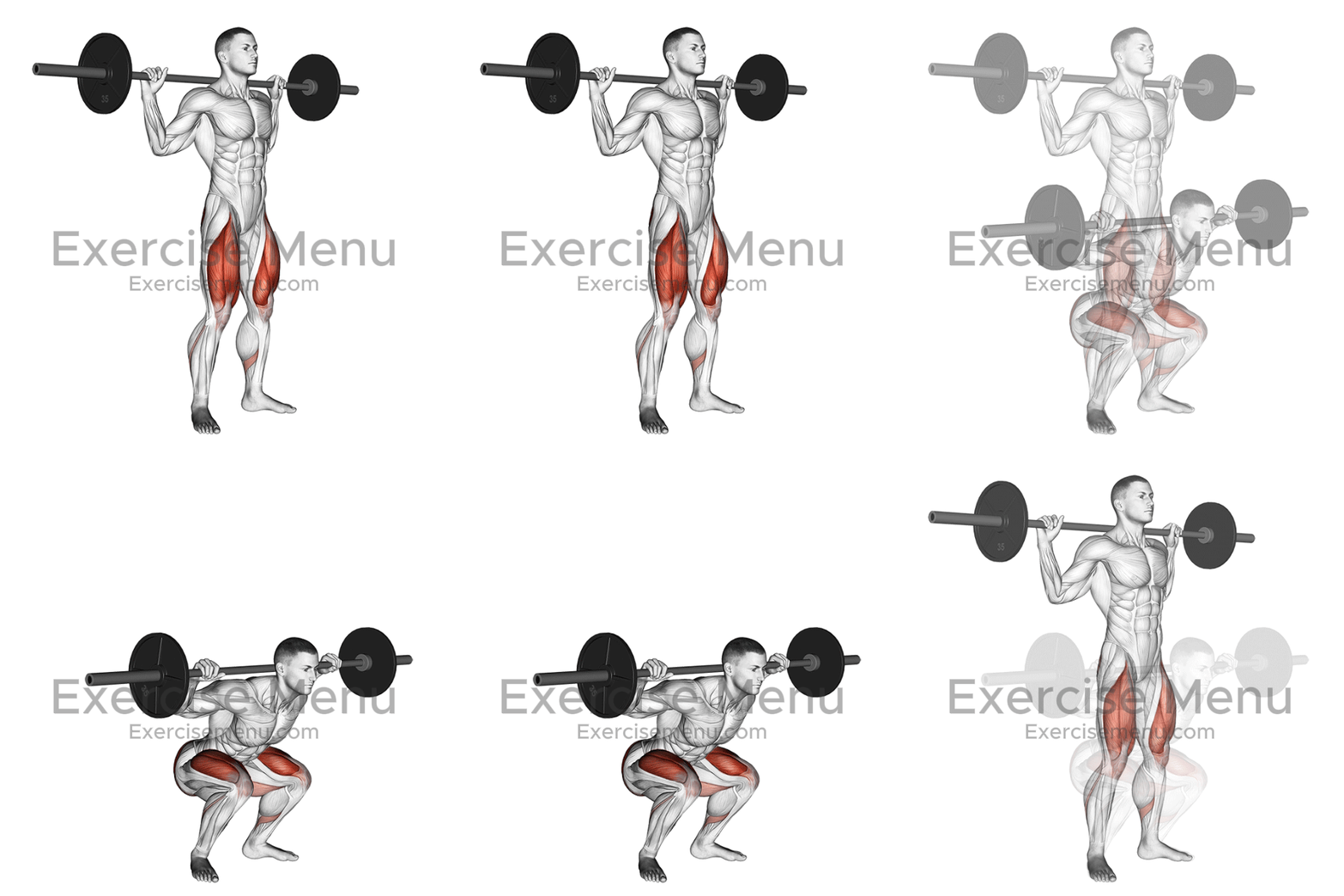 Barbell Back Squat
Quadriceps, Gluteus Maximus
Frequently Asked Questions
Is the deadlift a back exercise or a leg exercise?
Both. The glutes and hamstrings drive the hip extension, while the spinal erectors and upper back work hard to hold your position, so it trains the full posterior chain.
Should I use a belt for deadlifts?
A belt is optional. It can help experienced lifters brace on heavy sets, but beginners should first learn to brace without one at lighter loads.
How often should I deadlift?
One to two times per week is common. Deadlifts are tiring, so many programs pair one heavier day with a lighter variation such as the Romanian deadlift.
Conventional or sumo — which should I do?
Use the stance that lets you keep a flat back and a close bar path. Sumo uses a wide stance and a more upright torso; conventional uses a hip-width stance and more forward lean.
Why do I feel deadlifts in my lower back the next day?
Some lower back fatigue is normal because the erectors hold your position. Sharp pain is not normal and usually points to rounding, a bar that drifts forward, or a load that is too heavy.
How much should a beginner deadlift?
Start with a load you can lift for 5–8 reps with a flat back, even if that is the empty bar or a light trap bar. Add small amounts of weight each week while form stays the same.
If you have an existing injury or medical condition, check with your doctor before adding this exercise to your training.