
Barbell Back Squat
A barbell squat with the bar on the upper back that builds the quads, glutes, and adductors through a full range of motion.
IntermediateCompoundBarbellQuadsGlutesLegs
Last updated: November 4, 2026
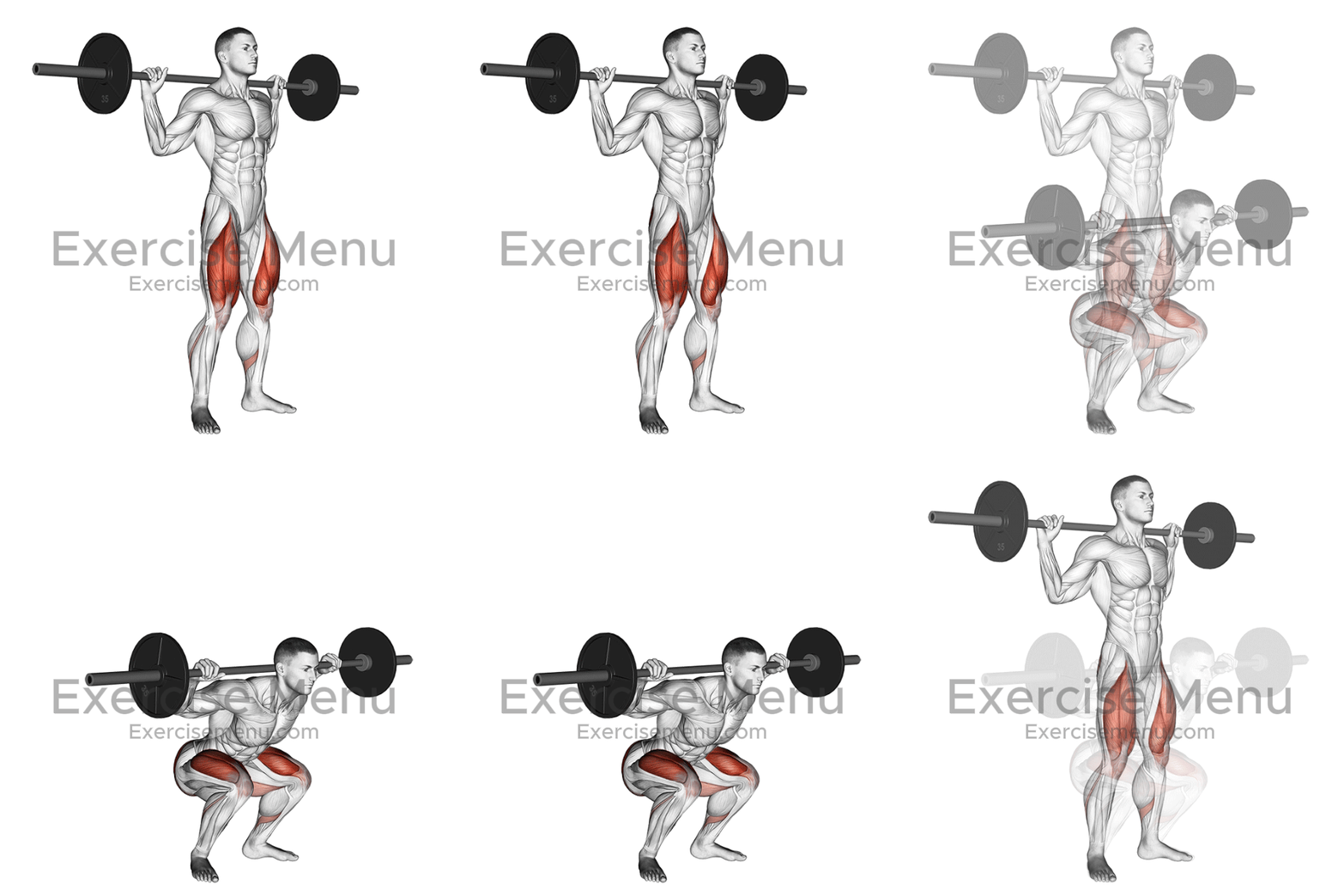
Exercise Profile
- Target Muscle
- Quadriceps, Gluteus Maximus
- Body Part
- Thighs, Hips
- Equipment
- Barbell, Squat Rack
- Category
- Compound
- Skill Level
- Intermediate
- Movement
- Squat
- Also Known As
- Back Squat, Full Squat, High-Bar Squat
- Est. Calories
- 3–6 kcal per setEstimate for a 70 kg person, 30–60 second set
Quick Answer
The barbell back squat is a compound lower-body lift that trains the quads, glutes, and adductors. Rest the bar on your upper back, brace, then bend your hips and knees to squat as deep as you can with a neutral back. Stand up by pushing through your whole foot. Start with 3 sets of 5 to 8 reps.
How to Do the Barbell Back Squat
- 1
Set the bar in the rack
Set the bar at about armpit height. Step under it and rest it across your upper traps, not on your neck. Grip the bar just outside your shoulders.
- 2
Unrack and set your stance
Stand up to lift the bar off the hooks, take two or three steps back, and set your feet about shoulder-width apart with toes turned slightly out.
- 3
Brace
Take a deep breath into your belly and tighten your abs as if preparing for a punch. Keep your chest up and eyes forward.
- 4
Squat down
Bend your hips and knees at the same time. Let your knees travel forward and out in line with your toes. Descend as low as you can while your back stays neutral and heels stay down.
- 5
Drive up
Push through your whole foot to stand up, keeping your chest up and knees in line with your toes. Exhale near the top.
- 6
Re-rack safely
After the last rep, walk forward until the bar touches the uprights, then lower it onto the hooks.
What Muscles Does the Barbell Back Squat Work?
Primary
- Quadricepsextend the knees to drive you up out of the squat.
- Gluteus Maximusextends the hips, especially out of the bottom position.
- Adductor Magnusassists hip extension in deep squats.
Secondary
- Hamstringshelp stabilize the knee and hip.
- Erector Spinaekeep the spine neutral under the bar.
- Abdominals and Obliquesbrace the trunk to support the load.
- Calves (Soleus and Gastrocnemius)stabilize the ankles.
How Many Sets and Reps Should You Do?
| Goal | Sets | Reps | Rest |
|---|---|---|---|
| Muscle Growth | 3–4 | 6–12 | 2–3 min |
| Strength | 3–5 | 3–5 | 3–5 min |
| Endurance | 2–3 | 12–20 | 60–90 sec |
| Beginner | 3 | 5–8 | 2–3 min |
Common Mistakes That Reduce Results
✕
Knees Caving In
Letting the knees collapse inward on the way up reduces control and stresses the knee. Push your knees out in line with your toes.
✕
Heels Lifting
Rising onto the toes shifts the load forward and makes you unstable. Keep the whole foot planted. Limited ankle mobility often causes this.
✕
Losing the Brace at the Bottom
Relaxing the trunk lets the lower back round under the bar. Hold your breath and brace through the hardest part of the rep.
✕
Bar Too High on the Neck
Resting the bar on the neck is painful and unstable. Place it on the meaty upper traps.
✕
Chest Dropping on the Way Up
If the hips rise faster than the chest, the squat becomes a good-morning and loads the lower back. Lead with the chest out of the hole.
Tips for Better Results
✓
Squat to Your Own Depth
Go as low as you can while your back stays neutral and heels stay down. For many lifters, that is hips at or below the knees.
✓
Use Safety Arms
Set the rack's safety arms just below your lowest squat position so you can dump a failed rep safely.
✓
Spread the Floor
Think about spreading the floor apart with your feet. It helps keep the knees tracking over the toes.
✓
Warm Up with Lighter Sets
Work up through two or three lighter sets with the empty bar and moderate loads before your working sets.
Modifications and Progressions
▼ Easier
Goblet Squat
Holding a dumbbell or kettlebell at your chest keeps the torso upright and teaches squat depth with a light load.
▼ Easier
Box Squat
Squatting to a box set at your target depth gives you a consistent depth marker and builds confidence.
▲ Harder
Front Squat
Holding the bar on the front of the shoulders demands a more upright torso and places more emphasis on the quads and upper back.
▲ Harder
Pause Squat
Holding the bottom position for 2–3 seconds removes the bounce out of the hole and builds strength in the deepest part of the lift.
Barbell Back Squat Alternatives
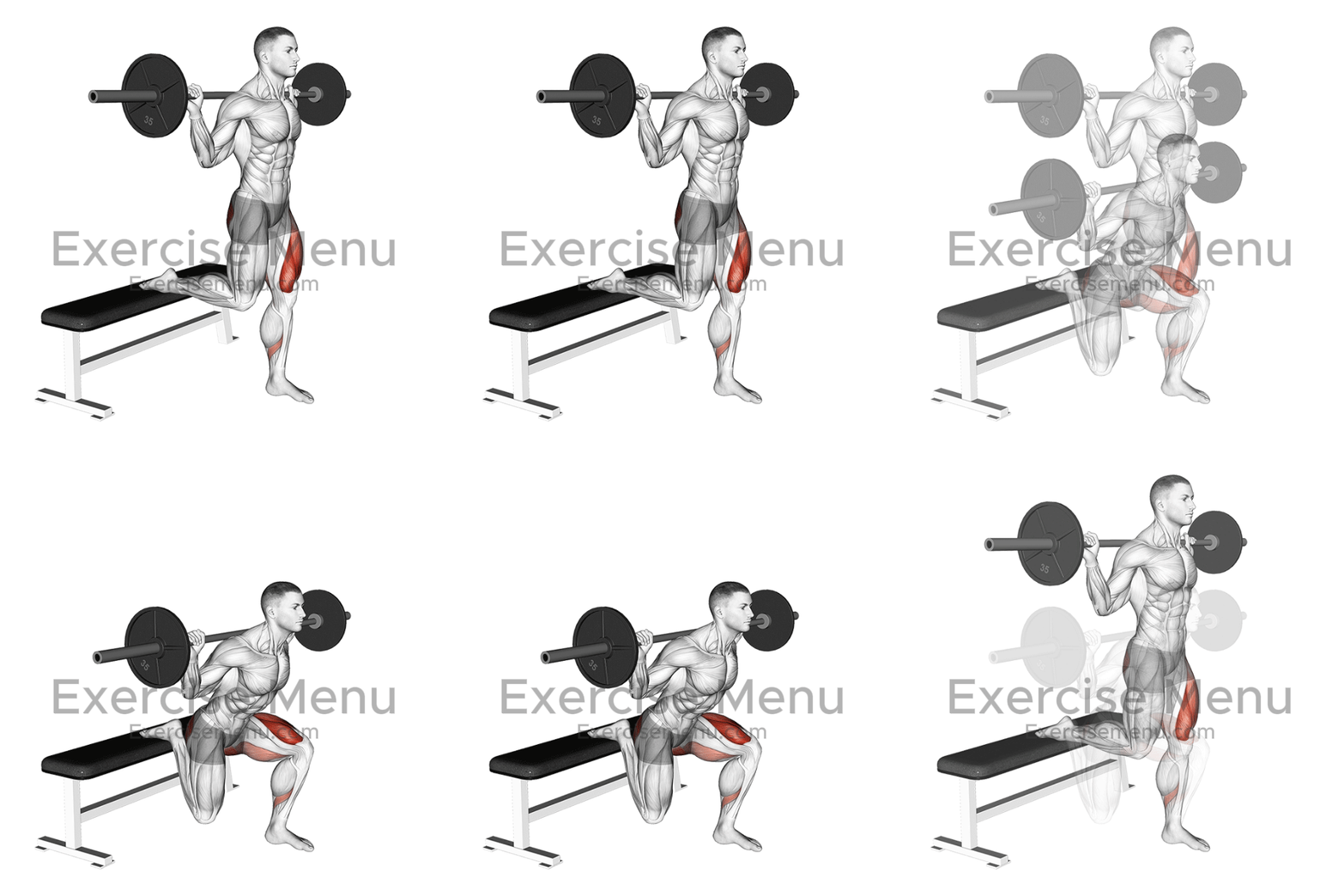 Barbell Bulgarian Split Squat
Quadriceps, Gluteus Maximus
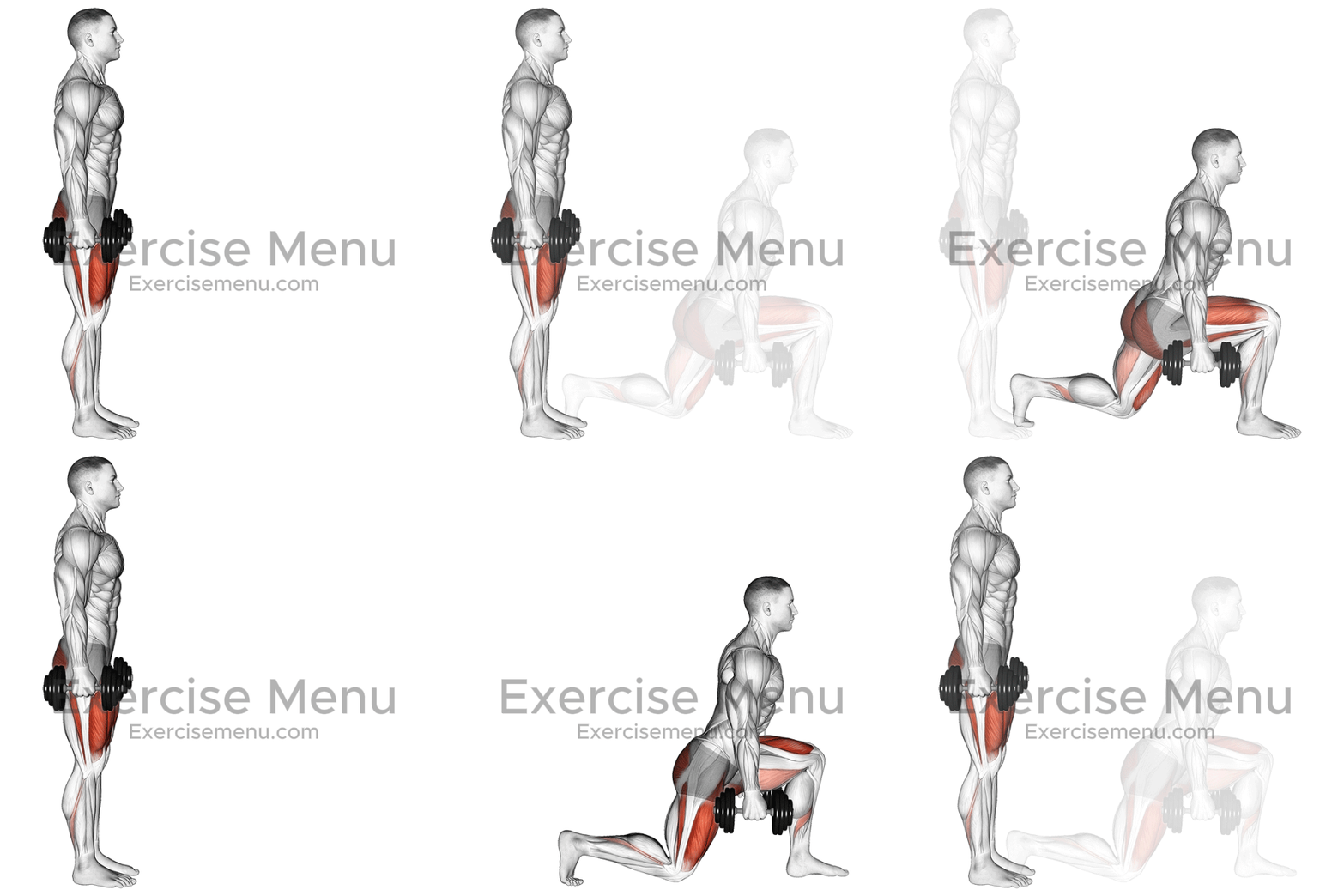 Dumbbell Lunge
Quadriceps, Gluteus Maximus
Frequently Asked Questions
How deep should I squat?
As deep as you can with a neutral back and heels down. Full-depth squats train the glutes and adductors through a longer range than partial squats.
Should my knees go past my toes?
They can. Knees moving forward past the toes is a normal part of a deep squat for most people, as long as the heels stay down and the knees track over the toes.
What is the difference between high-bar and low-bar squats?
High-bar places the bar on the upper traps and keeps the torso more upright. Low-bar sits lower on the rear delts, increases forward lean, and usually allows heavier loads.
How often should I squat?
Two to three times per week works well for most beginners and intermediates. Vary the load across sessions, such as one heavy day and one lighter day.
Should I wear a belt?
A belt is optional. It can help experienced lifters brace under heavy loads, but you should first learn to brace without one.
If you have an existing injury or medical condition, check with your doctor before adding this exercise to your training.