
Barbell Hip Thrust
A bench-supported hip extension with a barbell across the hips that loads the glutes hardest at full lockout.
BeginnerCompoundBarbellGlutesHipsLower Body
Last updated: November 4, 2026
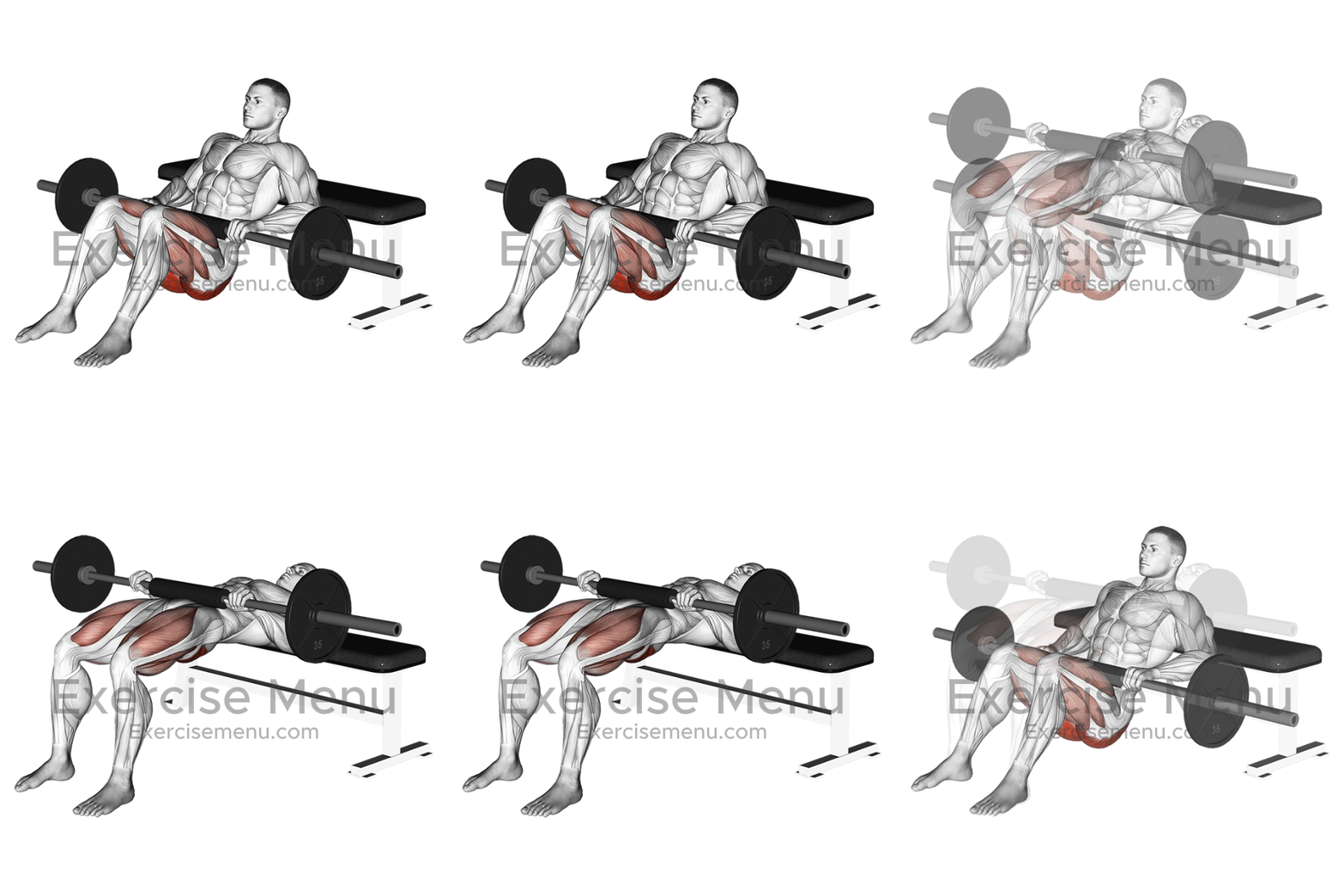
Exercise Profile
- Target Muscle
- Gluteus Maximus
- Body Part
- Hips
- Equipment
- Barbell, Flat Bench, Barbell Pad
- Category
- Compound
- Skill Level
- Beginner
- Movement
- Hip Extension
- Also Known As
- Hip Thrust, Barbell Glute Bridge (Bench)
- Est. Calories
- 2–4 kcal per setEstimate for a 70 kg person, 30–60 second set
Quick Answer
The barbell hip thrust is a hip extension exercise that targets the glutes. Rest your upper back on a bench with a padded bar across your hips, plant your feet, then drive your hips up until your torso and thighs form a straight line. Squeeze, then lower. Use 3 to 4 sets of 8 to 12 reps.
How to Do the Barbell Hip Thrust
- 1
Set up against the bench
Sit on the floor with the lower edge of your shoulder blades against the side of a flat bench. Roll a padded barbell over your legs until it sits in the crease of your hips.
- 2
Plant your feet
Bend your knees and place your feet flat, about hip-width apart. Hold the bar with both hands to keep it steady.
- 3
Brace and tuck your chin
Tighten your abs and keep your chin slightly tucked so your eyes look forward, not up at the ceiling.
- 4
Drive your hips up
Push through your heels and mid-foot to lift your hips until your torso is parallel to the floor and your shins are about vertical.
- 5
Squeeze at the top
Hold for one second, squeezing your glutes without arching your lower back.
- 6
Lower with control
Lower your hips toward the floor under control, then start the next rep.
What Muscles Does the Barbell Hip Thrust Work?
Primary
- Gluteus Maximusextends the hips to lift the bar and is under the most tension at the top.
Secondary
- Hamstringsassist hip extension.
- Adductor Magnusassists hip extension.
- Quadricepshelp hold the knees at about 90 degrees at the top.
- Gluteus Mediushelps keep the knees from caving in.
- Abdominalskeep the ribs down and the pelvis from tilting.
How Many Sets and Reps Should You Do?
| Goal | Sets | Reps | Rest |
|---|---|---|---|
| Muscle Growth | 3–4 | 8–12 | 90 sec–2 min |
| Strength | 3–5 | 5–8 | 2–3 min |
| Endurance | 2–3 | 15–20 | 60 sec |
| Beginner | 2–3 | 10–12 | 90 sec |
Common Mistakes That Reduce Results
✕
Arching the Lower Back at the Top
Overextending the spine to finish the rep moves work away from the glutes. Keep your ribs down and stop when your hips are fully extended.
✕
Feet Too Far or Too Close
Feet too far forward shift work to the hamstrings, and too close shift work to the quads. Set them so your shins are vertical at the top.
✕
Pushing Through the Toes
Lifting the heels shifts work toward the quads and makes the top position less stable. Drive through your heels and mid-foot.
✕
Bench Too High or Too Low
A bench that hits the neck or the middle of the back makes the setup unstable. The bench edge should sit just below your shoulder blades.
✕
Skipping the Pad
A loaded bar on the hip bones is painful and limits how much you can lift. Use a bar pad or a folded mat.
Tips for Better Results
✓
Keep Your Chin Tucked
Looking forward rather than up helps keep the ribs down and the lower back from arching.
✓
Pause at Lockout
A one-second hold at the top makes sure the glutes, not momentum, finish each rep.
✓
Use Bigger Plates When Possible
Standard 45 cm (17.7 in) plates raise the bar high enough to roll over your legs easily.
✓
Program It with a Squat or Hinge
A 2023 Frontiers in Physiology study by Plotkin and colleagues found that 9 weeks of hip thrusts and back squats produced similar glute growth, while squats grew the quads and adductors more. Each lift has its own role.
Modifications and Progressions
▼ Easier
Glute Bridge
Performed with your back on the floor and body weight or a light load, it teaches the same hip extension with a smaller range.
▼ Easier
Dumbbell Hip Thrust
Holding a dumbbell on your hips makes the setup quicker and lets beginners use light loads.
▲ Harder
Single-Leg Hip Thrust
Working one leg at a time puts much more load on each glute and shows any side-to-side difference.
▲ Harder
Paused Barbell Hip Thrust
Holding the top for 3–5 seconds increases time under tension at the point where the glutes work hardest.
Barbell Hip Thrust Alternatives
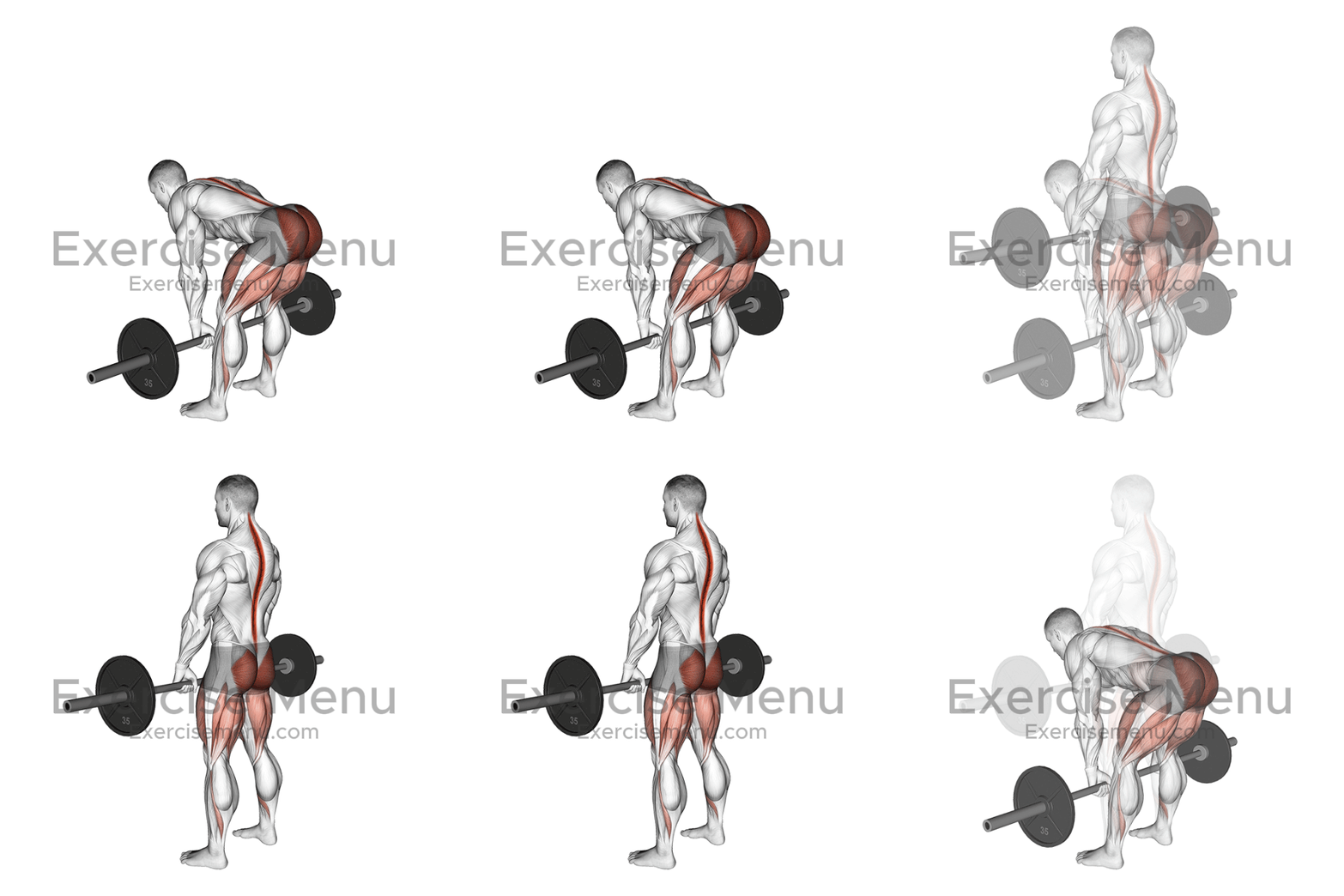 Barbell Romanian Deadlift
Hamstrings, Gluteus Maximus
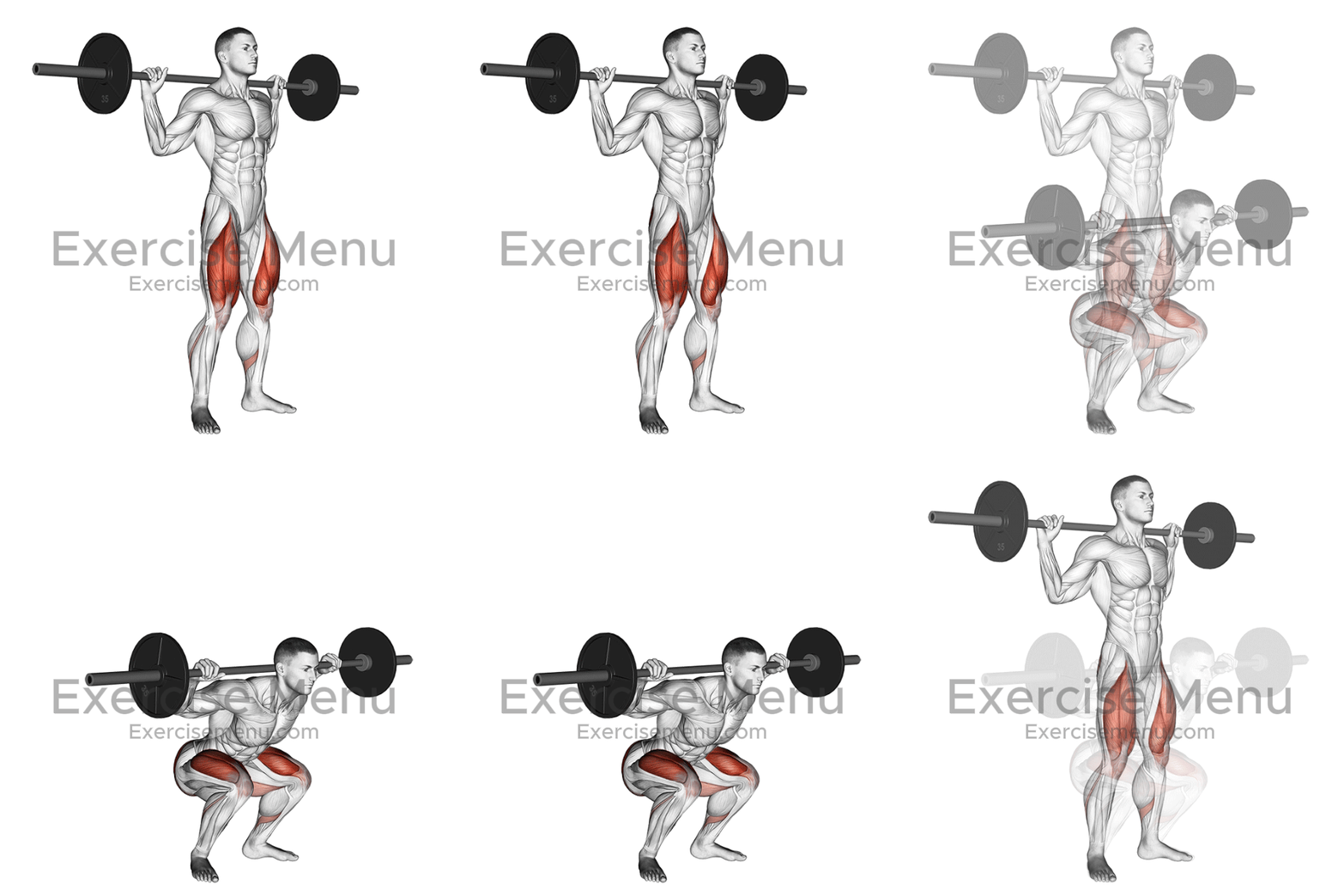 Barbell Back Squat
Quadriceps, Gluteus Maximus
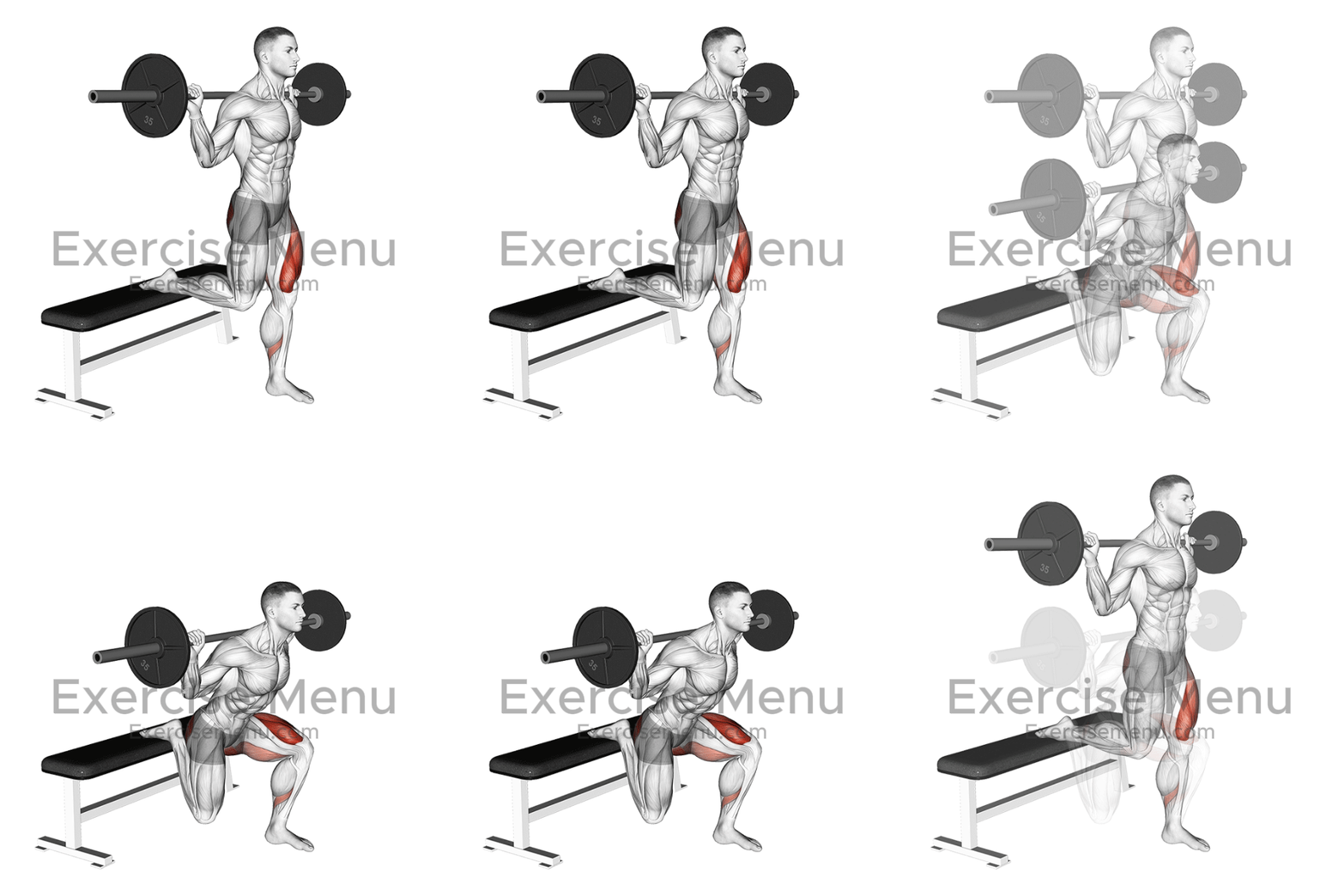 Barbell Bulgarian Split Squat
Quadriceps, Gluteus Maximus
Frequently Asked Questions
Is the hip thrust better than squats for glutes?
Not clearly. A 2023 study by Plotkin and colleagues found similar glute growth from both. Hip thrusts are useful because they load the glutes without much knee bend.
Where should the bar sit?
In the crease of your hips, below the hip bones, with a pad. Too high on the stomach or too low on the thighs makes the lift unstable.
Why do I feel hip thrusts in my hamstrings?
Your feet are probably too far from your body. Move them closer until your shins are about vertical at the top.
Why do I feel it in my quads?
Your feet are likely too close to your hips. Move them a little further away.
How heavy can hip thrusts go?
Loads climb quickly because the back is supported and the range of motion is short. Add weight only while you can still reach full hip lockout with a one-second squeeze.
Sources
- Plotkin DL, et al. Hip thrust and back squat training elicit similar gluteus muscle hypertrophy and transfer similarly to the deadlift. Front Physiol. 2023;14:1279170. https://www.frontiersin.org/journals/physiology/articles/10.3389/fphys.2023.1279170/full
If you have an existing injury or medical condition, check with your doctor before adding this exercise to your training.