

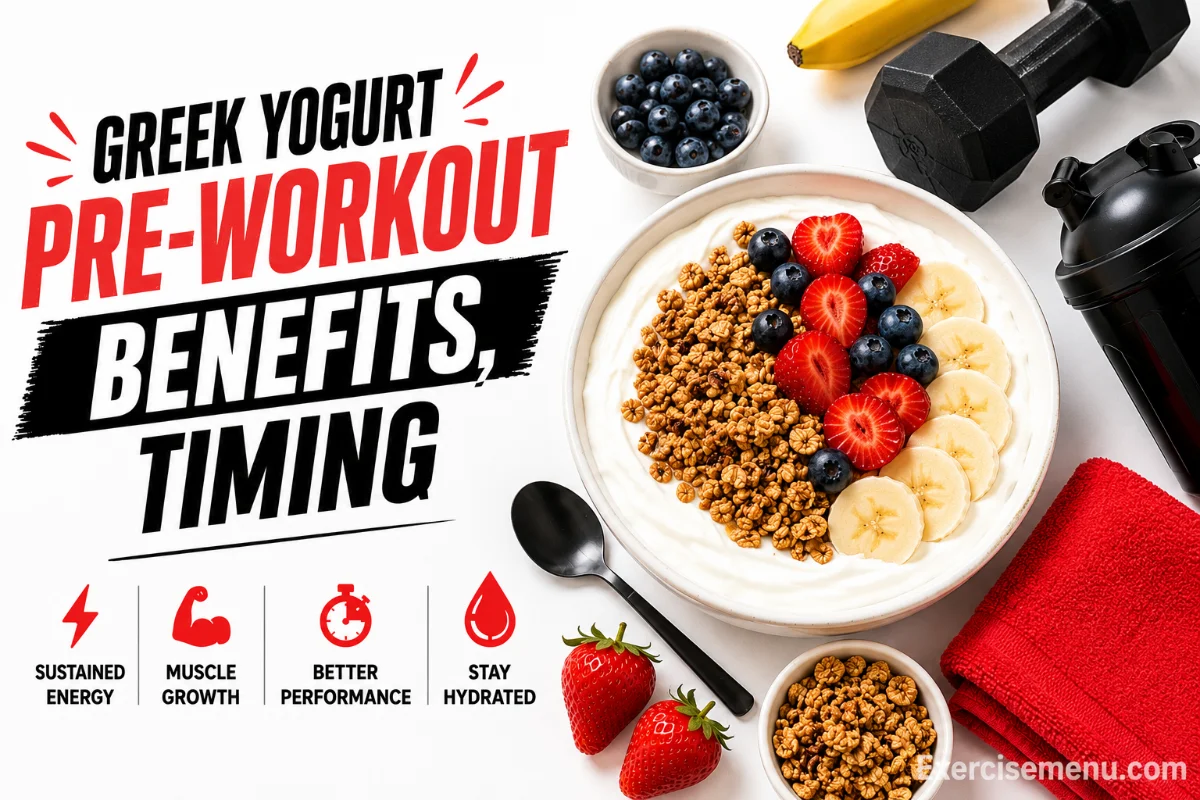
Yes. Greek yogurt is one of the best pre-workout snacks you can eat. One cup delivers 15–20g of protein — mostly slow-digesting casein — with less sugar and lactose than regular yogurt. Pair it with fruit or granola, eat it 45–60 minutes before training, and you get steady energy without stomach issues.
Greek yogurt checks the three boxes that matter for a pre-workout snack: enough protein to protect your muscles during training, enough carbs to fuel the session when paired with a topping, and a texture light enough that it won’t sit in your stomach while you squat.
If you’ve read our guide on what to eat before a workout, you know the ideal pre-workout snack combines fast-acting carbs with a moderate protein source. Greek yogurt does that — but the way it does it is different from most other options on that list.
Most pre-workout advice stops at “eat Greek yogurt with fruit.” It doesn’t explain why Greek yogurt’s protein type gives it a specific edge, how to pair it for muscle gain versus fat loss, or when to skip it entirely. These are the questions clients bring to nutrition consultations — and the answers depend on details most articles leave out. — Rimsha Shahid, RD, DDNS MS HND, Certified Diabetes Specialist USA.
Why Greek Yogurt Works Better Than Most Pre-Workout Snacks
Greek yogurt’s protein is roughly 80% casein, a slow-digesting protein that releases amino acids into your bloodstream over several hours. This sustained release means your muscles have a steady supply of building blocks during your entire workout — not just the first 15 minutes. Most pre-workout snacks spike your energy quickly and fade. Greek yogurt holds.
That matters because of what happens inside your muscles while you train. Resistance training triggers both muscle protein synthesis (building) and muscle protein breakdown (damage). When amino acids are circulating in your blood during a session, breakdown stays lower. Casein’s slow drip keeps that flow going longer than a whey shake or a handful of almonds would.
Greek yogurt also provides leucine, an essential amino acid involved in stimulating muscle protein synthesis. However, leucine content varies by brand, serving size, and total protein content. A serving containing 15–20g of protein can make a useful contribution, but one cup does not automatically guarantee a specific 2–3g leucine dose. Check the nutrition label and consider your total protein intake across the day rather than relying on a single snack.
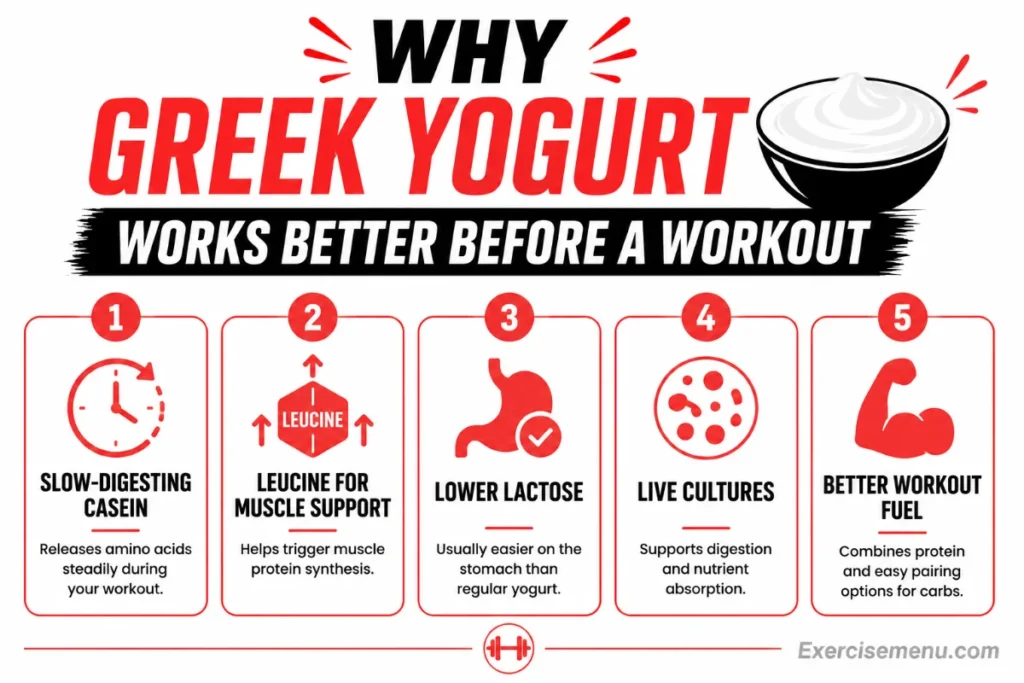
Digestion matters too. The straining process that makes Greek yogurt removes a significant portion of lactose along with the liquid whey. Less lactose means less risk of bloating or cramping — which matters during exercise, when blood flow shifts away from your gut and toward working muscles.
The live bacterial cultures (Lactobacillus bulgaricus, Streptococcus thermophilus) support digestion further. They help your body absorb nutrients from a snack you’re eating close to physical activity.
The research backs this up. A 12-week study by Bridge et al. (2019) in Frontiers in Nutrition gave young men Greek yogurt as a daily protein source — consumed post-exercise, as an evening snack, and throughout the day alongside a resistance training programme. The yogurt group gained more strength, lean body mass, and lost a greater percentage of body fat compared to a carbohydrate placebo (PMC6503736).
The study tested daily Greek yogurt intake across a full training programme rather than pre-workout timing specifically, but it suggests that Greek yogurt can contribute to muscle-building outcomes when included consistently within an appropriate diet and resistance-training programme.
Greek Yogurt vs Regular Yogurt Before a Workout
| Factor | Greek Yogurt (plain, 1 cup) | Regular Yogurt (plain, 1 cup) |
|---|---|---|
| Protein | 15–20g | 8–13g |
| Carbs | 5–10g | 12–17g |
| Sugar | 5–7g | 12–14g |
| Calories | 100–150 kcal | 90–120 kcal |
| Dominant protein | Casein (concentrated) | Casein (less concentrated) |
| Lactose | Lower (strained out) | Higher |
| Calcium | ~25% DV | ~40% DV |
| Pre-workout verdict | ✅ More protein per calorie, less GI risk | ⚠️ OK, but less protein-dense |
The difference comes down to the straining process. Greek yogurt is strained three times, which removes liquid whey and concentrates what remains. That’s why a cup of Greek yogurt packs nearly twice the protein of regular yogurt while carrying half the sugar.
For pre-workout specifically, this concentration matters. You’re eating close to exercise, which means you want maximum nutrition in minimum volume. A cup of regular yogurt gives you 8–13g of protein. To match Greek yogurt’s 15–20g, you’d need to eat nearly double the portion — more food sitting in your stomach when you’d rather be training.
One exception: if you’re focused on calcium intake (relevant for bone health, especially adults over 50), regular yogurt delivers about 40% of your daily value compared to Greek yogurt’s 25%. But for workout fuel, Greek yogurt wins on the metric that matters most — protein per calorie.
How to Eat Greek Yogurt Before a Workout (By Goal)
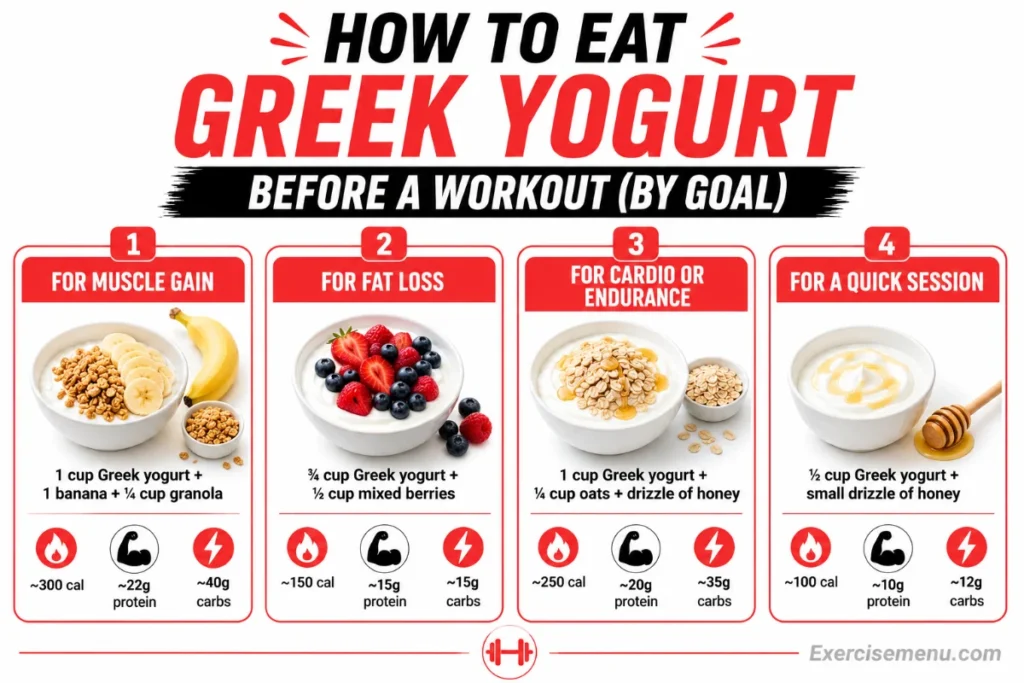
Pair Greek yogurt with different toppings depending on your training goal. For muscle gain, add banana and granola for extra carbs and calories. For fat loss, keep it simple with berries only. For cardio or endurance, add oats and honey for sustained energy. For a quick session, a half cup with honey is enough.
The base stays the same — plain Greek yogurt. What changes is what you put on top.
For Muscle Gain
1 cup Greek yogurt + 1 banana (sliced) + ¼ cup granola ~300 cal | ~22g protein | ~40g carbs
The higher carb load tops off glycogen stores before heavy compound lifts. Banana adds potassium, which supports muscle contraction under load — useful when you’re pushing through sets of squats or deadlifts. The granola rounds out the carb count with a mix of oats and natural sugars.
If your goal is building muscle, your pre-workout snack needs to earn its place by providing enough fuel for the session and enough protein to start the repair process early. This combination does both. For more options built around the same principle, see our guide on pre-workout snacks for muscle gain.
For Fat Loss
¾ cup Greek yogurt + ½ cup mixed berries ~150 cal | ~15g protein | ~15g carbs
High protein-to-calorie ratio is the priority when you’re in a deficit. This combo delivers enough energy to train without undoing your calorie target. Berries — blueberries, strawberries, raspberries — add fiber and antioxidants without the sugar load of a banana or granola. The protein keeps you full through the session and into the hour after, reducing the chance of overeating post-workout.
For Cardio or Endurance
1 cup Greek yogurt + ¼ cup oats + drizzle of honey ~250 cal | ~20g protein | ~35g carbs
Oats provide complex carbs that break down gradually, releasing glucose over 45–60 minutes instead of all at once. Honey adds a small hit of fast-acting simple sugar for the first 10–15 minutes of your run or cycle session. For HIIT-specific fueling where digestion tolerance matters more, the what to eat before a HIIT workout guide covers timing and meal options.
For a Quick Session (Under 45 Minutes)
½ cup Greek yogurt + small drizzle of honey ~100 cal | ~10g protein | ~12g carbs
Light enough to eat 30 minutes before without feeling heavy. You don’t need a full carb load for a 30-minute session — just enough to prevent running on empty. This keeps volume low and digestion fast.
When to Eat Greek Yogurt Before a Workout?
The standard window for a pre-workout snack is 30–60 minutes before training. Greek yogurt sits at the longer end of that range because casein digests slower than simpler carb sources like a banana or rice cakes.
Aim for 45–60 minutes before your session. That gives the casein enough time to clear your stomach and start delivering amino acids to your bloodstream by the time your warm-up sets begin. Eating it 20–30 minutes before is not harmful, but you’ll likely feel the food still sitting heavy — especially during movements that compress your abdomen, like squats, deadlifts, or any core work.
If you have 2+ hours before training, Greek yogurt alone won’t sustain you. Add it to a larger meal — toast with yogurt and fruit, or yogurt alongside eggs — so the combination carries you to your session.
Morning fasted trainers benefit from Greek yogurt more than most. It breaks an overnight fast with protein — blunting muscle breakdown that accelerates while you sleep — and paired with fruit, provides enough carbs to fuel a full session. No cooking. No heaviness. Under a minute to prepare.
Should You Choose Plain or Flavored Greek Yogurt?
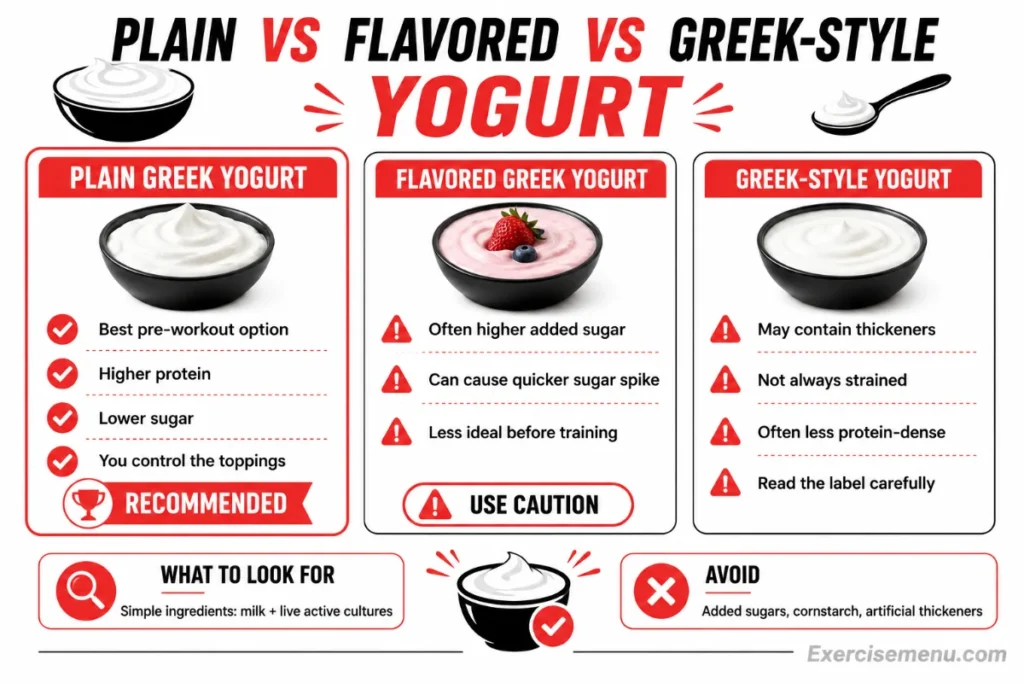
Plain Greek yogurt is usually the more practical pre-workout choice because it gives you greater control over added sugar. Flavoured varieties often contain more total and added sugar, although the amount varies considerably by brand and product. This does not automatically make flavoured yogurt unsuitable before training.
If you choose plain yogurt, add fruit for carbohydrates along with fibre, potassium, and other micronutrients. Honey can provide quick carbohydrates, but it does not provide meaningful fibre. Choose the option that fits your calorie needs, digestion, workout timing, and personal preference.
If you find plain Greek yogurt too tart, add a teaspoon of honey, cinnamon, or a small portion of berries. Always check the nutrition label rather than assuming that every flavoured product contains the same amount of added sugar.
One label warning: “Greek-style” yogurt is not the same as Greek yogurt. Greek-style products are regular yogurt thickened with additives like cornstarch or milk protein concentrate — not strained. They have lower protein, higher sugar, and none of the concentration benefits. Read the label. The ingredient list should be short: milk, live active cultures. If it lists thickeners, it’s not Greek yogurt.
When to Skip Greek Yogurt Before a Workout?
Greek yogurt works for most people in most training contexts. But there are situations where it’s the wrong choice.
Severe dairy sensitivity or lactose intolerance. Greek yogurt has less lactose than regular yogurt, but it’s not lactose-free. If dairy consistently causes cramping, bloating, or GI distress, don’t test it before a training session. Cottage cheese is not a solution here either — it’s also dairy. Consider a plant-based yogurt alternative with comparable protein (soy-based options tend to come closest).
Less than 20 minutes before your session. No solid food digests fast enough in that window. If you’re that short on time, train fasted or drink a small amount of juice for quick glucose.
Before high-intensity sprint or plyometric work. Any solid food close to max-effort jumping, sprinting, or explosive movements increases nausea risk. Greek yogurt is better suited before strength training or moderate-intensity cardio where your gut isn’t being jolted with every rep.
You just don’t like yogurt. Cottage cheese has a similar macronutrient profile — roughly 25g protein per cup, also casein-dominant — and works as a direct swap. The texture is different, but the pre-workout function is nearly identical.
FAQs
Can Greek yogurt replace a protein shake before a workout?
For moderate-intensity training, yes. A cup of Greek yogurt delivers 15–20g of protein with carbs, fat, and probiotics that a shake doesn’t include. If you need 30g+ protein pre-workout (heavier lifters or those in a high-protein protocol), a shake is more efficient per serving. For most gym-goers, Greek yogurt covers the job.
Does the fat content of Greek yogurt matter for pre-workout?
It can. Full-fat Greek yogurt (5g fat per cup) digests slower than nonfat, which pushes your timing window earlier — closer to 60–90 minutes before training rather than 45. Nonfat or low-fat versions clear your stomach faster and work better when you’re short on time. If you prefer the taste of full-fat, just eat it earlier.
Can I add protein powder to Greek yogurt before a workout?
Yes. Adding protein powder may be useful if the yogurt serving is small or if you need additional protein to meet your daily target. However, it may be unnecessary if the yogurt and your surrounding meals already provide enough protein. Consuming more than 40g of protein is not automatically wasteful or unusable, but adding extra protein may offer little practical benefit if your total daily intake is already sufficient.
How much Greek yogurt should I eat before a workout?
Between ½ and 1 cup, depending on your calorie needs and timing. If you’re eating 45–60 minutes before, 1 cup with toppings gives you a complete snack. If you’re closer to 30 minutes out, ½ cup plain with a small drizzle of honey keeps the portion light enough to digest in time.
Is Greek yogurt better before or after a workout?
Both timings work. Pre-workout protein reduces muscle breakdown during the session; post-workout protein supports repair afterward. Research shows no significant difference in outcomes when daily protein intake is sufficient so choose whichever fits your schedule.
