
Reverse Pec Deck Fly
A seated machine exercise that trains the rear delts and upper back by sweeping the arms out and back in a wide arc.
BeginnerIsolationMachineShouldersRear DeltsUpper BackPull
Last updated: November 3, 2026
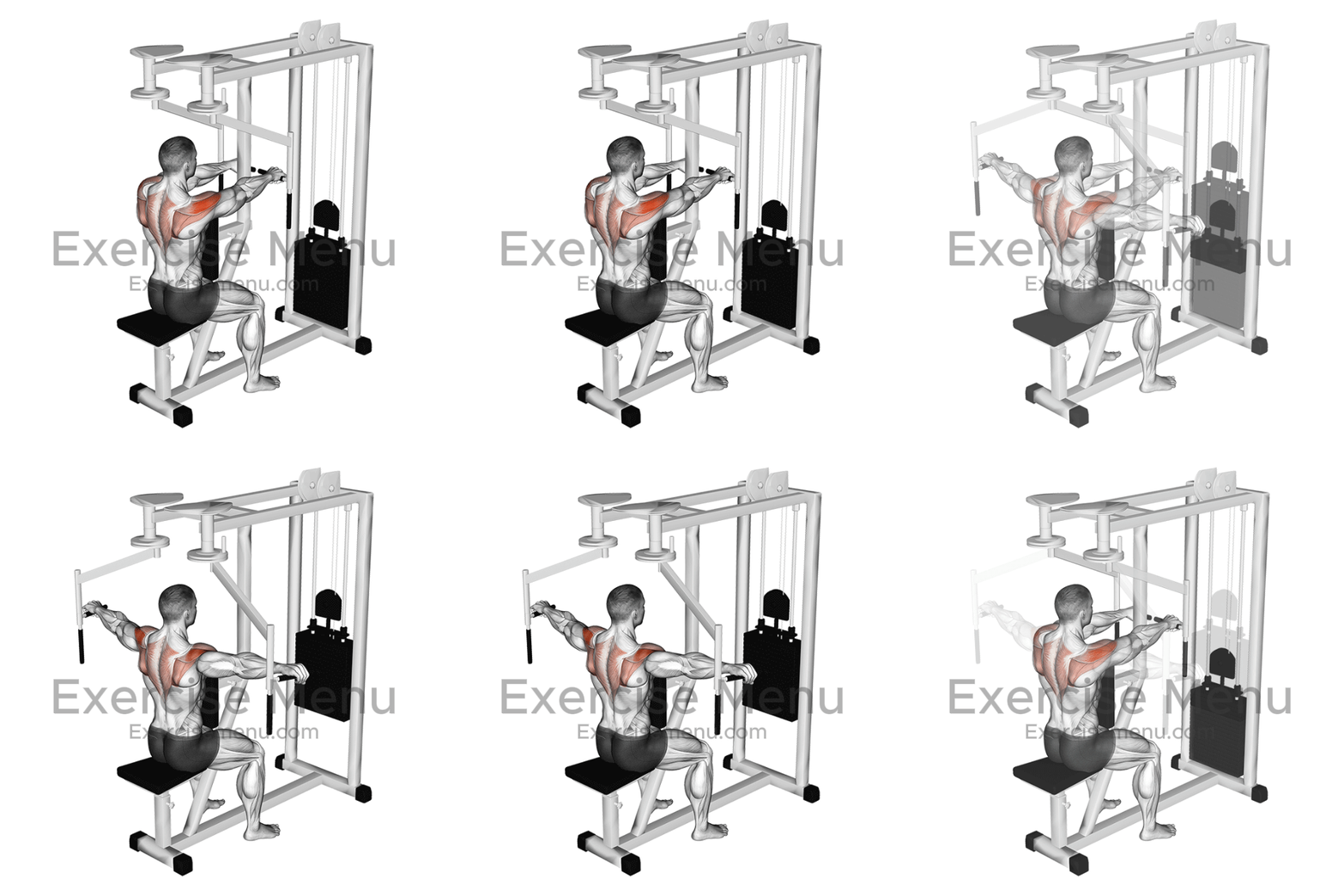
Exercise Profile
- Target Muscle
- Posterior Deltoid
- Body Part
- Shoulders, Upper Back
- Equipment
- Reverse Pec Deck Machine (Rear Delt Fly Machine)
- Category
- Isolation
- Skill Level
- Beginner
- Movement
- Horizontal Abduction (Shoulder)
- Also Known As
- Reverse Pec Deck, Machine Rear Delt Fly, Reverse Machine Fly, Seated Reverse Fly
- Est. Calories
- 2–4 kcal per setEstimate for a 70 kg person, 30–60 second set
Quick Answer
The reverse pec deck fly trains the rear delts and upper back. Sit facing the pad with your chest against it, hold the handles with your arms straight forward at shoulder height, then sweep them out and back in line with your shoulders. Use 3 sets of 12 to 15 reps.
How to Do the Reverse Pec Deck Fly
- 1
Set the seat height
Adjust the seat so the handles sit at about shoulder height when you sit down.
- 2
Swing the arms forward
Move the machine arms around to the front so the handles are within easy reach.
- 3
Sit and get set
Sit facing the machine with your feet flat on the floor, sitting tall with your chin tucked. If your machine has a chest pad, rest your chest against it.
- 4
Take the handles
Hold the handles with your palms facing down, arms almost straight with a small bend at the elbows.
- 5
Sweep your arms back
Pull the handles out and back in a wide arc until your arms are roughly in line with your shoulders. Squeeze your shoulder blades together and pause for a second.
- 6
Return slowly
Let your arms travel forward over 2–3 seconds until the handles are back in front of you, then repeat.
What Muscles Does the Reverse Pec Deck Fly Work?
Primary
- Posterior Deltoidthe rear of the shoulder, pulls the upper arm back and out to the side.
Secondary
- Rhomboidspull the shoulder blades together.
- Middle Trapeziuspulls the shoulder blades together and holds them in place.
- Infraspinatus and Teres Minorrotator cuff muscles that help move the upper arm backward.
- Lower Trapeziushelps control the shoulder blades.
How Many Sets and Reps Should You Do?
| Goal | Sets | Reps | Rest |
|---|---|---|---|
| Muscle Growth | 3–4 | 12–15 | 60–90 sec |
| Strength | 3 | 10–12 | 90 sec |
| Endurance | 2–3 | 15–20 | 45 sec |
| Beginner | 2–3 | 12–15 | 60 sec |
Common Mistakes That Reduce Results
✕
Using Too Much Weight
A heavy stack makes you jerk the handles and throw your torso into the rep. Pick a load you can hold still for a second at the back.
✕
Bending the Elbows Through the Rep
Pulling the handles with bending elbows turns the fly into a row and brings the lats and biceps in. Keep the small elbow bend fixed.
✕
Rocking Your Torso Backward
Swinging the upper body to start each rep adds momentum the rear delts never see. Keep your torso still from the first rep to the last.
✕
Shrugging
Letting your shoulders rise toward your ears shifts the work to the upper traps. Keep them down.
✕
Dragging the Handles Too Far Back
Pulling well past your shoulders strains the front of the shoulder without adding useful range. Stop in line with your shoulders.
Tips for Better Results
✓
A Neutral Grip May Give You More
Schoenfeld and colleagues (2013) measured higher rear delt and infraspinatus activity with a neutral, thumbs-up grip than with the palms-down grip shown here. If your machine also has vertical handles, try them.
✓
Lead With Your Elbows
Think about moving your elbows out and back rather than pulling with your hands.
✓
Light Weight, Strict Reps
The rear delt is small and the range is short, so controlled sets of 12–15 usually work better than heavy singles.
✓
Note Your Seat Setting
Write down the seat height you use so every session starts from the same position and the loads compare fairly.
Modifications and Progressions
▼ Easier
Resistance Band Pull-Apart
Holding a band at chest height and pulling it apart trains the same backward sweep with light resistance at home.
▼ Easier
Chest-Supported Dumbbell Rear Delt Fly
Lying face down on an incline bench supports your torso while you learn the arc.
▲ Harder
Reverse Pec Deck with 2-Second Pause
Hold the back position for 2 seconds on every rep before you return.
▲ Harder
Single-Arm Reverse Pec Deck
With one arm you can hold the frame with your free hand, which stops the torso turning as you sweep.
Workout Plans With the Reverse Pec Deck Fly
Day 2 — Pull A 5-Day Workout Split: Upper, Lower, Push, Pull, Legs Gym PlanReverse Pec Deck Fly Alternatives
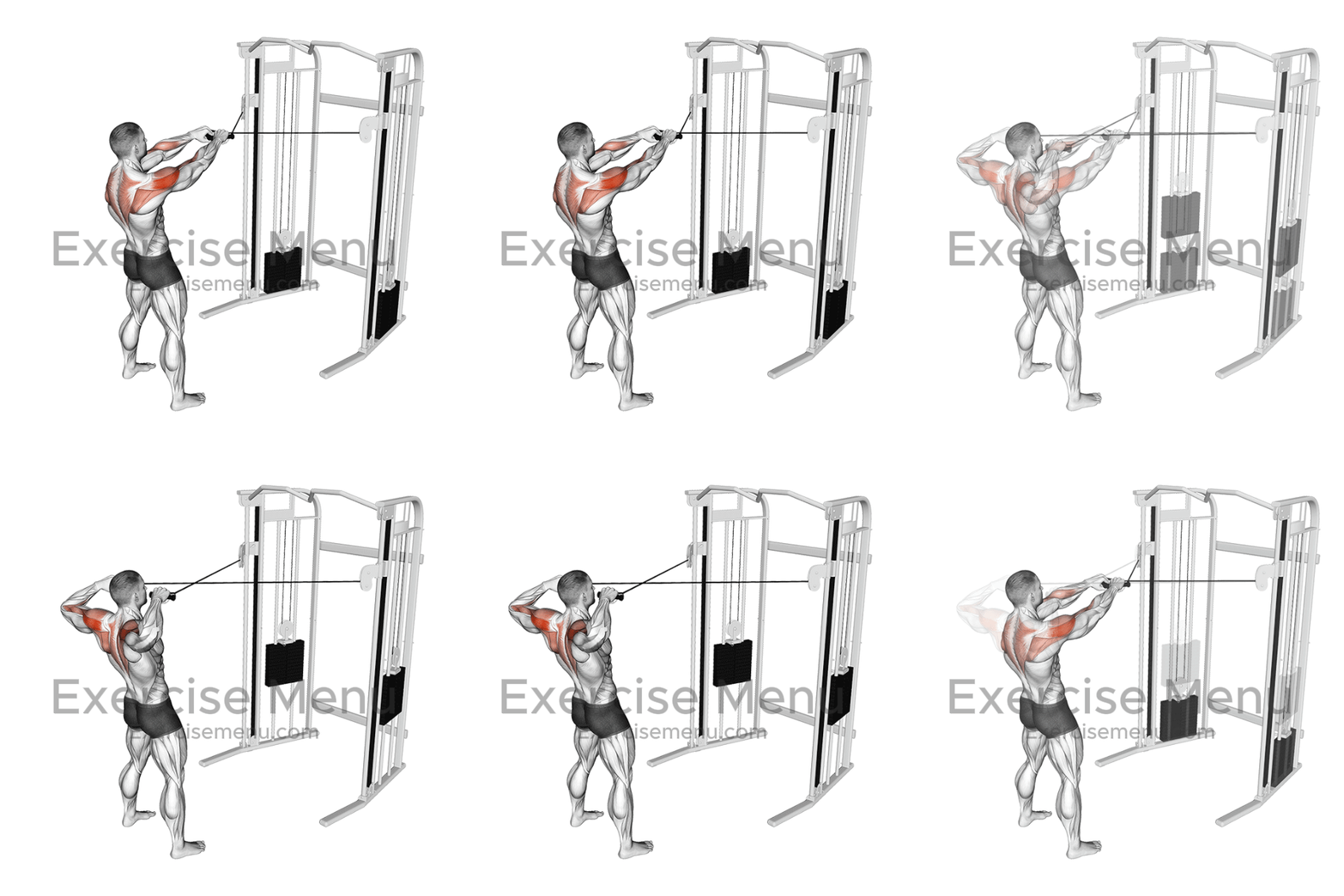 Cable Face Pull
Posterior Deltoid
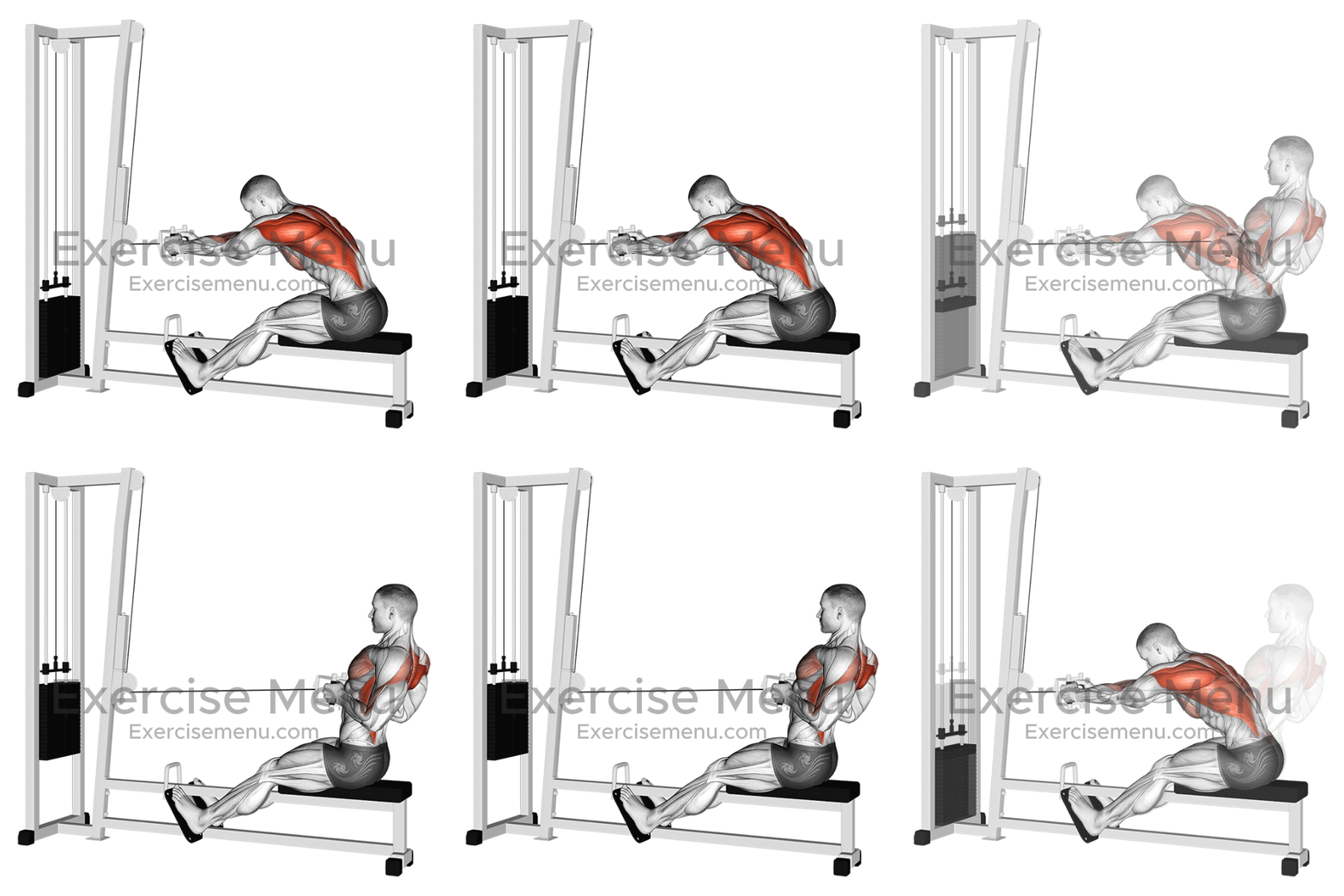 Seated Cable Row
Latissimus Dorsi, Rhomboids, Middle Trapezius
Frequently Asked Questions
What does the reverse pec deck work?
Mainly the posterior deltoid, with the rhomboids, middle trapezius and the rotator cuff muscles that pull the arm back helping out.
Should my palms face down or face in?
Both are used. A 2013 study by Schoenfeld and colleagues measured higher rear delt and infraspinatus activity with a neutral, thumbs-up grip, so try the vertical handles if your machine has them.
How heavy should I go?
Light enough for 12–15 controlled reps with your torso staying still. Heavy loads usually turn the fly into a row.
Reverse pec deck or face pull?
Both train the rear delts. The face pull adds outward rotation of the shoulder at the end of each rep, while the machine fixes your torso so there is less to control.
Where should I feel it?
Across the back of your shoulders and between your shoulder blades. If you mostly feel your biceps, your elbows are bending through the rep.
Sources
- Schoenfeld B, Sonmez RG, Kolber MJ, Contreras B, Harris R, Ozen S. Effect of hand position on EMG activity of the posterior shoulder musculature during a horizontal abduction exercise. J Strength Cond Res. 2013;27(10):2644–2649. https://pubmed.ncbi.nlm.nih.gov/23302754/
If you have an existing injury or medical condition, check with your doctor before adding this exercise to your training.