
Cable Face Pull
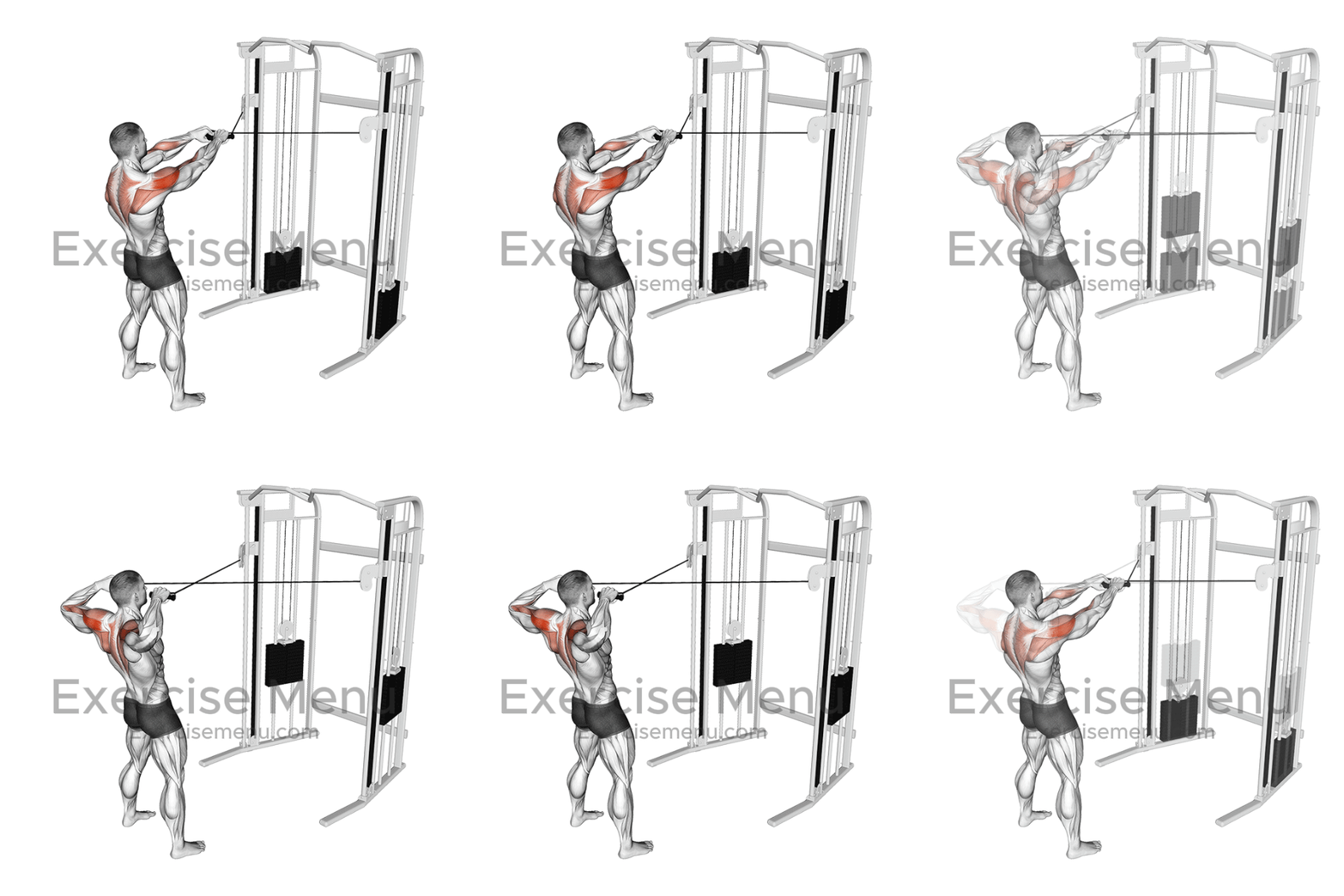
A standing cable pull with a rope toward your face that trains the rear delts, upper back and the muscles that rotate the shoulder outward.
BeginnerIsolationCableShouldersUpper BackPull
Last updated: October 31, 2026
Exercise Profile
- Target Muscle
- Posterior Deltoid
- Body Part
- Shoulders, Upper Back
- Equipment
- Cable Machine, Rope Attachment
- Category
- Isolation
- Skill Level
- Beginner
- Movement
- Horizontal Pull with External Rotation
- Also Known As
- Face Pull, Rope Face Pull, Standing Cable Face Pull
- Est. Calories
- 2–4 kcal per setEstimate for a 70 kg person, 30–60 second set
Quick Answer
The cable face pull trains the rear delts and upper back. Set a rope at about shoulder to face height, keep your elbows high, and pull the rope toward your face while separating the ends beside your ears. Return slowly. Use a light weight for 3 sets of 12 to 20 reps.
How to Do the Cable Face Pull
- 1
Set the pulley
Attach a rope to a cable pulley and set it at about shoulder to face height.
- 2
Take your stance
Hold one end of the rope in each hand and step back until your arms are straight and the weight lifts off the stack. Stand tall with your feet about hip-width apart.
- 3
Pull toward your face
Pull the middle of the rope toward your face, leading with your elbows. Keep your elbows high, at or slightly above shoulder height.
- 4
Separate the rope
As the rope nears your face, pull the ends apart so your hands finish beside your ears. Squeeze your shoulder blades together and pause for a second.
- 5
Return slowly
Let your arms straighten over about 2 seconds while keeping your torso still, then repeat.
What Muscles Does the Cable Face Pull Work?
Primary
- Posterior Deltoidthe rear of the shoulder, pulls the upper arms back.
- Middle Trapeziuspulls the shoulder blades together.
- Rhomboidspull the shoulder blades together and hold them in place.
Secondary
- Infraspinatus and Teres Minorrotator cuff muscles that turn the upper arm outward at the end of the pull.
- Lower Trapeziushelps control the shoulder blades.
- Biceps Brachii and Brachialisbend the elbows during the pull.
How Many Sets and Reps Should You Do?
| Goal | Sets | Reps | Rest |
|---|---|---|---|
| Muscle Growth | 3 | 12–20 | 60 sec |
| Strength | 3–4 | 10–12 | 90 sec |
| Endurance | 2–3 | 20–25 | 45 sec |
| Beginner | 2–3 | 15 | 60 sec |
Common Mistakes That Reduce Results
✕
Letting the Elbows Drop
When the elbows fall below the shoulders, the face pull turns into a row and the rear delts do less. Keep your elbows high.
✕
Using Too Much Weight
Heavy loads make you lean back and swing. Choose a weight you can pull to your face and hold for a second.
✕
Shrugging
Lifting your shoulders toward your ears shifts work to the upper traps. Keep your shoulders down as you pull.
✕
Pulling to the Chest or Neck
Aim the middle of the rope at your face, around nose to forehead level.
✕
Leaning Back
Using your body weight to start the pull takes the load off the target muscles. Keep your torso still.
Tips for Better Results
✓
Finish with Your Hands Beside Your Ears
Pulling the rope ends apart at the end of each rep makes the upper arms rotate outward.
✓
Pause at Your Face
A one-second hold at the end of each rep stops you from using momentum.
✓
Use a Staggered Stance if Needed
If the stack pulls you forward, put one foot slightly in front of the other.
✓
Think Light and Strict
Face pulls are usually done with light weights and higher reps.
Modifications and Progressions
▼ Easier
Resistance Band Face Pull
A band anchored at face height gives light resistance and works at home.
▼ Easier
Seated Cable Face Pull
Sitting removes body sway so you can focus on keeping your elbows high.
▲ Harder
Cable Face Pull with 2-Second Pause
Hold the rope beside your ears for 2 seconds on every rep before you return.
▲ Harder
Cable Face Pull with Slow Return
Take 3–4 seconds to straighten your arms on each rep.
Frequently Asked Questions
What muscles do face pulls work?
Mainly the rear delts, middle traps and rhomboids. The rotator cuff muscles that turn the arm outward work at the end of each rep.
How high should the cable be?
About shoulder to face height. That lets you keep your elbows high while you pull toward your face.
Why do programs add face pulls to bench press days?
Many programs use them to balance lots of pressing with direct work for the rear delts and upper back.
Face pull or reverse fly — which is better?
Both train the rear delts. The face pull adds outward rotation of the shoulder at the end of each rep, which a reverse fly does not.
Can I use a band instead of a cable?
Yes. A band anchored at face height lets you do the same movement at home.
If you have an existing injury or medical condition, check with your doctor before adding this exercise to your training.