
Low-to-High Cable Fly
A standing cable exercise that trains the chest by sweeping both arms up and in from hip height.
IntermediateIsolationCableChestUpper ChestPush
Last updated: November 3, 2026
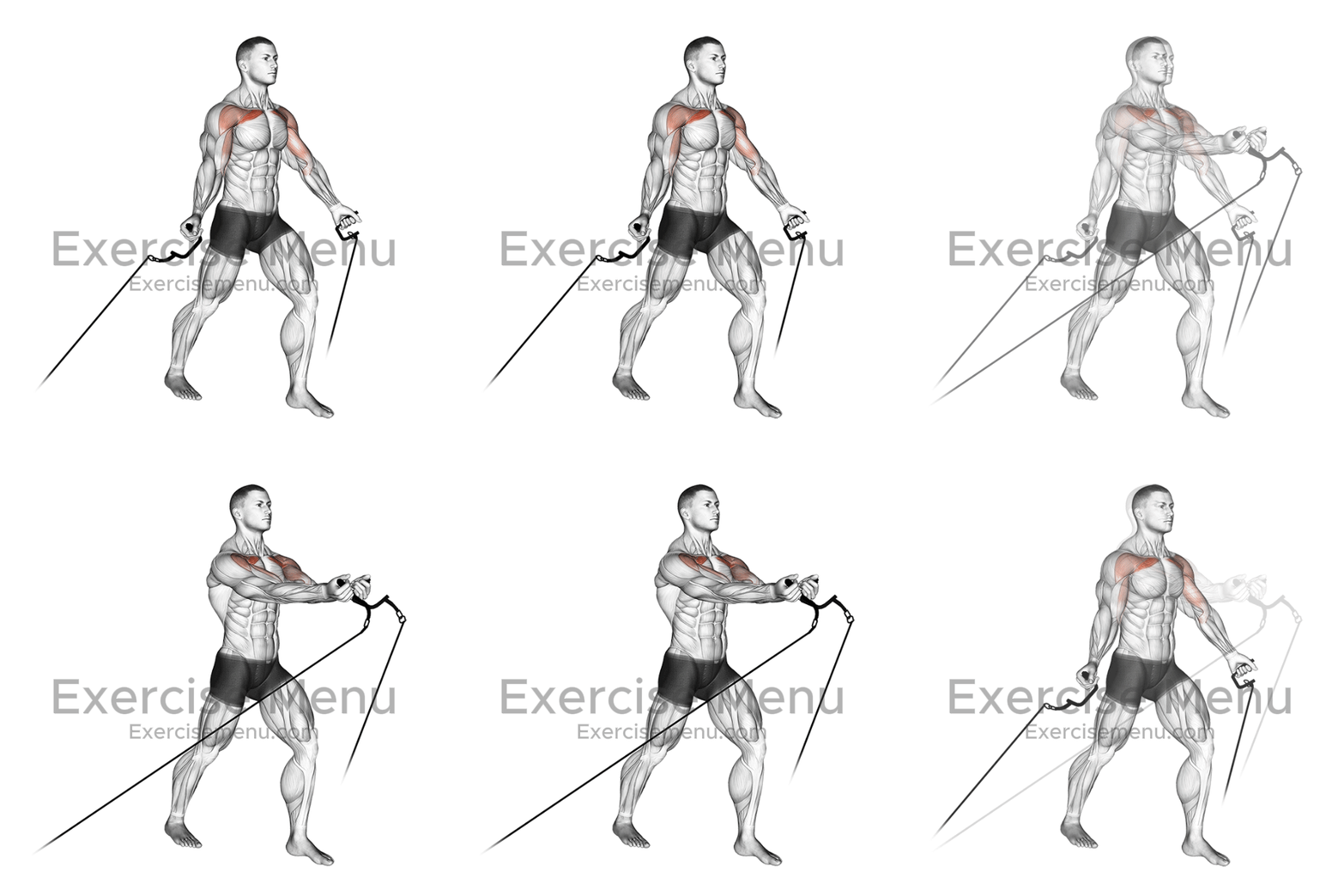
Exercise Profile
- Target Muscle
- Pectoralis Major
- Body Part
- Chest
- Equipment
- Cable Machine (two low pulleys), D-Handles
- Category
- Isolation
- Skill Level
- Intermediate
- Movement
- Shoulder Horizontal Adduction and Flexion
- Also Known As
- Low Cable Fly, Low Cable Crossover, Standing Incline Cable Fly
- Est. Calories
- 2–4 kcal per setEstimate for a 70 kg person, 30–60 second set
Quick Answer
The low-to-high cable fly trains the chest. Set two pulleys low, hold a handle in each hand in a staggered stance, then sweep your arms up and in until your hands meet in front of your chest. Lower slowly. Use 3 sets of 12 to 15 reps.
How to Do the Low-to-High Cable Fly
- 1
Set two low pulleys
Put a D-handle on two cable pulleys and set both to the lowest setting, one on either side of you.
- 2
Pick up the handles
Take a handle in each hand and step into the middle so the weights lift off the stacks and your arms hang down beside your hips.
- 3
Take a staggered stance
Step one foot in front of the other with your trunk upright. Brace your abs so your lower back does not arch.
- 4
Set your elbows
Hold a small, fixed bend in your elbows and keep your wrists straight.
- 5
Sweep up and in
Breathe out and bring both arms up and in along a wide arc until your hands meet in front of your chest, arms almost straight. The elbow bend does not change.
- 6
Lower slowly
Pause, then let your arms open back down and out over 2–3 seconds to the start, then repeat.
What Muscles Does the Low-to-High Cable Fly Work?
Primary
- Pectoralis Majorbrings the upper arms up and across the front of the body; the upper fibres run toward the collarbone, so they line up with the upward path.
Secondary
- Anterior Deltoidhelps raise the arms forward and up.
- Biceps Brachii (Short Head)assists the forward arm raise and holds the elbow bend.
- Serratus Anteriorholds the shoulder blades against the ribs.
- Abdominalskeep your torso upright against the pull of the cables.
How Many Sets and Reps Should You Do?
| Goal | Sets | Reps | Rest |
|---|---|---|---|
| Muscle Growth | 3–4 | 12–15 | 60–90 sec |
| Strength | 3 | 10–12 | 90 sec |
| Endurance | 2–3 | 15–20 | 45 sec |
| Beginner | 2–3 | 12–15 | 60 sec |
Common Mistakes That Reduce Results
✕
Leaning Forward
ACE's instructions warn that leaning forward on this exercise strains the shoulder joint. If you have to lean to finish a rep, the weight is too heavy.
✕
Bending and Straightening the Elbows
Letting the elbows open and close turns the fly into a press and brings the triceps in. Keep the bend fixed.
✕
Arching the Lower Back
Flaring your ribs to help the arms up loads the spine. Keep your abs braced and your trunk upright.
✕
Crossing Over on the Way Down
On the lowering phase, let your arms open out to your sides without your hands crossing past the middle of your body.
✕
Needing a Heave to Start
If each rep begins with a swing of the hips, the stack is choosing the weight. Go lighter and keep the arc smooth.
Tips for Better Results
✓
Think of a Wide Hug Going Upward
Picture wrapping your arms around something large while lifting them, rather than pushing a weight away.
✓
You Can Finish Higher
The demonstration brings the hands together in front of the chest. ACE's version of this exercise carries them on up to face level or above the head. Either finish is used; pick one and keep it the same so your sets compare.
✓
The Upper-Chest Claim Has Limits
The upper fibres of the chest run toward the collarbone, so the upward path lines up with them. No study has measured this exercise directly, so treat it as a sensible variation rather than a proven upper-chest fix.
✓
Keep the Stance the Same
Note which foot goes forward and how far you step in, so the resistance is the same from session to session.
Modifications and Progressions
▼ Easier
Resistance Band Low-to-High Fly
A band anchored low on each side copies the same upward arc with no cable machine.
▼ Easier
Pec Deck Fly (Machine)
The machine fixes the arm path, so you can focus on the squeeze rather than on balance.
▲ Harder
Single-Arm Low-to-High Cable Fly
One side at a time adds a trunk-steadying challenge and lets each side work alone.
▲ Harder
Low-to-High Cable Fly with 2-Second Hold
Hold the top position for 2 seconds on every rep before you lower.
Low-to-High Cable Fly Alternatives
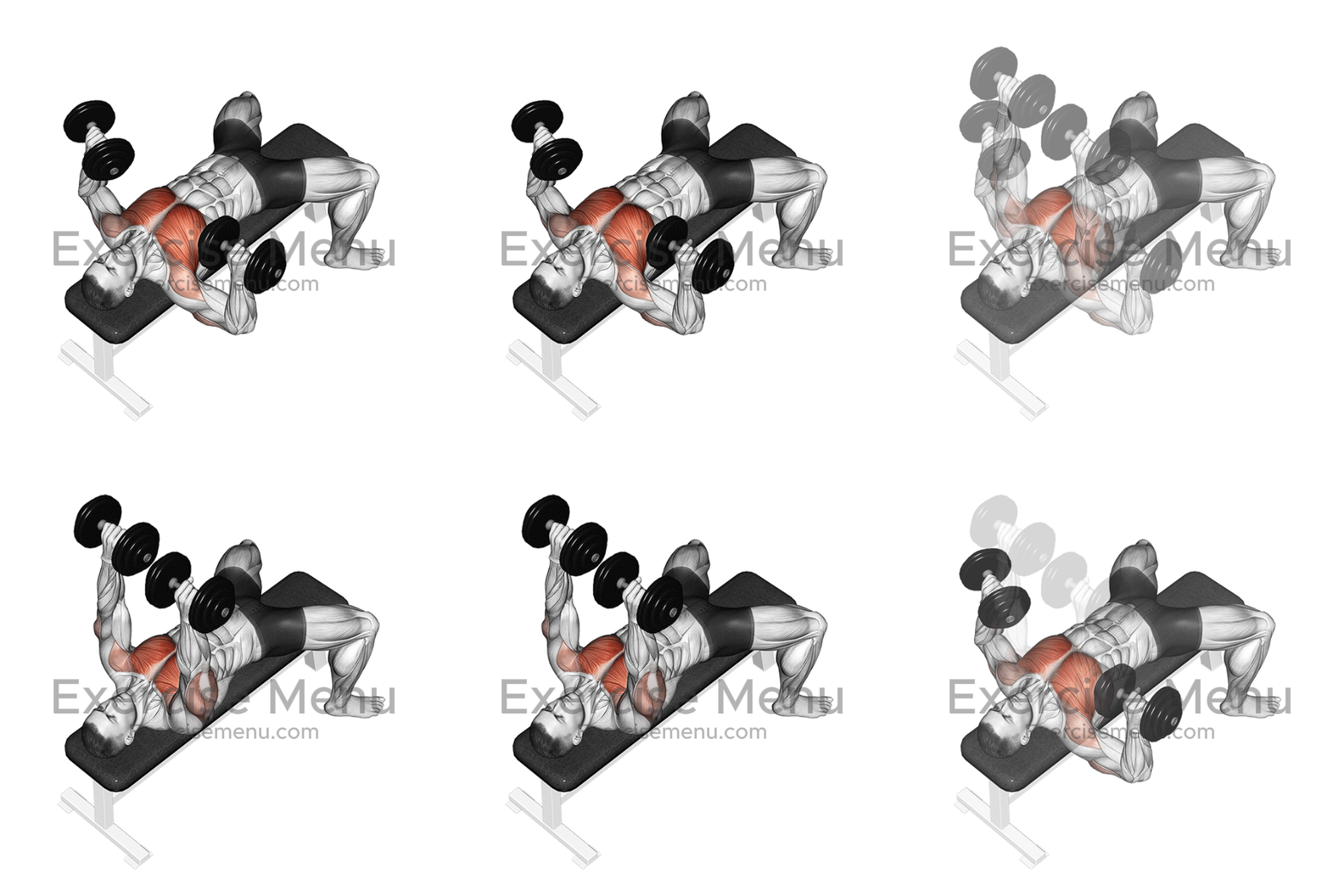 Dumbbell Bench Press
Pectoralis Major
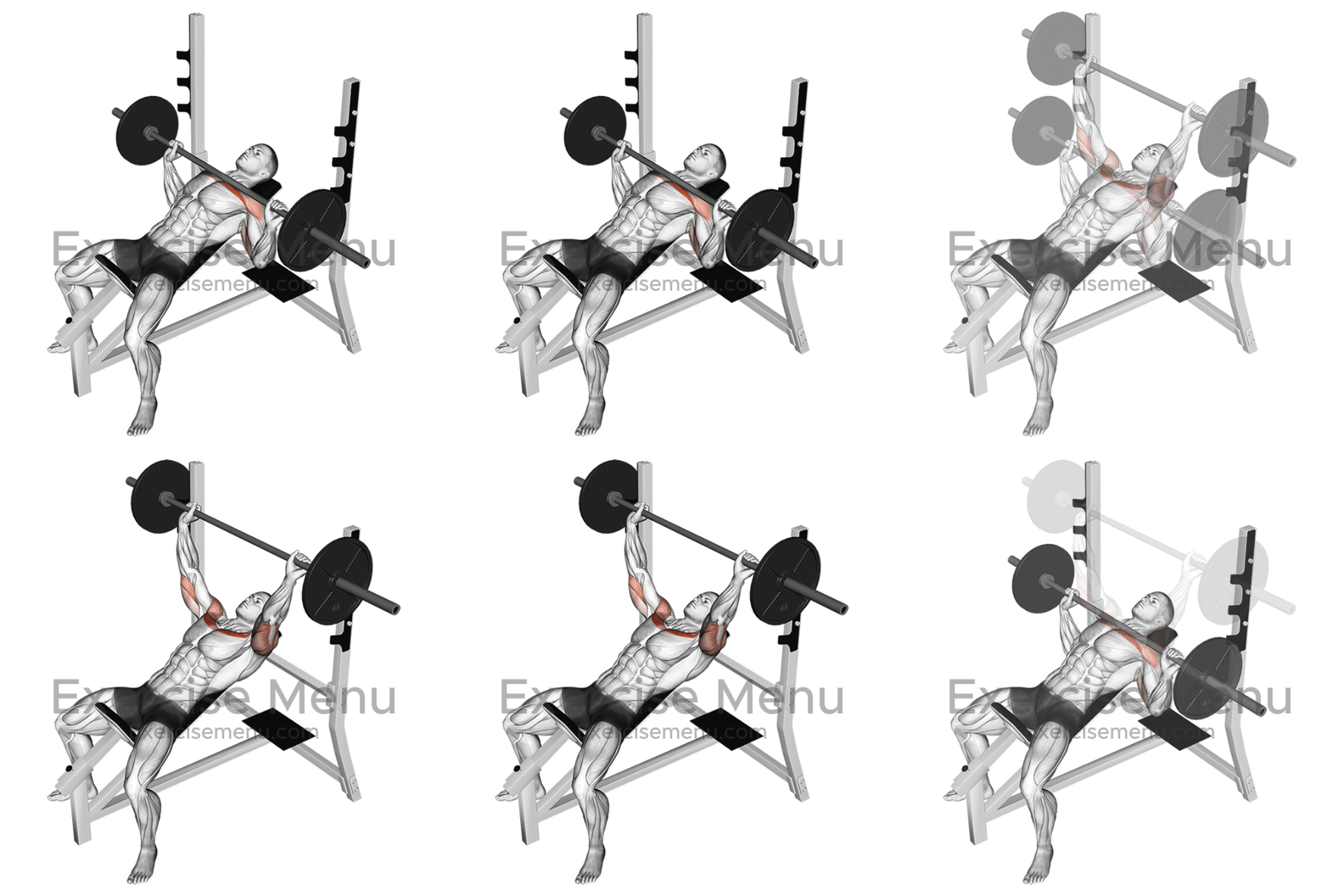 Barbell Incline Bench Press
Pectoralis Major (Clavicular Head)
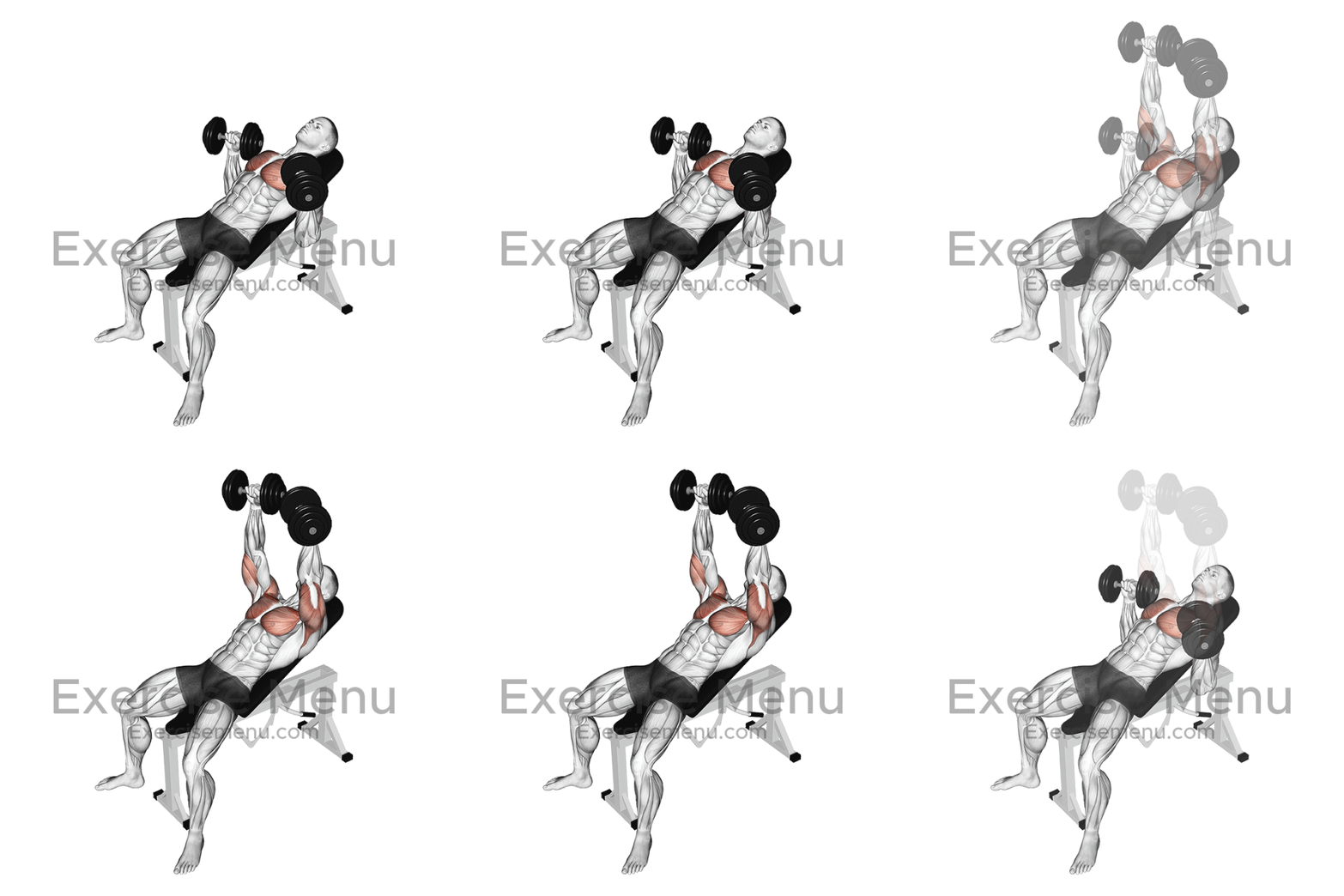 Dumbbell Incline Bench Press
Pectoralis Major (Clavicular Head)
Frequently Asked Questions
Does the low-to-high fly build the upper chest?
The upper fibres of the chest run toward the collarbone, so the upward arm path lines up with them. No study has measured this exercise directly, so treat it as a reasonable variation rather than a proven one.
Where should my hands finish?
In the demonstration they meet in front of the chest with the arms almost straight. ACE's version of the same setup takes them higher, to face level or above the head. Both are used — stay with one so you can track progress.
How far forward should I step?
Far enough that the weights lift off the stacks at the start and your arms can open all the way without the plates touching down.
Cable fly or dumbbell fly?
The cables keep pulling at the top of the rep, where a dumbbell fly gets easy. The dumbbell version needs no machine and is simpler to set up.
Why do I feel this in my shoulders?
Usually the weight is too heavy, or you are leaning forward and letting your arms drift behind your body at the bottom. Lower the load and keep your trunk upright.
Sources
- American Council on Exercise (ACE). Standing Incline Cable Flyes — Exercise Library. https://www.acefitness.org/resources/everyone/exercise-library/163/standing-incline-cable-flyes/
If you have an existing injury or medical condition, check with your doctor before adding this exercise to your training.