
Leg Extension
A seated machine exercise that trains the quadriceps by straightening the knees against a padded roller.
BeginnerIsolationMachineQuadsLegs
Last updated: November 3, 2026
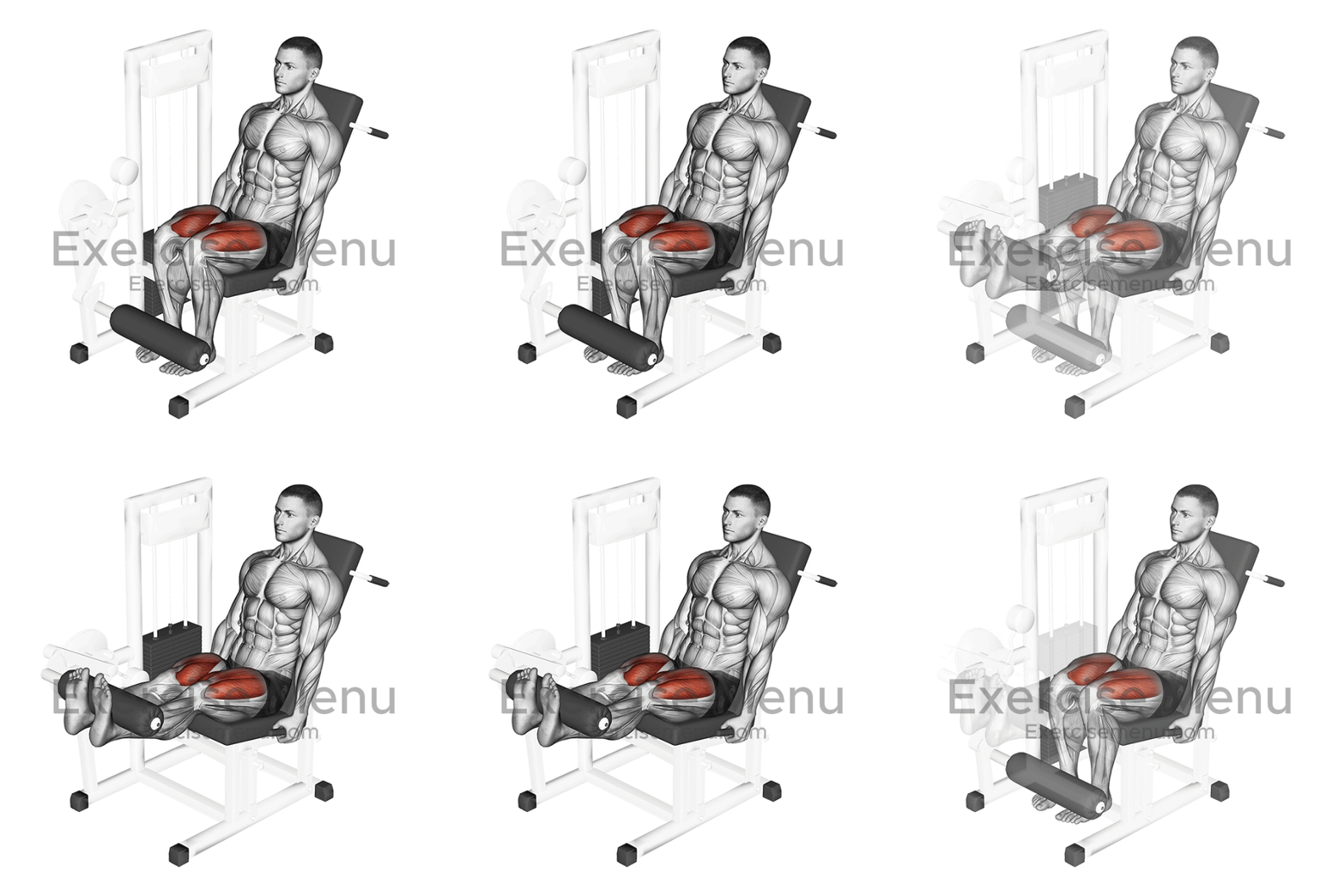
Exercise Profile
- Target Muscle
- Quadriceps
- Body Part
- Thighs
- Equipment
- Leg Extension Machine
- Category
- Isolation
- Skill Level
- Beginner
- Movement
- Knee Extension
- Also Known As
- Machine Leg Extension, Seated Leg Extension, Lever Leg Extension, Knee Extension
- Est. Calories
- 2–4 kcal per setEstimate for a 70 kg person, 30–60 second set
Quick Answer
The leg extension trains the quadriceps. Sit with your back on the pad and your knees lined up with the machine's pivot, set the roller just above your feet, then straighten your knees until your legs are almost straight. Lower slowly. Use 3 sets of 10 to 15 reps.
How to Do the Leg Extension
- 1
Set the back pad
Adjust the back pad so that when you sit right back, your knees line up with the pivot point of the machine arm.
- 2
Set the roller
Set the roller so it rests across the front of your lower legs, just above your feet.
- 3
Sit and take the handles
Sit with your back flat against the pad and hold the handles at the sides of the seat to stop yourself sliding forward.
- 4
Straighten your knees
Breathe out and straighten your legs until they are almost straight. Pause for a second at the top.
- 5
Lower slowly
Bend your knees over 2–3 seconds back to about 90 degrees, then repeat without letting the stack rest.
What Muscles Does the Leg Extension Work?
Primary
- Rectus Femoristhe middle of the four quadriceps; straightens the knee and also crosses the hip.
- Vastus Lateralisthe outer quadriceps; straightens the knee.
- Vastus Medialisthe inner quadriceps; straightens the knee.
- Vastus Intermediussits under the rectus femoris and straightens the knee.
Secondary
- Iliopsoasholds your thigh down on the seat as the roller rises.
- Abdominalskeep you sitting back against the pad.
How Many Sets and Reps Should You Do?
| Goal | Sets | Reps | Rest |
|---|---|---|---|
| Muscle Growth | 3–4 | 10–15 | 90 sec |
| Strength | 3–4 | 8–10 | 2 min |
| Endurance | 2–3 | 15–20 | 45–60 sec |
| Beginner | 2–3 | 12–15 | 90 sec |
Common Mistakes That Reduce Results
✕
Knees Off the Pivot
If your knee joint does not line up with the machine's pivot, the roller slides on your shin and the movement feels wrong. Reset the back pad before you start.
✕
Lifting Your Hips off the Seat
Pushing your hips up to throw the weight takes the work off the quads. Hold the handles and keep your hips down.
✕
Swinging the Weight Up
Kicking the roller and letting it drop skips most of the rep. Push up smoothly and take 2–3 seconds to lower.
✕
Roller on the Foot
A roller sitting on the top of the foot rather than just above it is uncomfortable and harder to control.
✕
Cutting the Bottom Short
Stopping before your knees get back to about 90 degrees trims off the part of the range where the quads are longest.
Tips for Better Results
✓
Do Not Cut the Deep Part of the Rep
Pedrosa and colleagues (2022) trained untrained women on this machine in different ranges. The group that trained only the deep part of the range, from 100 to 65 degrees of knee bend, grew more in several parts of the muscle than the full-range group.
✓
You Cannot Target the Teardrop
A systematic review of 20 EMG studies (Smith and colleagues, 2009) found that changing foot or leg position does not preferentially work the vastus medialis over the vastus lateralis. Turning your toes in or out will not shape the inner quad.
✓
Pause at the Top
A one-second hold stops you bouncing out of each rep, and it lets you use less weight for the same effort. If your knees are sensitive near lockout, hold slightly short of straight instead.
✓
Hold the Handles
Gripping the side handles keeps your hips in the seat, which keeps the work in your thighs.
Modifications and Progressions
▼ Easier
Bodyweight Sit-to-Stand
Standing up from a chair and sitting back down trains the quads with no machine and no added load.
▼ Easier
Resistance Band Knee Extension
Sitting on a bench with a band looped around one ankle loads the knee straightening without a machine.
▲ Harder
Single-Leg Leg Extension
One leg at a time doubles the work on each thigh for the same stack weight.
▲ Harder
Leg Extension with Slow Lowering
Take 3–4 seconds to bend your knees on each rep, which keeps the same weight under tension for longer.
Leg Extension Alternatives
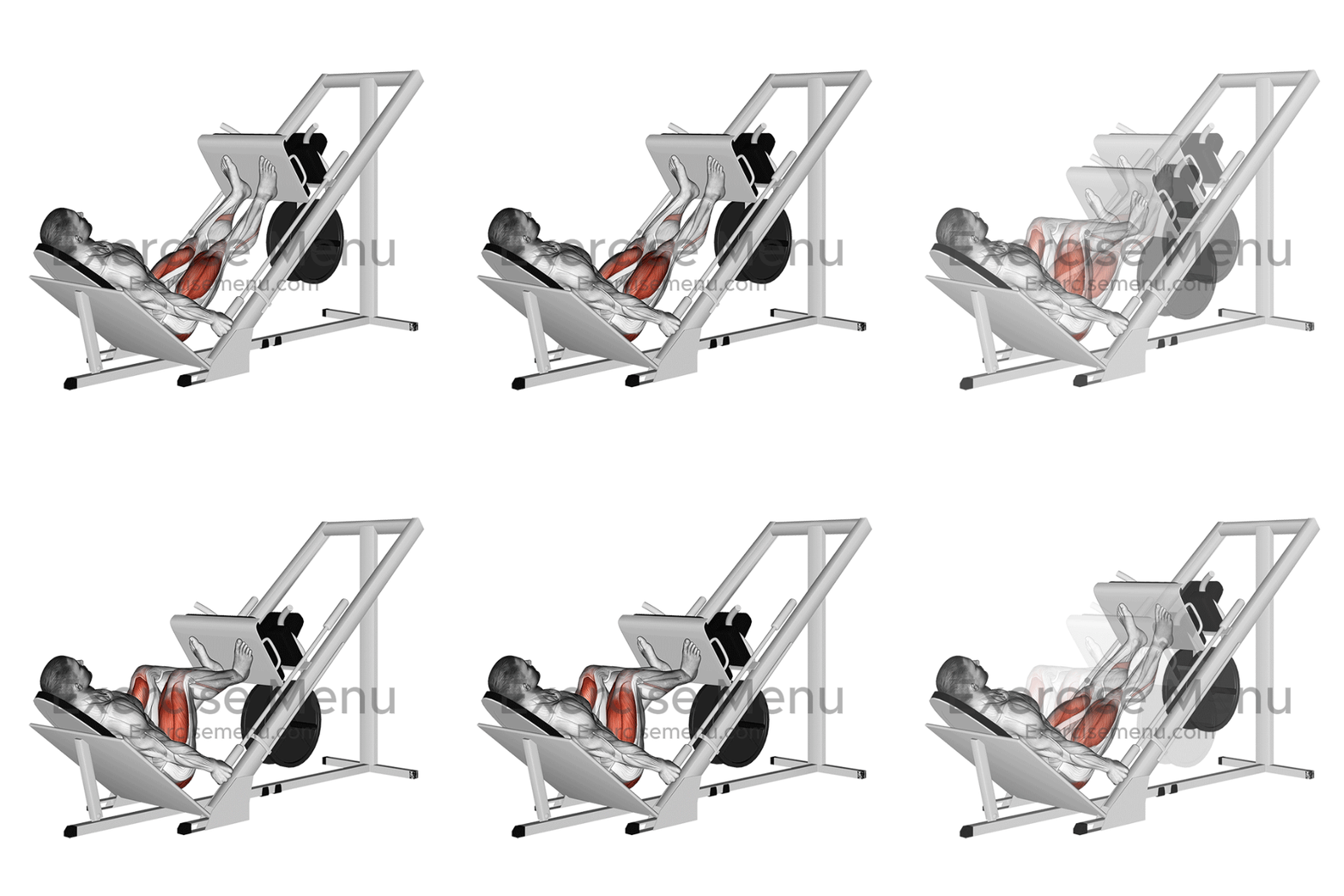 Leg Press
Quadriceps, Gluteus Maximus
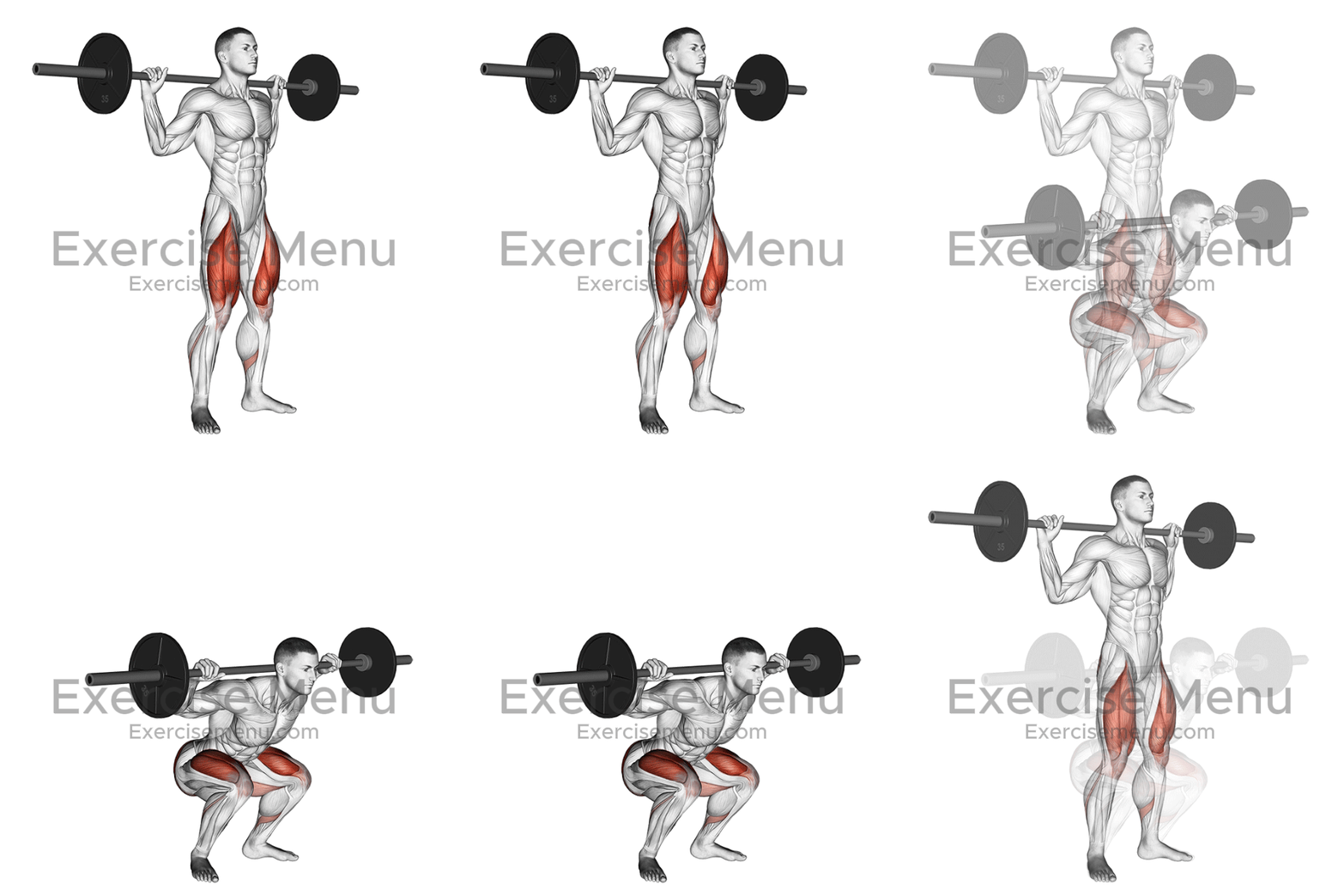 Barbell Back Squat
Quadriceps, Gluteus Maximus
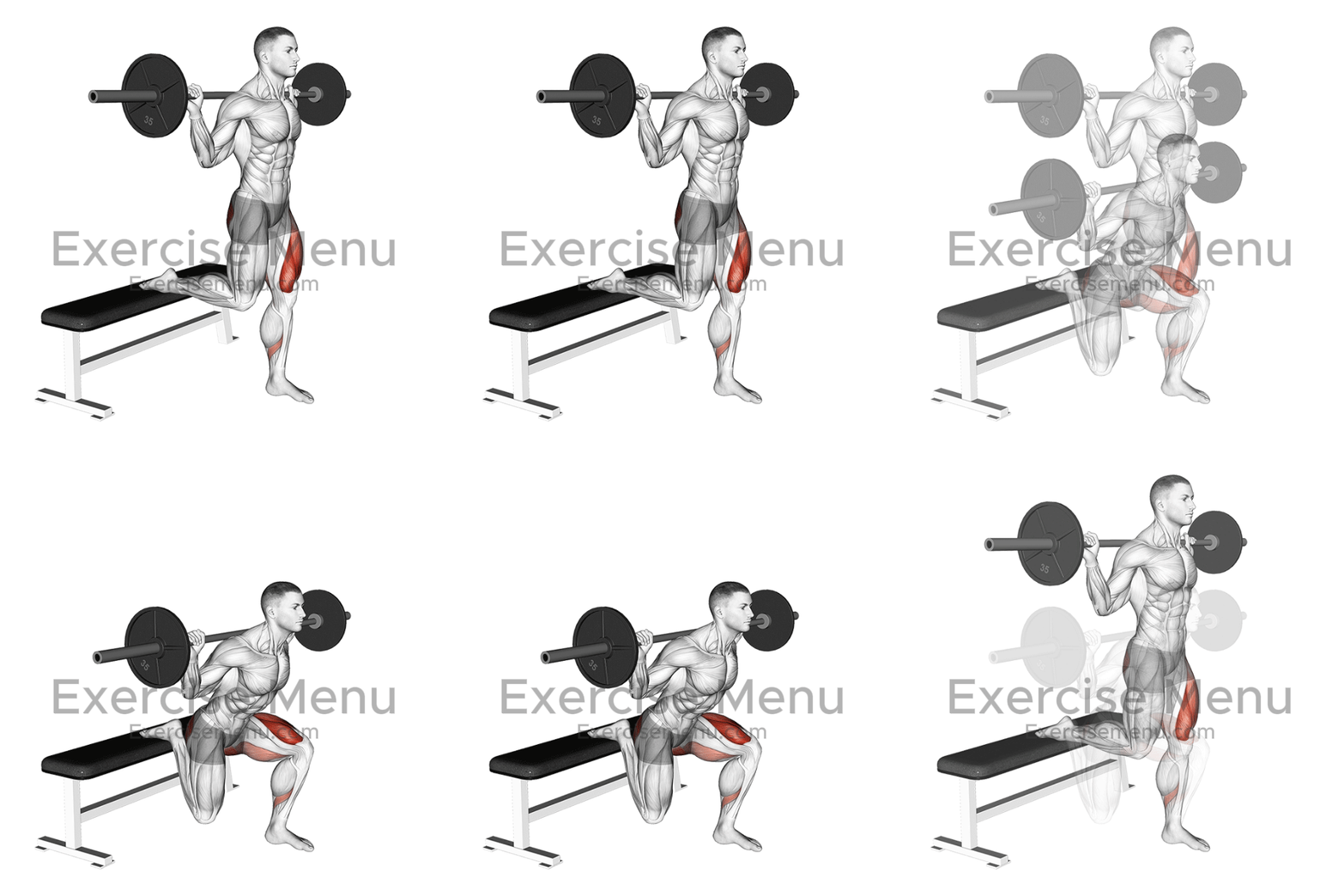 Barbell Bulgarian Split Squat
Quadriceps, Gluteus Maximus
Frequently Asked Questions
Are leg extensions bad for your knees?
For most healthy people they are a normal part of training. Pressure between the kneecap and the thigh bone does rise as the knee straightens, and it rises most over the last 30 degrees (Kaya and colleagues, 2012), which is why people with kneecap pain are usually kept in roughly the 25 to 90 degree range. If your knees hurt, stop short of full extension and speak to a clinician before loading it heavily.
Does turning my toes in or out work different parts of the quad?
No. A review of 20 EMG studies by Smith and colleagues (2009) found that changing leg or foot position does not preferentially work the inner quad over the outer one.
Should I lock my knees at the top?
Straighten your legs until they are almost straight and hold for a second. Snapping the knees hard into lockout under a heavy load adds nothing useful.
Leg extension or squat?
They do different jobs. The squat trains the quads together with the glutes, hips and trunk, while the leg extension loads the quads on their own, which is useful as extra work after the heavy lifts.
How many sets should I do?
The plans on this site use 2–4 sets of 10–15 reps, usually at the end of a leg session after the squat or leg press.
Sources
- Pedrosa GF, Lima FV, Schoenfeld BJ, et al. Partial range of motion training elicits favorable improvements in muscular adaptations when carried out at long muscle lengths. Eur J Sport Sci. 2022;22(8):1250–1260. https://pubmed.ncbi.nlm.nih.gov/33977835/
- Kaya D, Doral MN, Callaghan M. How can we strengthen the quadriceps femoris in patients with patellofemoral pain syndrome? Muscles Ligaments Tendons J. 2012;2(1):25–32. https://pmc.ncbi.nlm.nih.gov/articles/PMC3666499/
- Smith TO, Bowyer D, Dixon J, Stephenson R, Chester R, Donell ST. Can vastus medialis oblique be preferentially activated? A systematic review of electromyographic studies. Physiother Theory Pract. 2009;25(2):69–98. https://pubmed.ncbi.nlm.nih.gov/19212898/
If you have an existing injury or medical condition, check with your doctor before adding this exercise to your training.