
Hanging Knee Raise
A bodyweight ab exercise done hanging from a bar, lifting the bent knees toward the chest.
IntermediateIsolationBodyweightAbsCore
Last updated: November 4, 2026
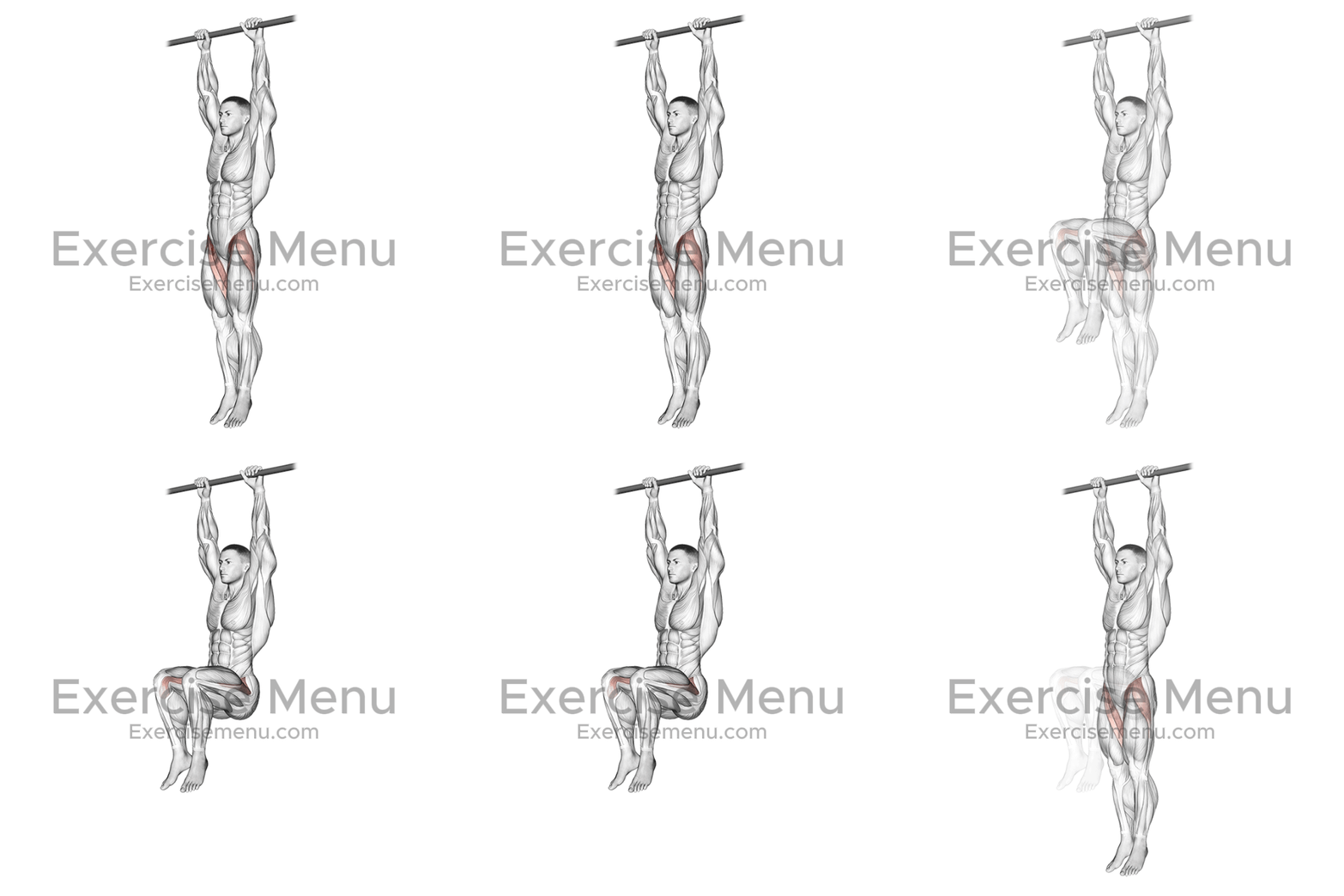
Exercise Profile
- Target Muscle
- Rectus Abdominis
- Body Part
- Waist
- Equipment
- Pull-Up Bar
- Category
- Isolation
- Skill Level
- Intermediate
- Movement
- Hip Flexion with Spinal Flexion
- Also Known As
- Hanging Knee Tuck, Bent-Knee Hanging Raise, Hanging Leg Raise (bent-knee version)
- Est. Calories
- 2–4 kcal per setEstimate for a 70 kg person, 30–60 second set
Quick Answer
The hanging knee raise is a bodyweight ab exercise. Hang from a bar with straight arms, bend your knees and lift your thighs to about hip height, then lower them slowly without swinging. Use 3 sets of 10 to 15 reps.
How to Do the Hanging Knee Raise
- 1
Hang from the bar
Take an overhand grip about shoulder-width apart and hang with your arms straight and your legs together.
- 2
Settle the swing
Let your body stop moving before the first rep. Pull your shoulders down away from your ears so you are not hanging loose.
- 3
Lift your knees
Bend your knees and lift your thighs until they reach about hip height, as the demonstration shows. ACE describes the same movement: start with the knees bent and lift them slowly as high as possible, pulling the knees toward the chest. Breathe out as you lift.
- 4
Curl at the top
At the top, tilt your pelvis back slightly so your lower abs finish the rep rather than only your hip flexors. Pause for a second.
- 5
Lower slowly
Lower over about 2 seconds until your legs hang straight again, keeping your body still, then repeat.
What Muscles Does the Hanging Knee Raise Work?
Primary
- Iliopsoas and Rectus Femoristhe hip flexors; they lift the thighs, and they do most of the work in this exercise.
- Rectus Abdominiscurls the pelvis at the top of the rep and stops the lower back arching on the way down.
Secondary
- External and Internal Obliqueskeep the hips from swinging side to side.
- Latissimus Dorsi and Teres Majorhold the upper arms steady against the pull of the hang.
- Forearm Flexorshold your grip on the bar.
How Many Sets and Reps Should You Do?
| Goal | Sets | Reps | Rest |
|---|---|---|---|
| Muscle Growth | 3 | 10–15 | 60 sec |
| Strength | 3–4 | 8–10, weighted | 90 sec |
| Endurance | 2–3 | 15–20 | 45 sec |
| Beginner | 2–3 | 6–10 | 60 sec |
Common Mistakes That Reduce Results
✕
Swinging Between Reps
Using a backward swing to throw the knees up turns it into momentum work. Come to a dead stop before you start, and reset if you begin to swing.
✕
Stopping Too Low
Lifting the knees only a few inches barely moves the hips. Bring the thighs to about hip height or higher.
✕
Letting the Legs Drop
Releasing at the top and letting the legs fall skips the part of the rep where the abs have to stop the lower back arching.
✕
Only Lifting, Never Curling
If the pelvis never tilts back at the top, the hip flexors do nearly all the work. Add that small curl.
✕
Gripping Until the Abs Are Untrained
If your hands give out first, use straps so the set ends when your abs are done, not your grip.
Tips for Better Results
✓
Not for Everyone's Lower Back
ACE notes that exercises where the legs hang unsupported are good for the deep abdominal muscles, but are not recommended for people with diagnosed lower-back pain.
✓
Start on a Captain's Chair
ACE suggests the captain's chair — the padded forearm station — as the beginner version, because your back is supported and your grip is not the limit.
✓
Think Hips, Not Feet
Aiming to lift your hip bones toward your ribs gives a better rep than aiming to lift your feet.
✓
Add Weight Before Adding Reps
Once 15 clean reps are easy, hold a light dumbbell between your feet rather than pushing past 20.
Modifications and Progressions
▼ Easier
Captain's Chair Knee Raise
Forearms on the padded station takes your grip and your back out of the equation.
▼ Easier
Lying Reverse Crunch
Lying on your back and curling the knees toward the chest trains the same curl with no hanging.
▲ Harder
Hanging Straight-Leg Raise
Keeping the legs straight lengthens the lever and makes every rep much harder.
▲ Harder
Weighted Hanging Knee Raise
Hold a light dumbbell between your feet once body weight stops being a challenge.
Workout Plans With the Hanging Knee Raise
Day C — Deadlift Focus 5×5 Workout: Strength and Muscle Building Program Day 3 — Shoulders & Traps 4-Day Workout Split: The Torso/Limbs Plan for Muscle and StrengthHanging Knee Raise Alternatives
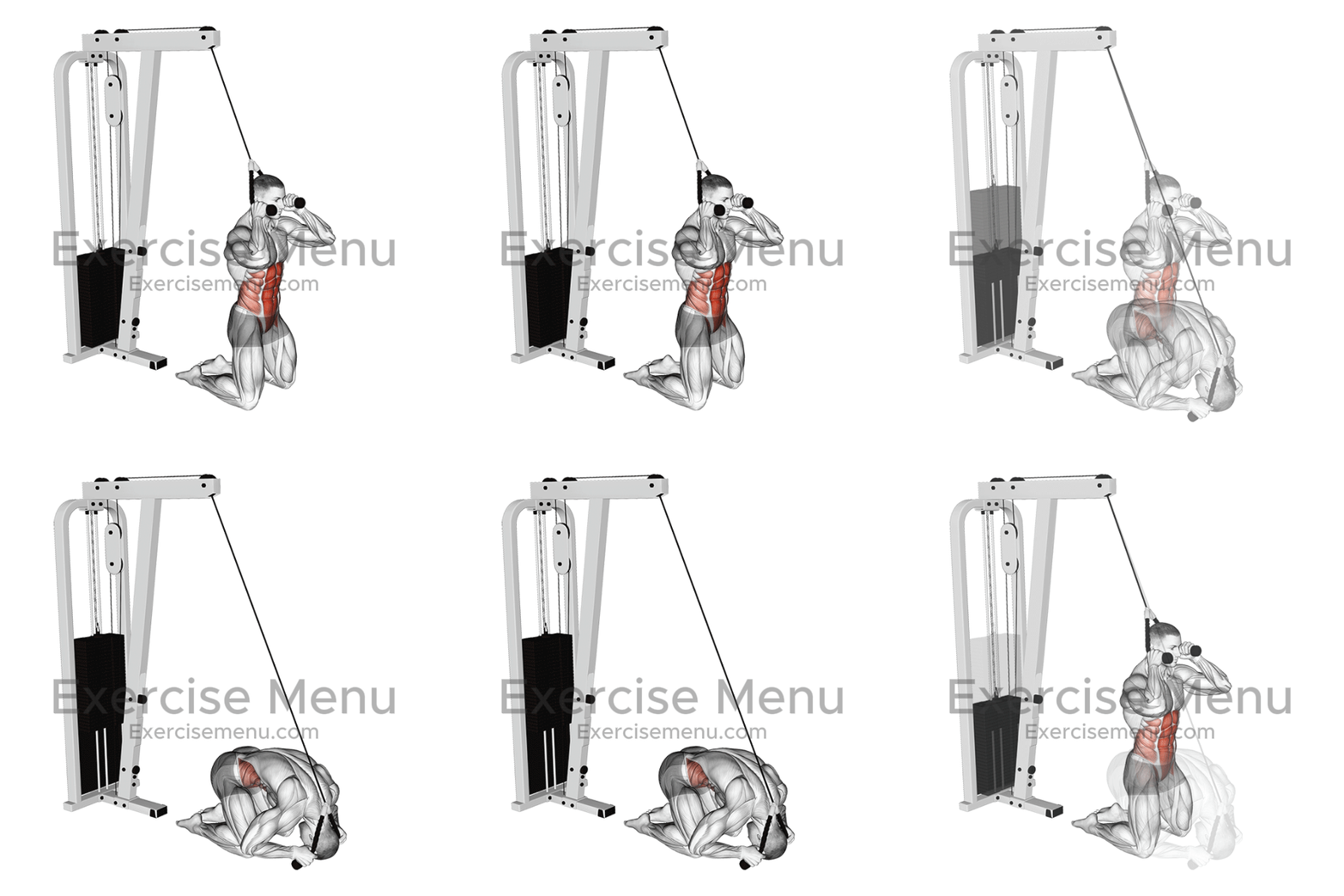 Cable Kneeling Crunch
Rectus Abdominis
Frequently Asked Questions
Knee raise or straight-leg raise?
The knee raise is the easier of the two and is what this demonstration shows. Straight legs make the same movement much harder, so most people work up to it.
Why do I feel it in my hip flexors and not my abs?
The hip flexors lift the thighs, so some of that is normal. To bring the abs in, tilt your pelvis back at the top so the rep finishes with a small curl.
How do I stop swinging?
Come to a complete stop before the first rep, lower slowly rather than dropping, and stop the set once a swing creeps in.
Is this safe for my lower back?
For most people, yes. ACE advises against unsupported hanging leg exercises for anyone with diagnosed lower-back pain, so use the captain's chair or a lying version instead if that applies to you.
How often should I train abs?
The plans on this site train them once or twice a week, 2–3 sets each time.
Sources
- American Council on Exercise (ACE). 6 Exercises for a Stronger Core. https://www.acefitness.org/resources/pros/expert-articles/5452/6-exercises-for-a-stronger-core/
If you have an existing injury or medical condition, check with your doctor before adding this exercise to your training.