
Cable Kneeling Crunch
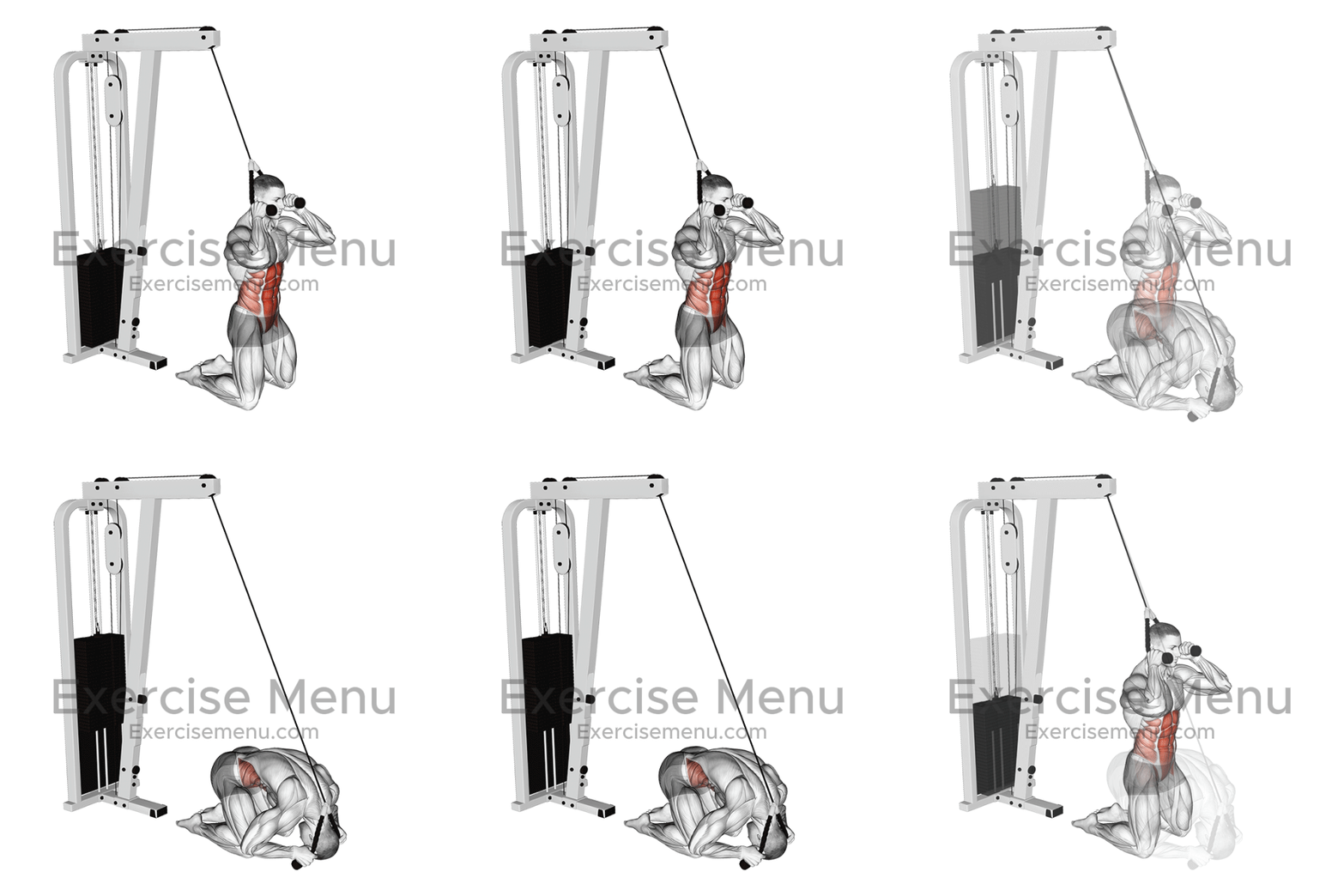
A kneeling cable exercise that trains the abs by curling the spine down against the pull of a high cable.
BeginnerIsolationCableAbsCore
Last updated: October 31, 2026
Exercise Profile
- Target Muscle
- Rectus Abdominis
- Body Part
- Waist
- Equipment
- Cable Machine, Rope Attachment
- Category
- Isolation
- Skill Level
- Beginner
- Movement
- Spinal Flexion
- Also Known As
- Cable Crunch, Kneeling Cable Crunch, Rope Crunch
- Est. Calories
- 2–4 kcal per setEstimate for a 70 kg person, 30–60 second set
Quick Answer
The cable kneeling crunch is an ab exercise done on your knees below a high pulley. Hold a rope beside your head, keep your hips still, and curl your ribs toward your hips by rounding your spine. Uncurl slowly to return. Use 2 to 3 sets of 10 to 15 reps.
How to Do the Cable Kneeling Crunch
- 1
Set the pulley high
Attach a rope to the high pulley of a cable machine and choose a light weight.
- 2
Kneel below the pulley
Kneel directly below the pulley with your back to the machine, knees about hip-width apart, sitting up tall with your hips over your knees.
- 3
Hold the rope by your head
Hold one end of the rope in each hand beside your head, hands near your ears. Keep them fixed there for the whole set.
- 4
Curl down
Breathe out and round your spine, pulling your ribs toward your hips and your elbows toward your thighs. Your hips stay where they are.
- 5
Uncurl slowly
Uncurl over about 2 seconds until your torso is upright again, then start the next rep.
What Muscles Does the Cable Kneeling Crunch Work?
Primary
- Rectus Abdominisrounds the spine to pull the ribcage toward the pelvis.
Secondary
- External Obliquesassist trunk flexion and keep the torso steady.
- Internal Obliquesassist trunk flexion and keep the torso steady.
How Many Sets and Reps Should You Do?
| Goal | Sets | Reps | Rest |
|---|---|---|---|
| Muscle Growth | 2–4 | 10–15 | 60 sec |
| Strength | 3–4 | 8–10 | 90 sec |
| Endurance | 2–3 | 15–20 | 45 sec |
| Beginner | 2–3 | 12–15 | 60 sec |
Common Mistakes That Reduce Results
✕
Moving the Hips
Sitting back toward your heels or pushing the hips back turns the crunch into a hip hinge and takes work away from the abs. Keep your hips over your knees.
✕
Pulling with the Arms
If your hands drift away from your head, the arms and shoulders start pulling the weight. Keep your hands fixed beside your head.
✕
Bending with a Flat Back
Folding forward from the hips with a straight back misses the movement. The abs work when the spine rounds, so curl your ribs toward your hips.
✕
Using Too Much Weight
A heavy stack usually forces a hip hinge and a jerky pull. Pick a load you can curl and uncurl smoothly.
✕
Letting the Cable Yank You Up
Rushing the return loses tension on the abs. Control the way up as much as the way down.
Tips for Better Results
✓
Think Ribs to Hips
Picture shortening the distance between your lower ribs and your hip bones. This keeps the movement in your spine.
✓
Breathe Out as You Curl
Exhale as you curl down and breathe in as you uncurl, so you don't hold your breath through the set.
✓
Add Weight in Small Steps
The cable stack makes it simple to add a little weight once you can complete all reps with control.
✓
Keep Your Setup the Same
Kneeling with your back to the machine, as shown, or facing it both work. Use one setup every session so you can track progress.
Modifications and Progressions
▼ Easier
Bodyweight Floor Crunch
Lying on your back and curling your shoulders off the floor trains the same spine-rounding movement with no load.
▼ Easier
Stability Ball Crunch
Lying back on a ball lets you curl through a longer range with body weight only.
▲ Harder
Paused Cable Kneeling Crunch
Hold the bottom position for 2 seconds on every rep before you uncurl.
▲ Harder
Cable Kneeling Crunch with Slow Return
Take 3–4 seconds to uncurl, which keeps the abs under tension for longer.
Frequently Asked Questions
Should I face the machine or face away from it?
Both work. What matters is that the pulley is high, your hands stay beside your head, and the movement comes from rounding your spine.
Will cable crunches burn belly fat?
Not on their own. In a 6-week study by Vispute and colleagues (2011), ab exercises improved muscular endurance but did not reduce belly fat. Fat loss depends on your overall diet and activity.
Why do I feel cable crunches in my hip flexors or lower back?
Most often the hips are moving. Keep your hips still over your knees and lighten the weight until the movement comes from your spine.
How heavy should I go?
Use a weight you can move for 10–15 controlled reps without swinging your hips. The cable lets you load the abs more than a floor crunch.
How often should I train abs?
The workout plans on this site use 2–3 sets once or twice a week. Add more only if your abs recover well between sessions.
Sources
- Vispute SS, et al. The effect of abdominal exercise on abdominal fat. J Strength Cond Res. 2011;25(9). https://pubmed.ncbi.nlm.nih.gov/21804427/
If you have an existing injury or medical condition, check with your doctor before adding this exercise to your training.