
Front Plank
A bodyweight hold on the forearms and toes that trains the abs to keep the spine still.
BeginnerIsolationBodyweightAbsCore
Last updated: November 4, 2026
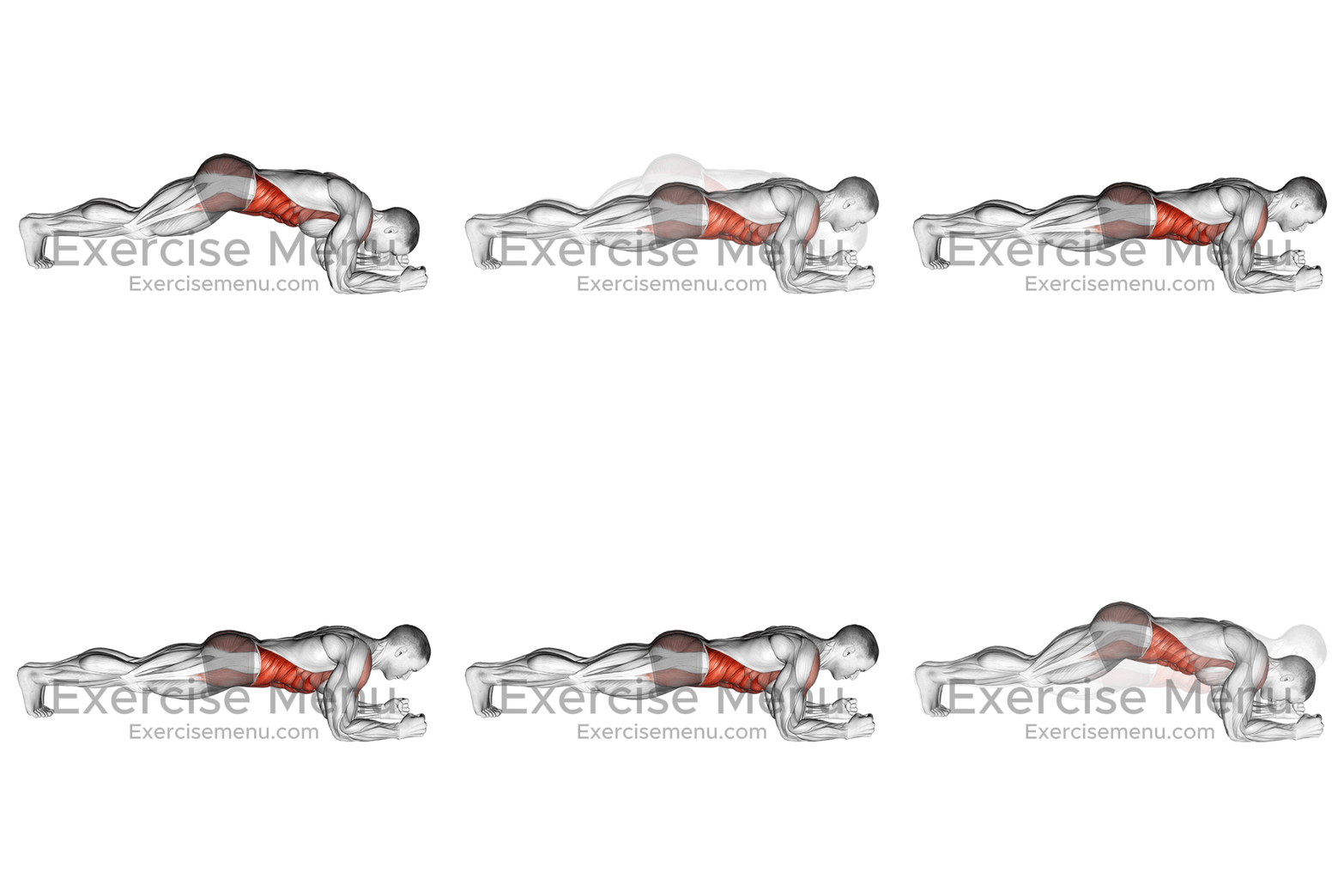
Exercise Profile
- Target Muscle
- Rectus Abdominis
- Body Part
- Waist
- Equipment
- None (Exercise Mat optional)
- Category
- Isolation
- Skill Level
- Beginner
- Movement
- Anti-Extension (Core Brace)
- Also Known As
- Plank, Forearm Plank, Prone Plank, Abdominal Plank
- Est. Calories
- 2–3 kcal per setEstimate for a 70 kg person, 30–60 second set
Quick Answer
The front plank is a bodyweight hold for the abs. Rest on your forearms with your elbows under your shoulders, straighten your legs, then lift your body into one straight line from head to heels and hold. Keep breathing. Start with 2 to 3 holds of 20 to 45 seconds.
How to Do the Front Plank
- 1
Set your forearms
Lie face down and place your elbows directly under your shoulders, close to your sides, with your palms down and hands facing forward.
- 2
Set your legs
Straighten your legs behind you and pull your toes toward your shins so the balls of your feet are on the floor.
- 3
Brace before you lift
Tighten your abs as if you were about to be poked in the stomach. Squeeze your glutes.
- 4
Lift into the plank
Lift your whole body off the floor in one piece, so you form a straight line from head to heels. Keep your shoulders stacked over your elbows and do not shrug.
- 5
Hold and breathe
Hold the position, breathing normally. Stop the set when your hips start to drop or lift rather than when a timer runs out.
- 6
Lower in one piece
Keep your trunk stiff and your knees straight as you lower back down to the floor.
What Muscles Does the Front Plank Work?
Primary
- Rectus Abdominisholds the ribcage and pelvis together so the lower back does not sag.
Secondary
- External and Internal Obliquesstop the torso twisting or tipping.
- Transversus Abdoministhe deep abdominal wall that braces the trunk.
- Erector Spinaework with the abs to hold the spine still.
- Gluteus Maximus and Quadricepskeep the hips and knees straight.
- Serratus Anteriorholds your shoulder blades flat against your ribcage.
How Many Sets and Reps Should You Do?
| Goal | Sets | Reps | Rest |
|---|---|---|---|
| Muscle Growth | 3 | 30–45 sec hold | 45–60 sec |
| Strength | 3–4 | 20–30 sec hold, add weight on your back | 60–90 sec |
| Endurance | 2–3 | 45–60 sec hold | 45 sec |
| Beginner | 2–3 | 15–20 sec hold | 60 sec |
Common Mistakes That Reduce Results
✕
Hips Sagging Toward the Floor
When the abs tire, the hips drop and the lower back takes the strain. End the set at that point rather than holding on.
✕
Hips Hiked Up
ACE's plank instructions say not to let the hips hike up toward the ceiling. A raised backside makes the hold easier and takes the work off the abs.
✕
Shoulders Shrugged
Letting your shoulders creep toward your ears shifts the effort to the traps. Keep them pulled down.
✕
Elbows Too Far Forward
Elbows out in front of the shoulders change the angle and load the shoulder joint. Stack them directly underneath.
✕
Holding Your Breath
Bracing does not mean stopping your breath. Keep breathing through the hold.
Tips for Better Results
✓
Squeeze Your Glutes
Tightening the glutes tips the pelvis slightly and makes it much easier to keep the lower back from sagging.
✓
Look at the Floor
Keeping your head in line with your spine, eyes on the floor just ahead of your hands, keeps your neck out of it.
✓
Quality Beats Time
A strict 20-second hold does more than a sagging 90-second one. Add time only once the shape holds.
✓
Stop if Your Lower Back Hurts
ACE's instructions say to stop the exercise and speak to a doctor if you feel low back pain during it.
Modifications and Progressions
▼ Easier
Knee Plank
Resting on your knees instead of your toes shortens the lever and cuts the load.
▼ Easier
Incline Plank (Hands on a Bench)
Putting your forearms on a bench raises your upper body and makes the hold lighter.
▲ Harder
Weighted Plank
A plate placed on your upper back adds load without adding time.
▲ Harder
Long-Lever Plank
Walking your elbows further forward lengthens the lever and makes the same hold much harder.
Front Plank Alternatives
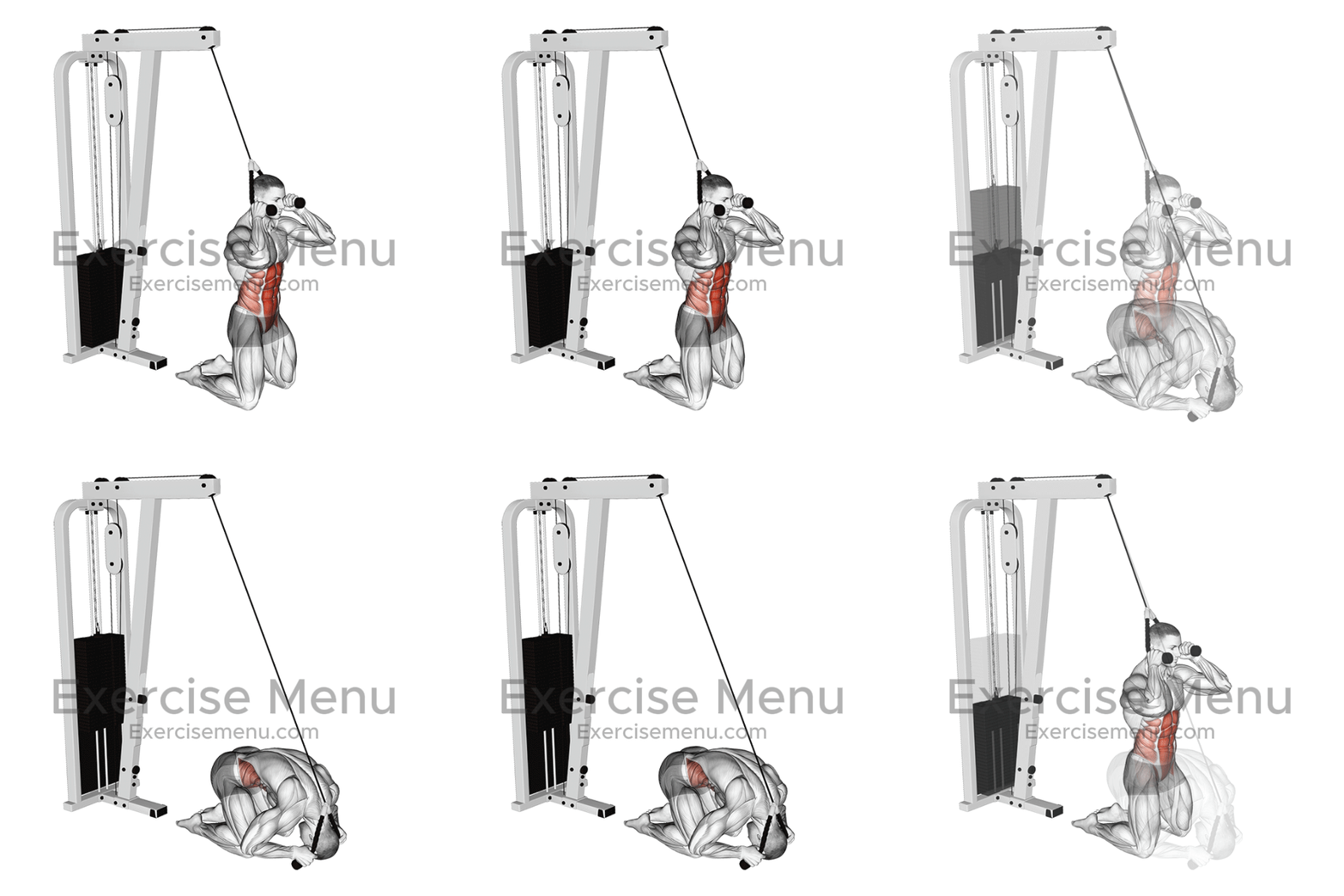 Cable Kneeling Crunch
Rectus Abdominis
Frequently Asked Questions
How long should I hold a plank?
Long enough to keep a straight line, usually 20 to 45 seconds. ACE's instructions call for at least 5 seconds as a minimum. Once a hold stays clean past about a minute, add weight instead of more time.
Where should my elbows be?
Directly under your shoulders and close to your sides, with your palms flat and your hands facing forward.
Why does my lower back hurt in a plank?
Usually the hips are sagging, which passes the load to the lower back. Shorten the hold, squeeze your glutes, and stop if the pain continues — ACE advises speaking to a doctor about low back pain in this exercise.
Will planks give me a flat stomach?
They build the muscle that holds your trunk steady, but how visible your abs are depends on body fat, which comes down to diet and overall activity.
Plank or crunch?
They do different jobs. The plank trains the abs to stop the spine moving; the crunch trains them to bend it. The plans on this site use both.
Sources
- American Council on Exercise (ACE). Front Plank — Exercise Library. https://www.acefitness.org/resources/everyone/exercise-library/32/front-plank/
If you have an existing injury or medical condition, check with your doctor before adding this exercise to your training.