
Dumbbell Seated Shoulder Press
A seated overhead press with two dumbbells that builds the front and side delts and triceps with the back supported.
BeginnerCompoundDumbbellsShouldersPush
Last updated: November 4, 2026
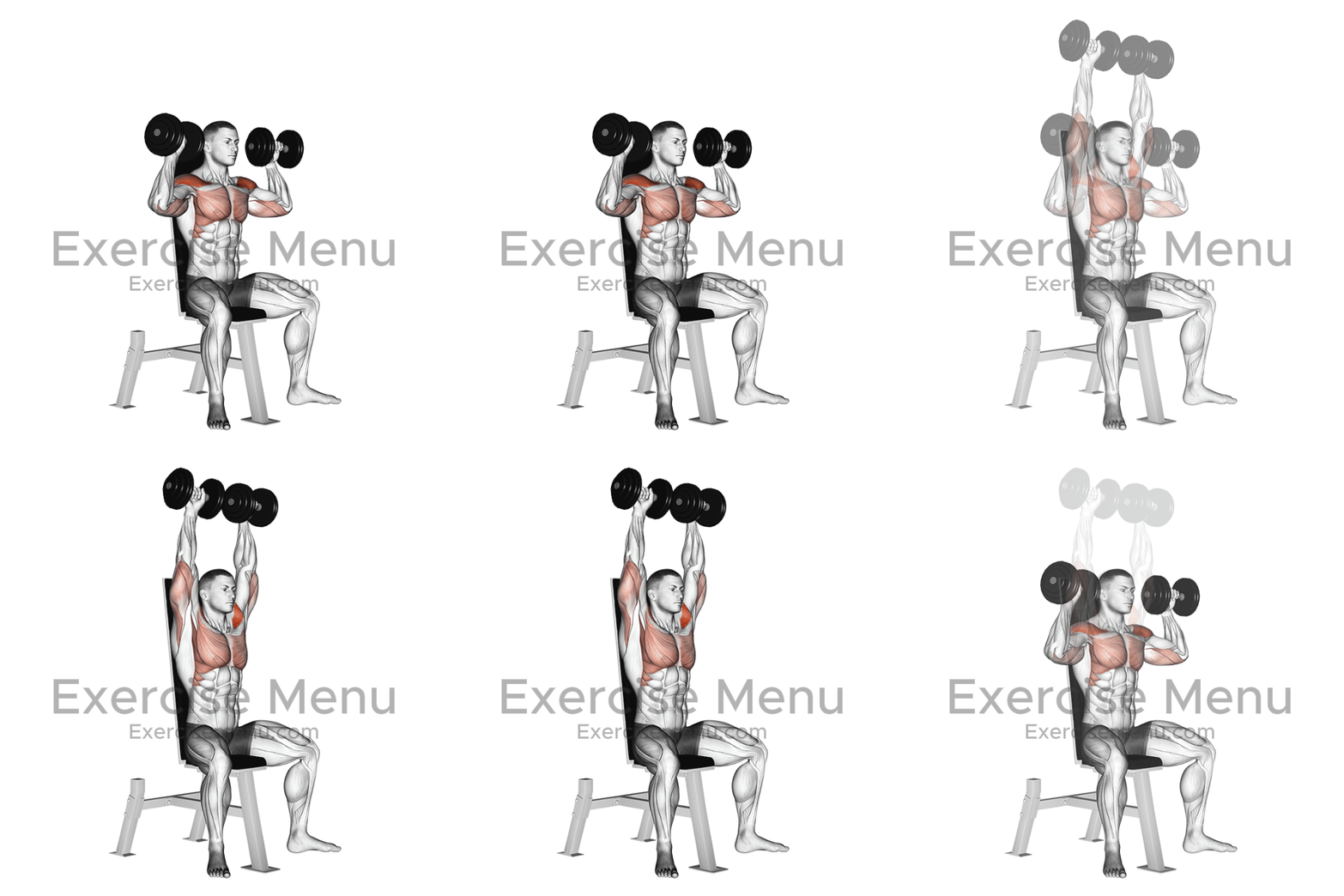
Exercise Profile
- Target Muscle
- Anterior Deltoid, Lateral Deltoid
- Body Part
- Shoulders
- Equipment
- Dumbbells, Adjustable Bench
- Category
- Compound
- Skill Level
- Beginner
- Movement
- Vertical Push
- Also Known As
- Seated Dumbbell Overhead Press, Seated Dumbbell Military Press
- Est. Calories
- 24 –kcal per setEstimate for a 70 kg person, 30–60 second set
Quick Answer
The seated dumbbell shoulder press is a compound overhead press that trains the front and side delts and the triceps. Sit on an upright bench with back support, start with the dumbbells at shoulder height, palms facing forward, then press them overhead until your arms are straight. Use 3 to 4 sets of 8 to 12 reps.
How to Do the Dumbbell Seated Shoulder Press
- 1
Set the bench upright
Set an adjustable bench to upright or one notch below (about 80–90 degrees). Sit with your back against the pad and feet flat on the floor.
- 2
Bring the dumbbells to your shoulders
Rest the dumbbells on your thighs, then kick them up one at a time to shoulder height. Palms face forward and elbows sit slightly in front of your torso.
- 3
Brace
Keep your head, upper back, and hips against the pad and tighten your abs so your lower back does not arch away from the bench.
- 4
Press overhead
Press the dumbbells straight up until your elbows are straight and the weights are over your shoulders. They can move slightly toward each other at the top.
- 5
Lower to shoulder height
Lower the dumbbells under control until they are about level with your ears or a little lower, then press again.
What Muscles Does the Dumbbell Seated Shoulder Press Work?
Primary
- Anterior Deltoidthe front of the shoulder, lifts the arms overhead.
- Lateral Deltoidthe side of the shoulder, assists as the dumbbells press up and out.
Secondary
- Triceps Brachiistraighten the elbows to finish each press.
- Upper Trapeziushelps rotate the shoulder blades upward as the arms rise.
- Serratus Anteriorrotates and stabilizes the shoulder blades overhead.
- Rotator Cuffkeeps the shoulder joint stable.
How Many Sets and Reps Should You Do?
| Goal | Sets | Reps | Rest |
|---|---|---|---|
| Muscle Growth | 3–4 | 8–12 | 60–90 sec |
| Strength | 3–5 | 5–6 | 2–3 min |
| Endurance | 2–3 | 15–20 | 30–60 sec |
| Beginner | 2–3 | 10–12 | 60–90 sec |
Common Mistakes That Reduce Results
✕
Arching the Lower Back
Leaning back and arching turns the press into an incline press and stresses the lower back. Keep your hips and upper back on the pad and abs tight.
✕
Elbows Flared Straight Out to the Sides
Pressing with elbows directly out at 90 degrees can be uncomfortable for the shoulders. Keep them slightly in front of your body.
✕
Cutting the Range Short
Stopping the dumbbells high above the shoulders reduces the work for the delts. Lower until the dumbbells reach about ear level.
✕
Clanging the Dumbbells Together
Hitting the weights at the top makes the press less controlled. Bring them close without forcing contact.
✕
Using Momentum
Bouncing out of the bottom shifts the load away from the shoulders. Press smoothly from a controlled start.
Tips for Better Results
✓
Use the Back Pad
The supported back is the main benefit of the seated version. It limits lower back arching and lets you focus on the shoulders.
✓
Get the Dumbbells Up Safely
Use your thighs to kick each dumbbell up to shoulder height rather than curling heavy weights into position.
✓
Try a Neutral Grip if Your Shoulders Ache
Pressing with palms facing each other is a common option for lifters who find the palms-forward grip uncomfortable.
✓
Keep Wrists Over Elbows
Stacking the wrists over the elbows at the bottom gives the most direct pressing line.
Modifications and Progressions
▼ Easier
Machine Shoulder Press
A fixed path removes the need to balance two dumbbells, which helps beginners learn the pressing pattern.
▼ Easier
Single-Arm Seated Dumbbell Press
Pressing one dumbbell at a time lets you focus on form on each side and use the free hand for balance.
▲ Harder
Standing Dumbbell Shoulder Press
Standing removes the back support, so your trunk and legs must stabilize your body throughout the press.
▲ Harder
Barbell Overhead Press
Pressing a barbell while standing allows heavier loading and adds a full-body bracing demand.
Dumbbell Seated Shoulder Press Alternatives
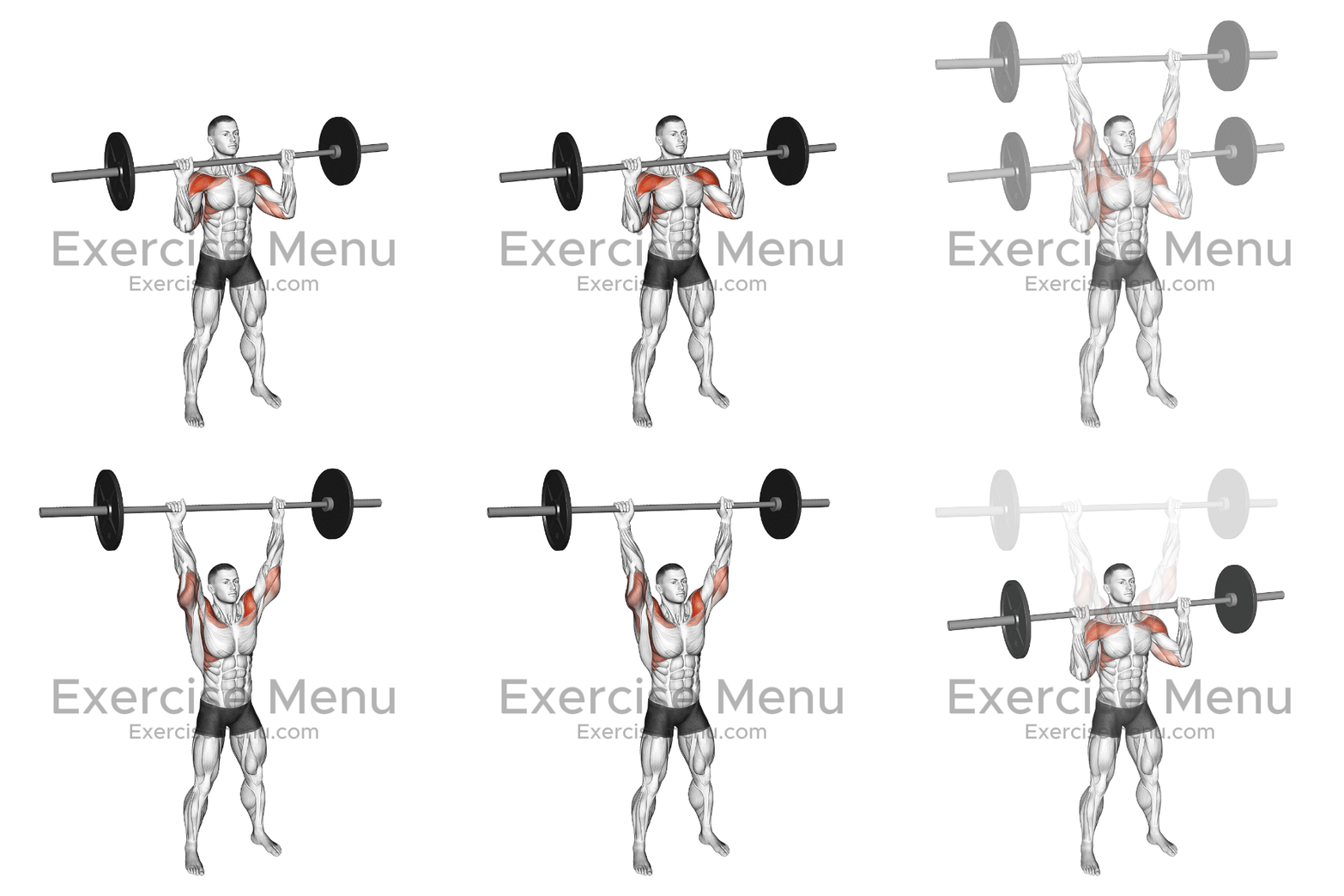 Barbell Overhead Press
Anterior Deltoid, Lateral Deltoid
Frequently Asked Questions
Is seated or standing shoulder press better?
Both build the shoulders. In a 2013 study by Saeterbakken and Fimland, lifters pressed about 10% more weight seated than standing with dumbbells, while standing presses produced higher rear-shoulder (posterior deltoid) activity.
How low should the dumbbells go?
Lower them to about ear level or slightly below, as far as your shoulders allow without pain.
Dumbbell or barbell shoulder press?
Dumbbells let each arm work independently and allow a more natural wrist position. A barbell usually allows heavier loads.
What bench angle should I use?
Upright or one notch back from upright. Leaning further back shifts more work to the upper chest.
Is the seated shoulder press good for beginners?
Yes. The back support makes it one of the easier overhead presses to learn, as long as you start with light dumbbells.
Sources
- Saeterbakken AH, Fimland MS. Effects of body position and loading modality on muscle activity and strength in shoulder presses. J Strength Cond Res. 2013;27(7):1824–1831. https://pubmed.ncbi.nlm.nih.gov/23096062/
If you have an existing injury or medical condition, check with your doctor before adding this exercise to your training.