
Barbell Overhead Press
A standing barbell press from the front of the shoulders to overhead that builds the delts, triceps, and trunk stability.
IntermediateCompoundBarbellShouldersPush
Last updated: November 4, 2026
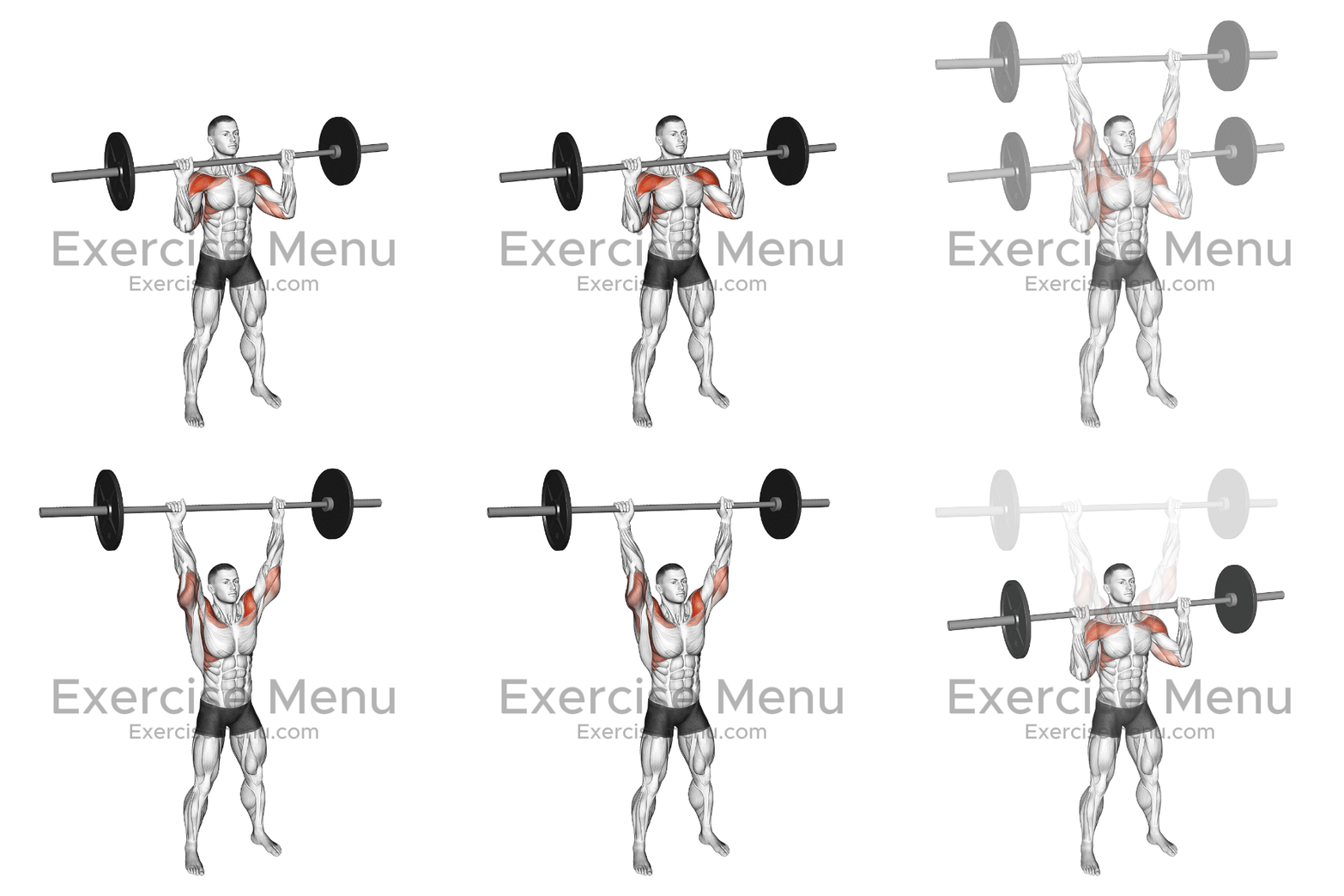
Exercise Profile
- Target Muscle
- Anterior Deltoid, Lateral Deltoid
- Body Part
- Shoulders
- Equipment
- Barbell, Squat Rack
- Category
- Compound
- Skill Level
- Intermediate
- Movement
- Vertical Push
- Also Known As
- Overhead Press, OHP, Military Press, Standing Shoulder Press
- Est. Calories
- 2–4 kcal per setEstimate for a 70 kg person, 30–60 second set
Quick Answer
The barbell overhead press is a standing compound lift that trains the front and side delts, triceps, and upper traps. Start with the bar on your front shoulders, brace your trunk and glutes, then press it straight overhead until your arms lock out. Start with 3 sets of 5 to 8 reps.
How to Do the Barbell Overhead Press
- 1
Set the bar in the rack
Set the bar at about upper-chest height. Grip it just outside shoulder-width with palms facing forward.
- 2
Unrack onto your shoulders
Step under the bar so it rests on your front shoulders and upper chest, elbows slightly in front of the bar. Step back and stand with feet about hip-width apart.
- 3
Brace your whole body
Squeeze your glutes, tighten your abs, and lock your knees so your body forms a stable column.
- 4
Press straight up
Press the bar straight up, moving your head back slightly to let it pass your face.
- 5
Finish over your mid-foot
Once the bar passes your forehead, move your head forward under the bar. Lock out your elbows with the bar over the middle of your feet.
- 6
Lower to your shoulders
Lower the bar under control back to your front shoulders, moving your head back again to clear your chin.
What Muscles Does the Barbell Overhead Press Work?
Primary
- Anterior Deltoidthe front of the shoulder, drives the bar upward.
- Lateral Deltoidthe side of the shoulder, assists as the arms rise overhead.
- Triceps Brachiistraighten the elbows to lock out the bar.
Secondary
- Upper Trapeziusrotates the shoulder blades upward for the bar to finish overhead.
- Serratus Anteriorrotates and stabilizes the shoulder blades.
- Abdominals and Obliqueskeep the torso from leaning back.
- Gluteus Maximuskeeps the hips locked so the press stays strict.
How Many Sets and Reps Should You Do?
| Goal | Sets | Reps | Rest |
|---|---|---|---|
| Muscle Growth | 3–4 | 6–10 | 2 min |
| Strength | 3–5 | 3–5 | 3–5 min |
| Endurance | 2–3 | 12–15 | 60–90 sec |
| Beginner | 3 | 5–8 | 2 min |
Common Mistakes That Reduce Results
✕
Leaning Back Too Far
Excessive backward lean turns the press into a standing incline press and stresses the lower back. Squeeze your glutes and keep your ribs down.
✕
Pressing the Bar Forward
A bar that drifts in front of the face is harder to control. Move your head out of the way so the bar travels straight up.
✕
Using the Legs
Bending the knees to drive the bar up turns it into a push press. Keep the legs straight for a strict press.
✕
Incomplete Lockout
Stopping with bent elbows or the bar in front of your head shortens the lift. Finish with the bar over your shoulders and mid-foot.
✕
Wrists Bent Back
Letting the bar roll back toward your fingers strains the wrists. Keep the bar low in your palm over your forearms.
Tips for Better Results
✓
Get Your Head Out of the Way
Moving the head back and then forward is what lets the bar travel in a straight line.
✓
Push Your Head Through at the Top
Finishing with your head slightly forward under the bar locks the shoulders into a strong overhead position.
✓
Start Light
Most people press much less than they bench. Add small amounts, such as 1–2.5 kg (2.5–5 lb) at a time.
✓
Use Fractional Plates if Progress Stalls
Small jumps in weight make it easier to keep progressing on a lift that moves slowly.
Modifications and Progressions
▼ Easier
Seated Dumbbell Shoulder Press
A back-supported bench and dumbbells reduce the balance and bracing demand.
▼ Easier
Landmine Press
Pressing one end of a barbell at an angle is often more comfortable for lifters with limited overhead mobility.
▲ Harder
Push Press
A short dip and drive with the legs lets you handle heavier loads and trains power.
▲ Harder
Pause Overhead Press
Pausing for 1–2 seconds just above the shoulders removes momentum from the start of each press.
Barbell Overhead Press Alternatives
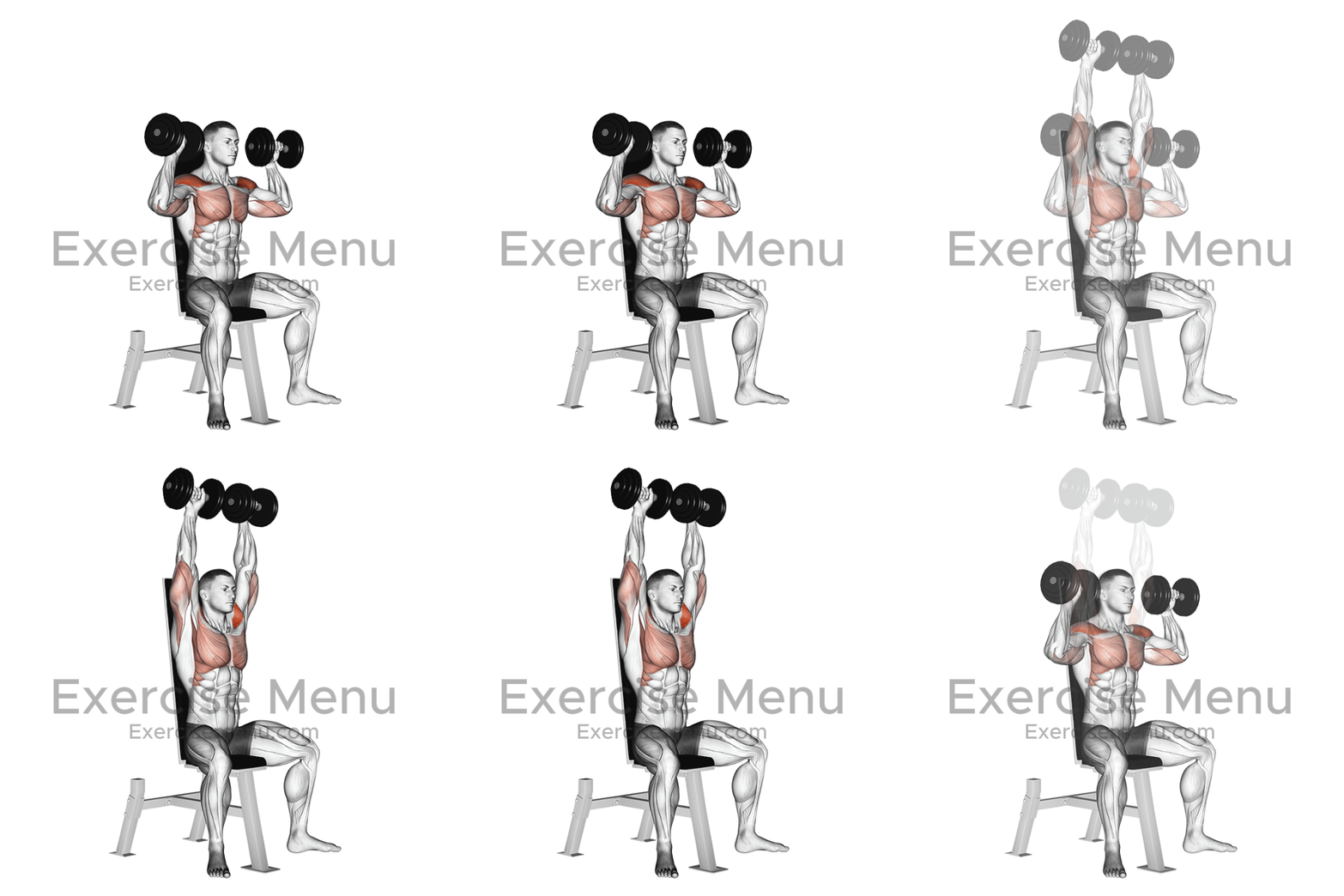 Dumbbell Seated Shoulder Press
Anterior Deltoid, Lateral Deltoid
Frequently Asked Questions
Is the overhead press the same as the military press?
The names are often used for the same lift. Some coaches use "military press" for a stricter version with the heels together.
Should I press standing or seated?
Standing presses train the trunk and legs to stabilize the load. Seated presses support the back and let you focus on the shoulders.
Is the overhead press bad for the shoulders?
Not for most healthy lifters using good form and sensible loads. People with existing shoulder pain should check with a clinician first.
How wide should my grip be?
Just outside shoulder-width for most lifters, so the forearms are close to vertical when the bar is on the shoulders.
Why is my overhead press so much weaker than my bench?
That is normal. The shoulders are smaller muscles than the chest, and pressing overhead also requires you to stabilize your whole body.
If you have an existing injury or medical condition, check with your doctor before adding this exercise to your training.