
Dumbbell Lunge
A forward step into a lunge with a dumbbell in each hand that trains the quads and glutes one leg at a time.
BeginnerCompoundDumbbellsQuadsGlutesLegs
Last updated: November 4, 2026
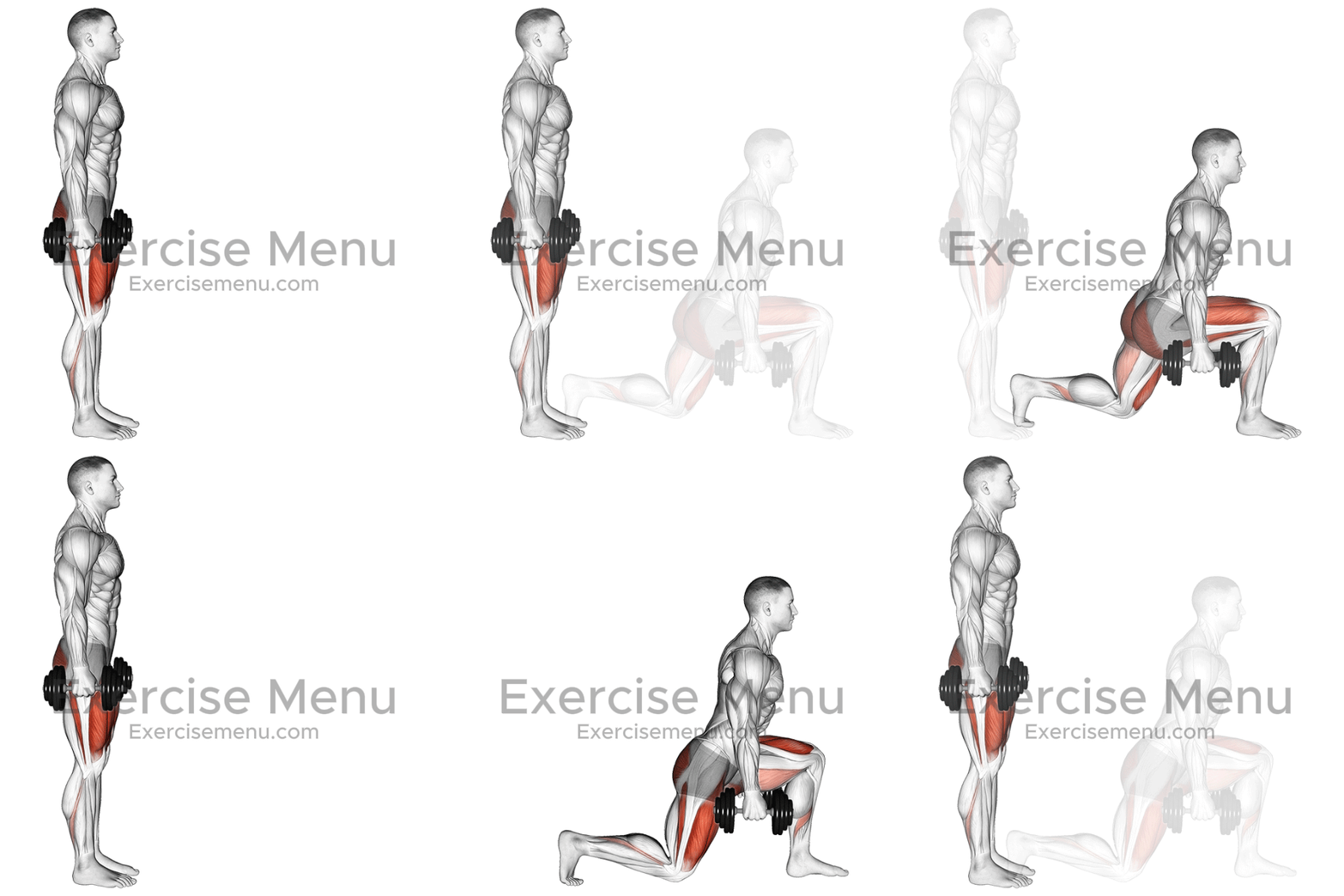
Exercise Profile
- Target Muscle
- Quadriceps, Gluteus Maximus
- Body Part
- Thighs, Hips
- Equipment
- Dumbbells
- Category
- Compound
- Skill Level
- Beginner
- Movement
- Lunge
- Also Known As
- Dumbbell Forward Lunge, Alternating Dumbbell Lunge
- Est. Calories
- 2–4 kcal per leg per setEstimate for a 70 kg person, 30–60 second set
Quick Answer
The dumbbell lunge is a single-leg exercise for the quads and glutes. Hold a dumbbell in each hand, step forward, and lower until both knees bend to about 90 degrees. Push through the front foot to return to standing, then switch legs. Use 3 sets of 8 to 12 reps per leg.
How to Do the Dumbbell Lunge
- 1
Stand tall with dumbbells
Stand with feet hip-width apart, holding a dumbbell in each hand at your sides with palms facing in.
- 2
Step forward
Take a long step forward with one leg, landing heel first, and keep your feet about hip-width apart for balance.
- 3
Lower straight down
Bend both knees and lower your body until your back knee is just above the floor. Your front knee should bend to about 90 degrees and stay in line with your toes.
- 4
Push back to the start
Drive through your front foot to push yourself back up and return to standing with feet together.
- 5
Switch legs
Repeat with the other leg. Keep your torso upright and the dumbbells hanging at your sides throughout.
What Muscles Does the Dumbbell Lunge Work?
Primary
- Quadricepsstraighten the front knee to push you back up.
- Gluteus Maximusextends the front hip, especially from the bottom of the lunge.
Secondary
- Adductor Magnusassists hip extension on the front leg.
- Hamstringshelp stabilize the hip and knee.
- Gluteus Mediuskeeps the front knee from caving in and the pelvis level.
- Calvesstabilize the ankle on the front and back foot.
- Forearm Flexorshold the dumbbells.
How Many Sets and Reps Should You Do?
| Goal | Sets | Reps | Rest |
|---|---|---|---|
| Muscle Growth | 3–4 | 8–12 per leg | 60–90 sec |
| Strength | 3–4 | 6–8 per leg | 2 min |
| Endurance | 2–3 | 15–20 per leg | 30–60 sec |
| Beginner | 2–3 | 8–10 per leg | 60–90 sec |
Common Mistakes That Reduce Results
✕
Step Too Short
A short step pushes the front knee far forward and lifts the heel. Step far enough that you can lower with your front heel planted.
✕
Feet in a Straight Line
Stepping as if on a tightrope makes you wobble. Keep your feet about hip-width apart, like on train tracks.
✕
Front Knee Caving In
Letting the knee collapse inward reduces control. Keep it pointing over your middle toes.
✕
Leaning Forward Too Much
Letting your chest fall forward shifts stress to the lower back. Keep your torso upright.
✕
Slamming the Back Knee
Dropping the back knee onto the floor is hard on the joint. Lower under control and stop just above the ground.
Tips for Better Results
✓
Push Through the Front Heel
Driving through the whole front foot, not just the toes, keeps the heel planted and the glutes involved.
✓
Brace Your Core
Tight abs help you stay balanced when stepping forward and back.
✓
Start with Body Weight
Learn the movement without dumbbells first, then add weight once your balance is solid.
✓
Use Straps or Lighter Weights if Grip Fails
If your grip gives out before your legs, use lighter dumbbells, straps, or a goblet hold.
Modifications and Progressions
▼ Easier
Bodyweight Reverse Lunge
Stepping backward instead of forward is often easier to balance, and many people find it more comfortable on the knees.
▼ Easier
Dumbbell Split Squat
Keeping both feet in place and moving only up and down removes the stepping and balance challenge.
▲ Harder
Dumbbell Walking Lunge
Stepping forward into the next lunge instead of returning to the start adds a balance and conditioning challenge.
▲ Harder
Barbell Bulgarian Split Squat
Elevating the rear foot on a bench puts more load on the front leg and increases the range of motion.
Dumbbell Lunge Alternatives
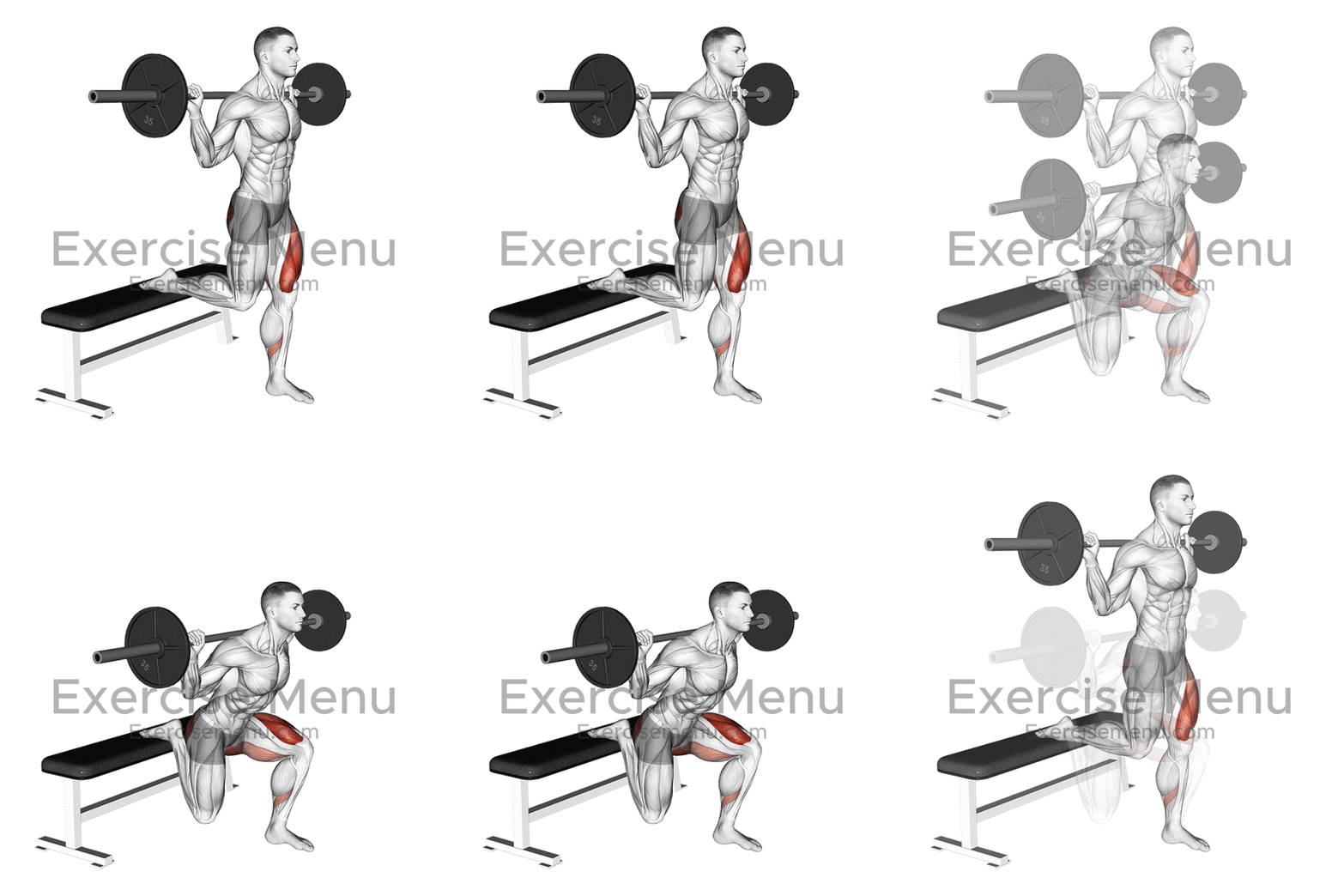 Barbell Bulgarian Split Squat
Quadriceps, Gluteus Maximus
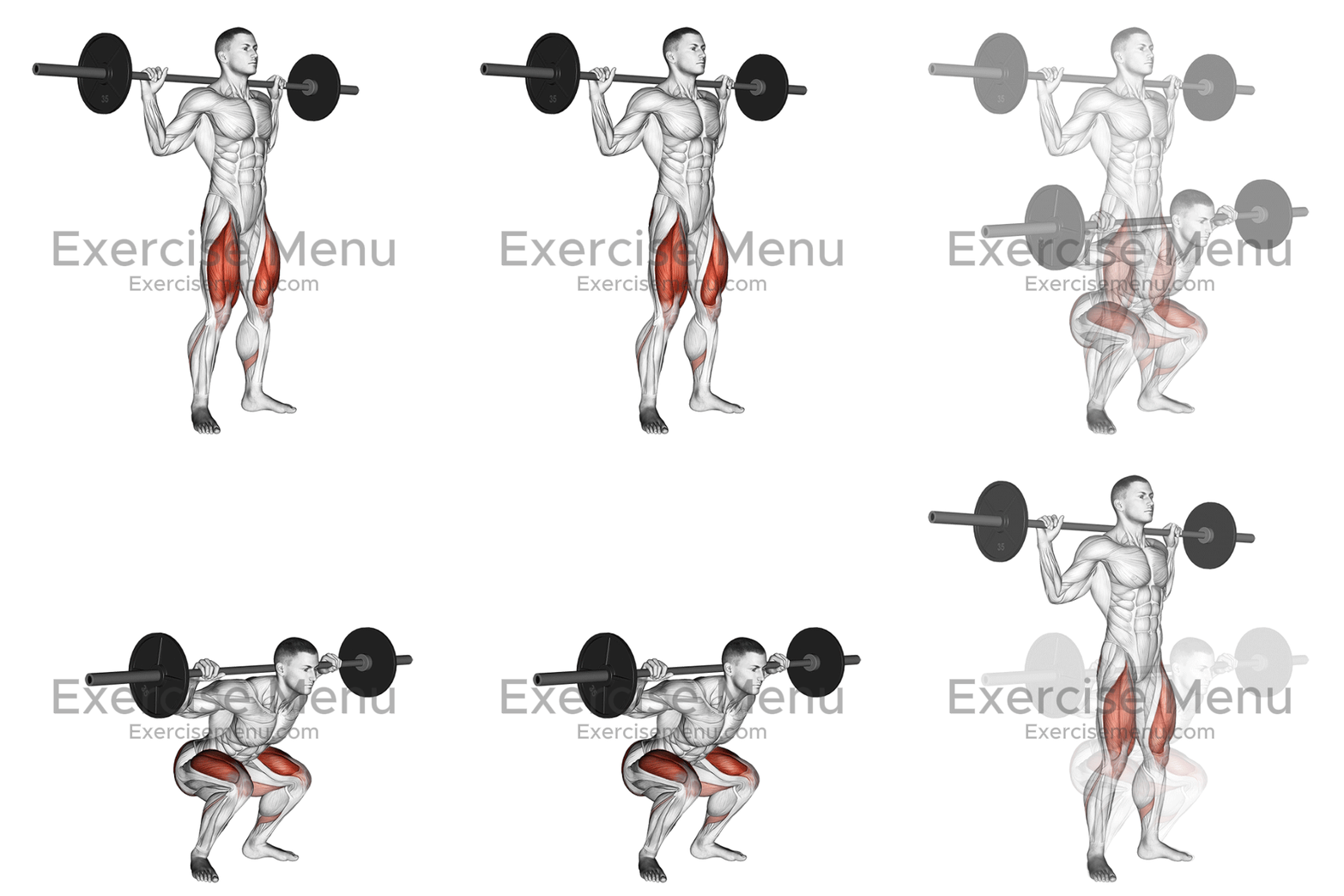 Barbell Back Squat
Quadriceps, Gluteus Maximus
Frequently Asked Questions
Is a forward lunge the same as a walking lunge?
No. In a forward lunge you push back to the starting spot after each rep. In a walking lunge you step through and keep moving forward.
Should my knee go past my toes?
A little is fine for most people. What matters is that your front heel stays down and your knee tracks in line with your toes.
Are lunges better than squats?
They train similar muscles in a different way. Lunges work one leg at a time and challenge balance, so they work well alongside squats.
How far should I step?
Far enough that both knees can bend to about 90 degrees at the bottom with your front heel planted.
Should I alternate legs or do all reps on one side?
Both are fine. Alternating is common. Finishing all reps on one leg first makes the set harder for that leg.
Push Pull Legs Workout Plan — add when the plan page is published
Legs B (the plan says 'Walking Lunges' — rename it to 'Dumbbell Lunge' in the plan, or buy a walking-lunge GIF)
If you have an existing injury or medical condition, check with your doctor before adding this exercise to your training.