
Barbell Seated Calf Raise
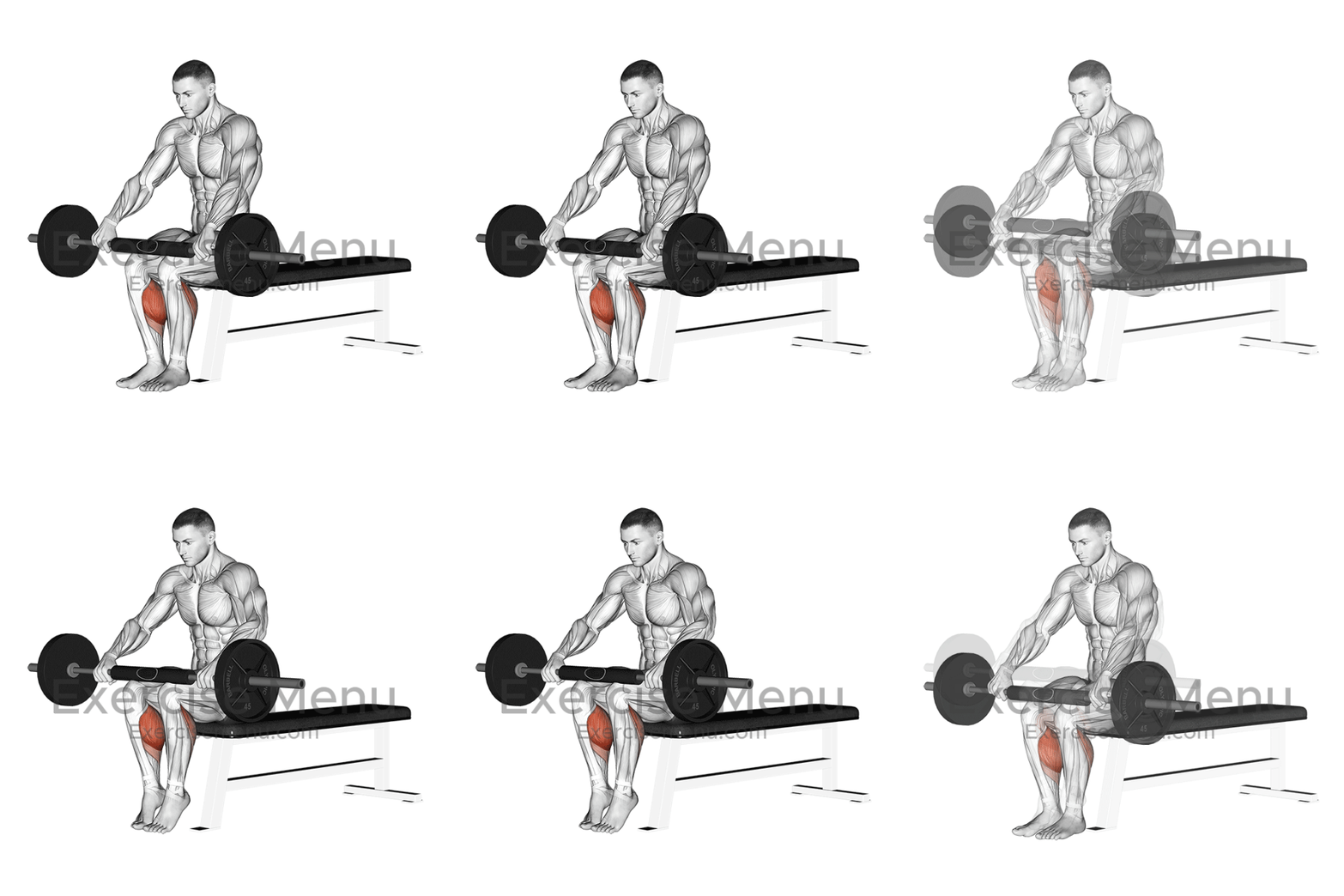
A seated calf raise with a barbell across the thighs and knees bent to about 90 degrees, which shifts the work toward the soleus.
BeginnerIsolationBarbellCalvesLower Legs
Last updated: November 4, 2026
Exercise Profile
- Target Muscle
- Soleus
- Body Part
- Calves
- Equipment
- Barbell, Flat Bench, Barbell Pad, Step or Plate (optional)
- Category
- Isolation
- Skill Level
- Beginner
- Movement
- Plantar Flexion
- Also Known As
- Seated Barbell Calf Raise, Bench Calf Raise
- Est. Calories
- 2–4 kcal per setEstimate for a 70 kg person, 30–60 second set
Quick Answer
The barbell seated calf raise is a calf exercise done sitting with bent knees and a padded barbell across your lower thighs. The bent knee reduces the gastrocnemius's role, so the soleus does more of the work. Raise your heels as high as you can, pause, then lower slowly. Use 3 to 4 sets of 12 to 20 reps.
How to Do the Barbell Seated Calf Raise
- 1
Sit on the bench
Sit on the end of a flat bench with your knees bent to about 90 degrees and feet about hip-width apart.
- 2
Position the bar
Rest a padded barbell across your lower thighs, just above the knees, and hold it in place with both hands.
- 3
Set your feet
Place your feet flat on the floor, or put the balls of your feet on a step or weight plate so your heels can drop lower for a bigger stretch.
- 4
Raise your heels
Push through the balls of your feet to lift your heels as high as possible. Pause for a second at the top.
- 5
Lower slowly
Lower your heels over 2–3 seconds to the bottom, or below the step if you are using one, and hold the stretch briefly before the next rep.
What Muscles Does the Barbell Seated Calf Raise Work?
Primary
- Soleusthe deep calf muscle that crosses only the ankle and does most of the work when the knee is bent.
Secondary
- Gastrocnemiusthe upper calf muscle, contributes less because the bent knee puts it in a shortened position.
- Tibialis Posteriorassists plantar flexion and stabilizes the ankle.
- Peroneus Longus and Brevisstabilize the ankle on the outside of the lower leg.
How Many Sets and Reps Should You Do?
| Goal | Sets | Reps | Rest |
|---|---|---|---|
| Muscle Growth | 3–4 | 12–20 | 60 sec |
| Strength | 3–4 | 8–12 | 90 sec |
| Endurance | 2–3 | 20–30 | 30–45 sec |
| Beginner | 2–3 | 15–20 | 60 sec |
Common Mistakes That Reduce Results
✕
Bouncing Through Short Reps
Fast, short reps rely on the elastic recoil of the Achilles tendon instead of the calf muscles. Pause at the bottom and top of each rep.
✕
No Pad on the Bar
A bare bar on the thighs is painful and limits the load you can use. Use a bar pad or folded towel.
✕
Using Too Little Range
Stopping halfway up or not lowering fully cuts the work. Move through the biggest range your ankles allow.
✕
Pushing with the Hands
Lifting the bar with your arms takes load off the calves. Use your hands only to keep the bar in place.
✕
Rolling Onto the Outer Foot
Letting the ankles roll outward shifts pressure to the little toes. Press evenly through the big toe and the ball of the foot.
Tips for Better Results
✓
Make Standing Calf Raises Your Main Calf Exercise
In a 12-week study by Kinoshita and colleagues (2023), standing raises grew the gastrocnemius by about 9–12%, while seated raises grew it by only about 1–2%. Soleus growth was similar with both (about 2–3%). Use the seated version as an extra calf exercise, or when standing under a bar is not an option.
✓
Know Why the Knee Angle Matters
The gastrocnemius crosses the knee, so bending the knee reduces its contribution. A 1995 study by Cresswell and colleagues in Experimental Brain Research found gastrocnemius activity dropped as the knee bent, while soleus activity did not change.
✓
Use a Step for More Range
Placing the balls of your feet on a plate or step lets your heels drop below the toes for a deeper stretch.
✓
Use a Machine if Available
A seated calf raise machine does the same job with a more comfortable setup and easier loading.
Modifications and Progressions
▼ Easier
Bodyweight Seated Calf Raise
Doing the movement without a bar, or with light dumbbells on the knees, lets you learn the full range first.
▼ Easier
Dumbbell Seated Calf Raise
Resting dumbbells on your thighs is easier to set up and lets you use lighter loads.
▲ Harder
Seated Calf Raise Machine
The machine pad lets you load heavier than you can balance on your thighs with a barbell.
▲ Harder
Single-Leg Seated Calf Raise
Working one calf at a time puts more load on each side and shows any difference between legs.
Barbell Seated Calf Raise Alternatives
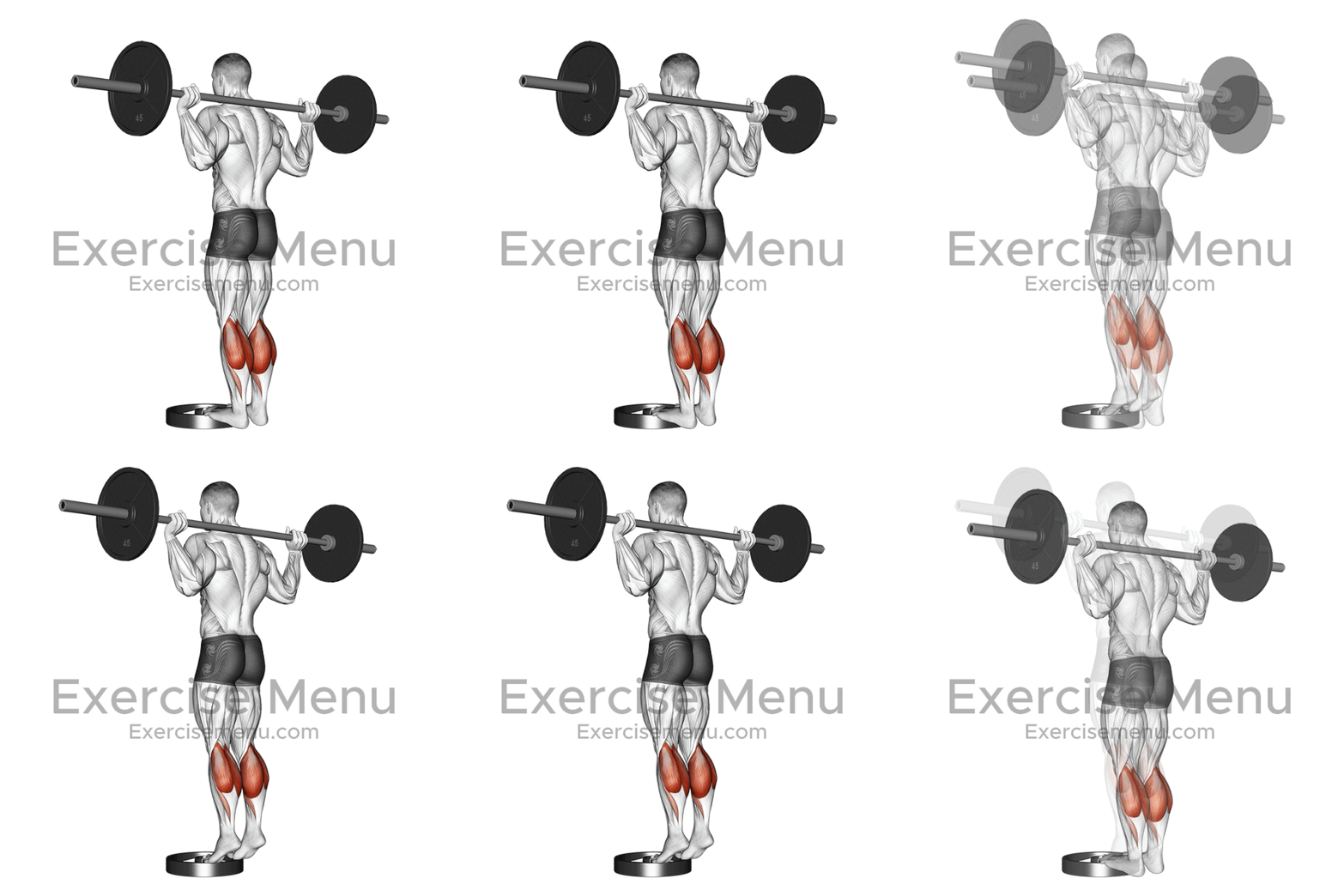 Barbell Standing Calf Raise
Gastrocnemius
Frequently Asked Questions
What is the difference between seated and standing calf raises?
Seated raises use bent knees, which reduces the gastrocnemius's role. Standing raises keep the knees straight and grew the calves more overall in a 2023 study by Kinoshita and colleagues.
Do I need a block under my feet?
It is not required, but a block or plate under the balls of your feet lets your heels drop lower and increases the range of motion.
How heavy should the barbell be?
Start with a load you can move through a full range for 15–20 controlled reps. Add weight once you can complete every rep with a pause at the top and bottom.
Why are my calves sore for days?
Soreness is common after a new exercise, especially one that loads the muscle in a stretched position. It usually eases after the first few sessions.
Can I do seated calf raises at home?
Yes. Sit on a chair or bench and place dumbbells or a loaded backpack on your thighs.
Sources
- Kinoshita M, et al. Triceps surae muscle hypertrophy is greater after standing versus seated calf-raise training. Front Physiol. 2023;14:1272106. https://www.frontiersin.org/journals/physiology/articles/10.3389/fphys.2023.1272106/full
- Cresswell AG, Löscher WN, Thorstensson A. Influence of gastrocnemius muscle length on triceps surae torque development and electromyographic activity in man. Exp Brain Res. 1995;105(2):283–290. https://pubmed.ncbi.nlm.nih.gov/7498381/
If you have an existing injury or medical condition, check with your doctor before adding this exercise to your training.