

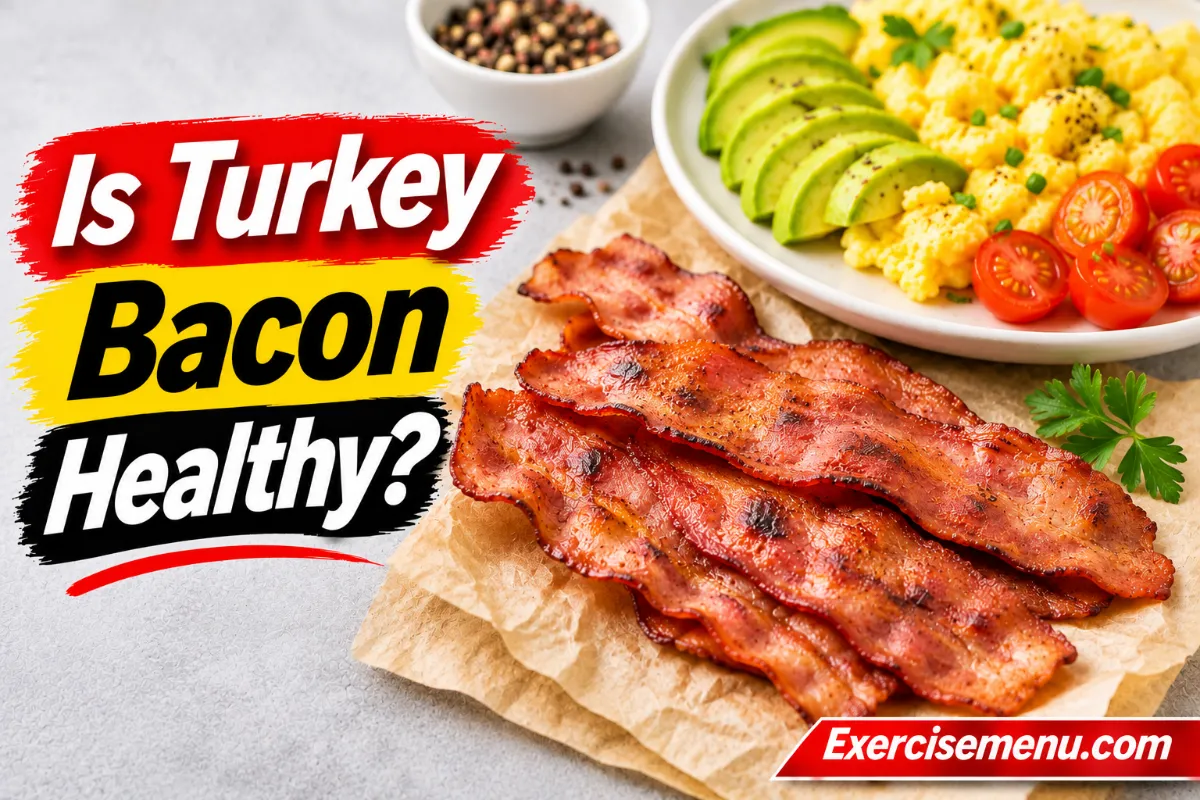
Quick Answer: Turkey bacon is leaner than pork bacon, with about a third fewer calories and nearly half the saturated fat per slice, but it isn’t a health food. Sodium is the same or higher, protein is lower, and it’s still a processed meat. Treat it as an occasional swap, not a daily staple.
Turkey bacon wears a health halo it only half earns. The lean part is real: fewer calories, less total fat, and less saturated fat than pork bacon.
What most people miss is that the salt doesn’t change, the protein drops, and it’s still a cured, processed meat. Here’s what the numbers show, how the two bacons compare, and how to pick and cook a better one.
Is turkey bacon healthy?
Leaner, yes. Healthy, not quite. Swapping pork bacon for turkey does cut calories and saturated fat, and that is a real gain if bacon is a regular part of your week.
What the swap doesn’t change is the salt, and that catches most people out. Turkey bacon carries as much sodium as pork bacon, delivers less protein, and is cured and processed the same way. Among high-protein foods, it belongs in the flavor column rather than the protein column. The American Heart Association does support the swap for heart health, but only for low-sodium, nitrate-free versions, which is a narrower endorsement than the health halo suggests.
Turkey bacon nutrition facts
Figures are for one cooked slice, based on USDA FoodData Central. Brands vary a lot, so the sodium range matters as much as the average.
| Nutrient | Per slice (~8 g) | Per 100 g |
| Calories | 30 | 368 |
| Protein | 2.4 g | 29.5 g |
| Total fat | 2.1 g | 25.9 g |
| Saturated fat | 0.6 g | 6.9 g |
| Sodium | 164 mg | 2,020 mg |
| Carbs / sugar | 0.3 g | 4.2 g |
| Cholesterol | 12 mg | 150 mg |
Sodium across brands runs from about 150 mg to 300 mg a slice, and some products reach 570 mg per ounce. Turkey bacon also supplies small amounts of selenium, niacin, B12, phosphorus, and zinc, though a slice is too small to count as a meaningful source of any of them.
Turkey bacon vs pork bacon
This is the comparison people come for, and it holds three surprises.
| Per 1 cooked slice | Turkey bacon | Pork bacon |
| Calories | 30 | 43 |
| Protein | 2.4 g | 3.6 g |
| Total fat | 2.1 g | 3.1 g |
| Saturated fat | 0.6 g | 1.1 g |
| Sodium | 164 mg | 162 mg |
| Sugar | 0.3 g | 0.04 g |
Sodium is a wash. The single nutrient most people are trying to avoid in bacon is identical in both. At larger servings some turkey brands land higher than pork.
Turkey bacon has less protein, not more. It gives about a third less per slice, the opposite of what the name suggests.
Protein per calorie is the same. Turkey bacon sits near 8 grams per 100 calories, pork bacon near 8.4. Neither is a protein food, and switching gains you nothing on that front.
Where turkey bacon does win is calories and saturated fat, which is a real benefit if bacon is a regular part of your week. It’s also white meat rather than red, and it works for anyone avoiding pork.
What is turkey bacon made of?
Turkey bacon isn’t a cut of meat. It’s a formed product: light and dark turkey meat is chopped or ground, mixed with salt, sugar, seasonings, smoke flavor, and preservatives, then pressed into strips that look like bacon. Some brands stripe light and dark meat to mimic the fat lines of pork belly.
A few premium products are made from whole cuts such as turkey thigh, which means less reforming and a shorter ingredient list. Those are the better buy when you can find them.
One detail worth checking if you avoid pork for religious or personal reasons: a small number of turkey bacon products include other meats, and some use pork-based ingredients. The front of the pack won’t tell you, so read the ingredient list.
The real concerns: sodium, nitrates, and processing
Sodium is the main one. Two or three slices can pass 500 mg, and the Dietary Guidelines cap sodium at 2,300 mg a day, with the American Heart Association suggesting 1,500 mg as the better target for most adults. A salty brand eaten daily makes that difficult.
Nitrates and nitrites are added to cure the meat and hold its color. Under high heat they can form nitrosamines, and a 2023 review of the research links higher dietary nitrite and N-nitroso compound intake to greater gastrointestinal cancer risk. Packages labeled “uncured” or “no nitrates added” usually rely on celery powder, which is itself a concentrated nitrate source, so that label is closer to marketing than to a nitrate-free product.
Processing is the broader point. The World Health Organization classifies processed meat as a Group 1 carcinogen, with its cancer agency putting the increase at roughly 18% in colorectal cancer risk for every 50 grams eaten daily, and turkey-based products fall inside that definition. Fifty grams is about six slices a day, so frequency matters far more than any single rasher.
Added sugar is the quiet one. Because turkey has less fat than pork belly, manufacturers often add sugar to restore flavor and browning, so turkey bacon can carry more sugar than the pork version it replaced.
How to choose and cook a better turkey bacon
The gap between brands is wider than the gap between turkey and pork, so the label does most of the work:
- Look for under about 300 mg of sodium per two slices, and lower if you can find it.
- Keep the ingredient list short: turkey, water, salt, seasonings, and little else.
- Skip added sugar where a no-sugar-added version exists.
- Check for pork-based ingredients or casings if you avoid pork.
- Bake it on a rack or microwave it so the fat drains away instead of frying the strips in it.
- Don’t char it. Heavy browning is where nitrosamines form, so cook to crisp, not black.
- Drain on paper towel and skip extra salt or oil in the pan.
- Pair it with potassium-rich foods such as avocado, spinach, or banana, which help blunt sodium’s effect on blood pressure.
Better options if you want the protein
When protein is the goal, these beat turkey bacon outright. Three ounces of roasted turkey breast gives about 125 calories and 25.6 grams of protein with barely any saturated fat, roughly ten times the protein of a slice of turkey bacon for a fraction of the sodium. Chicken breast and canned chicken do the same job.
Canadian bacon is another option: it’s cut from pork loin rather than belly, so it’s much leaner than regular bacon, though still cured and salted. Plant-based strips made from tempeh or soy are a further route, though sodium and additives vary there as widely as they do in the meat versions. The full ranking sits in the high-protein foods guide.
A practical middle ground is to treat turkey bacon the way you’d treat a seasoning. A slice crumbled over a salad or into eggs gives you the smoky, salty hit without building a meal around processed meat.
Frequently Asked Questions
Is turkey bacon keto or low-carb friendly?
Mostly yes. A slice carries well under a gram of carbs, which fits keto comfortably. The catch is sugar-sweetened brands, where a few slices can add up, so check the label on flavored or maple varieties.
Can you eat turkey bacon while pregnant?
Yes, if it’s cooked hot. foodsafety.gov advises pregnant people to heat processed meats until steaming to kill any Listeria, and turkey bacon cooked until crisp clears that easily. The sodium is the bigger reason to keep portions small.
Is turkey bacon precooked, or do you have to cook it?
Most supermarket turkey bacon is fully cooked during processing and only needs heating through, but some fresh varieties are raw. The package states which, and raw turkey products should reach 165°F (74°C).
How should you store turkey bacon?
Keep unopened packs refrigerated until the use-by date. Once opened, seal and use within about seven days, or freeze for up to a month for the best texture.
Is turkey bacon okay if you have high cholesterol?
In small amounts. It has less saturated fat than pork bacon, which is the fat that raises LDL, but it’s still a salted, processed meat, so it fits better as an occasional garnish than a regular breakfast.
Is turkey bacon suitable for people with diabetes?
Its near-zero carbs make it easy to fit, but the sodium and processed-meat link to heart risk matter more here, since heart disease often travels with diabetes. Choose a low-sodium version, keep it occasional, and follow your provider’s guidance.
Disclaimer: Turkey bacon is high in sodium. If you have high blood pressure, heart, or kidney concerns, choose a reduced-sodium variety and keep servings small.
