

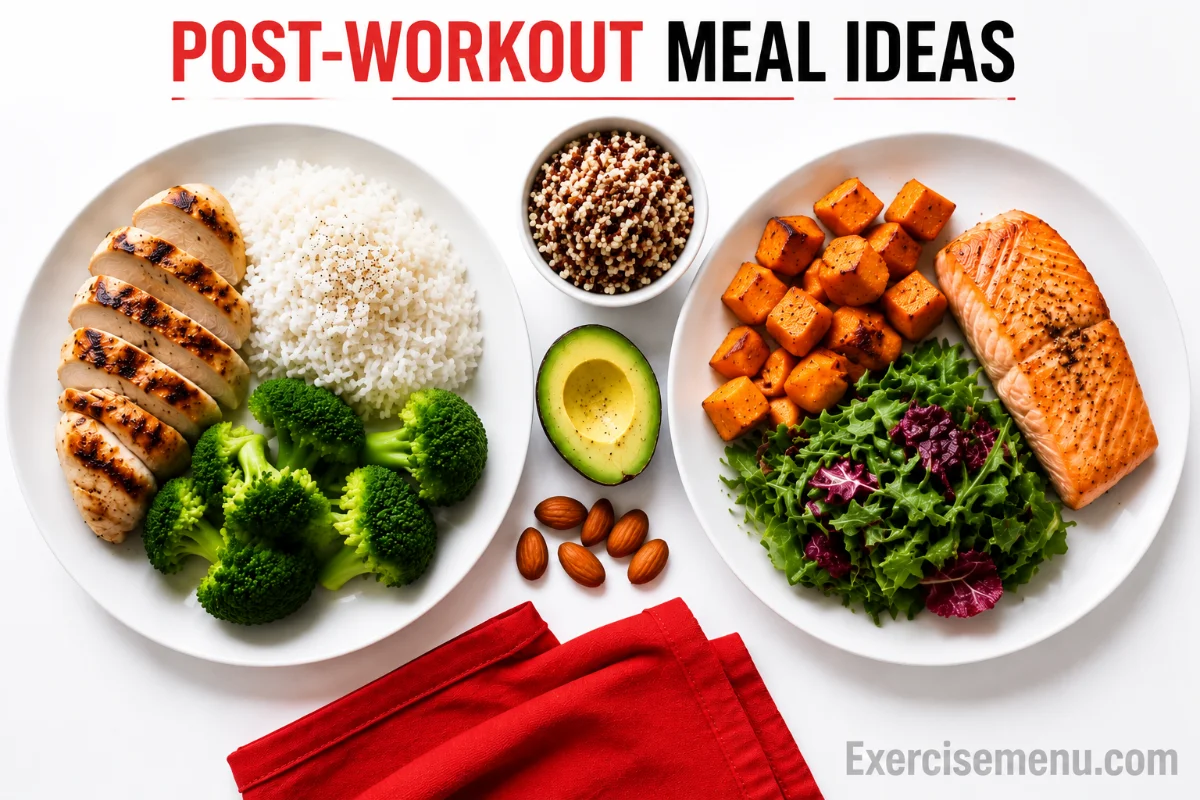
The best post-workout meals combine 30–40g of protein with 40–60g of carbohydrates and a source of healthy fats — scaled to your training intensity. A light session needs roughly 400 calories; a heavy leg day needs closer to 700. These 12 post-workout meal ideas are organized by that intensity so you eat the right amount for the work you did.
Most post-workout meal guides list individual foods — chicken, rice, sweet potatoes — without assembling them into actual meals with portions and macros. That leaves you knowing what to eat but not how much or in what combination.
The International Society of Sports Nutrition recommends 20–40g of protein per meal, consumed every 3–4 hours, with total daily intake of 1.4–2.0g per kilogram of body weight for active adults. These 12 meals hit those targets as complete plates — protein, carbs, fats, and micronutrients — ready to eat after your workout. For lighter options under 400 calories, see our guide on post-workout snacks for muscle gain.
How Do You Build a Post-Workout Meal That Works?
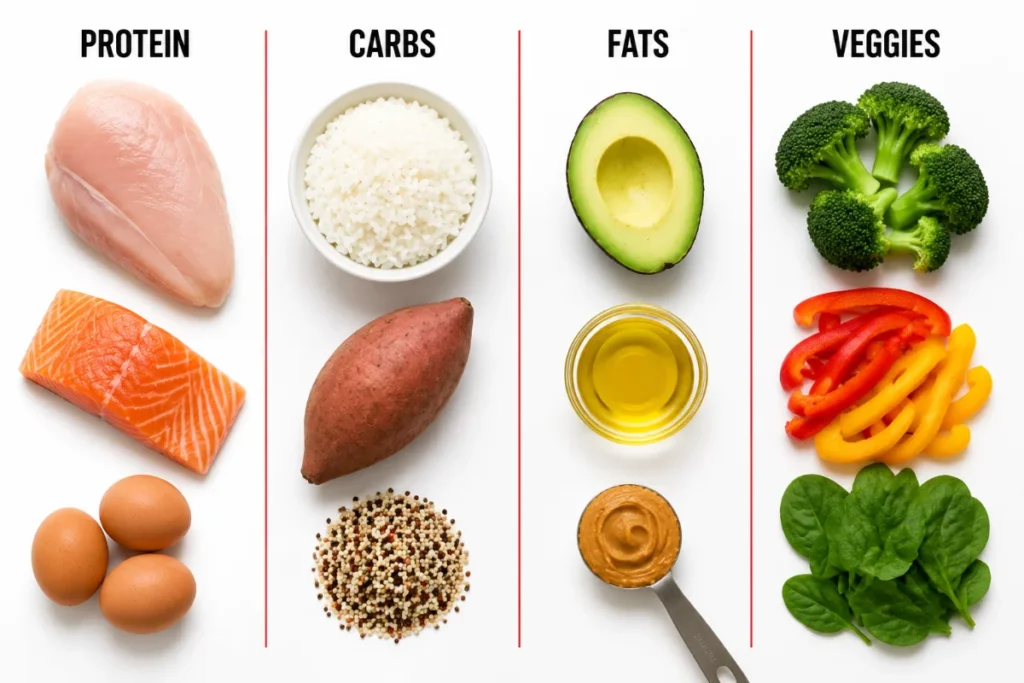
Every effective post-workout meal follows the same formula: one lean protein source (30–40g), one carbohydrate source (40–60g), one fat source (10–15g), and one vegetable or micronutrient booster. Once you know the formula, you stop needing recipes entirely.
The Post-Workout Meal Builder
- Pick 1 Protein (30–40g): Chicken breast (150g), salmon fillet (170g), lean ground beef (150g), 4 eggs, tempeh (200g), or Greek yogurt (300g)
- Pick 1 Carb (40–60g): White rice (1 cup cooked), sweet potato (200g), quinoa (1 cup), whole grain pasta (100g dry), or 2 slices whole grain bread
- Pick 1 Fat (10–15g): Half an avocado, 1 tbsp olive oil, 20g almonds, or 1 tbsp peanut butter
- Pick 1 Veggie/Booster: Spinach, broccoli, bell peppers, tomatoes, or mixed greens — for fiber, vitamins, and anti-inflammatory micronutrients
This formula produces a meal between 450–650 calories with roughly 30–40g protein, 45–60g carbs, and 12–18g fat. Adjust portion sizes up or down based on the intensity tiers below.
A 2019 review in Applied Physiology, Nutrition, and Metabolism found that whole-food meals provide a “food matrix” of vitamins, minerals, fiber, and bioactive compounds that protein supplements alone do not replicate. Complete meals using the formula above deliver this food matrix at every sitting — something a protein shake never will.
What Are the Best Post-Workout Meal Ideas by Training Intensity?
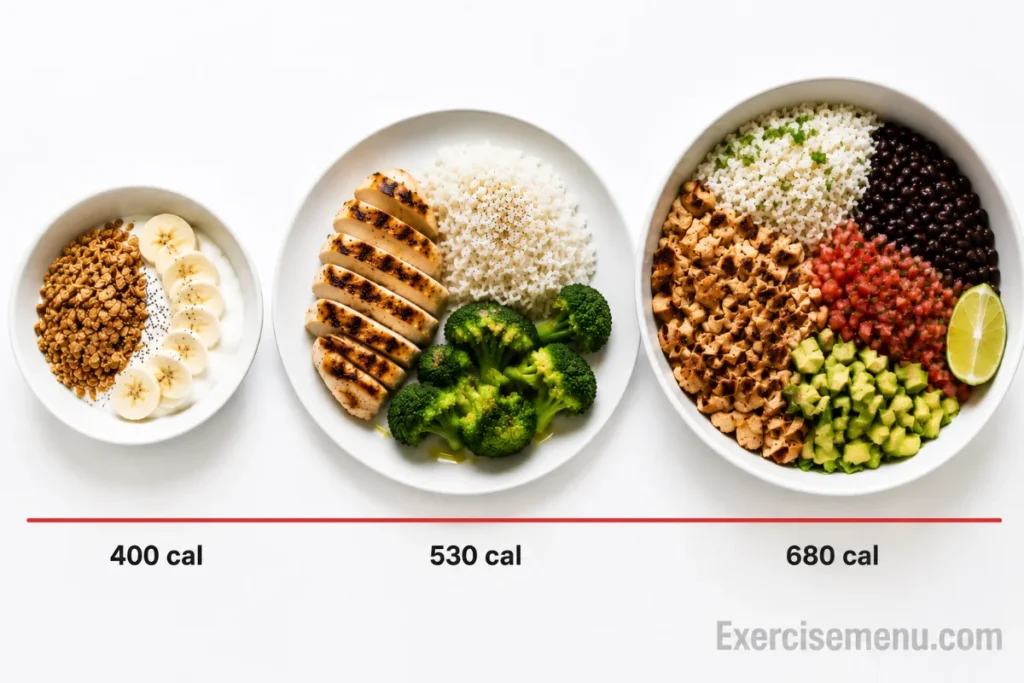
Light sessions need 400–450 calories, moderate sessions need 500–550, and heavy sessions need 600–700. These 12 meals are split into those three tiers — because a 30-minute arm session and a 90-minute leg day create very different recovery demands.
Light Sessions — 400–450 Calories (Upper Body, Short Sessions)
1. Greek yogurt power bowl. 300g Greek yogurt, a handful of granola, sliced banana, and a drizzle of honey. 32g protein, 48g carbs, 8g fat, 410 cal. No cooking. Ready in 2 minutes.
2. Tuna salad whole grain wrap. One tuna packet mixed with a squeeze of lemon and black pepper, wrapped in a whole grain tortilla with spinach and sliced cucumber. 30g protein, 38g carbs, 10g fat, 400 cal. Portable — works at your desk or in the car.
3. Egg and avocado toast. Three scrambled eggs on two slices of whole grain toast with a quarter avocado and a pinch of chili flakes. 28g protein, 40g carbs, 18g fat, 440 cal. The healthy fats from avocado support hormone production needed for muscle repair.
4. Cottage cheese and fruit plate. 1 cup cottage cheese, sliced pear, a handful of walnuts, and a drizzle of honey. 30g protein, 35g carbs, 14g fat, 400 cal. Casein-dominant protein makes this a strong option after evening sessions — amino acid delivery continues while you sleep.
Moderate Sessions — 500–550 Calories (Full-Body, Moderate Volume)
5. Grilled chicken + white rice + broccoli. 150g chicken breast, 1 cup cooked white rice, and a cup of steamed broccoli with a drizzle of olive oil. 38g protein, 52g carbs, 12g fat, 520 cal. White rice digests faster than brown, which speeds up glycogen replenishment.
6. Salmon + sweet potato + mixed greens. 170g baked salmon fillet, one medium baked sweet potato, and a side salad with olive oil dressing. 36g protein, 48g carbs, 16g fat, 540 cal. Salmon delivers 1.5–2g of omega-3 fatty acids per serving, which reduces exercise-induced inflammation and muscle soreness over time.
7. Turkey meatballs + whole grain pasta. 150g lean ground turkey formed into meatballs, served over 100g whole grain pasta with marinara sauce and a side of sautéed spinach. 35g protein, 55g carbs, 14g fat, 530 cal. The spinach adds iron and magnesium — two minerals depleted during heavy training.
8. Tofu stir-fry + quinoa (vegan). 200g firm tofu, stir-fried with bell peppers, snap peas, and broccoli in sesame oil and soy sauce. Served over 1 cup cooked quinoa. 32g protein, 50g carbs, 16g fat, 500 cal. Quinoa is a complete protein — it contains all nine essential amino acids, unlike most plant-based carb sources. Combined with tofu, this meal hits roughly 2.3g leucine. Add a tablespoon of hemp seeds to push past the 2.5g threshold.
Heavy Sessions — 600–700 Calories (Leg Day, High Volume, Compound Lifts)
9. Lean beef + rice + roasted vegetables. 170g lean ground beef (93% lean), 1.5 cups cooked white rice, and a mix of roasted bell peppers, zucchini, and onion with olive oil. 40g protein, 65g carbs, 18g fat, 650 cal. Beef provides the highest leucine density of any whole food — roughly 3.5g per 170g serving. After a heavy session involving multiple muscle groups, research shows that 40g of protein stimulates greater muscle protein synthesis than 20g, making this meal well-calibrated for high-volume days.
10. Chicken burrito bowl. 150g seasoned chicken thigh, 1 cup rice, black beans (half cup), salsa, a quarter avocado, and a squeeze of lime. 42g protein, 68g carbs, 16g fat, 680 cal. Black beans add 7g of fiber per half cup, which slows digestion and sustains energy levels through the evening. Leg day and heavy compound sessions create the largest glycogen deficit, which is why this meal sits at the top of the calorie range.
11. Salmon poke bowl. 170g raw salmon (sushi grade), 1.5 cups sushi rice, edamame, cucumber, avocado, sesame seeds, and soy sauce. 38g protein, 70g carbs, 18g fat, 660 cal. The combination of salmon omega-3s and edamame delivers both anti-inflammatory fats and plant-based protein in a single bowl.
12. Tempeh + sweet potato + peanut sauce (vegan). 200g baked tempeh with peanut sauce, one large baked sweet potato, and a side of steamed broccoli. 35g protein, 62g carbs, 20g fat, 620 cal. Tempeh is fermented, which improves protein digestibility compared to unfermented soy. The peanut sauce adds calories without excess volume — a practical solution when appetite drops after high-volume training.
How Do You Meal Prep Post-Workout Meals for the Week?
Batch cook three components on Sunday — a protein, a carb, and a roasted vegetable — and assemble different combinations throughout the week. This takes roughly 90 minutes and produces 5–6 meals.
- Protein batch: Grill 750g chicken breast or bake 800g salmon. Slice and store in airtight containers. Keeps 4 days refrigerated.
- Carb batch: Cook a large pot of white rice (3 cups dry) or bake 5 sweet potatoes. Rice keeps 5 days refrigerated; sweet potatoes keep 4.
- Veggie batch: Roast a sheet pan of broccoli, bell peppers, and zucchini with olive oil and salt. Keeps 4 days.
- Assembly: Combine one portion of each into a container. Microwave 2–3 minutes. Add a fresh element — avocado, salsa, lemon — at the time of eating for texture.
Budget note: buying protein in bulk (whole chicken thighs vs. pre-cut breasts, frozen salmon vs. fresh) can cut weekly meal prep costs by 30–40%. Frozen vegetables are nutritionally equivalent to fresh and cost roughly half the price.
What Post-Workout Meal Mistakes Slow Down Recovery?
Three meal-level errors that slow down muscle recovery and glycogen restoration:
- Eating the same-sized meal regardless of session intensity. A 400-calorie meal after a heavy leg day leaves a glycogen deficit that carries into your next workout. Match your calories to what you burned — light sessions get light meals, heavy sessions get heavy ones.
- Too much fat, not enough carbs. Fat slows gastric emptying. A meal with 30g+ of fat delays protein and carbohydrate absorption during the window when your muscles need them most. Keep fat at 10–18g and prioritize carbs alongside protein.
- Skipping vegetables entirely. Protein and carbs handle the macronutrient side of recovery. But micronutrients — magnesium, iron, vitamin C, potassium — support muscle contraction, oxygen delivery, and connective tissue repair. A plate of chicken and rice without vegetables misses half the recovery equation.
Frequently Asked Questions
Can I eat the same post-workout meal every day?
Yes, as long as it hits 30–40g protein with adequate carbs. But rotating between 2–3 meals across the week provides a wider range of micronutrients — different vegetables and protein sources cover different vitamin and mineral gaps.
What if I’m not hungry after a workout?
Start with a liquid-based option — a smoothie with Greek yogurt, banana, and oats delivers 30g protein without requiring appetite. Alternatively, eat a smaller portion (half a meal) within 60 minutes and follow up with the rest within 2 hours. Skipping entirely delays glycogen restoration and extends soreness into the next session.
Is it bad to eat a big post-workout meal before bed?
No. A meta-analysis in the British Journal of Nutrition found that pre-sleep protein intake of 30–40g supports overnight muscle protein synthesis without negative effects on sleep quality or fat gain. Casein-rich options like cottage cheese are particularly effective before bed.
Do post-workout meals change for women?
The macro targets stay similar — 25–35g protein, 40–50g carbs. Research on female athletes suggests the recovery window may be slightly narrower for women, so eating within 60–90 minutes after training is more beneficial than delaying. Calorie portions should match body weight and training load, not a fixed number.
Should I eat differently after cardio vs. strength training?
After cardio and endurance work, shift toward more carbohydrates (3:1 carb-to-protein ratio) because glycogen depletion is higher. After strength training, keep the ratio closer to 2:1 with higher total protein. The meals on this page work for both — adjust rice or sweet potato portions up for cardio days, protein portions up for strength days.
What if I already had a pre-workout meal 1–2 hours ago?
If your pre-workout meal contained 25g+ protein and was eaten within 2 hours of training, the urgency of your post-workout meal decreases. You can wait up to 2–3 hours before eating again. If your pre-workout meal was 3+ hours ago or light on protein, eat within an hour of finishing.
Your Next Step
Use the meal builder formula to plan three post-workout meals this week — one from each intensity tier. Prep the protein and carb batches on Sunday and you will have recovery meals ready in under 5 minutes on training days. If mornings are your training window, see our guide on the best post-workout breakfast for morning-specific options. For the complete science behind post-workout nutrition, start with our full guide on what to eat after a workout.
