
Cable Triceps Pushdown
A standing cable exercise that trains the triceps by straightening the elbows with the upper arms held at your sides.
BeginnerIsolationCableTricepsArmsPush
Last updated: November 3, 2026
Exercise Profile
- Target Muscle
- Triceps Brachii
- Body Part
- Upper Arms
- Equipment
- Cable Machine, Rope Attachment
- Category
- Isolation
- Skill Level
- Beginner
- Movement
- Elbow Extension
- Also Known As
- Triceps Pushdown, Rope Pushdown, Cable Pushdown, Triceps Rope Pushdown
- Est. Calories
- 2–4 kcal per setEstimate for a 70 kg person, 30–60 second set
Quick Answer
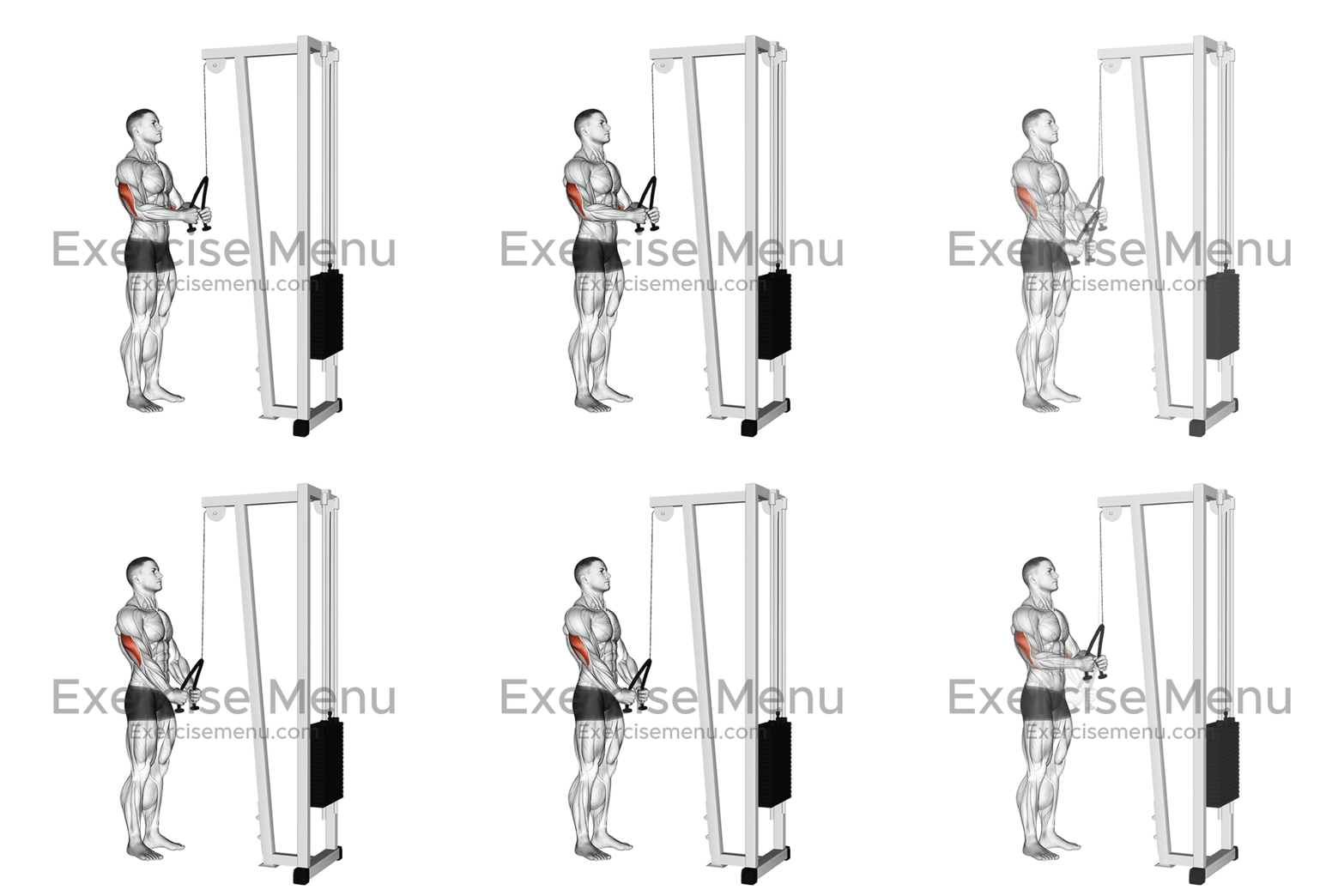
The cable triceps pushdown trains the triceps. Face a high pulley, hold a rope with your elbows bent and tucked at your sides, then straighten your arms down until they are almost straight. Let the rope rise back slowly. Use 3 sets of 10 to 15 reps.
How to Do the Cable Triceps Pushdown
- 1
Set the pulley high
Attach a rope to a cable pulley set at or above head height.
- 2
Take your stance
Face the machine and stand about a step back, feet about hip-width apart, standing tall.
- 3
Set your elbows
Hold one end of the rope in each hand, palms facing each other, and pull your elbows in to your sides. Start with your hands at about mid-chest height and your elbows well bent.
- 4
Push down
Breathe out and push the rope down until your hands reach about waistband height and your arms are almost straight. Your upper arms stay at your sides and only your forearms move.
- 5
Return slowly
Let the rope rise over 2–3 seconds until your elbows are bent again, then repeat without resting the stack.
What Muscles Does the Cable Triceps Pushdown Work?
Primary
- Triceps Brachii (Lateral and Medial Heads)straighten the elbow.
- Triceps Brachii (Long Head)also straightens the elbow, but it is only lightly stretched when the arm hangs at your side.
Secondary
- Anconeusassists at the end of elbow straightening.
- Latissimus Dorsi and Posterior Deltoidhold the upper arms down at your sides.
- Forearm Flexorshold your grip on the rope.
- Abdominalskeep your torso still as you push.
How Many Sets and Reps Should You Do?
| Goal | Sets | Reps | Rest |
|---|---|---|---|
| Muscle Growth | 3–4 | 10–15 | 60–90 sec |
| Strength | 3 | 8–12 | 90 sec |
| Endurance | 2–3 | 15–20 | 45 sec |
| Beginner | 2–3 | 12–15 | 60 sec |
Common Mistakes That Reduce Results
✕
Elbows Drifting Forward
If your elbows travel away from your sides, your shoulders and lats start pushing. Keep the upper arms still against your ribs.
✕
Leaning Over the Cable
Bending forward and pressing down with body weight moves the work away from the arms. Stand tall and keep your torso still.
✕
Letting the Weight Pull You Up
Allowing the stack to snap your hands back up skips the lowering half of the rep. Control the way up over 2–3 seconds.
✕
Shrugging
Lifting your shoulders toward your ears as you push shifts the work to the traps. Keep your shoulders down.
✕
Too Much Weight
A heavy stack makes you rock, lean and bend the wrists. Pick a load you can push down with still upper arms.
Tips for Better Results
✓
Rope or Bar Makes Little Difference to the Triceps
Rendos and colleagues (2016) compared handle types during standing pushdowns and found no significant difference in triceps activity between them. Use whichever your elbows and wrists prefer.
✓
Pair It With an Overhead Exercise
Maeo and colleagues (2023) found the long head grew more when trained overhead than with the arm at the side. The pushdown is the arm-at-the-side position, so it works well alongside an overhead extension rather than instead of it.
✓
Keep Your Wrists Straight
Let your wrists stay in line with your forearms rather than curling the rope down with your hands.
✓
Spreading the Rope Is Optional
The demonstration keeps the hands together all the way down. Some lifters pull the two ends apart at the bottom instead. Neither has been shown to change what the triceps do, so use whichever you can hold still.
Modifications and Progressions
▼ Easier
Resistance Band Pushdown
A band looped over a bar above you trains the same push with no machine.
▼ Easier
Straight-Bar Pushdown
A fixed bar keeps both hands in one place, which is simpler to control than a rope.
▲ Harder
Single-Arm Cable Pushdown
Pushing with one arm at a time lets you watch each elbow and stop it drifting forward.
▲ Harder
Cable Pushdown with Slow Return
Take 3–4 seconds to let the rope rise on each rep.
Cable Triceps Pushdown Alternatives
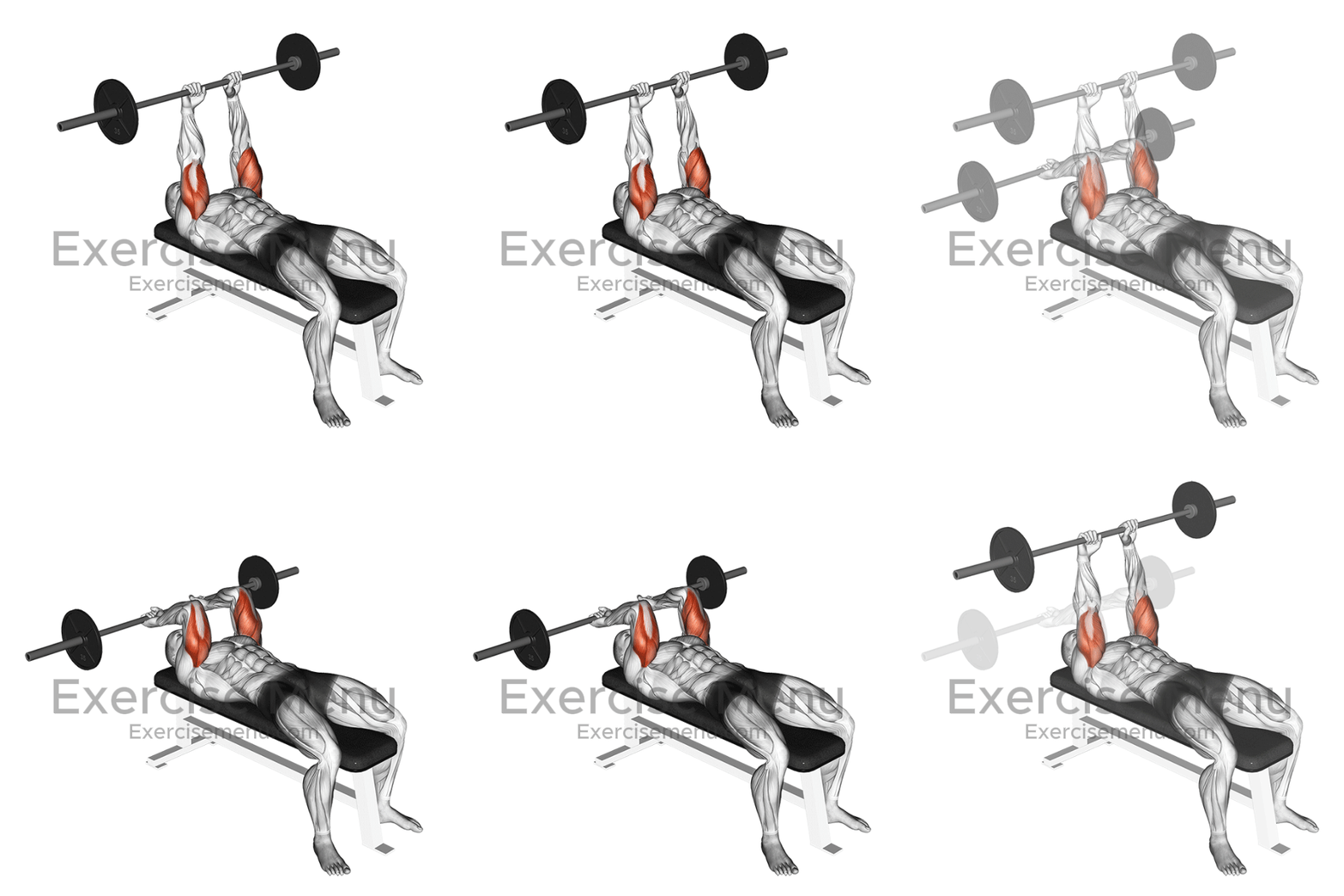 Barbell Lying Triceps Extension
Triceps Brachii
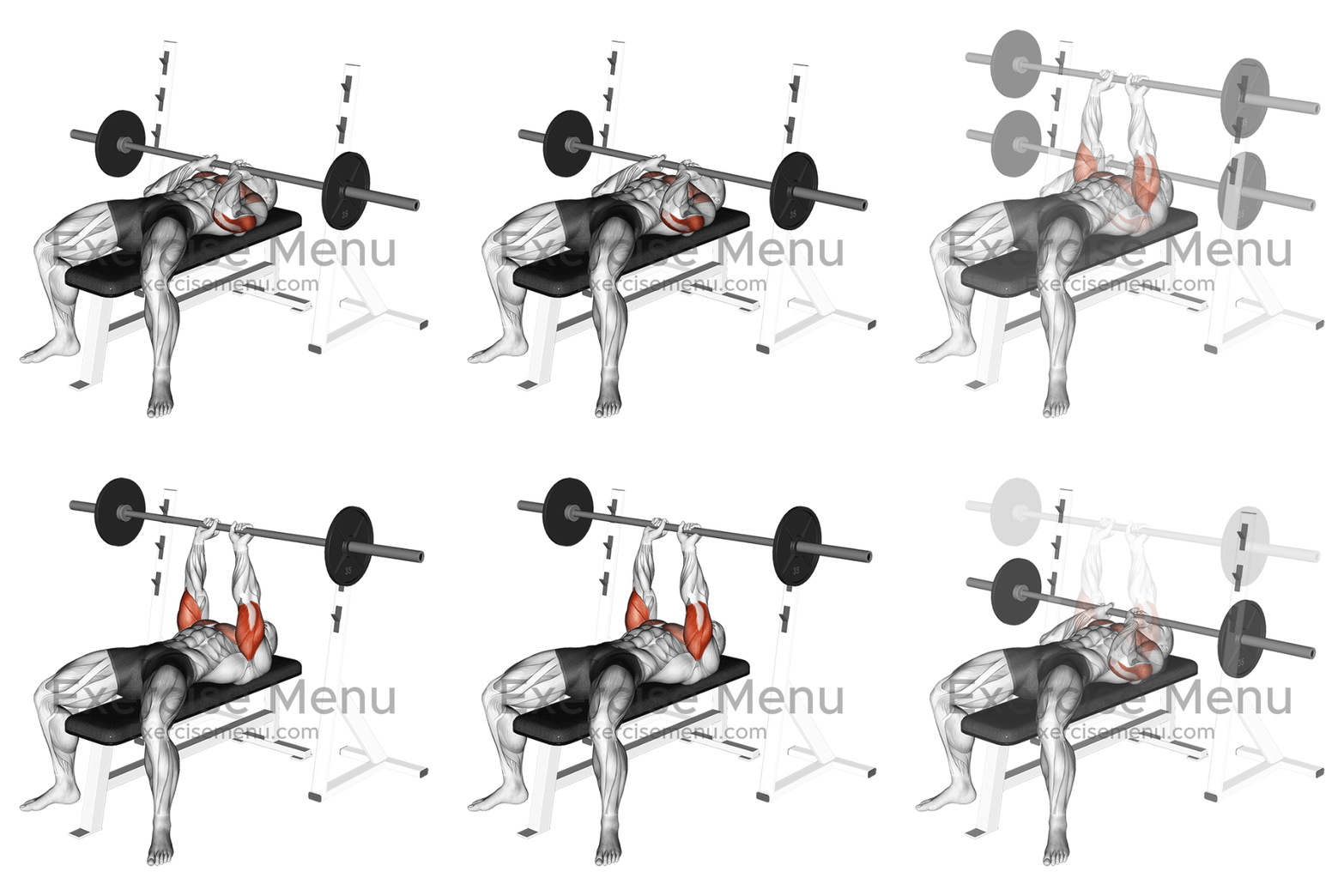 Barbell Close-Grip Bench Press
Triceps Brachii
Frequently Asked Questions
Rope or straight bar for pushdowns?
For the triceps it makes little difference. Rendos and colleagues (2016) measured no significant difference in triceps activity across handle types, so choose the one that feels best on your elbows and wrists.
How high should the pulley be?
At or above head height, so the cable pulls up and forward and your elbows can stay at your sides through the whole rep.
Why do I feel pushdowns in my shoulders?
Usually the elbows are drifting forward or you are leaning over the cable. Stand tall, pin the upper arms to your ribs and lower the weight.
Pushdown or overhead extension?
Both train the triceps in different arm positions. Maeo and colleagues (2023) found more long-head growth from the overhead position, so many programs run both, as the plans on this site do.
Should I lock my elbows at the bottom?
Straighten your arms until they are almost straight and hold for a moment. Snapping into a hard lockout under load adds nothing useful.
Sources
- Rendos NK, Heredia Vargas HM, Alipio TC, Regis RC, Romero MA, Signorile JF. Differences in Muscle Activity During Cable Resistance Training Are Influenced by Variations in Handle Types. J Strength Cond Res. 2016;30(7):2001–2009. https://pubmed.ncbi.nlm.nih.gov/26694502/
- Maeo S, Wu Y, Huang M, et al. Triceps brachii hypertrophy is substantially greater after elbow extension training performed in the overhead versus neutral arm position. Eur J Sport Sci. 2023;23(7):1240–1250. https://pubmed.ncbi.nlm.nih.gov/35819335/
If you have an existing injury or medical condition, check with your doctor before adding this exercise to your training.