

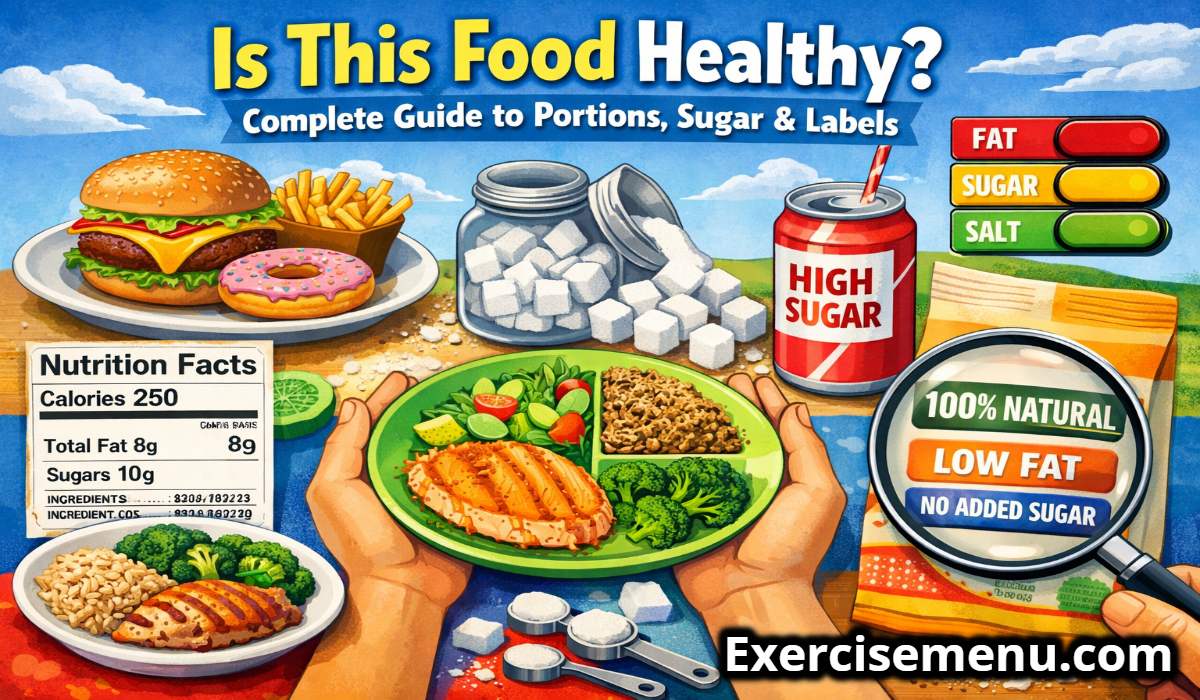
If you’ve ever searched something like “Is this food healthy?” you’re not alone. It’s one of the most common nutrition questions people ask today — because honestly, food advice online can feel confusing. One person says a food is “super healthy,” another says it’s “toxic,” and suddenly even a simple breakfast or dinner feels stressful.
The truth is: most foods are not automatically “healthy” or “unhealthy” for everyone. It depends on your goals, your portion size, how the food is cooked, and what the rest of your diet looks like.
That’s why we created this complete nutrition guide on Exercisemenu.com.
This page is designed to be your central nutrition hub for understanding popular everyday foods — including bread, cereals, chicken meals, red meat, dairy products, soups, and even processed snacks. Instead of giving you extreme rules, we’ll explain food health in a clear and realistic way, so you can make smarter, healthier choices without overthinking every bite.
Let’s start with the basics.
How to Know If a Food Is Healthy or Not?
Before we judge any specific food, it helps to understand what “healthy” actually means. A lot of people label foods as good or bad, but real nutrition isn’t that simple. In most cases, a food becomes healthy or unhealthy based on your goals, your portion size, how it’s prepared, and how often you eat it.
And if the food is packaged or processed, the ingredients inside (like added sugar, sodium, and additives) can also change its health value a lot.
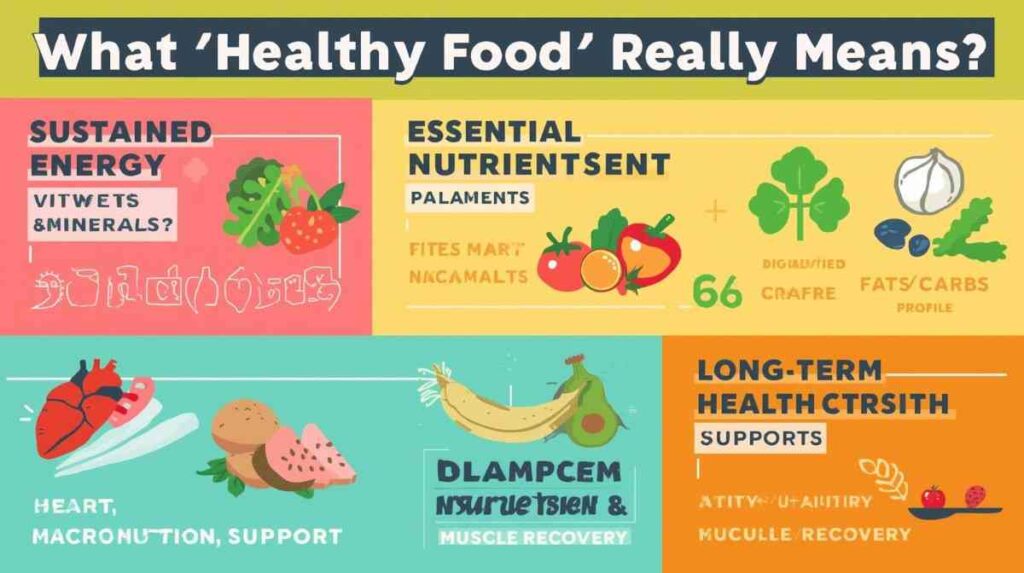
What “Healthy Food” Really Means?
Healthy food isn’t just about being “low calorie” or “low fat.” A truly healthy food usually supports your body by providing:
- Energy (without constant crashes)
- Important nutrients (vitamins and minerals)
- A good balance of macros (protein, fats, and carbs)
- Long-term health support (heart health, digestion, hormones, and muscle recovery)
It’s also important to understand that a food can be healthy for one person and not ideal for another. For example, a higher-carb food may work well for someone who is very active, but it may not be the best choice for someone trying to manage blood sugar levels.
The Role of Calories, Protein, Fat, and Carbohydrates
To understand whether a food is healthy, it helps to know the basics:
Calories
Calories are energy. Eating too many calories regularly can lead to weight gain, but eating too few can also cause fatigue, weakness, and low energy.
Protein
Protein supports muscle repair and recovery, and it helps you feel satisfied after meals.
Carbohydrates
Carbs are your body’s main fuel source. Some carbs are better than others — whole grains and fiber-rich carbs are usually more supportive than sugary processed carbs.
Fats
Fats support hormones, brain health, and long-lasting energy. The type of fat matters. Some fats are healthier than others, while too much saturated fat may not be ideal if your overall diet isn’t balanced.
A “healthy” food often provides a better balance of these nutrients — not just fewer calories.
Fiber + Protein = The “Stay Satisfied” Rule
One of the easiest ways to judge whether a food is a smart choice is to ask a simple question: Will this keep you satisfied?
Foods that contain protein and fiber usually keep you full for longer and help your body maintain steadier energy throughout the day.
- Protein supports muscle repair and helps you feel satisfied after meals
- Fiber supports digestion and slows down how quickly food is absorbed
That’s why many balanced meals include:
- a protein source (like chicken, eggs, yogurt, beans)
- and a fiber source (like vegetables, fruits, oats, whole grains)
If a food is low in both protein and fiber (like many sugary snacks), it may leave you hungry again quickly — even if it doesn’t look “too heavy.”
Why Portion Size Matters?
Even a healthy food can become unhealthy if the portion size is too large.
For example:
- A small serving of bread may fit into a balanced meal
- But eating multiple large servings with high-fat toppings daily may not
Portion size matters because it affects:
- Total calories
- Blood sugar levels
- Digestion
- Energy levels
A simple rule to remember: Healthy foods still need smart portions.
How Cooking Methods Affect Nutrition (Fried vs Baked vs Grilled)?
The same food can change completely depending on how it’s cooked.
- Fried foods often contain more calories and unhealthy fats
- Baked foods can be lighter and easier to control
- Grilled foods can be high-protein and lower in added fats
- Boiled or steamed foods often keep things simple and clean
Even “healthy foods” can become less healthy when they’re cooked with extra oil, heavy sauces, breading, or sugary marinades.
For example, chicken breast is usually considered a healthy option — but fried chicken tenders may not be ideal as an everyday choice due to added oils, coatings, and extra calories.
If you want a crispy option, air-frying is often a better middle-ground than deep-frying because it usually uses less oil.
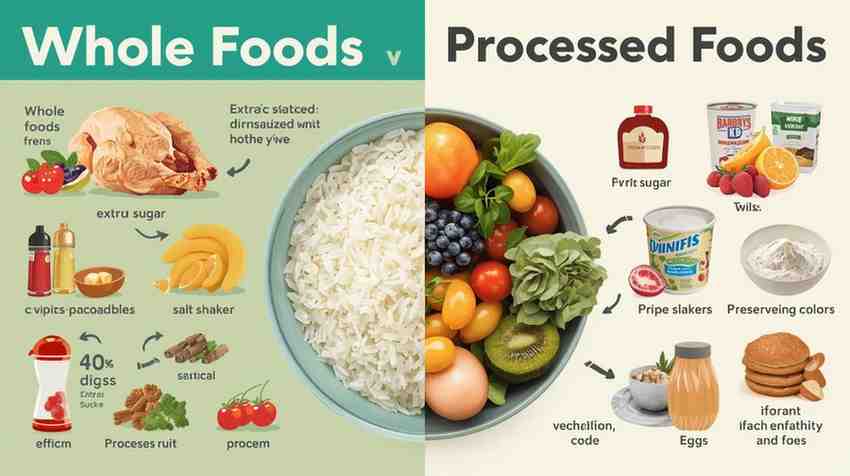
Processed Foods vs Whole Foods (What’s the Difference?)
This is one of the most important parts of understanding food health.
Whole foods are foods close to their natural form, such as:
- fresh chicken
- rice
- vegetables
- fruits
- eggs
- plain yogurt
Processed foods are foods that have been changed from their original form. Some processing is normal (like freezing or simple packaging), but heavy processing often adds:
- extra sugar
- extra salt (sodium)
- preservatives
- artificial flavors
- unhealthy fats
A good general rule is: the more a food looks like it came straight from nature, the easier it is to fit into a balanced diet.
Added Sugar vs Natural Sugar (A Big Difference)
Not all sugar is the same — and this is where many people get confused.
Natural sugar comes from whole foods like fruits and milk. These foods also contain helpful nutrients like fiber, vitamins, and minerals. For example, fruit contains sugar, but it also contains fiber, which helps slow down how quickly sugar is absorbed.
Added sugar, on the other hand, is sugar added during processing. It’s commonly found in packaged cereals, snacks, desserts, flavored drinks, and many “healthy-looking” products.
A simple rule:
- Natural sugar (in whole foods) is usually fine in a balanced diet
- Added sugar (in processed foods) is what you should watch more closely
When reading a label, the “Added Sugars” line is often more useful than total sugar for most people.
How to Read Food Labels the Right Way (Quick & Simple)?
✅ 1) Check the serving size first
Many products look “healthy” until you realize the label is based on a much smaller portion than people normally eat.
✅ 2) Look for lower levels of the “limit” nutrients
Try to keep these lower in your overall diet:
- Saturated fat
- Sodium
- Added sugars
✅ 3) Use % Daily Value (%DV) for quick decisions
The %DV makes label reading easier:
- 5% DV or less is generally considered low (better for saturated fat, sodium, and added sugars)
- 20% DV or more is considered high (great for fiber and key nutrients)
Nutrients you may want higher %DV for include:
- Fiber
- Vitamin D
- Calcium
- Iron
- Potassium
✅ 4) Scan the ingredient list
In general:
- Shorter ingredient lists are better
- Ingredients that look like real food are better
- Avoid products with long lists of chemicals, multiple types of sugar, or heavy additives
Quick trick: if sugar is in the first 3 ingredients, it’s usually a sign the product is more “dessert-like” than healthy.
Front-of-Pack Labels (Quick Visual Cues)
Some products also have front-of-pack rating systems (depending on the country), such as star ratings or other “health score” labels. These can be a helpful shortcut, but they should never replace checking the full Nutrition Facts label and ingredient list.
Helpful Apps & Websites for Quick Food Checks (Optional but Useful)
If you want faster help while shopping, you can also use tools and apps to quickly analyze packaged foods:
- Yuka – scans barcodes, gives a health score (Excellent, Good, Mediocre, Poor) and suggests alternatives
- EWG’s Food Scores – highlights ingredient concerns and production methods
- Cronometer – detailed nutrient tracking (great if you want to track vitamins/minerals too)
- Nutrition.gov – credible nutrition information from the USDA
These tools can be useful, but the best long-term strategy is still focusingon whole foods most of the time and using labels to make smarter choices.
The 10-Second “Healthy Food Score” Quick Test
If you want a fast way to judge a food without overthinking, use this simple scoring method. Give the food 1 point for each “yes”:
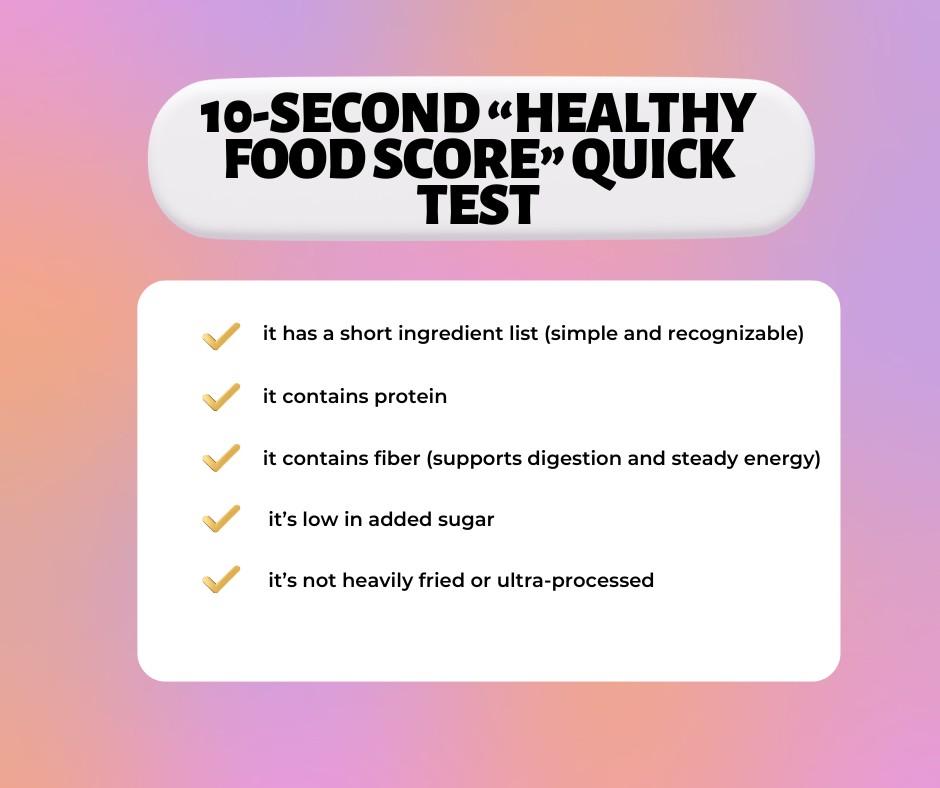
- ✅ 1 point if it has a short ingredient list (simple and recognizable)
- ✅ 1 point if it contains protein (supports the body and helps you feel satisfied)
- ✅ 1 point if it contains fiber (supports digestion and steady energy)
- ✅ 1 point if it’s low in added sugar
- ✅ 1 point if it’s not heavily fried or ultra-processed
Score Guide:
- 4–5 points: Great choice for regular eating
- 3 points: Fine in moderation
- 1–2 points: Best as an occasional treat
This isn’t about perfection — it’s about making smarter decisions more consistently.
Are Breakfast Foods Really Healthy?
Breakfast is one of the most talked-about meals of the day — and also one of the most confusing. Some people believe breakfast is “mandatory,” while others skip it and feel completely fine. The truth is, breakfast can be very healthy and nutrient-dense, but it depends on what you eat, how much you eat, and how it fits into your daily routine.
A well-balanced breakfast can help fuel your body, support steady energy, and even improve focus, memory, and concentration — especially on busy mornings. For many people, eating a smart breakfast also helps regulate blood sugar levels, which may reduce cravings and prevent overeating later in the day.
However, not all breakfast foods are equal. Some common breakfast choices are more processed and sugary than people realize, which can lead to energy crashes and hunger returning quickly.
The Role of Bread, Bagels, and Cereals in a Daily Diet
Foods like bread, bagels, and breakfast cereals are popular because they are:
- easy to prepare
- affordable
- filling
- widely available
These foods can fit into a balanced diet, especially when paired with protein and fiber. For example, eating a bagel by itself may feel filling at first, but you might feel hungry again quickly. On the other hand, a more balanced breakfast that includes a protein source (like eggs or yogurt) and a fiber source (like fruit or whole grains) can help you stay satisfied and energized longer.
The key is not to fear these foods — the key is to choose smarter versions and eat them in realistic portions.
Refined Grains vs Whole Grains (The Biggest Difference)
One of the most important things to understand about breakfast foods is the difference between refined grains and whole grains.
Refined grains are often found in:
- white bread
- many bagels
- sugary cereals
- pastries
They digest quickly and may lead to:
- energy spikes and crashes
- stronger cravings later
- less steady fullness
Whole grains are found in:
- whole wheat bread
- oats and oatmeal
- high-fiber cereals
- whole grain wraps or flatbreads
They digest more slowly and usually provide:
- better energy stability
- more fiber
- improved digestion support
A simple way to think about it: whole grains usually help your breakfast feel more “complete,” while refined grains often need extra balance from protein and fiber.
Sugar Content in Common Breakfast Foods
Another reason breakfast foods get a “bad reputation” is because many of them contain hidden added sugar — even the ones marketed as “healthy.”
Common high-sugar breakfast items include:
- sweetened cereals
- packaged pastries
- toaster snacks
- sugary spreads and toppings
- sweet breakfast bars and flavored drinks
Too much added sugar in the morning can sometimes lead to:
- a quick burst of energy followed by tiredness
- cravings later in the day
- less stable blood sugar and appetite control
This doesn’t mean you can never enjoy sweet breakfast foods — it simply means you should understand what you’re eating and keep things balanced.
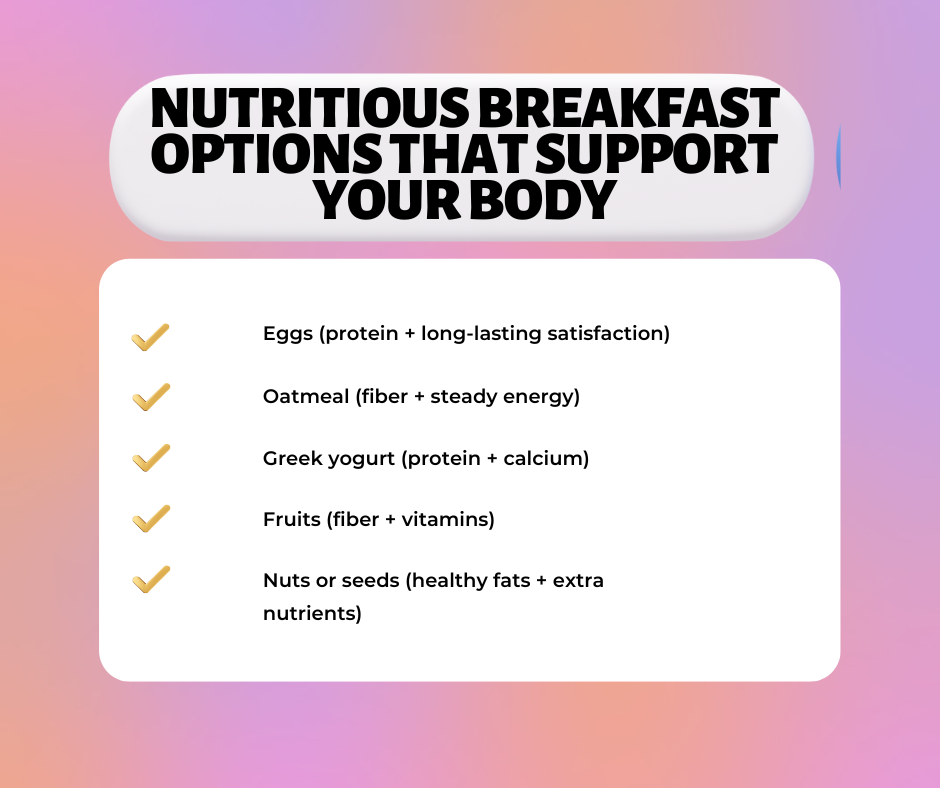
Nutritious Breakfast Options That Support Your Body
If your goal is a healthier breakfast, focus on nutrient-dense foods that provide a mix of protein, fiber, and important micronutrients. Some common healthy breakfast options include:
- Eggs (protein + long-lasting satisfaction)
- Oatmeal (fiber + steady energy)
- Greek yogurt (protein + calcium)
- Fruits (fiber + vitamins)
- Nuts or seeds (healthy fats + extra nutrients)
These foods can support better energy and focus, and they also help you get essential nutrients like fiber, calcium, and vitamins, which play a role in long-term health.
Nutritional Focus: What a Balanced Breakfast Usually Looks Like
A healthy breakfast doesn’t need to be complicated. A simple balanced breakfast often includes:
- A protein source (eggs, Greek yogurt, milk, beans)
- A fiber source (fruit, oats, whole grains)
- A healthy fat (optional) (nuts, seeds, olive oil, peanut butter)
- Water (hydration matters more than people realize)1
This combination supports steady energy, better digestion, and stronger mental focus throughout the day.
Quality Matters More Than the Word “Breakfast”
One important thing to understand is that breakfast is not automatically healthy just because it’s eaten in the morning. Quality matters most. For example:
- oatmeal with berries and yogurt is very different from a sugary cereal and pastry
- a simple egg-based breakfast is very different from a packaged toaster snack
Choosing nutrient-dense foods more often is what makes the biggest difference.
Scientific Context: Is Breakfast Mandatory?
Many studies show that people who eat breakfast often have healthier habits overall. However, research also suggests that it’s not only about the act of eating breakfast — it’s about the overall quality of the diet throughout the day.
So, breakfast can be a great way to start the day, but it’s not inherently mandatory for everyone. If you skip breakfast and still meet your nutrition needs later with balanced meals, that can be completely fine too.
In the long term, consistently choosing better food quality may also support overall wellness and help reduce the risk of health problems such as type 2 diabetes and heart disease.
Are Chicken-Based Meals Healthy?
Chicken is one of the most popular foods in fitness and everyday healthy eating — and for good reason. It’s widely available, easy to cook, and it can be an excellent source of high-quality protein. But just like any other food, whether chicken-based meals are “healthy” depends on how the chicken is prepared, what it’s served with, and how often it’s eaten.
A simple grilled chicken meal can be completely different from fried chicken tenders with heavy sauces and refined carbs on the side. So instead of labeling chicken as always healthy or always unhealthy, it’s smarter to look at the full meal and the cooking method.
Chicken as a High-Quality Protein Source
Chicken is considered a strong protein option because it helps support:
- muscle repair and recovery
- long-lasting satisfaction after meals
- balanced energy throughout the day
- meeting your daily protein needs
Many people include chicken in their meals because it fits into different eating styles and can be combined easily with vegetables, grains, and healthy fats.
How Cooking Styles Affect Health?
The biggest factor that changes chicken’s health value is how it’s cooked. Some methods keep the meal light and clean, while others add extra calories, sodium, and processed ingredients.
In general:
- Grilled or baked chicken is usually a cleaner, lighter option
- Boiled or steamed chicken keeps things simple and easy to digest
- Fried chicken often includes added oils, coatings, and extra calories
- Heavy sauces and breading can increase sodium, sugar, and overall processing
Here’s a quick comparison to make it even easier:
✅ Chicken Cooking Methods (Quick Health Comparison)
| Cooking Method | Health Level | Why It’s Better/Worse | Best For |
|---|---|---|---|
| Grilled | ⭐⭐⭐⭐⭐ | Low added oil, high protein, simple ingredients | Everyday meals |
| Baked/Roasted | ⭐⭐⭐⭐☆ | Easy to control fats, good flavor without frying | Regular eating |
| Boiled/Steamed | ⭐⭐⭐⭐☆ | Very light, easy to digest, minimal additives | Simple clean meals |
| Air-Fried | ⭐⭐⭐⭐☆ | Less oil than deep-frying, still crispy | Healthier “fried-style” option |
| Pan-Fried | ⭐⭐⭐☆☆ | Uses oil, can increase calories depending on amount | Occasional |
| Deep-Fried | ⭐⭐☆☆☆ | High calories, coating + oil absorption | Occasional treat |
Fried Chicken vs Grilled Chicken (A Simple Comparison)
A quick way to understand the difference:
Grilled chicken is usually:
- higher in protein
- lower in added fats
- easier to fit into a balanced plate
Fried chicken is often:
- higher in calories due to oil absorption
- more processed because of breading/coating
- higher in sodium depending on seasoning and packaging
Fried chicken isn’t “forbidden,” but it’s usually better as an occasional option rather than an everyday choice.
The Importance of Balanced Meals
A chicken-based meal becomes much healthier when the full plate is balanced. Chicken alone is a great start, but what you eat with it matters just as much.
A balanced meal usually includes:
- Protein (chicken)
- Fiber (vegetables, salad, legumes)
- Carbs in a smart portion (rice, potatoes, whole grains)
- Healthy fats (optional) (olive oil, nuts, avocado)
This combination supports:
- steady energy
- better digestion
- more satisfaction after eating
- better overall nutrition quality
To make it even easier, here’s a simple “build-your-plate” guide:
✅ Chicken Meal “Healthy Plate” Builder
| Meal Part | Best Choices | Why It Helps |
|---|---|---|
| Protein | Chicken breast, grilled chicken, baked chicken | Supports muscle repair + keeps you satisfied |
| Carbs | Rice (portion-controlled), brown rice, potatoes, whole grains | Provides energy and meal balance |
| Fiber | Salad, vegetables, beans, lentils | Supports digestion + steadier energy |
| Healthy Fats (optional) | Olive oil, nuts, avocado | Helps fullness + supports overall nutrition |
| Extra Flavor | Lemon, herbs, spices, yogurt-based sauces | Adds taste without heavy calories/sugar |
Chicken and Rice as a Complete Meal
Chicken and rice is one of the most common meals people eat worldwide. It can be a smart and balanced option because it includes:
- Protein from chicken
- Carbohydrates from rice
- A strong base for adding vegetables and healthy fats
However, the healthiness depends on:
- the portion size of rice
- the type of rice (white vs brown)
- added oils, sauces, or heavy seasonings
- whether vegetables are included
For many people, chicken and rice can be a solid everyday meal when it’s prepared simply and balanced with vegetables.
Quick Chicken Meal Check (10 Seconds)
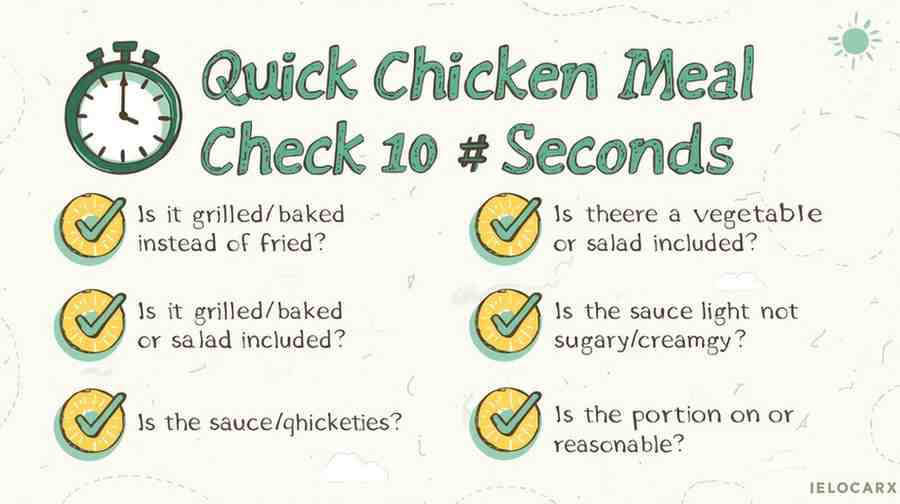
If you want a fast way to judge a chicken meal, ask yourself:
| Question | Yes = Better Choice |
|---|---|
| Is it grilled/baked instead of fried? | ✅ |
| Is there a vegetable or salad included? | ✅ |
| Is the sauce light (not sugary/creamy)? | ✅ |
| Is the portion reasonable? | ✅ |
If you get 3–4 yes answers, it’s usually a good sign the meal is a smart choice.
Is Red Meat Healthy or Unhealthy?
Red meat is one of the most misunderstood foods in nutrition. Some people avoid it completely, while others eat it daily and feel fine. The truth is usually somewhere in the middle: red meat can be healthy in moderation, but it may carry health risks when eaten too often, in large portions, or in highly processed forms.
Instead of asking, “Is red meat always bad?” a better question is: What type of red meat, how much, and how often?
Red Meat Nutrition Facts (What It Offers)
Red meat can be a nutrient-dense food. It naturally provides several nutrients that support the body, including:
- High-quality protein (contains all essential amino acids)
- Vitamin B12 (important for the nervous system and energy support)
- Heme iron (a form of iron the body absorbs more easily than plant-based iron)
- Zinc (supports immune health and recovery)
- Selenium (acts as an antioxidant in the body)
- Other important minerals depending on the cut
Because of this, red meat can be helpful for people who struggle to meet protein needs or have low iron levels (especially when it’s eaten in balanced portions)
Protein, Iron, and Fat Content (Why the Cut Matters)
Red meat is often rich in:
- Protein (supports muscle repair, growth, and strength)
- Iron (supports oxygen transport and helps prevent low-energy feelings)
- Fats (which vary a lot depending on the cut)
Some cuts are naturally leaner, while others contain more fat. This matters because higher-fat cuts can increase total calories and saturated fat intake.
Here’s a simple guide:
✅ Red Meat Cuts: Lean vs Higher-Fat (Quick Guide)
| Type of Cut | Examples | What It’s Usually Higher In | Best For |
|---|---|---|---|
| Lean Cuts | sirloin, tenderloin, flank steak | more protein, less fat | regular balanced meals |
| Medium-Fat Cuts | brisket, some ground beef | protein + moderate fat | moderate portions |
| Higher-Fat Cuts | heavily marbled cuts | more calories + saturated fat | occasional meals |
(Exact nutrition depends on the brand, portion size, and cooking method, but this gives you a clear idea.)
The Health Risks (What to Be Aware Of)
Red meat isn’t “toxic,” but eating it too frequently — especially in processed forms — is linked in research to higher long-term health risks.
Some studies associate high intake of red meat (especially processed meats) with an increased risk of conditions like:
- heart disease
- type 2 diabetes
- stroke
There is also strong evidence linking processed meats to a higher cancer risk. The World Health Organization (WHO) has classified processed meats as a known cause of cancer (based on research), and unprocessed red meat as “probably carcinogenic” when eaten in high amounts over time. The strongest link is often seen with colorectal cancer.
This doesn’t mean you need to panic or eliminate red meat completely — it simply means frequency and type matter a lot.
Why Processed Meats Are a Bigger Problem
One of the most important differences is red meat vs processed meat.
Processed meats often contain:
- high sodium
- preservatives
- nitrates/nitrites
- extra additives
Common processed meats include:
- bacon
- sausages
- deli meats
- hot dogs
These are generally better as rare/occasional foods, not everyday protein sources.
Saturated Fat, LDL Cholesterol, and Other Compounds
Some red meat cuts are high in saturated fat, which may raise LDL (“bad”) cholesterol in some people when eaten too often.
Also, when red meat is digested, the body can produce a compound called TMAO, which some research links to heart health concerns. This topic is still being studied, but it’s another reason why many experts recommend moderation and variety in protein choices.
Cooking Methods Matter (Avoid Charring)
How you cook red meat can also affect health.
High-heat cooking methods like heavy grilling, charring, or burning meat can create compounds called HCAs and PAHs, which may not be ideal for long-term health.
That doesn’t mean you can’t grill meat — it just means you should avoid burning it.
Safer cooking tips:
- cook at lower to moderate heat
- avoid blackened or charred surfaces
- use methods like baking, roasting, steaming, or slow cooking
- don’t overuse heavy sugary marinades that burn quickly
How Much Red Meat Is “Moderate”? (Simple Weekly Guideline)
Most health organizations recommend limiting unprocessed red meat to around:
✅ 12–18 ounces per week
(roughly 2–3 small servings)
This is a general guideline — your needs may vary — but it’s a good reference point for balanced eating.
The Importance of Moderation (The Smart Approach)
For many people, red meat can fit into a healthy diet when:
- portions are reasonable
- it’s not eaten excessively
- leaner cuts are chosen more often
- cooking methods are healthier
- processed meats are limited or avoided
Moderation is key. You don’t need to fear red meat — but you also don’t need to rely on it as your main protein every day.
A smart approach is to diversify protein sources, such as:
- chicken and turkey
- fish
- eggs
- beans and lentils
- dairy-based protein options
Quick Summary: Red Meat Pros vs Cons (Fast Decision Table)
| Red Meat Pros | Red Meat Cons |
|---|---|
| High-quality complete protein | High intake may increase long-term health risks |
| Rich in Vitamin B12 | Processed meats are strongly linked with higher risk |
| Heme iron (highly absorbable) | Some cuts are high in saturated fat |
| Zinc + selenium | High-heat charring may create harmful compounds |
| Can be satisfying and filling | Better when eaten in moderation |
Are Dairy Products and Cheese Healthy?
Dairy products and cheese can absolutely be part of a healthy, balanced diet — and for many people, they’re a convenient way to get important nutrients. Dairy foods can provide calcium, protein, potassium, and vitamin D, which support strong bones, muscle function, and overall wellness
However, not all dairy products are the same. Some are naturally nutrient-dense and easy to fit into daily eating, while others (especially certain cheeses and flavored dairy products) can be high in saturated fat, sodium, and calories. That’s why the real key is choosing the right type and keeping portions realistic.
Key Health Benefits of Dairy (Why People Include It)
Dairy products can support health in multiple ways when eaten in moderation:
1) Bone Health Support
Dairy is one of the most common sources of nutrients that help maintain bone strength, including:
- Calcium
- Phosphorus
- Vitamin D (in fortified milk and some dairy products)
These nutrients work together to support bone density and long-term bone health.
2) Nutrient-Dense and High in Quality Protein
Many dairy foods provide:
- High-quality protein
- Potassium
- Magnesium
- Vitamin D (in some products)
This combination supports daily nutrition, recovery, and muscle function.
3) May Support Long-Term Health (Moderate Intake)
Some research suggests that regular, moderate dairy intake may be linked with a lower risk of certain chronic health problems, such as:
- cardiovascular disease
- stroke
- type 2 diabetes
This doesn’t mean dairy is “magic,” but it shows that dairy can fit into a healthy lifestyle for many people.
Fermented Dairy: A Smart Option for Gut Health
Not all dairy is just about calcium and protein — fermented dairy can also support gut health.
Foods like:
- yogurt
- Greek yogurt
- certain cheeses (like Swiss and Cheddar)
may contain probiotics, which are beneficial bacteria that support digestion and gut balance.
Fermented dairy is often one of the best choices if you want dairy that feels “lighter” and more supportive for digestion.
Potential Risks and Considerations (What to Watch Out For)
Even though dairy can be healthy, it’s also important to understand the downsides — especially if you eat large amounts.
1) Saturated Fat + Calories (Moderation Matters)
Many cheeses and full-fat dairy products are high in:
- saturated fat
- calories
Too much saturated fat may raise LDL (“bad”) cholesterol in some people, which can affect heart health over time. This is why cheese is usually best enjoyed in moderate portions, not in oversized servings daily.
2) Sodium (Especially in Cheese)
A lot of cheeses contain high sodium, which may be a concern for:
- bloating and water retention
- blood pressure management
This doesn’t mean you must avoid cheese completely — it just means it’s smart to check the label and keep portions controlled.
3) Lactose Intolerance
A large number of people have difficulty digesting lactose (milk sugar). If dairy causes symptoms like:
- gas
- bloating
- stomach discomfort
you may do better with:
- lactose-free milk
- yogurt (often easier to digest)
- smaller portions of cheese
- dairy alternatives (if needed)
4) Mixed Science (Not Always Black & White)
Nutrition science isn’t always simple. While many studies show benefits with moderate dairy intake, some sources (including Harvard-style discussions) mention that very high dairy consumption may have mixed results in certain health areas. That’s another reason why balance and moderation is the safest approach.
Quick Comparison: Which Dairy Choices Are Usually Better?
Here’s a simple guide to help you choose:
| Dairy Type | Usually a Better Choice? | Why |
|---|---|---|
| Plain milk (low-fat or moderate) | ✅ Yes | Good source of calcium + protein |
| Greek yogurt / plain yogurt | ✅ Yes | High protein + fermented (gut-friendly) |
| Cottage cheese | ✅ Yes (portion-controlled) | High protein, easy snack option |
| Hard cheeses (Cheddar, Swiss, etc.) | ⚠️ Moderation | Nutrient-dense but high calories/sodium |
| Processed cheese slices/spreads | ⚠️ Limit | More additives, often higher sodium |
| Flavored yogurts | ⚠️ Check label | Can be high in added sugar |
Tips for Healthier Dairy Choices
If you want dairy in your diet while keeping it healthier, these tips help a lot:
- Choose low-fat or fat-free dairy when needed (especially if you already eat a lot of fats in your diet)
- Pick fermented dairy like yogurt for probiotic benefits
- Keep cheese portions moderate, because it’s calorie-dense
- Check sodium and saturated fat on the label
- If you’re sensitive to dairy, try lactose-free options or smaller servings
Are Soups and Comfort Foods Healthy?
Soups and comfort foods can definitely be healthy — especially when they’re homemade and made with simple, whole ingredients. In fact, a well-made soup can be one of the easiest ways to eat more vegetables, get enough protein, stay hydrated, and feel satisfied after a meal.
That said, not all soups and comfort foods are the same. Some options (like broth-based vegetable soups) are naturally light and nutrient-dense, while others (like creamy soups or heavily processed packaged meals) can be high in sodium, saturated fat, and calories. The key is learning how to balance comfort with nutrition.
Why Soups Can Be Healthy?
When made the right way, soups can offer several benefits:
Nutrient-Dense
Soups often include ingredients like vegetables, beans, lentils, and lean proteins — which can increase your daily intake of fiber, vitamins, and minerals.
Hydration + Fullness
Because soups are water-based, they help support hydration and can help you feel full and satisfied. This is one reason soup-based meals often feel comforting without being overly heavy.
A Simple Comfort Food That Can Support Wellness
Many people find warm soups (like chicken soup) soothing during colder weather or when they’re not feeling their best. While soup isn’t a “cure,” it can be an easy-to-digest meal that supports overall comfort.
Homemade vs Packaged Soups and Comfort Foods
Homemade soups are usually healthier because you have full control over what goes in.
Homemade soups often have:
- better quality ingredients
- more control over salt
- more vegetables and fiber
- more protein options
- fewer additives
Packaged soups and ready-made comfort foods may include:
- high sodium
- preservatives
- extra additives
- added sugars (sometimes)
- less real nutrition overall
If you want soups to be a regular part of your diet, homemade versions are usually the best option.
Broth-Based vs Creamy Soups (Big Nutrition Difference)
One simple way to judge soup health is to look at the base:
✅ Quick Soup Comparison Table
| Soup Type | Usually Healthier? | Why |
|---|---|---|
| Broth-based vegetable soup | ✅ Yes | Lower calories, high nutrients, easy to digest |
| Lentil/bean soups | ✅ Yes | High fiber + plant protein, very filling |
| Chicken & veggie soup | ✅ Yes | Lean protein + vitamins/minerals |
| Cream-based soups | ⚠️ Sometimes | Can be higher in saturated fat and calories |
| Cheesy soups | ⚠️ Often heavy | Higher sodium + calories |
| Instant/packet soups | ❌ Usually not | Very high sodium + additives |
Sodium Levels and Preservatives (The Biggest Problem)
High sodium is one of the biggest issues with packaged comfort foods and ready-made soups. Too much sodium regularly can contribute to:
- water retention
- bloating
- blood pressure concerns
A simple tip: if you’re using store-bought soup, look for low-sodium options, or dilute it with extra water and add fresh vegetables to improve it.
Tips for Healthier Comfort Foods (Without Losing the Comfort)
Comfort food doesn’t have to mean “junk food.” The best approach is to keep the comfort, but upgrade the nutrition.
Here are easy ways to do that:
✅ Watch the sodium
Use low-sodium broth, or make your own at home.
✅ Load up on vegetables
Add more veggies to soups, stews, casseroles, and curries for fiber and nutrients.
✅ Choose lean proteins
Good options include:
- beans and lentils
- fish
- skinless chicken
- lean meat in moderate portions
✅ Limit heavy cream and too much cheese
Creamy soups can be delicious, but they’re often higher in saturated fat and calories. A smarter trick is blending vegetables (like carrots or potatoes) to create a creamy texture without needing a lot of cream.
✅ Control portions (especially for calorie-dense soups)
Some soups are light, but others can be surprisingly heavy depending on ingredients. Portion control helps you enjoy comfort foods without overeating.
Occasional Consumption vs Daily Eating
Comfort foods can fit into a healthy diet, but many are best enjoyed occasionally rather than daily — especially highly processed options.
A good rule:
- Homemade soups with vegetables + protein can be eaten more regularly
- Creamy, cheesy, or packaged comfort foods are better as occasional choices
Comfort food is often naturally higher in calories, but the good news is it can almost always be modified to be more nutritious.
Processed Foods vs Whole Foods – What’s the Real Difference?
This is one of the most important topics in nutrition today. Many foods look normal on the outside, but the ingredient list tells a very different story. The biggest difference between whole foods and processed foods is simple: how much the food has been changed from its natural form.
The more a food is altered, the more likely it is to lose natural nutrition and gain extra ingredients that don’t support long-term health.
What Are Whole Foods?
Whole foods are foods in their most natural form, or only minimally changed. They usually contain no added ingredients and are naturally rich in nutrients your body needs.
Common examples of whole foods include:
- fresh fruits and vegetables
- whole grains (like oats and brown rice)
- nuts and seeds
- eggs
- beans and lentils
- fresh meat, fish, and chicken
Whole foods are often naturally high in:
- fiber
- vitamins and minerals
- antioxidants
- better-quality carbs and fats
Because of this, whole foods tend to support:
- better digestion
- steadier energy
- stronger fullness after meals
- more stable blood sugar
What Are Processed Foods?
Processed foods are foods that have been deliberately changed for convenience, preservation, or flavor. Processing exists on a spectrum — and this part is important:
- Not all processed foods are “bad.”
- The problem usually starts with ultra-processed foods.
Minimally Processed Foods (Often Fine)
These are processed in a simple way but still close to the original food. Examples include:
- frozen vegetables
- canned beans (especially low-sodium)
- plain yogurt
- pasteurized milk
- plain oats
- packaged nuts (without added sugar)
These can still fit into a healthy diet easily.
Ultra-Processed Foods (Limit These More Often)
Ultra-processed foods are heavily modified and usually include additives. Examples include:
- packaged snacks
- ready-to-eat meals
- sugary cereals
- pastries
- instant noodles
- processed desserts
- flavored items with additives
Additives: What Ultra-Processed Foods Usually Contain
Ultra-processed foods often contain ingredients like:
- added sugars
- high sodium
- unhealthy fats
- preservatives
- artificial flavors
- colorings
- emulsifiers and stabilizers
These ingredients are often used to make foods taste better and last longer — but they can also make it easier to overeat and harder to stay consistent with healthy eating.
Nutritional and Health Impact (Why It Matters)
The reason whole foods usually win is not because they’re “perfect,” but because they support the body in a more natural way.
1) Whole Foods Support Fullness and Better Appetite Control
Whole foods usually contain more fiber and protein, which helps you feel satisfied after meals. Many ultra-processed foods are designed to be easy to eat quickly and can leave you hungry again soon after.
2) Whole Foods Help With Stable Energy
Highly processed foods can cause quick energy spikes and crashes because they often digest faster, especially when they’re low in fiber and high in refined carbs or sugar.
3) Blood Sugar Spikes Can Happen Faster With Ultra-Processed Foods
When processing removes fiber and breaks food down into refined starches and sugars, those carbs become easier and faster to absorb. This can lead to:
- quicker blood sugar rises
- stronger cravings
- more frequent hunger
Whole foods digest more slowly, which supports steadier blood sugar and energy.
4) Long-Term Health Risks (High Ultra-Processed Diets)
Diets very high in ultra-processed foods are often linked with a higher risk of health issues over time, including:
- obesity
- type 2 diabetes
- heart disease
- high blood pressure
That’s why many nutrition experts recommend building most meals around whole foods, and treating ultra-processed foods as occasional choices.
Whole Foods vs Processed Foods (Quick Comparison Table)
| Feature | Whole Foods | Ultra-Processed Foods |
|---|---|---|
| Ingredient list | Short or none | Long, complex |
| Fiber | Usually higher | Often low |
| Added sugar | Usually none | Often high |
| Sodium | Naturally low | Often high |
| Fullness | Keeps you satisfied longer | Hunger returns faster |
| Digestion | Slower, steadier | Faster, more spikes |
| Best for | Everyday eating | Occasional use |
How to Read Nutrition Labels Correctly (Quick Checklist)
If you want to make smarter choices, always check the label before buying:
- Serving size (most important — don’t skip this)
- Calories per serving
- Added sugar (more important than total sugar)
- Fiber amount (higher is usually better)
- Sodium levels (lower is usually better)
- Saturated fat (watch this in heavily processed foods)
- Ingredient list (shorter and recognizable is usually better)
A simple rule: if the ingredient list looks like a chemistry experiment, it’s probably an ultra-processed product.
How Often Should You Eat These Foods?
This is one of the most common questions people have after learning whether a food is “healthy” or not: How often can I eat it?
And the honest answer is: it depends. Most foods don’t need to be labeled as allowed or not allowed. What matters more is frequency, portion size, and the overall pattern of your diet.
Some foods are easier to eat daily because they’re nutrient-dense and support stable energy. Others are totally fine to enjoy sometimes, but may not be the best choice as an everyday habit—especially if they’re highly processed, high in sugar, or high in sodium.
Foods That Are Usually Fine to Eat More Regularly
In general, foods that are closer to whole foods and provide strong nutrition are easier to include more often.
These often include:
- lean proteins (chicken, eggs, fish, beans, lentils)
- vegetables and fruits
- whole grains (oats, brown rice, whole wheat options)
- plain dairy (milk, yogurt) in moderate portions
- soups made with whole ingredients
These foods tend to support:
- steady energy
- better digestion
- more consistent hunger control
- long-term health
Foods That Are Better as Occasional Choices
Some foods can still fit into a healthy lifestyle, but they’re usually best enjoyed occasionally instead of daily—especially if they are ultra-processed or heavily fried.
These often include:
- sugary cereals and packaged snacks
- pastries and toaster snacks
- fried foods (like fried chicken tenders)
- processed meats
- creamy or very salty packaged soups
- comfort foods with heavy sauces and cheese
You don’t need to feel guilty for eating these. The key is simply not making them your “default” meal every day.
Portion Control Basics (Simple and Realistic)
Even healthy foods can cause problems if the portion is too large. Portion control doesn’t mean eating tiny meals — it just means eating the amount that fits your needs.
A simple way to think about portions:
- Protein: aim for a solid serving (enough to feel satisfied)
- Carbs: keep it reasonable, especially with refined carbs
- Fats: small amounts go a long way
- Vegetables: you can usually eat more freely
If you’re not sure, start with a normal portion and adjust based on your hunger, energy, and results.
Lifestyle-Based Eating Decisions (Because Everyone Is Different)
What’s “healthy” for you also depends on your lifestyle.
For example:
- If you’re very active, you may handle more carbs and calories comfortably
- If you sit most of the day, you may feel better with lighter meals and more fiber
- If you have digestion issues, simple foods may work better
- If you’re busy, convenience matters — but you can still make smart choices
This is why one person can eat bread daily and feel great, while another feels better with fewer refined carbs.
Quick Table: Daily vs Occasional Foods (Simple Guide)
| Category | Better for Regular Eating | Better for Occasional Eating |
|---|---|---|
| Breakfast | oats, eggs, Greek yogurt, fruit | sugary cereal, pastries, toaster snacks |
| Chicken meals | grilled/baked chicken, chicken + veggies | fried tenders, heavy sauces |
| Red meat | lean cuts in moderation | processed meats, very fatty cuts often |
| Dairy | plain milk/yogurt, small cheese portions | large cheese portions daily, high-sodium cheese |
| Soups | homemade veggie/chicken soups | creamy soups, instant soups often |
| Snacks | nuts, fruit, yogurt | Pop-Tarts, candy, ultra-processed snacks |
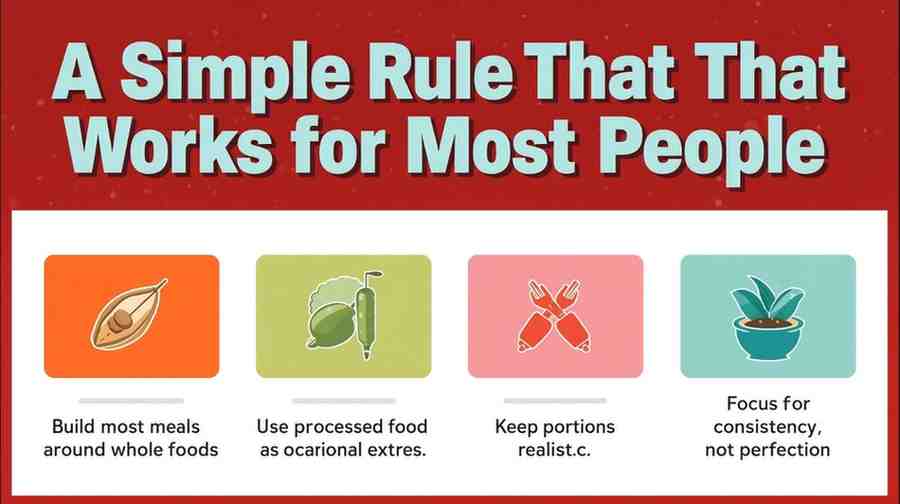
A Simple Rule That Works for Most People
If you want an easy guideline to follow:
✅ Build most meals around whole foods
✅ Use processed foods as occasional extras
✅ Keep portions realistic
✅ Focus on consistency, not perfection
That’s the best way to enjoy your favorite foods while still supporting your health.
Common Mistakes People Make When Judging Food Health
When people search “Is this food healthy?” they usually want a quick yes or no. But real nutrition isn’t that simple. A lot of foods can fit into a balanced diet — and many “healthy-looking” foods can still be misleading depending on ingredients, portions, and how often you eat them.
Here are the most common mistakes people make when judging whether a food is healthy or unhealthy.
1) Trusting Marketing Buzzwords Too Easily
Words like “natural,” “organic,” “gluten-free,” “low-fat,” “diet,” or “all-natural” can sound healthy — but they don’t guarantee the product is actually good for you.
Many packaged foods still contain:
- added sugar
- high sodium
- unhealthy fats
- long ingredient lists
Always trust the Nutrition Facts and ingredient list more than the front label.
2) Ignoring Serving Sizes
This is one of the biggest mistakes.
A product can look “healthy” until you realize the label is based on a much smaller portion than people normally eat. Some packs contain 2–3 servings, so you may end up eating double or triple the calories, sugar, and sodium without realizing it.
3) Thinking “Healthy” Means Calorie-Free
Even healthy foods still contain calories.
For example, foods like:
- nuts
- olive oil
- cheese
- peanut butter
- avocado
are nutritious, but they’re also easy to overeat because they’re calorie-dense. “Healthy” doesn’t mean unlimited — portion size still matters.
4) Not Checking the Ingredient List for Hidden Sugar & Sodium
Many people only look at calories, but the ingredient list often tells the real story.
A simple rule:
- Ingredients are listed by weight, so the first few ingredients matter most.
Watch for:
- multiple types of sugar
- very high sodium
- long lists of additives
This is especially important for packaged snacks, sauces, cereals, and ready-to-eat foods.
5) Forgetting That Cooking Method Changes Everything
The same food can become completely different depending on how it’s prepared.
- grilled chicken vs fried chicken
- baked potatoes vs deep-fried fries
- plain oats vs sugary instant oats
Cooking methods can change:
- calories
- fat content
- sodium levels
- overall health impact
6) Ignoring Liquid Calories
A lot of people eat healthy meals but forget that drinks can add a surprising amount of calories and sugar.
- sodas
- packaged juices
- sweet coffee drinks
- energy drinks
- alcohol
Even “healthy” drinks can become a problem if they’re high in sugar or consumed daily.
7) Seeing Food as “Good” vs “Bad”
Labeling foods as strictly “good” or “bad” often leads to an unhealthy cycle:
- strict restriction
- cravings
- overeating or bingeing
- guilt
A better mindset is: daily foods vs occasional foods. This keeps your diet realistic and sustainable.
8) Over-Relying on Packaged “Health Foods”
Some snacks are marketed as healthy (protein bars, diet snacks, “fitness” foods), but they can still be highly processed and loaded with:
- sweeteners
- additives
- refined carbs
- extra sodium
Whole foods are usually the safer everyday choice.
9) Not Checking Protein Content (Especially in Meals & Snacks)
Protein helps with satisfaction and meal balance. When a meal is low in protein, people often feel hungry again quickly and end up snacking more later.
A simple tip: try to include some protein + some fiber in most meals for better balance.
Common Misconceptions (Quick Reality Check)
- “Sugar-free” doesn’t always mean calorie-free
- “Low-fat” often means higher sugar or more additives
- “Reduced sodium” doesn’t always mean low sodium
Final Reminder
- What’s the serving size?
- What’s the ingredient list like?
- Is there protein and fiber?
- How is it cooked?
- How often do I eat it?
Frequently Asked Questions About Healthy Foods
Is healthy food the same for everyone?
Not always. A food that works well for one person may not work the same way for someone else. Your goals, activity level, digestion, and health needs can all affect what feels “healthy” for you. That’s why it’s better to focus on balance, portion size, and how your body responds.
Can unhealthy food be eaten occasionally?
Yes. Most people can enjoy “unhealthy” foods occasionally without any major issue. What matters most is your overall eating pattern. If most of your diet is made of nutrient-dense foods, then occasional treats can still fit into a healthy lifestyle.
Does cooking method change nutritional value?
Yes, a lot. The same food can become healthier or less healthy depending on how it’s cooked. For example, grilled or baked foods usually contain less added fat than deep-fried foods. Cooking can also change calories, sodium, and overall nutrition quality depending on the ingredients used.
Is calorie counting necessary for good health?
No, calorie counting is not required for everyone. Some people find it helpful for awareness, but many people can improve their diet by focusing on food quality, portion control, protein and fiber intake, and limiting ultra-processed foods. Consistency matters more than perfect tracking.
How do I know if a packaged food is healthy?
Start with the Nutrition Facts label and ingredient list. Check the serving size first, then look at added sugar, sodium, fiber, and saturated fat. In general, shorter ingredient lists with recognizable foods are usually a better sign than long lists of additives.
Are carbs unhealthy?
Carbs are not automatically unhealthy. Your body uses carbs as a major energy source. Whole-food carbs like oats, fruits, beans, and whole grains are usually better choices than refined carbs like pastries and sugary cereals. Portion size and food quality matter most.
Is fat bad for you?
No. Healthy fats support hormones, brain function, and long-lasting energy. The type of fat matters. Foods like nuts, seeds, olive oil, and fish contain healthier fats, while too much saturated fat from processed foods may not be ideal for daily intake.
What’s the easiest way to make meals healthier?
A simple method is to balance your plate include a protein source add vegetables or fiber-rich foods keep carbs in a smart portion avoid heavy sauces and deep-frying. Small changes like this make a big difference over time.
Is it better to eat whole foods than processed foods?
Most of the time, yes. Whole foods are usually more nutrient-dense and naturally contain fiber, vitamins, and minerals. Processed foods can still fit sometimes, but ultra-processed foods often contain added sugar, sodium, and additives that make them harder to eat regularly.
